
Time to Wake Up!

AlarmClock&Coffee

TO LISTEN TO THIS POST AS A PODCAST EPISODE, CLICK HERE:

No, we’re not talking here about setting your alarm clock.  You’re probably thinking, “Obviously, I’m already awake, or I wouldn’t be reading this right now!” You might not be actually sleeping, but as we start a brand-new year, it’s time to ask yourself: Are you fully awake and aware of the life you are creating for yourself at this very moment?

How do you create your life and your future? You do it through the thoughts and feelings that you hold in your mind consistently over a period of time. We have tens of thousands of thoughts a day, but many of them are random and fleeting and don’t have much impact. What does matter, though, are our dominant thoughts — the ones we dwell on consistently, the habitual thought patterns we follow on a regular basis. Those thoughts of today are what draw the events, situations, and people that will form our tomorrow.

What we don’t realize is that what we think consciously and believe subconsciously affects how we act and react to the world around us. It sends out a signal that in turn has an effect on other people, drawing those of like mind to us. This is great if our thoughts are positive and constructive – who doesn’t want to be surrounded by people and situations that lift our spirits, encourage and inspire us to be our best selves? But what if our thoughts are sad, gloomy, bitter, angry, fearful or anxious – do we really want to draw people to us who will just perpetuate this negativity? Please don’t invite me to that party!

Our thoughts also influence our future, because when we are steeped in negativity, we do not make wise choices or take constructive action. We are too reactive, act too hastily without sufficient reflection, respond to others with negativity, try to control or manipulate people, or force events and situations in such a way as to sabotage our own goals and progress.

There is a lot of buzz in recent years about the Law of Attraction (LOA), which is based on the theory that “like attracts like.” Personally, I firmly believe in this law because I have seen it manifest over and over in my own life – for both good and bad, depending on the way I was thinking, feeling and acting at the time. Although the LOA has become very popular nowadays, it has been written about for the last 100+ years by various “New Thought” authors, and these principles actually have been around in one form or another for thousands of years. They form a part of virtually every major religion, and are mentioned by many great thinkers and spiritual leaders and in many religious texts, including the Judeo-Christian Bible and the teachings of Buddha. They may not have called it “the Law of Attraction,” as that is a relatively new term, but in principle they were teaching the same truths.  We may have heard their words hundreds of times, but just never truly understood or “got it” on a deep, basic level. 

Utilizing the Law of Attraction is just another phrase for unwavering faith in Divine Power to manifest those things to which we aspire. Although many modern LOA proponents use the term “the Universe,” I prefer to use the “G” word — God — or Divine Power, instead of “Universe.” This is because I believe that God is the supreme intelligence that created all things, and the Universe is simply a creation through which God works, using the power of love. But it doesn’t matter what you call it, and you don’t have to be a particularly religious person to utilize it; it is only necessary to have an open mind and to believe in a Power greater than yourself, a Power which is the Source of everything and the loving Force that is present within you and everything else in the Universe. You can refer to this Power by any name that resonates with you.

Even those who are not of a spiritual or metaphysical mindset would likely agree that our subconscious beliefs affect the way we act and appear to others, and that they definitely have an impact on our own bodies and mental/physical health. Many medical professionals today acknowledge the mind-body connection. 

Many people who are proponents of LOA talk about using it to acquire weath and success. Although there is nothing wrong with wanting material things — as long as we don’t put them above everything else — I believe that the LOA’s greatest power lies in allowing us to open ourselves the the gifts God wants to bestow upon us, but which our negativity and feelings of unworthiness prevent us from receiving, or even requesting.  As it says in James 4:2: “You don’t have what you want because you don’t ask God for it.”
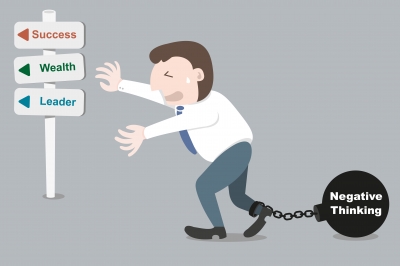
NegativeThinking

Image courtesy of kittijaroon at FreeDigitalPhotos.net

This is the first article of several that I’ll be posting periodically over the next several months, which will explore in simple steps how to change your life for the better, how to experience more joy, happiness, serenity and abundance. The first step is “waking up” by becoming aware of the quality of our thoughts. Awareness is the beginning of changing things for the better, because if we walk around unconscious of what we’re doing, we will never change.

The next post of this series will present some questions to help you identify your own habitual thought patterns. 


PERSEVERANCE: TURNING SETBACKS INTO SUCCESS – Pt. 2

TO WATCH ON YOUTUBE (PTS. 1 & 2 COMBINED), CLICK THUMBNAIL BELOW:

TO LISTEN TO THE AUDIO VERSION, CLICK BELOW:

Runnerwithtitle

The first post of this two-part series examined how perception and attitude shape our experiences whenever we encounter obstacles to achieving our goals, and how keeping an open mind and asking for Divine guidance can keep us from giving up. Once you have quieted your mind and prayed for guidance, reflecting on the following 10 questions can help you gain a clearer perspective on your situation and turn your setback into success:

  1. Am I on the right path? If a goal is unrealistic, incompatible with your soul’s deeper purpose, your talents and abilities, or potentially harmful to you or others, the obstacles you encounter might be a way of detouring you to another, better goal. Consider constructive criticism and feedback about your goals from people whose judgment you trust. Don’t seek the opinion of people who might be envious and not want to see you succeed, because they will only discourage you, undermine your confidence and give you false advice. Conversely, people too close to you might not want to rain on your parade, or their feelings for you might cloud their own judgment. But an honest and objective third party might see things you’re missing because you’re too emotionally involved.
  1. Am I using the right tactics? Sometimes the goal is appropriate, but the approach is wrong. If you consistently meet with opposition and failure, it could mean a change in strategy is necessary. Brainstorm to see how many new tactics you can come up with, and then begin to implement them one by one until you hit the right formula. Look to the example of others who have accomplished what you want to do and try to emulate their process to the best of your ability.
  1. Is my timing off? The worthiest goals and the cleverest strategy will not succeed if the timing is wrong. Anxious to reach our destination, we sometimes rush ahead without adequate thought or preparation. When plans stagnate, it’s tempting to try to force results before the time is right, often with disastrous consequences. I have committed some of my worst mistakes when I tried to make something happen that wasn’t ready or able to happen. If you’ve given something your best effort but still encounter a setback, if it seems as though everywhere you turn you come up against a brick wall with no discernible way out, a waiting period might be necessary to allow the right people and circumstances into your life to help you achieve your goal when the time is right.
  1. What motivates me? Selfishness, greed, revenge, jealousy, egotism, or a desire for excessive power can spoil even the most worthy goals. Obstacles and setbacks can force us to examine our motives and determine whether they conform to the highest standards. When we have the wrong motives, even if we succeed we may destroy relationships, hurt other people, and even jeopardize our own soul in the process. As a result, although we might achieve our goal, we ultimately will not feel fulfilled.
  1. Do I need more education, expertise, or experience? If you are unable to compete successfully in your field of endeavor, it might mean you need to sharpen your skills, increase your knowledge, or obtain more practical experience before you can attain your goal. Take classes, or find a mentor or role model who is successful in the field you are pursuing to help you. Read books by and about people who have done what you would like to do. Search the internet for articles, webinars, podcasts and videos that will give you more information. It’s amazing how many people will launch themselves toward a goal about which they know nothing and have never bothered to do any research! Adopt as your motto the old saying, “Knowledge is power.”
  1. Is this setback necessary for my personal and spiritual growth? Obstacles, failure, and stagnation are not only inevitable, but essential to the soul’s development. Growth occurs by overcoming obstacles, not by sailing through life without challenges. No creature is capable of constant productivity. God uses our dormant times to nourish us on a deep level, enabling us to draw upon new sources of strength and ability. The Roman poet Horace said, “Adversity has the effect of eliciting talent, which in prosperous circumstances would have lain dormant.”
  1. Am I encountering resistance because I am undertaking something important? It’s a known fact that often when we are about to embark on an endeavor that will do a lot of good and help a lot of people, we will encounter obstacles and misfortune, at the beginning and also at various points along the way. Whether you believe in evil forces or attribute it to your own subconscious resistance, these setbacks are a supreme test of your faith and determination to carry on with your high ideals and goals despite the opposition you’re encountering.
  1. Does someone need my help? Our plans are sometimes halted simply because our spouse, children, parents, siblings, friends or neighbors need our attention. Christ often interrupted his preaching and teaching in order to serve people’s practical needs of food, healing, and comfort. This doesn’t mean putting our lives on hold indefinitely or using other people’s needs as an excuse to shirk other responsibilities. But we can rest assured that the time we take from our own plans to show love and caring to someone will never be wasted. It may even open doors to helpful contacts and new opportunities.
  1. Do I need more trust, detachment, or acceptance? Having initiative and determination to make our dreams come true is essential, but we also need the detachment and discernment to know when to let go. All situations, whether perceived as good or bad, are temporary. When we trust God, we know that if we don’t get what we want, it’s because God wants to give us something better. God is not the denier of good things, but the source of them. “When you call me, when you pray to me, I will listen to you. When you look for me, you will find me. Yes, when you seek me with all your heart, you will find me with you… And I will change your lot” (Jeremiah 29, 11-14).
  1. Is the effort more important than the result? There is a saying, “Some goals are so worthy, it’s glorious even to fail.” The growth we achieve through our efforts will benefit us, regardless of the visible outcome.

Whenever you experience failure or frustration, remember that everyone who has ever done anything worthwhile has met with obstacles. “I am not discouraged,” said Thomas Edison, “because every wrong attempt discarded is another step forward.” Edison’s teachers thought he was stupid, and he was fired from his first two jobs. It is a well-known fact that Edison conducted hundreds, even thousands, of failed experiments before successfully inventing the light bulb.

One of my favorite people of all time, Walt Disney, was fired in 1919 from a job at a newspaper because the editor said he “lacked imagination and had no good ideas.”

Oh, yeah — if you’re wondering whatever happened to our writer friends who couldn’t sell their stories: They finally found a small publishing house on the verge of bankruptcy that was willing to take a chance on their book. And Chicken Soup for the Soul by Jack Canfield and Mark Victor Hansen became what Time magazine called “a publishing phenomenon.” To date they have sold over 500 million copies worldwide, with more than 250 titles in 43 languages, and has evolved into a socially conscious company that combines storytelling with making the world a better place.

If you do research into the lives of famous people from all walks of life, you will discover stories of failure, frustration, and opposition of all kinds. What makes these people extraordinary is their persistence and determination to achieve their goals in the face of all odds. So, if you currently are experiencing obstacles and setbacks, cheer up — you’re in excellent company!

PERSEVERANCE: TURNING SETBACKS INTO SUCCESS – PT.1

Marathon with quote from 2 Timothy 4:7

Part 1 of a 2-Part Series

TO WATCH ON YOUTUBE (PTS. 1 & 2 COMBINED), CLICK THUMBNAIL BELOW:

TO LISTEN TO THE AUDIO VERSION, CLICK HERE:

In 1990, two men collaborated on a collection of inspirational stories. They were sure they had a winner, but in the first month alone thirty-three New York publishers turned them down. “No one buys short stories,” they were told, “and your title stinks!” Even their agent dropped them; yet they refused to give up. But after 140 rejections, they seemed to be up against a brick wall. No one wanted what they had to offer.

At one time or another, we all face obstacles, setbacks, and failures. Whenever we make changes in our life or embark on a new venture, we meet resistance from outside sources and from within ourselves. Friends and family may question our goals, or maybe we are inwardly fearful of what lies ahead. Random events beyond our control can also disrupt our plans. Confidence fails; doubt and discouragement replace our initial feelings of hope and excitement. But obstacles are a natural part of progress. If we realize this from the beginning, we can gain insight into the possible causes, and learn from our experiences. We can find the courage to press on instead of giving up.

Few people experience as many obstacles as did St. Paul. He was shipwrecked, beaten with rods, whipped, stoned, suffered many sleepless nights, hunger, thirst, cold and exposure. On top of that, he experienced constant anxiety about the early churches who looked to him for leadership. In Damascus, the governor guarded the city so Paul could be arrested. He writes, “…but I was lowered in a basket through a window in the wall and escaped…” Now that’s persistence!

Undaunted by the innumerable obstacles he faced, Paul continued writing and encouraging the early Church even from prison. In his second letter to Timothy he wrote, “I have competed well; I have finished the race; I have kept the faith.”

Your Perceptions

Events in themselves are not necessarily good or bad. It’s our perception of the situation that labels it, our reaction to it that determines the ultimate effect it will have on our life. “The pessimist sees the difficulty in every opportunity; the optimist sees the opportunity in every difficulty,” said Winston Churchill.

When our plans go awry, the human tendency is to react with fear, despair, or anger. We are angry with ourselves for our perceived failure, with other people for getting in our way, or with God for letting us down. But doors are opening even while we think everything is hopeless; changes are occurring during even the darkest times. We cannot see this, because our earthly perspective is limited to our present circumstances. It’s only in hindsight that we understand how each piece in the puzzle of our lives is essential to the entire picture.

Your Attitude

The late comedian Flip Wilson had a character named Geraldine, who used to flaunt her charms with the announcement, “What you see is what you get!” Similarly, what we see when we envision our future is often what we get. Lacking self-confidence, doubting God’s care, and obsessing about everything that could go wrong, set us up for failure.

Equally impractical is the blind optimism that stubbornly clings to unreasonable goals and pie-in-the-sky dreams. People with a well-balanced attitude set realistic goals and focus on success, while still leaving the door open to God’s surprises. They’re confident that nothing happens that God cannot use for good. They know they are guided, even when they can’t see the road ahead or feel God’s presence

 Make Room for Abba

Jesus referred to God  as “Abba,” which translates into “Daddy.” If we think of God as our loving Father (“Daddy”), it stands to reason that He would want only the best for us. Set goals and make plans, but leave them open-ended. Remember, God might have an even better idea, so stay open to it! “Which of you, if your son asks for bread, will give him a stone? Jesus asked the crowd during his Sermon on the Mount, Or if he asks for a fish, will give him a snake? If you, then, though you are evil, know how to give good gifts to your children, how much more will your Father in heaven give good gifts to those who ask him!” If God is our loving Daddy, we can trust that He will give us the very best!

“If you are discouraged, it is a sign of pride, because it shows you trust in your own power,” said Mother Teresa of Calcutta. “Your self-sufficiency, your selfishness, and your intellectual pride, will inhibit [God’s] coming to live in your heart, because God cannot fill what is already full.”

After Christ ascended to heaven, the apostles didn’t know what their next step should be. During this dormant time, they had to wait for God’s direction. “…They went to the upper room where they were staying…[and] devoted themselves with one accord to prayer…” (Acts 2:13-14). For 10 days, they waited and listened prayerfully for God’s answer, which manifested at Pentecost with the coming of the Holy Spirit.

Brick Wall with slogan

Every one of us has experienced frustrating times when despite all our efforts, nothing moves forward. You leave voicemail messages, send emails, texts, post something important on social media, etc., but no one responds. You launch a new venture, but the people you counted on to support it are strangely absent, whether through thoughtlessness, self-absorption, or because they’re dealing with personal problems. Your new business seemed off to a great start, but now the phone is silent and no one seems to know you exist. Just as you seem to be advancing toward a goal, you’re hit with illness, a family crisis, or financial problems, and all progress comes to a screeching halt.

During times of stagnation or frustration, surrender your anxiety to a Power greater than your own. Quiet your thoughts and listen with an open mind to what your inner wisdom might be telling you. Gradually, guidance will emerge out of a seemingly hopeless situation.

In Part 2, we’ll examine 10 steps you can take to help turn your setbacks into success. (You’ll also find out what happened to the two authors who couldn’t sell their book!)

7 Steps To Sharing Talents – Pt. 3

Little Ballerina

TO WATCH ALL THREE PARTS ON YOUTUBE, CLICK BELOW:

This is the last post in a 3-part series. To read Pt. 1 click here; for Pt. 2 click here

In Step 3 of my previous post, we listed all our talents and abilities. Step 4 dealt with finding opportunities to share our gifts. Now on to our last three steps:

5. Give without worrying about your imperfections or limitations. “Freely you have received; now freely give.” (Matt. 10:8 NIV). You don’t have to be a saint,  genius, or the next winner of a TV talent program to bring joy to others with your gifts. Let’s face it, the vast majority of us will never reach those levels! Give without restraint, and it will free you to be more than you ever imagined. Don’t get discouraged by what you see as your limitations. My mother couldn’t drive in her later years, but she used her talent for knitting to make sweaters and other items for charity.

Your gifts are only as great as you allow them to be. If you feel the need, read books or take a class to improve your skills. But it is by using our gifts and seeing the happiness they bring that we gain the greatest confidence. Our skills will grow as we continue to share them. We will also gain valuable feedback about where we are succeeding and how we can keep improving. 

Jesus told a parable about three servants who were entrusted by their master with varying sums of money (called “talents”), each according to his ability, before he left on a journey. The first two servants invested the money wisely and doubled the amount they had been given. But the third servant, because he was afraid of losing his master’s money and angering him, buried it in the ground. When the master returned, he praised the first two servants for their ingenuity and entrusted them with greater authority and responsibilities. But when the third servant returned the money exactly as it had been given, with the excuse that he had been afraid to do anything else with it, the master was angry. He took the money from the third servant and gave it to the first servant, who had returned to the master the greatest amount of money.

God wants us to “invest” in the talents he has given us, and if we do, He will increase them and reward us with greater opportunities and deeper fulfillment. But if we “bury” our talents out of laziness, fear, or feelings of inadequacy, this is contrary to God’s plan. It is not showing proper appreciation and gratitude for the gifts our Creator has entrusted to us. Hoarding our gifts gives nothing back to the world, or to God from whom we have received so much. When we stop giving, we stop growing.

Although we fear other people’s criticism and rejection, we usually are our own worst critic. We are eager to answer God’s call to use our gifts.  Then that little negative voice inside us undermines our confidence, reminding us of our limitations and everything that can possibly go wrong. “You can’t do that!” it taunts. And that’s true: We can’t do it, but God can do it through us! If we reach out to God in faith, He will lift us up to our true potential.

6. Remember that sharing our gifts and earning money are not mutually exclusive! What if you are unhappy in your job, or unemployed and trying to find a job, or are in need of additional income? Usually our talents will lie in the areas for which we have a real passion. Many times, these passions point to our life’s true purpose. A career change or an entrepreneurial opportunity will sometimes develop from volunteer work that opened new doors for us. If you are unhappy in your present job, finding ways to do the things you love and for which you have an innate gift can help you feel happier and more fulfilled, whether or not you ever earn any money from it.

If you are unemployed and job hunting, share your gifts and abilities in the meantime. Offering your talents as a volunteer is an excellent way to hone your skills, make new contacts, and ward off the depression and discouragement that can come with being unemployed and searching for a new position. It also is a way to “plant seeds” that will demonstrate your faith and grow into future blessings.

Portrait Artist-cropped

7. Make use of the present time and don’t procrastinate. “So then, if we do not do the good we know we should do, we are guilty of sin.” (Jas. 4:17). The excuses are many: “I’m too busy right now,” “I’m not ready,” “I’ll wait until I retire,” “Maybe next year,” “I’m not good enough yet.” But our time on earth is limited. We don’t know if we’ll have tomorrow. By procrastinating, we can miss precious opportunities and later regret it. Future possibilities grow out of what we do in the present. Don’t wait until all the conditions of your life are ideal or your gift is “perfect.” Guess what? This will never happen! Do it now!

As we freely share what we have been given, our power to help others and do God’s work multiplies. Using our gifts is an investment in God’s Kingdom. This is like buying stock that can only go up. Be a star in God’s talent show! Lavishly spending our gifts brings happiness to others as well as ourselves. It fulfills our responsibility to make the world a better place.

What are your particular gifts and how have you used them?  I would love to hear your own thoughts and experiences in the Comment section below. 

7 Steps to Sharing Talents – Pt. 2

Leaping in Air-edited

TO WATCH ALL THREE PARTS ON VIDEO, CLICK BELOW:

In my last post, I listed some of the benefits of sharing our talents and gifts. I also outlined the first two steps, which were praying for guidance and staying receptive to whatever answers you receive. You can read Part 1 here. 

Here are the next two steps of our 7-step program:

  1. List all of your talents and abilities. “Then Moses called…every skilled person in whom the Lord had given ability, and who was willing to come and do the work” (Exodus 36:2 NIV). Like a designer of great artistic creations, God gives each of us unique gifts and the power to use them to touch other souls with His light. Open your mind and heart to honestly evaluate your abilities:
  • Do you have a creative gift like music, art, writing or dancing?
  • Are you good with animals? With children?
  • Do you excel in sports?
  • Are you a good listener?
  • Can you make people laugh?
  • Are you good at gardening, sewing, cooking, or carpentry?
  • Have a talent for public speaking?
  • Are you a compassionate, nurturing type of person?

Ask people who know you well for their input. This is no time for false modesty! True humility is the ego rising to a higher level by honoring the will of God. It is the attitude that God is the creator of our gifts, and our duty is to use them according to His plan, to honor Him, serve others, and make the world a brighter place.

One way to brainstorm ideas is to use the “mind-mapping” method: Across the top of a large piece of paper or whiteboard, list all your talents, abilities and things you love to do. You will be using this mind-mapping list in our next step, as well.

writing-edited
  1. Brainstorm ways you can use and share your gifts.

You don’t have to go far to find ways to share your gifts.  Check out volunteer opportunities in your community, school, local non-profit organizations, church or synagogue. Here are some suggestions for some of the talents you may have listed:

  • Teaching: Offer to teach a class at your local high school’s or YMCA’s adult education program.
  • An outgoing type who loves people, good listener or nurturing personality: Offer your help with fundraising or public relations for a local non-profit.  Volunteer at a local hospital, nursing home or hospice. Many churches and synagogues have bereavement committees for which you can volunteer to help the grieving. Or visit a friend who has suffered a loss or is feeling troubled or sad. Don’t worry if you cannot offer help or advice to solve their problem; sometimes all that is needed is someone who is willing to listen and “be there.”
  • Good with children: Offer to teach Sunday school or religious instruction classes at your church or synagogue. Volunteer at a children’s hospital, or join an organization such as Big Brothers/Big Sisters to act as a mentor for a child who needs your love and caring. Help out a new mother in your community who might be feeling overwhelmed.
  • Love animals: Offer your services at a local animal shelter or rescue group. I love horses, but after being injured in a fall off a horse, my riding days unfortunately were over. However, I greatly missed being around horses, so I became a volunteer at a non-profit horse sanctuary. I not only get to be around dozens of horses, but also have made new friends who share my equine passion!
  • Performing Arts: Join your local community theatre, or consider using your talents to brighten the lives of people in hospitals, nursing homes, senior centers, etc. If you like public speaking and have a good reading voice, you can become a lector/reader at your church or volunteer to record audiobooks for the blind. Consider giving lectures or workshops about a subject in which you have expertise. If singing or playing an instrument is your talent, join a church choir or community choral group.
  • If getting up in front of people is not your thing, but you are good at carpentry or have artistic talent, your community theater could use your skills as part of their stage crew. If you can sew, the costume department would love to have you!
  • Love books/reading: Volunteer at the local library, or offer your help to a local literacy program that teaches adults to read.
  • Good with computers, web design or graphic arts: Offer your services to a non-profit organization.
  • Gardening: Give your beautiful, home-grown flowers and vegetables to neighbors and friends, especially those who are sick, lonely, or dealing with trouble or grief. Offer to help establish or tend a garden for your church or synagogue. Or start a community garden in your neighborhood. 
  • Cooking/Baking: Share your culinary delights with others. Bring some of your homemade treats to shut-ins, for whom they will bring much-needed cheer and nourishment. Volunteer your skills to charitable organizations that feed the hungry. Bake goodies for fundraising events.
  • Building and carpentry skills: Charitable organizations such as Habitat for Humanity can always use talented people with these particular skills! If you are good at fixing things, help out a neighbor who doesn’t have the physical or financial resources for needed repairs. Small non-profit organizations usually operate on a shoestring budget and greatly appreciate people who can do remodeling or repairs to their facilities.
  • Writing: Consider authoring an article, book, e-book or blog to share your original stories, poems, or knowledge with others.
gardening-edited

These are just idea starters to get your own brainstorming juices flowing! With a little research and ingenuity, you can come up with many more ideas and find the opportunities that fit in with your particular circumstances and abilities. Take the mind-mapping paper or board that you used to write down your gifts in our last step. Now, using the above list and your own ideas, write as many possible opportunities as you can think of underneath each gift’s heading. Then seek out local organizations that might logically offer opportunities to use some of the skills you listed. An internet search will suggest places in your area that you may not have noticed on your own. Contact them to get more information and see if they can use your help. At least one of them should be just the right fit for you!

Does anyone have additional ideas or information? Please share them in the comment section.