So, you’ve decided on the goals you want to achieve in order to transform your life into something more closely resembling your ideal. You’re very excited and want to share your goals with others, seeking their support and encouragement. But should you rush out and broadcast your precious ambitions to everyone you know? Should you post about it on social media, talk about it with your friends over lunch, call your family and confide all your plans to them? How do you decide how much, if anything, to share, and with whom? This is a complicated issue and a personal decision, which calls for careful consideration.
There are, of course, advantages to sharing your goals with the right people: Speaking your heart’s desire out loud may help it to manifest. It’s fun to share your vision of Your Ideal Life with people you know, especially at the beginning when you’re bursting at the seams to talk about it to someone! Sharing your goals can help keep you accountable, because when other people know about your goals, it makes it harder for you to slack off on working towards fulfilling them.
You may feel it would be helpful to get other people’s opinions on the goals you have chosen. This, however, can be a double-edged sword. It’s true that an objective third party might be able to point out where you possibly can tweak or rethink a certain goal, and upon reflection you might decide they’re right. But on the other hand, these are YOUR goals, and your best source of guidance is to pray about them and follow where your deep intuition leads you, rather than take someone else’s words at face value. Of course, if your Ideal Life will include another person who has similar goals (for instance, a spouse or partner), you can be of great help to one another by sharing your dreams and aspirations. Two people working toward the same goals is doubly powerful!
If you have a very supportive relative or friend whom you trust implicitly and know will support you and have your best interests at heart, sharing your goals with them can be very edifying to you. Because they love you, they will encourage you in any way they can. Sometimes, they even might be able to assist you in practical ways to achieve them.
The important thing, though, is to be very selective and extremely careful about any person to whom you choose to entrust your most cherished dreams. As unpleasant as it may be to acknowledge, there always will be people out there who do not wish the best for you. They will be more than happy to shoot down your most cherished dreams, telling you every conceivable reason why you cannot possibly attain them, thus filling you with doubt and insecurity. This could be because of their natural negativity or bitterness, a narrow-minded, cynical viewpoint, or rigid, fatalistic religious beliefs. If you know people like this, do not share your goals and dreams with them. They will only undermine your confidence and possibly discourage you from even trying.
You also might invite envy from people who are too lazy or uninspired to set and pursue their own goals. Such people might openly ridicule you, both to your face and behind your back, because they envy your ambition and optimism. Sometimes they may actually try to sabotage your efforts to attain your goals. “He who guards his mouth and his tongue, guards his soul from troubles.” Proverbs 21:23
Photo by Peter Forster on Unsplash
Another drawback is that revealing your intentions and plans can put you in the position of having to defend them to other people, which is unnecessary and can cause your confidence to falter. You do not have to defend your goals to anyone; they are yours, and nobody has the right to challenge you about them, as long as they will not cause harm to other people.
Once having spoken about your goals, you might then become fearful of looking foolish if you fail. This lack of confidence can cause you to sabotage your own efforts. Also, sometimes our goals will change with time. If this happens with some of your goals, you might feel silly admitting this to people, who may not take you seriously after that.
Most importantly, sometimes people close to you might feel threatened by this new vision of your Ideal Life. They may feel that you will change and no longer be the person they feel comfortable with. Many times, family, spouses and friends secretly don’t want you to succeed, not necessarily out of malice, but out of fear that it will change your relationship with them. This is possible, because as you grow and change for the better as a result of your goals, you may well lose people who cannot accept the new you, nor grow and change along with you. This is a part of the process that you need to be willing to face.
One very important thing to realize is that the energy we expend by talking about our goals will sometimes seriously deplete the energy we have left to actually pursue them. Ever notice how the people you know who do the most talking usually accomplish the least? Although there is merit in “speaking your goals out loud” to yourself or to a select few people, wasting too much time and energy talking about all the wonderful things you plan to do may mean that by the time you decide to start working on them, you are already tired of the subject and find your enthusiasm has waned, rather than grown stronger. Talkers talk, but doers do — so be a doer, not a talker!
“Stop talking to people about what you will do; show them instead what you are doing.” says British psychologist, author, and broadcaster Robert Holden, PhD.
When you have achieved your goals and are well on the way to your Ideal Life, you’ll find that other people will want to talk to you about what you have accomplished, rather than the other way around. You can then use your experiences and success to help, inspire, and encourage them to work towards their own best life!
In most cases, it might be wise, especially at the beginning, to limit your goals and plans to your vision board, goal scrapbook, treasure box, or Ideal Life screensaver, as described in my previous post, “The Power of Visual Imagery.” Cherish your dreams within your heart and talk them over with God, and with your Guardian Angel or Guide if this fits into your personal beliefs. Ask for support and direction from the spiritual realm rather than the earthly one. Create your plan of action and then implement it, instead of wasting time and energy, and risking possible setbacks, by talking about them with other people.
Photo by Tima Miroshnichenko on Pexels
In the words of Benjamin Franklin: “Well done is better than well said….Words may show a man’s wit, but actions his meaning.”
TO WATCH THE YOUTUBE VIDEO, CLICK ON THUMBNAIL BELOW:
Dedicated to the memory of my mother, Anna, for Divine Mercy Sunday. (Divine Mercy Sunday is celebrated by the Roman Catholic Church on the first Sunday after Easter)
“At three o’clock, implore My mercy, especially for sinners,“ Jesus told St. Maria Faustina Kowalska in a vision. “This is the hour of great mercy….In this hour I will refuse nothing to the soul that makes a request of Me in virtue of My Passion….In this hour you can obtain everything for yourself and for others for the asking; it was the hour of grace for the whole world — mercy triumphed over justice.”
At 3:00 p.m. daily, all those gathered in the perpetual adoration chapel of my parish fulfill Our Lord’s request by reciting the Chaplet of Divine Mercy for the sick and dying, often called “the 3 o’clock prayer.” For Catholics, who believe in the Real Presence of Christ in the Eucharist, perpetual adoration is the practice of prayer and worship in the presence of the Blessed Sacrament (consecrated Host), which is usually exposed in a golden receptacle called a monstrance. It is called “perpetual” adoration because there is at least one person voluntarily committed to each hour of the day without intermission. This practice has been carried out by monks and nuns since early Christian times, and eventually spread to lay Catholics in parishes that have a perpetual adoration chapel.
For many months, my mother and I had been keeping a Holy Hour together once a week from 2:00 – 3:00 p.m. We cherished this weekly vigil, sitting and praying quietly side-by-side in the peaceful atmosphere of the chapel. Since both of us had readDivine Mercy in My Soul(The Diary of St. Faustina),and often prayed the Divine Mercy Chaplet, we gladly stayed the extra ten minutes to recite it for the sick and dying at 3:00 p.m.
Photo of St. Maria Faustina Kowalska
One terrible afternoon in January 2002 found my mother and me together in a different type of vigil. But this time, the harsh sterility and bustling activity of the hospital’s Surgical Trauma Unit replaced the soft light and peaceful hush of the chapel. Although my mother and I were physically only a foot or two apart, the gulf between us seemed to me unfathomable.
Mom lay motionless and unconscious in a hospital bed, surrounded by tubes and a complex array of blinking, beeping machines. She was dying of complications following emergency surgery to repair a ruptured abdominal aortal aneurysm. Amazingly, she had survived the four-hour operation, but the massive amounts of blood she had lost made it impossible to stabilize her. I sat at her bedside, my eyes glued to readouts on the machine that monitored her heartbeat and blood pressure. The rosary clutched in my hand was my only weapon against the icy grip of fear and despair that grew tighter as it became increasingly clearer to me that all the heroic efforts of the medical team were not going to save my beloved mother. With each agonizing minute, my prayers were changing gradually from a hopeful plea for healing to the prayer of Gethsemane: “Not my will, but Yours be done.”
My mother and I had always shared a deep spiritual bond and had often discussed the afterlife. Neither of us feared death itself, but we had the natural apprehension about what form it would take and the suffering that might precede it. I knew that my mother was spiritually ready to face God, and since she already had been given Last Rites, the one remaining gift I could give this woman who had given me so much was to let her go.
“It’s alright, Mom, ” I told her silently. “If it’s your time to go Home, you go ahead and don’t worry. I won’t hold you back — I want you to be happy.”
My mother died at 3:20 that afternoon. Although I was too overcome with grief to think about it at the time, I later realized that she had passed into eternity during the Hour of Great Mercy, just minutes after the adorers at my parish’s chapel would have finished praying the Chaplet of Divine Mercy for the sick and dying. The same prayers my mother and I had recited so many times for other souls in need had come back to us, easing my mother’s transition into the next life and giving me the strength to accept and bear the greatest loss of my life. Furthermore, I was grateful that my mother had been spared the painful and lingering death she had always feared.
For several years afterward, I still kept my weekly hour in the chapel, although the first few times there without my mother were so painful I couldn’t even bear to sit in the same place I used to sit with her. But now, every time I say the Divine Mercy Chaplet at 3:00 p.m. for the sick and dying, it is much more meaningful to me than it was before her death.
Now when I pray, I see images in my mind of families gathered around sickbeds, keeping vigil with a loved one they can’t bear to lose but know they must let go; of souls closing their eyes to darkness and opening them to a Light so brilliant their sufferings fall away like dying leaves. I see people whose time on earth is not yet through, gaining strength of body and mind through the healing energy of a stranger’s prayers.
With a certainty that surpasses understanding, I know that all souls are connected in ways more profound and mysterious than we can ever imagine. I feel reassured that each one of us praying the Chaplet will be blessed with the same sustaining light of God for which we are offering ourselves as channels today.
I sense my mother’s presence with me and I recall Our Lord’s words to St. Faustina: “Encourage souls to say the Chaplet which I have given to you….Whoever will recite it will receive great mercy at the hour of death….When they say this chaplet in the presence of the dying, I will stand between My Father and the dying person, not as the Just Judge but as the Merciful Savior….”
As the Chaplet ends, I silently add St. Faustina’s prayer of praise: “Divine Mercy, embracing us especially at the hour of death, I trust in You.”
To watch the YouTube video, click on the arrow in the thumbnail below:
I learned about St. Lucy at a very young age, when my mother told me she believed that her prayers to this great saint saved my eyesight when I was an infant. It was customary at that time to put silver nitrate into the eyes of newborn babies to prevent bacterial infections that can occur during birth. Unfortunately, in my case too much silver nitrate was applied to my eyes, which can cause severe inflammation, corneal melting and scarring, and significant vision impairment. My mother said that for a while my eyes were stuck shut, and the doctors didn’t know if I would suffer vision loss. Being Italian-American and knowing that Santa Lucia, greatly venerated in Italy, is the patron saint of eyes, my Mom fervently prayed to her on my behalf. Fortunately, my eyes cleared up, and I suffered no permanent damage to my vision. (In the 1980’s, erythromycin replaced silver nitrate as a precautionary treatment for newborn babies’ eyes.)
As a result of this incident, St. Lucy always has held a special place in my heart, and I’ve had a devotion to her all my life. I even picked Lucy as my confirmation name. I have invoked her intercession whenever I or a loved one have had any type of eye problem, and she has always helped us.
Because Lucia lived so long ago, most of her history has been lost to time. We do have some basic facts about her, as well as legends that have persisted over the centuries. The following account is the one that has stood the test of time and seems the most plausible:
Lucia was born in Siracusa (Syracuse) in Sicily, Italy in or around the year 283. Her parents were wealthy members of the nobility. Her father was of Roman origin, but there seems to be no record of his name. He died when Lucia was five years old. Her mother’s name was Eutychia and she was seemingly of Greek ancestry. Lucia converted to Christianity at a young age and developed a devotion to St. Agatha, a virgin who was martyred in Catania, Sicily, around 251 AD. Like Agatha, Lucia consecrated her virginity to God and vowed never to marry.
Her mother, Eutychia, is said to have suffered from a chronic hemorrhagic condition and feared that she did not have long to live. She worried about Lucia being left alone after her death, so she arranged Lucia’s betrothal to a wealthy young man from a noble pagan family. It’s possible that Eutychia was unaware of Lucia’s vow of virginity, or else her concern for Lucia’s future caused her to ignore the vow. But somehow, Lucia managed to delay the marriage for the next several years.
Having heard of the many cures reported by people who had traveled to St. Agatha’s tomb in Catania to invoke her intercession, Lucia persuaded her mother make a pilgrimage with her to the tomb to request St. Agatha’s intercession to cure Eutychia of her malady. Lucia hoped not only for the healing of her mother, but that the healing might convince her mother that Lucia’s Christian faith was indeed the best choice for her life.
Lucia and Eutychia traveled to Catania, which was less than 50 miles from their home, and prayed at St. Agatha’s tomb for Eutychia’s healing. While there, Lucia had a dream in which St. Agatha told her that Eutychia would be cured because of Lucia’s faith. Agatha also told her, “Soon you will be the glory of Siracusa, as I am of Catania.” Upon awakening, Lucia cried to Eutychia, “O mother, mother, you are healed!”
Lucia’s Dream at St. Agatha’s Tomb 14th-century painting by Giovanni di Bartolommeo Cristiani
Eutychia’s condition did indeed improve, so when they returned home Lucia took the opportunity to convince her mother to allow Lucia to distribute her dowry money to the poor and live the celibate life she had vowed to God years earlier. At first, Eutychia tried to persuade Lucia that it would be imprudent to dispose of all her money straightaway, and suggested that Lucia instead bequeath it in her will. Lucia is reported to have replied, “Whatever you give away at death for the Lord’s sake you give because you cannot take it with you. Give now to the true Savior, while you are healthy, whatever you intended to give away at your death.” Eutychia finally agreed, and Lucia began to distribute her dowry money to the poor.
In 303 A.D., the Roman Emperor Diocletian issued an edict that outlawed the Christian religion throughout the Roman Empire. Christians were forbidden to gather for worship, their churches were destroyed, and sacred Christian texts were abolished. Christian civil servants or members of the nobility were stripped of their ranks, and their belongings confiscated. Christians were forced to offer sacrifice to the Emperor and the Roman gods. To refuse meant torture and even execution.
Tradition says that Lucia visited the poor, the homebound, and Christians hiding in the catacombs, delivering wheat and bread to them. Because she often went at night to avoid being discovered, she carried a lamp to light her way. Sometimes, to keep her hands free to carry the provisions, she wore on her head a wreath crowned with candles. An early Christian text records her as telling her fellow Christians by way of encouragement: “To God’s servants the right words will not be wanting, for the Holy Spirit speaks in us. All who live piously and chastely are temples of the Holy Spirit.”
Eventually, gossip about Lucia’s donation of her dowry to the poor reached her prospective bridegroom. He became enraged, either because of the rejection of realizing that Lucia had no intention of becoming his bride, or because of his greed over the loss of her dowry money – and probably both. He reported to Paschasius, the Governor of Siracusa, that Lucia was a practicing Christian.
Lucia was arrested and questioned by the Governor. He ordered her to offer a sacrifice to the Roman gods, but of course she refused.A later text on Roman martyrs reports her to have said: “I know but one sacrifice pure and full of honor, which I can offer. This is to visit orphans and widows in their tribulation, and to keep oneself unspotted from the world. For three years, I have daily offered this sacrifice to my God and Father, and now I long for the happiness of offering myself to Him as a living victim. His holy will be done.”
Lucia also told the Governor that his worship of the Roman Gods would condemn his soul before the one true God, and that the reign of Diocletian would soon come to an end. This so outraged Paschasius that he ordered her to be taken to a brothel and forced into prostitution, the ultimate mockery of her Christianity and vow of virginity. Legend tells, however, that Lucia was so filled with the Holy Spirit that she became immovable. No efforts on the part of her captors was able to budge her, not even when they attempted to drag her by tying her to the yoke of a team of oxen. They then surrounded her with wood and set it on fire, but the flames did not harm her.
To further torture her, Lucia’s eyes, which were reportedly very beautiful, were gouged out by her captors. Another account says that Lucia gouged them out herself, in an effort to make herself unattractive to her suitor or any man who would attempt to defile her. (Personally, I find the torture theory to be more plausible than the self-mutilation theory.) Her frustrated captors finally succeeded in killing her by piercing her through the neck with a sword. Early literature on the martyrs reports Lucia to have said as she was dying: “O Siracusa, O place of my birth, as Catania finds its safety and glory beneath the guardianship of my sister Agatha, so shall you be shielded by me, if you are willing to embrace that Faith for the truth of which I shed my blood.”
“Santa Lucia” by Carlo Dolci, 1616
Whatever the real cause of Lucia’s loss of her eyes, when her body was being prepared for burial, it was discovered that her beautiful eyes had been restored by God. This is the reason Lucia is honored as the patron saint of those suffering from blindness and eye diseases, and why she is most often depicted in art holding her eyes on a golden platter.
Whatever one believes about the legends that have sprung up around Lucia’s life, one thing is clear: She had to have been a woman of a particularly heroic nature, because devotion to her grew exponentially after her death. The first writings about her were in the Acts of the Martyrs, written in the late fifth century. Many miracles were attributed to her, and by the sixth century she was included in the Sacramentary of Pope Gregory I, and also in the Roman Martyrology. She was honored throughout the Christian world until the Protestant Reformation. In England, her feast day of Dec. 13 was at one time considered a holy day, on which no work except farming was allowed. Today, St. Lucy is still venerated in the Roman Catholic, Orthodox, Lutheran and Anglican Churches.
Lucy holds the honor of being one of several women saints mentioned in the Roman Catholic Eucharistic Prayer I said at Mass: “To us, also, your servants, who, though sinners, hope in your abundant mercies, graciously grant some share and fellowship with your holy Apostles and Martyrs: with John the Baptist, Stephen, Matthias, Barnabas, Ignatius, Alexander, Marcellinus, Peter, Felicity, Perpetua, Agatha, Lucy, Agnes, Cecilia, Anastasia, and all your Saints….”
St. Lucy is the patroness of Siracusa and Perugia in Italy, the town of Olon in Ecuador, and Guane, Santander, Colombia. The island of St. Lucia in the Caribbean is named after her. She is the patron of authors, glaziers, laborers, martyrs, peasants, saddlers, salesmen, and stained glass workers. Besides her special patronage of people with blindness and diseases of the eye, she is invoked against hemorrhages, dysentery, and throat infections. In art, she is usually pictured carrying her eyes on a golden plate, and sometimes holding a palm branch, symbolic of martyrs. She also is sometimes depicted with the symbols of a lamp, dagger, sword, or two oxen.
St. Lucy’s current feast day is December 13, during Advent. Before the calendar reforms, her feast day was also the Winter Solstice. Since this was the shortest and darkest day of the year, and because her name, Lucia, derives from the Latin word for light (“lux”), she stands as a symbolic bearer of light in the darkness. Thus, her feast day became a festival of light.
One legend tells that during a famine in Italy, ships filled with wheat sailed into the harbors on St. Lucy’s feast day, saving the people from starvation. Because of this, in Sicily it is traditional to make “cuccia,” a dish of boiled wheat berries, mixed with ricotta and honey or served as a soup with beans, to celebrate her feast day. Croatians plant wheat in a pot indoors on Dec. 13, and by Christmas, when the shoots have emerged, they are put next to the Nativity manger as a gift to the Christ Child and a symbol of the Eucharist, which is made of wheat.
A similar legend states that on the Winter Solstice during a famine in Sweden, a boat came into sight sailing across the lake. St. Lucy could be seen at the prow of the boat, dressed in white with a heavenly light emanating from her. Upon the boat’s docking at the shore, she handed out sacks of wheat to the starving people. To commemorate this, Scandinavians bake a sweet saffron bread called “Lussekatter,” and bring it to the poor, sick, and shut-ins on Dec. 13. In Scandinavian countries, on “lucienatt” (Lucy night), there is a procession of schoolchildren carrying candles and singing the “Santa Lucia” song. They are led by a girl dressed as Lucia in a white dress, with the wreath crown of candles on her head. The “Santa Lucia” song, which is popular in many countries, was written by the Neapolitan composer Teodoro Cottrau in 1850. There is a Scandinavian version as well, using the same melody but with Swedish lyrics. In some villages in the Philippines, a St. Lucy novena (9 days of prayer) is held before her feast day. There is a procession of St. Lucy’s image every morning at the village center during the 9 days of the novena.
Even though Lucy lived so long ago that there is little known about her, it is extraordinary that she has remained a beloved and venerated figure for over 1700 years. This fact stands as an enduring testimony to her sanctity, her courage, and her great love of Christ and her fellow humans. Her light still shines brightly today, as it did so many centuries ago. It is a light that is sorely needed in our present time, which is so often enveloped in the darkness of hatred, violence and evil. St. Lucy stands near to us as a steadfast friend in the communion of saints, ready to intercede with God on our behalf. For myself, I am grateful for her intercession in saving me from blindness, allowing me to be able to see the light and beauty of God’s creation. Grazie, Santa Lucia!
Traditional Prayer to St. Lucy:
“Saint Lucy, you did not hide your light under a basket, but let it shine for the whole world, for all the centuries to see. We may not suffer torture in our lives the way you did, but we are still called to let the light of our Christianity illumine our daily lives. Please help us to have the courage to bring our Christianity into our work, our recreation, our relationships, our conversation – every corner of our day.
By your intercession with God, obtain for us perfect vision for our bodily eyes and the grace to use them for God’s greater honor and glory and the salvation of all people. Saint Lucy, virgin and martyr, hear our prayers and obtain our petitions. Amen.”
By November of 1830, the unrest in Paris was over, and Louis Philippe had taken the throne. On Nov. 27, eve of the First Sunday of Advent, Catherine was in the chapel with the other sisters for evening meditation, when she again heard the swish of a silk dress. Looking up, she saw a vision of the Queen of Heaven dressed all in white, standing on a globe and holding a golden ball in her hands. Her fingers were covered with rings whose stones sparkled with brilliant light that poured from them all the way down to her feet. She was radiant “in all her perfect beauty,” as Catherine later described it. Catherine heard the words, “The ball which you see represents the whole world, especially France, and each person in particular. These rays symbolize the graces I shed upon those who ask for them. The gems from which rays do not fall are the graces for which souls forget to ask.”
Then the vision changed. The ball vanished, and Mary’s arms swept downward, the rays cascading to the globe on which she still stood, her foot crushing the head of a serpent. The globe had the year “1830” inscribed upon it. The Virgin wore a blue mantle over a white dress, with a white veil draped back over her shoulders. An oval formed around the vision like a frame, and written in gold letters within it were the words: “O Mary, conceived without sin, pray for us who have recourse to thee.”
The voice said, “Have a medal struck after this model. All who wear it will receive great graces; they should wear it around the neck….”The apparition reversed, and Catherine saw a large M surmounted by a bar and a cross, with the Hearts of Jesus and Mary beneath it, one crowned with thorns, the other pierced by a sword (symbolic of the prophecy of Simeon, when he told Mary, “a sword shall pierce your own heart, so that the thoughts of many hearts will be revealed.” Luke 2:35). Twelve stars encircled the whole thing. The vision then faded, but would be repeated five more times over the next year.
Catherine told Fr. Aladel about the latest apparitions and the request to have a medal struck. As with her other visions, he did not accord it much importance. Each time the vision was repeated, poor Catherine was compelled once again to approach Fr. Aladel about it. These were extremely unpleasant encounters for Catherine, often involving verbal battles between her and Fr. Aladel. The other Sisters would see Catherine approach the confessional trembling with fear, then hear the sound of raised voices issuing from within.
Although Catherine was never disobedient or rebellious, and would cease the discussion at Fr. Aladel’s order, she was not to be dissuaded from the mission she believed God had entrusted to her. While honoring her vow of obedience, she nonetheless possessed a strong will and a spirited tongue, and doggedly pursued her mission. There is no doubt that, as Our Lady had warned, Catherine suffered much during this period, even to the extent of telling the Virgin that she “had better appear to someone else, since no one will believe me.” Only Our Lady’s promise of God’s grace sustained Catherine and made it possible for her to persevere.
In fairness to Fr. Aladel, his was not an easy task, either. He needed to determine if Sister Catherine’s visions were genuine and whether it would be prudent to act on them. But eventually, as he came to know Catherine better, he realized that by her very nature it was unlikely that she was inventing it all. He knew that she was good and pious, and he did not doubt the sincerity of her belief that she had seen these things. He also realized that of herself she did not possess the intellectual ability nor the imagination to fabricate such a story with all its lavish detail. Then, too, was the fact that her reported prophecies had indeed come true. Furthermore, he had given his promise to Catherine early on that her identity not be revealed, which placed all the responsibility for carrying out heaven’s orders on his shoulders alone.
Meanwhile, the end of Catherine’s novitiate was fast approaching, when she could possibly be assigned to a far-away post. Somehow, Fr. Aladel managed to use his influence to ensure that Catherine was assigned to the Hospice d’Enghien at Reuilly, where he was the regular confessor. This, of course, was necessary because of his role as Catherine’s spiritual advisor in the matter of her visions. The Hospice had been founded as a retirement home for the old men who in earlier years had served the royal family. Sr. Catherine’s duty would now be to care for these aged residents.
Shortly after her arrival at Enghien, while visiting the chapel at the Motherhouse, Catherine saw Our Lady again. The apparition took the same form as it had on Nov. 27, but on this occasion Our Lady informed Catherine, “You will see me no more, but you will hear my voice in your prayers.”In the following weeks, during her prayers Catherine heard the frequent urging of Our Lady that the medal be struck. When Catherine complained that Fr. Aladel did not believe her, Our Lady replied, “Never mind. He is my servant and would fear to displease me.”
No doubt it was these words reported back to Fr. Aladel that finally spurred him to action. His love for Mary and his fear of angering her overcame the lingering doubts he had about Catherine’s visions. Indeed, Our Lady seemed to have great confidence in him, as he also would later be spiritual advisor to Sr. Justine Bisqueyburu, to whom the Green Scapular was manifested in 1840, and would be responsible for its production and distribution.
In January 1832, his good friend, Fr. Etienne, had an appointment with Archbishop de Quelen and asked Fr. Aladel to accompany him. After Fr. Etienne’s meeting, Fr. Aladel took this opportunity to tell the Archbishop about the visions and Our Lady’s request for a medal. After much careful questioning, the Archbishop, who was especially devoted to the Immaculate Conception, consented. On June 30, 1832, the first 2,000 Medals of the Immaculate Conception were delivered. Catherine, upon receiving her share of medals, said, “Now it must be propagated!” She was to keep a few of these first Medals until the end of her life (one of them can be seen at the Miraculous Medal Art Museum in Germantown, PA).
As the saying goes, the rest is history: The Medal’s rapid spread throughout France and the world, and its astonishing impact as a sacramental was rivaled only by the Rosary. So many healings, conversions, and wonders sprang from it that it soon became known as “the Miraculous Medal.”
Front & Back of a Medal of the Immaculate Conception (“Miraculous Medal”)
Catherine’s great mission was accomplished; and the ecstasy of the heavenly visions, as well as the despair and frustration of trying to convince Fr. Aladel to act on them, was over. Now Catherine would embark on the final, and longest, phase of her earthly journey: the hidden life of obscurity as she settled into the ordinary routine that was to be her destiny for 46 years.
(In Part 4: Catherine’s Hidden Life & Final Years on Earth)
TO WATCH THE YOUTUBE VIDEO, CLICK ON THUMBNAIL BELOW:
Does this sometimes happen to you? You wake up in the morning, feeling hopeful and looking forward to your day. Then you switch on the TV or or check out your favorite online news source, and there it is: another war, terrorist attack, school shooting, or other heinous, senseless act of violence. Disturbing images of death, horror and destruction instantly transform your positive, optimistic mood into one of sorrow, disgust and fear. Even the commercials are depressing, constantly filling our minds with messages about terrible diseases, and drugs with horrific side effects. It’s as if they want to brainwash us into becoming sick by constantly suggesting it to us.
Terrifying questions and scenarios fill your mind: Where will the next attack happen? What if my loved ones or I are the next victims? Will there ever be peace on earth? Is it futile to plan, hope and dream about the future? Do we even have a future? How can I stay hopeful when the world is such a mess?
During these troubled times, we are naturally concerned about our own country and the world. We wonder what we possibly can do to stay hopeful and to do our part to help. Excessive grief, fear and anxiety about the world’s troubles will keep us from functioning effectively. It’s important to maintain the right perspective so that we don’t become frightened and discouraged. Each one of us is on earth to fulfill a unique purpose, and unless we do, we will never feel peace, regardless of what is happening in the world. As we go about our day-to-day lives, we need to stay hopeful and open to God’s Light and love, grounding ourselves in prayer, reflection, meditation, and living our beliefs as authentically as possible.
In John 15:17-19, Jesus tells His apostles: “This I command you: love one another. If the world hates you, remember that it hated me first. If you belonged to the world, the world would love its own, but because you do not belong to the world, the world hates you.”
The world is not troubled because of God, but because it ignores what God is and how God wishes people to live. God is Love, and knows no other way to be. If humankind truly understood this, it would open our eyes forever, and evil and hatred would cease to have any power in the world. But we will not be able to recognize God as long as we are too busy deciding what we think God should be, trying to force the Boundless and Unlimited to fit into our limited, human perception. Spontaneous glimpses of God occur when human beings are focused on one another instead of on themselves. If we wish to see God here on earth, we must seek God in one another. We must spread Divine Light and love wherever and whenever we can.
The world won’t be saved by violence or empty words, but by love and truth. Strictly human ideas of God give opinions, not truth, and result in discord and hatred. Through troubled times, we must keep honoring Truth and giving it to others. God is truly recognized only when people stop fighting about who or what God is and instead aspire to the highest of all human endeavors: the simple ability to love. That’s all God wants of us. What we can do to help the world is love and work and stop dwelling on fear and anxiety. We can concentrate on only one thing at a time; if we fill our minds with Light, there will be no room for darkness and fear.
Inner peace is independent of what goes on around us. It’s like armor, shielding our souls from the evil and turmoil of the world, allowing us to stay positive, calm, and strong. Regardless of whether times are good or bad, we give our lives meaning by never losing sight of our high ideals or our purpose. If conflict appears to surround us, if we feel doubt and confusion about religious or political views and other issues, we shouldn’t dwell on these things until we lose all hope. Answering to the world instead of to our higher purpose will prevent us from living out God’s plan for our lives. We must not get discouraged or frightened when restless and misguided people threaten peace on earth. The world cannot destroy our inner peace unless we let it.
10 tips to stay positive and hopeful:
When worry and sorrow threaten your peace of mind, take some time to quiet your mind. Learn how to meditate, even if for just a few minutes a day. Keep a journal in which you record your thoughts, fears, and prayers. Talk to God about your anxieties and concerns, then release them into God’s care. Above all, quiet your mind to hear God’s gentle whispers of reassurance within your soul.
Don’t stay glued to news programs! Nowadays, news is available 24/7 in all its gory detail, and while you’re watching one horrible news story, there is a crawl at the bottom of the screen telling about still more depressing news. So it’s important to strictly limit the amount of time you spend absorbing all this negativity. Decide that you will spend a brief period of time every day catching up on important events. Set a time limit (i.e., 15 minutes) and stick to it. Then turn your attention to other, more productive, positive things and do not look at or read the news again until the following day.
Read or listen to positive, motivating, spiritually-uplifting material. Copy in your journal any passages you read/hear that speak to your soul.
Post some comforting quotes and/or scripture verses where they will constantly remind you that God is holding you with loving care, and ultimately all will be well.
Listen to soothing and/or inspirational music. Classical music works particularly well in having a quieting effect on the mind.
Spend time with loved ones — human and animal — and in activities that nurture your spirit and remind you that the world is still a beautiful place filled with much love and goodness.
Physical activity reduces stress and restores equilibrium. Whether you enjoy walking in nature, working out at the gym, dancing, or doing yoga, moving your body will help relax and refresh your mind and spirit.
Continue to plan, dream and set goals. “Where there’s life there’s hope” may be a cliche, but it’s true! Planning for our future keeps us hopeful and focused on the positive.
Don’t underestimate the power of doing good right where you are. A man who was distraught and heartbroken over all the trouble in the world cried out to God, “Why don’t you send help?” God replied, “I did send help. I sent you!” The ripple effect is a reality; however, it works for both good and bad actions. Drop your pebble of love and kindness into the lake of your daily life, and the ripples will keep spreading outward. You may never see all the results during your earthly life, but trust that they are happening!
The next time a frightening news report or act of violence disturbs your inner peace, stay hopeful by remembering God’s own promises:
“Trust in the Lord with all your heart, and lean not on your own understanding; In all your ways acknowledge Him, and He shall direct your paths.” ~ Proverbs 3:5-6
“I will instruct you and teach you in the way you should go; I will guide you with My eye.” ~ Psalm 32:8
“If any of you lacks wisdom, let him ask of God, who gives to all liberally and without reproach, and it will be given to him.” ~ James 1:5
“Your ears shall hear a word behind you, saying, ‘This is the way, walk in it,’ whenever you turn to the right hand or whenever you turn to the left.” ~ Isaiah 30:21
“Your word is a lamp to my feet And a light to my path.” ~ Psalm 119:105
And finally, take comfort in the promise of Isaiah 42:16: “I will bring the blind by a way they did not know; I will lead them in paths they have not known. I will make darkness light before them, And crooked places straight. These things I will do for them, And not forsake them.”
Image courtesy of stockimages at FreeDigitalPhotos.net
PRAYER FOR PEACE IN THE WORLD
Heavenly Creator, human rights are precious in your Your sight, and we ask you to answer our prayers for freedom, justice, and peace for all the nations of the world. Give our military the power to stand firm against its attackers. Make them aware of their responsibility to represent our nation with honor, truth, spiritual fortitude and moral courage, that our freedom may endure and spread outward to touch others who desperately need to be free.
Honoring our nation should not take precedence over honoring You, so let our leaders be governed by Your will. You are not a God of violence, but of Light and love. Help others to see You this way, and not use Your name as an excuse to hurt their fellow humans. Give us Your gifts of strength and peace. Help us to see ourselves without the self-righteous arrogance that spurns those who are different, yet with enough self-respect to fight for what is right and just.
We pray that You will bring an end to hatred and evil, and grant us safe and fruitful times blessed by Your peace and love. Help our nation to recognize its great power to help and guide its fellow nations, yet keep us ever humble as children of Your great mercy and truth. Honoring Your will is the only road that leads to peace. Gently guide our steps on the path You have set before us. Amen.
Image courtesy of hyena reality at FreeDigitalPhotos.net
TO VIEW THE YOUTUBE VIDEO, CLICK ON THUMBNAIL BELOW:
In his book, The Healing Power of Doing Good, Allan Luks tells the story of a well-meaning, charitable woman who desperately wanted to help humankind. Although she was not famous like Mother Teresa, she spent much of her life working with the homeless and destitute. But as time went on, she became more and more fixated on the outcome of what she was doing. When she couldn’t permanently change the conditions that were causing such misery, she became increasingly angry and frustrated. Without realizing it, she had become focused on personal power. This attitude eventually destroyed both her physical and emotional health.
Why are some people able to accomplish so much good and elevate their souls to great heights, while others become bitter and disillusioned? The difference is in their motivation. To God, only the heart’s true intention is important. Heroic deeds, showy displays of pious devotion, and eloquent words, do not mean as much to God as one small gesture made out of genuine love.
Personal gratification is its own reward, and sometimes God allows it in order to encourage us. It’s natural to be happy when we receive gratitude for our service to others; it is human nature to want love and approval from other people. It’s also true that the very act of helping others brings with it a feeling of deep satisfaction and often lifts our own mood when we are feeling depressed or troubled. To enjoy these positive feelings does not mean that we are selfishly motivated.
But this alone is not the criteria by which we should judge which deeds are of the most value. We might envision ourselves accomplishing wonderful things that show us in the best possible light, but our most worthwhile achievements will not always be the ones that satisfy our ego or have an immediately apparent outcome. Rather, they might consist of things we consider insignificant.
When an actor is working on a scene, the director or drama coach will challenge the actor by asking, “What’s your motivation?” By analyzing what drives the character, the actor will understand the character’s motives and be able to portray him more believably. It might benefit us to take a cue from the actor and ask ourselves, “What’s my motivation?”before we embark on any undertaking. For me as a Christian, I must ask myself not only “What would Jesus do?” but “Why would Jesus do it?”
Here’s a checklist for determining your motivation (you have to be totally honest for it to work!):
Am I doing good works or helping someone so I can feel important and/or show everyone how virtuous I am? For some of us, this is often the true, secret motivation lurking behind the outward altruism. When our efforts become unrewarding and tedious, when it feels like work, when the gratitude and accolades stop coming (or never come at all), will we then simply move on to something more personally gratifying? If so, our only motivation was to please ourselves, not help others or honor God.
Mother Teresa of Calcutta once said: “We must not drift away from the humble works, because these are the works nobody will do. They are never too small. We are so small we look at things in a small way. Even if we do a small thing for somebody, God, being almighty, sees everything as great. For there are many people who can do big things. But there are very few people who will do the small things.”
Mother Teresa herself suffered from spiritual desolation for a decade, during which she did not tangibly feel God’s presence, and sometimes even doubted His existence. Because she was human like the rest of us, she was subject to this “dark night of the soul.” But through it all, she continued to do her work to help others and glorify the God from Whom she felt separated. This is what elevates her soul above the ordinary, and why today we call her “Saint Teresa of Calcutta.” And this is why we can take courage and inspiration from her advice.
Am I trying to force someone to be more like me? I heard Joel Osteen confess in one of his inspiring talks that he used to criticize his wife’s habits, until one day he realized he was trying to make her over to be more like himself, even though they had distinctly different ways of doing things. This got me to thinking that all of us probably are guilty of this at one time or another. We think that just because someone doesn’t do something “our way,” he/she must be defective and needs to be made over into a “mini-me.” God has purposely created people with different personalities and ways of doing things, for a good reason! If everyone were the same, the world would be totally unbalanced. And I don’t know about you, but if I’m honest about it, the thought of everyone being like me is more than a little scary!
Do I want to “save” someone? It’s important to realize that of our own power we cannot truly save anyone. Only God has the power to save a person, and although He might sometimes use us as instruments to accomplish this, God will not force Himself or His will on anyone. A person must want to be saved, must decide they sincerely want to overcome whatever is holding them back from spiritual development or a better, more productive life.“Behold, I stand at the door and knock. If anyone hears my voice and opens the door, I will enter his house and dine with him, and he with me” [Rev. 3:20]. God will not break down a locked door, and only the person needing help can turn that key, not us! We cannot take away anyone’s suffering or figure out the reasons for it. We cannot “save” anyone. We can only offer ourselves as channels of God’s healing and love, realizing that the person we are trying to help must do their own part to open to it.
Am I making someone dependent on me? A common source of confusion is the concept of helping people versus taking over their responsibility, making them rely too much on us, or enabling them to continue on a destructive course. Many people subconsciously derive satisfaction from controlling others and making them feel indebted or dependent in an unhealthy way. Parents often do this with their children, but this co-dependent situation can exist in any relationship. Our role is not to make people dependent on us, but to help them achieve the self-respect and personal growth that come only out of effort and hardship. We also need to remember that God might have a different path in mind for this person than what we think is the “right way.”
Do I fulfill my religious obligations only when I’m in the mood or only because I fear God’s punishment? True, it might be better to do it for those reasons than not at all, and we all have times when we’re less than enthusiastic about our prayer time or attending religious services as we know we should. However, it would benefit us spiritually much more if we recognized these things as opportunities to show love and gratitude to God and enrich our souls. Fulfilling our spiritual obligations when we’re not in the mood is probably even more pleasing to God, because it shows Him that we are putting Him before our own feelings.
People often say, “I don’t get anything out of going to church/synagogue.” This is true for everyone at one time or another. There are times you might just sit there and not feel attentive or uplifted at all. However, you might also find, as I often have, that once you are in a place of worship, the peace and quiet and sense of God’s presence will soothe you and lift your spirits more than you expected it would. But even if this doesn’t always happen, the point is not for us to get anything out of it but to give something to God. Remember that God is never outdone in generosity – if you give Him this little bit of time out of your busy week, He will repay you in blessings a hundredfold! Of course, if you are avoiding in-person religious services due to health or other valid reasons, this is a different matter. But we can still spend some “quality time” with God in other ways. The important thing is to honor God by setting aside some time out of our lives that is strictly for God alone.
Do I try to “bargain” with God? Sometimes we might promise God all sorts of things, and make the effort to do good works, in order to barter with God for favors (“I’ll do this for You if You give me what I want”). Then when we conclude that God did not keep “His end of the bargain,” we become bitter and disillusioned. Even if things do work out as we hoped, we often forget to keep our promises to God, or we drop our good works because we have gotten what we wanted. God does not bargain with us. He already knows what we really need (not just what we think we want) and the best possible outcome for any situation, not only for us but for others who might be involved.
God gives us blessings out of His infinite love for us, not because He is swayed by our impressive bargaining power! If God grants you a blessing and you want to do something for Him to show your gratitude, this is wonderful. But don’t dangle a carrot in front of God. He doesn’t need our carrots. Give from your heart; don’t give with strings attached.
Am I too focused on the outcome of my efforts? This is a tough one! We all want to know that our efforts meant something, that they had a positive effect. But not seeing results doesn’t mean our efforts were in vain or that God is displeased with our work. It simply means that the time is not yet right, or our efforts were thwarted by another person’s attitude or lack of openness. Sometimes, God has plans for our work or for another soul that do not conform to our own ideas. Having the right motives means that if God wills a different outcome, or if he doesn’t let us see successful results from our efforts, we will trust His better judgment and infinite wisdom. The only thing that matters to God is the effort we made and our intentions when we did it.
Our true worth is not measured by talent, intelligence, or worldly success, but by how much we love and how open we are to others. When we strive to be of service to God or to our fellow humans for God’s sake, rather than our own ulterior motives, our smallest actions take on a Divine magnificence, which shines through our words and actions as an inspiration to others. We all will leave this earth one day, and our deeds might be forgotten. But if our motives were pure, our actions will be glorified in eternity and our souls will be radiant reflections of God’s all-encompassing love. Our reward will far surpass our greatest efforts or any earthly satisfaction. This should be our primary motivation.
You’ve lost your wallet with your driver’s license, credit cards, and money just withdrawn from the ATM. Quick — who ya gonna call? Chances are, if you’re like most Catholics, you’ll enlist the aid of St. Anthony of Padua, renowned for his ability to recover everything from a missing child to a misplaced set of house keys. But this is only one of the many powers attributed to this extraordinary saint, acknowledged as one of the greatest miracle workers of all time.
He began his remarkable life at Lisbon, Portugal in 1195 and was christened “Fernando.” Little is known of his early years. Experts cannot even agree on his parents’ names, but it is generally believed they were wealthy members of the nobility. He was educated at the Cathedral school in Lisbon, and at the age of 15 joined the Canons Regular of St. Augustine. In 1212 he was transferred to Coimbra in order to devote himself more fully to prayer and study, away from the distraction of frequent visits by family and friends.
In 1220 Don Pedro, Crown Prince of Portugal, brought from Morocco the relics of the first Franciscan martyrs. Seized with a new zeal to be a missionary and martyr, he left the Augustinians to join the Franciscan Order, founded about a decade earlier in Assisi by Francesco Bernardone (who would become known as Francis of Assisi). He took the name Anthony after Antony of Egypt, founder and father of organized Christian monasticism. Shortly thereafter, he was permitted to go as a missionary to Morocco, but God had other plans for him.
Immediately upon his arrival, he became so ill with malaria that he was forced to return to Europe. The ship on which he booked passage was diverted off course by severe storms and docked in Sicily. He recuperated there for several months, then went to Assisi, where he was assigned to the hermitage near Forli, a town outside Bologna. Although a brilliant scholar with a profound knowledge of Scripture, his great humility caused him to say nothing of his scholastic achievements. He lived quietly, serving the other Brothers and working in the kitchen.
One day, he accompanied some other Friars to Forli for an ordination. At the last minute there was no one available to preach, and in desperation the Superior asked Anthony to speak whatever the Holy Spirit prompted. Things would never be the same again! Although timid at first, Anthony was soon preaching so eloquently and fervently that everyone was amazed. Thus began the aspect of his public life for which he would become the most renowned: preaching. “When the Holy Spirit enters a soul,” he wrote, “He fills it with His fire and lets it enkindle others.” He had all the qualities of a successful preacher: a charismatic presence, clear, resonant voice, attractive appearance and magnetic personality. Although the Franciscans were guarded in their attitude toward book learning, Francis was so impressed by Anthony’s newly-discovered ability that he appointed him as teacher of theology to the Franciscans.
During the remainder of his short life, Anthony’s achievements were astounding. Crowds numbering over 30,000 flocked to hear him speak. He preached so forcefully against heresy, he became known as malleus hereticorum, “Hammer of the Heretics.” Thousands of conversions followed his compelling sermons, and miracles abounded wherever he went. Many of these miracles are legendary: Along the coast of Rimini, fish rose out of the water as he preached. Poisoned food offered to Anthony by his enemies was rendered harmless after he made the sign of the cross over it. A young man’s amputated foot was miraculously restored at Anthony’s touch.
In 1226, after the death of Francis of Assisi, Anthony eventually made his home in Padua, where he was greatly revered. During Lent in 1231, he preached a powerful series of sermons that were to be his last. Shortly after Easter he became fatally ill with edema, and died in Vercelli on June 13, 1231, at the age of 36. Immediately after his death he appeared to Thomas Gallo, the Abbott at Vercelli. Numerous miracles followed, and he was canonized on May 30, 1232, less than a year later — one of the fastest canonization processes in the Church’s history! Pope Gregory IX, who had known him personally, called Anthony the “Ark of the Covenant,” because of his prodigious knowledge of Holy Scripture.
Thirty years later, Anthony’s body was exhumed and his tongue found to be perfectly preserved. It remains uncorrupt to this day. When St. Bonaventure beheld this miracle, he exclaimed, “O Blessed Tongue, that always praised the Lord and made others bless Him, now it is evident what great merit you have before God!”
So how did he come to be regarded as “Finder of the Lost?” It all began with a cherished book of Psalms belonging to Anthony, in which he kept written notes for use in teaching theology to the friars. One day a novice suddenly deserted the monastery, taking with him, for reasons unknown, Anthony’s precious Psalm book. Anthony pleaded with Heaven for its return. The novice soon had a change of heart and not only returned the book, but rejoined the Franciscan Order. After Anthony’s death, people invoked his help in finding lost and stolen things, and so many of these were recovered that he became known as the patron saint of lost articles.
His patronage also includes: amputees, animals, barrenness, boatmen, donkeys, the elderly, expectant mothers, fishermen, harvests, horses, mariners, Native Americans, the oppressed, the poor, Portugal, the Tigua Indian tribe, travelers, against shipwrecks and starvation.
In paintings St. Anthony is often depicted holding the Child Jesus. This custom dates back to a 17th-century legend which says that while staying at a friend’s house, Anthony was spied on by his host, who found him in a state of rapture with the Christ Child in his arms.
Today, more than 750 years after his death, Anthony of Padua is one of the most popular and powerful saints of the Church, the many miracles attributed to him over the centuries earning him the title of “The Wonder-Working Saint.” His Feast Day is June 13th.
WHAT WE CAN LEARN FROM ST. ANTHONY
So, what are some lessons we can take from St. Anthony’s example? In thinking about his life, here are a few I came up with:
FOCUS. No doubt Fernando (later to be called Anthony) greatly loved his family and friends, but even as a teenager, he understood the value of avoiding distraction, so that he could stay focused on his studies and spiritual growth. How often do we let distractions keep us from doing things that are vital to our future and our development as a person? Distractions are much more rampant than they were in Anthony’s day, but we can still learn to be disciplined enough to know when to say “no” and keep ourselves focused on what is most important.
HUMILITY & INDEPENDENCE FROM THE GOOD OPINION OF OTHER PEOPLE: Not only were Anthony’s dreams thwarted by illness and other difficulties, but he was reassigned to a new location and given the most menial of tasks to perform. He probably could have asserted himself and insisted that, with his superior education, he should be given more prestigious work to do. But he honored his vow of obedience to his superiors, and accepted with grace and humility the tasks he was assigned. He placed his future in the hands of God, who knew his abilities and how to use them. In today’s world, it seems that everyone is vying for attention and approval from others. Spending just a few minutes on social media makes this apparent. Many times, people are trying to get attention for the most superficial reasons, instead of earning it by actual achievements. Anthony knew that, in time, he would fulfill his potential according to God’s plan, and he was patient and humble enough to wait.
LEAVING OURSELVES OPEN TO THE PROMPTING OF THE SPIRIT. Anthony was probably terrified at the prospect of suddenly being called upon to preach publicly, without any preparation. He could have refused, but again, he cooperated with his superiors and trusted in God – with the most amazing results! When we open ourselves to the Holy Spirit, He will do amazing things through us as well.
GOD’S PLAN DIFFERED FROM ANTHONY’S, BUT HE ACCEPTED THIS WITH GRACE AND COURAGE. Anthony dreamed of doing great things for God, to be sent as a missionary to Morocco and maybe even die for his Faith. He almost made it to his first goal, but God knew that Anthony’s destiny would be best served by staying close to home. This is a perfect example of “thriving where you are planted.” We don’t know how Anthony would have fared had he stayed in Morocco, but it’s doubtful that he could have achieved more greatness than he did by by following God’s will and doing his best to thrive where he was planted in Italy. This is a reminder to us to not get discouraged when our plans don’t work out, because God sees the big picture and will lead us to our destiny, if we trust in Him.
GUARDING THE TONGUE. Because Anthony was so renowned as a preacher, and the Holy Spirit infused him with such great wisdom in his speech, it’s not surprising that after Anthony’s death, the part of his body that God preserved from corruption was his tongue. St. Paul wrote in his letter to the Ephesians:“Do not let any unwholesome talk come out of your mouths, but only what is helpful in building others up according to their needs, that it may benefit those who listen.” Ephesians 4:29.Anthony perfectly exemplified what St. Paul meant, and it’s a heads-up to us that our words can build up or destroy, edify or corrupt. Anthony’s incorrupt tongue is a symbol that his words were never used to corrupt, but only to spread God’s Light and love to everyone who heard him speak.
WE DON’T ALWAYS KNOW FOR WHAT WE WILL BE MOST LOVED AND REMEMBERED. Many Catholics know the little prayer, “Something’s lost and can’t be found. Quick, St. Anthony, look around!” It may seem strange that, given all of Anthony’s remarkable achievements during his lifetime, today most people know him best as “Finder of the Lost.” But I think God allows this because it makes St. Anthony so relatable to all of us ordinary people, to whom losing something necessary or precious is a very real concern. He, too, had lost something precious and was so upset that he pleaded with God to help him recover it. St. Anthony is one of the best-loved saints, and I think that’s because so many of us have called upon his help when we’ve lost something important, and when we found it, we were so grateful to him for interceding on our behalf, it made him seem like a good friend. This makes him seem more accessible than if he were known just as a great preacher and miracle-worker.
None of us truly knows, until we die, which deeds or characteristics we will be most remembered for, or which touched other people’s lives the most. Like St. Anthony, we can only do our best to live our lives with love and kindness.
TRADITIONAL PRAYER TO ST. ANTHONY
Holy Saint Anthony, gentle and powerful in your help, your love for God and charity for His creatures, made you worthy, when on earth, to possess miraculous powers. Miracles waited on your word, which you were always ready to request for those in trouble or anxiety. Encouraged by this thought, I implore you to obtain for me (request). The answer to my prayer may require a miracle. Even so, you are the Saint of miracles. Gentle and loving Saint Anthony, whose heart is ever full of human sympathy, take my petition to the Infant Savior for whom you have such a great love, and the gratitude of my heart will ever be yours. Amen.
Are you looking for guidance and direction in your life? A deeper connection with God? Are you ready for a life-changing experience? In this blog post, I share how I invited the Holy Spirit into my life and experienced the transformative power of His presence, and how you, too, can cultivate a relationship with the Spirit, allowing Him to touch your life in ways you never imagined, through His powerful wisdom, guidance and great love. Let the Holy Spirit be your companion on life’s journey; He is the best friend you’ll ever have!
Some years ago, I experienced a time of intense spiritual searching. I had always believed in God and had always been able to speak to Him as a Friend and Father. However, at this time I had many unresolved questions about my destiny, my purpose, and life in general. I was at the time of life that many of us eventually encounter, when we search for deeper meaning and purpose in our existence.
In church one day, during this period of questioning and searching, I found a prayer to the Holy Spirit written by Cardinal Mercier, a Belgian Cardinal of the Roman Catholic Church, who lived from 1851 to 1926. The prayer was short and simple and promised to be a life-changer if said faithfully every day. The prayer card quoted Cardinal Mercier as follows:
“I am going to reveal to you a secret of sanctity and happiness. For five minutes every day quiet your imagination, close your eyes to everything visible, and your ears to all external sounds, and withdraw into the sanctuary of your baptized soul, which is the temple of the Holy Spirit, and say to Him:
‘O Holy Spirit, beloved of my soul, I adore You. Enlighten, guide, strengthen and console me. Tell me what I should do; give me Your orders. I promise to submit myself to all that You desire of me and to accept all that You permit to happen to me. Let me know only Your Will.’”
Cardinal Mercier went on to say that if you said the prayer daily, you would receive the serenity, consolation, grace and strength of the Holy Spirit, even in the midst of trials.
I didn’t know much at that time about the Holy Spirit, except for what most Christians know: He is the Third Person of the Trinity, He came to the Apostles at Pentecost, and at Confirmation He infuses us with His gifts of wisdom, understanding, counsel, knowledge, fortitude, piety, and fear of the Lord (awe). But all of these were only facts I had learned in Catechism class, not truths that I felt or understood on a deep, personal level. However, I decided to say the prayer every day and see what happened.
What gradually did occur when I put my trust in the Holy Spirit transformed my life and my relationship with God in ways I never imagined. I didn’t get all the answers to every question I had, but insights started to emerge – not the faltering human attempts at reason that the conscious mind produces, but serene, gracious, perfectly wise and loving answers that I knew were coming from a Source far greater than anything in my own power. I knew with deepest certainty that they were the true answers, because they reflected only the highest values and motives that I knew to be Truth, even at times when my human, conscious mind had been thinking just the opposite or had no answers at all.
Other changes began occurring. Because of the loving wisdom I was now perceiving in my life, God’s love became truly personal to me, a tangible thing, not merely the abstract concept I had grasped only partially before, which had consisted of thoughts like, “Yeah, I know God loves me. He has to love me, since God is Love and He created me.” Now God’s love and guidance became a real, vibrant force, not just an idea or theory. Now when I heard Scripture being read or a sermon being given, I was grasping them with an understanding that really related them to my own life. I became aware that I was surrounded by love, protection and guidance from unseen sources that were as real as anything that existed in the material world – actually, morereal! The gifts and fruits of the Holy Spirit took on meaning as powerful graces that were alive and working in my life and were mine for the asking, not just words to be memorized. I entrusted my life and my future to the Holy Spirit’s guidance, and asked Him to bless me with the gifts necessary to do whatever work God had planned for me.
At this time, I was also doing a lot of dream work, studying about dreams and keeping a dream journal. Many times, I would pray and meditate upon a question at bedtime and see what insights I might receive in my dreams. I was a vivid dreamer, and would often have detailed dreams full of personal symbolism and meaning, which I faithfully recorded and worked on interpreting (more about dreams in a future blog post)!
Photo by Negative Space at Pexels
I began praying to the Holy Spirit at bedtime, asking Him: “Please help my unbelief, and show me what serving You will mean to me.” I also requested that the Holy Spirit would show me a way to visualize Him that would be more personal than the customary depiction of Him as a dove, tongues of fire, or wind, which were hard for me to relate to. I asked Him to send me a “Divine dream.”
One night shortly thereafter, I received an answer in the form of the following dream, which I call “The Smiling Man:”
In the dream, I am in a building that resembles an office building. I don’t know where or why I am there. As I walk through this building, I pass a man dressed in a business suit, who is looking at me with a big, friendly smile. I don’t recognize him as anyone I know. I am wondering who he is. He certainly seems to know me, since he is smiling at me in such a familiar way. So I ask a woman nearby who that man is. She replies, “Oh, that’s the Holy Spirit!” I am thrilled and awed to be seeing Him, yet I’m surprised that he looks like a mortal, human man.
I don’t recall now exactly what He looked like, but the thing that stands out in my memory was that radiant smile He was directing at me. He looked like an ordinary person – no fanfare, no great rays of light beaming from Him, no resplendent garments, nothing “biblical” in the least – just an ordinary man with a beautiful smile.
In the next scene of the dream, I am starting a new job in that same office building, and I am introduced to the group of men for whom I will be working. They all look like the man who had been identified to me as the Holy Spirit! I remark to someone standing nearby, “Well, since they all resemble the Holy Spirit, at least I’ll get a chance to see what it’s like to work for Him! I’ll see what kind of a boss He is!” There the dream ended.
Upon awakening from this dream (it was the middle of the night), I immediately closed my eyes again to see if I could get back into the dream or see some imagery to expand upon the dream. After a few seconds of lying there with my eyes closed, I suddenly saw an image of a page with writing on it that looked like a piece of verse. I barely had time to read it before it faded and I woke up completely. I grabbed my notebook and wrote down the words of the verse:
“Every time you hear selfless human words,
Feel loving emotions,
Or help another soul,
I am there.
My Truth is in everything you do with high motives.
Live your life with spiritual Light –
You will know Me.”
These beautiful words made clear to me the meaning of the dream: The Holy Spirit had looked like an “ordinary person” because He wants me to know that God is within every person we meet. We don’t always recognize Him — as I didn’t recognize the man in my dream as being the Holy Spirit — but He knows us intimately and loves us with an unsurpassed love, symbolized by the man’s bright, beautiful, loving smile.
In the dream I was working for men who also “resembled the Holy Spirit” and I was curious to see what working for Him would be like, what kind of “boss” He would be. To me, this part of the dream symbolizes that when we serve our fellow humans, we are serving God as well. The opportunities to serve God are often disguised as ordinary tasks of daily life. This answered my bedtime prayer of asking the Holy Spirit to “show me what serving You would mean to me.” (Thank You, Holy Spirit!)
I later came across this quote by Chip Ingram, American Christian pastor, author, and teacher: “As you spend time in God’s Word and understand his love, the Holy Spirit will create new desires within you to love and serve others like never before.“
As Pentecost Sunday approaches, I share this dream as an encouragement to anyone who has not yet discovered what a wonderful Friend (and “Boss”) the Holy Spirit can be. I urge you to seek Him out, ask Him to manifest in your life and draw you closer to Him. He will enlighten and guide You and share His marvelous gifts with you, if you will only open up and let His light in. He will also pray on our behalf when we cannot find the words. As St. Paul wrote in his letter to the early Christians in Rome:“Likewise the Spirit helps us in our weakness. For we do not know what to pray for as we ought, but the Spirit himself intercedes for us with groanings too deep for words.“Romans 8:26. As my dream symbolized, by serving our fellow humans and living in the light of the Holy Spirit, we will find true happiness and peace, and we will know God.
Let this Pentecost Sunday be the day that you let the Holy Spirit unleash his great power in your life. Invite him to reveal his great love and caring wisdom and guidance. He’s the best friend you’ll ever have. As my dream symbolized, by serving our fellow humans and living in the light of the Holy Spirit, we will find true happiness and peace. And we will know God.
In the words of Robert Tillman Kendall, Christian writer, speaker, and teacher: “The Holy Spirit has His own personality. He therefore moves in at will when we least expect it, and sometimes when we are least deserving of it.“
Happy Pentecost!
Have you experienced the Holy Spirit in your own life? Comment below!
TO LISTEN TO THE PODCAST VERSION, CLICK ARROW IN PLAYER BELOW. TO FIND PODCAST ON OTHER PLATFORMS, CLICK HERE
Once upon a time, a beautiful fruit tree found itself afflicted with arrested growth and tired, droopy leaves, tested by drought, wind and storms. It asked itself, “Why is this happening to me? I’ve tried very hard to grow and give of my fruit. I guess I must have done something wrong. I should just give up and forget about any fruit I could have grown!“
The tree asked itself over and over how it could return to the state of fruitful and productive growth it once had, because it felt useless and put-upon and shriveled up. But no matter how much it tried, nothing changed. The tree stayed barren.
A time came, however, when the sun shone, the gentle rain fell, and the troubled period of dormancy passed. It turned this tired old tree into a newly-blossoming thing of great beauty. It felt eager to grow again, and it saw itself bear wonderful fruit.
Are you feeling stagnated in your life? Do you feel confused, uncertain about your future and your goals, about how to keep growing, feel more useful, and use your gifts? Nothing can make us more downhearted than to feel useless or as if we’re stuck in a rut. This quickly can lead to depression, so it’s best to deal with feelings of stagnation as soon as they arise.
Here are some practical ways to help you overcome this condition and get you out of that rut:
Think of your life as the tree in the preceding story, which has no trouble bearing fruit when conditions are right, but which withers under constant heat, or grows too many leaves and not enough fruit when atmospheric conditions are unfavorable. Under adverse conditions, your gifts become dormant and seem to no longer exist.But a time will come when you will feel better, you’ll see your life improve, you will open your mind to Light once again and share that Light with others. “He shall be like a tree planted by the rivers of water, that brings forth his fruit in his season; his leaf also shall not wither; and whatsoever he does shall prosper.” [Psalms 1:3]
Make a list of past achievements about which you are justifiably proud. If you’ve had recent failures or setbacks, remembering all the times you succeeded in overcoming obstacles will reassure you that you can do it again! For some tips to help you deal with setbacks, see my prior post,“Changing Setbacks Into Success: Finishing the Race.”
Keep learning new things. Some people think that once they’re out of school, there is no longer a need to learn anything new. Although this often is a problem with older people, especially after they retire, it can be a problem at any age or stage of life. Never stop striving to acquire knowledge, learn new skills and formulate new goals. This keeps us young, keeps our brains sharps, and makes us more interesting to other people as well.
Feeling overwhelmed by a task, situation, or trying to assimilate too much information at oncecan paralyze us. Give your brain some rest while it subconsciously assimilates all the new information you’ve been feeding it. Read a lighthearted novel, watch an entertaining show on Netflix, or enjoy some outdoor activities for a while. If a task is overwhelming, break it down into manageable steps and try to do something every day in relation to the task, no matter how small. Give yourself a little reward for each accomplishment. You will find that you’ll build momentum from even the smallest actions.
Let go of unreasonable expectations about yourself. Maybe what you’ve been trying to accomplish is out of your skill set right now, or perhaps the time frame you’ve given yourself is too limiting. Re-evaluate your expectations and adjust them to a more reasonable level.
Evaluate criticism from others to determine whether it’s justified and constructive. If it is, consider utilizing the other person’s advice; if it isn’t, dismiss it and trust your own inner guidance. Remember that many people who accomplished great things did not at first have the approval of other people.
Give yourself time to adapt to big life changes. Entering a new phase of life, brought on by events such as graduation, marriage, relocation, retirement, etc., even if happy, can be very stressful. Once the initial excitement wears off, we might feel let down and not know what our next step should be. So be patient with yourself. You’ll find that in time, as you adjust to your new situation, your enthusiasm and ambition will return.
Dealing with recent grief and loss can make us feel stuck in sorrow and inertia. This is a normal part of the grieving process, as we learn to cope with the “new normal.” Remember that although things will never be quite the same, life still can be very good. As you emerge from the worst of the grief, you will begin to regain your vitality. If, however, you find that you are unable to cope with the loss on your own, seek the help of a professional counselor or therapist.
Realize that you might be on the brink of a big breakthrough. Sometimes a period of inertia and stagnation precedes a great change in our lives and a new goal or direction that we didn’t foresee. This is like planting a seed: You might not see anything happening above the ground, but underneath there is great activity! So keep on praying, and hold on to your dream, but don’t get anxious about it. Relax, and give it some time to emerge.
Determine what your gifts and strengths are. It’s hard to set goals when we’re not sure of what we’re good at. Figure out what makes you unique, what special gifts you possess that can bring you fulfillment and make the world a brighter place. You can find lots of useful tips in my three-part series, 7 Steps to Sharing Your Talents & Gifts
Give yourself some downtime. When we have been relentlessly pursuing our dreams and working very hard to accomplish things, it’s inevitable that at some point we just run out of steam, leading to exhaustion and burnout. Take some time to decompress and recharge your batteries!
Do not neglect your own needs while taking care of others. Remember that you cannot be of much help to other people if you’re not seeing to your own health and mental well-being. My post, “What’s Your Motivation?” may help give you insights into this situation.
If you’re experiencing a lack of confidence, fear of failure, or fear of new things, the only solution is to power through, and take the plunge of embracing new challenges and pursuing your goals, in spite of these feelings. Turning to God and seeking the support of loving family and friends can be a great help at times like this. In the words of Mark Twain, “Courage is resistance to fear, mastery of fear, not absence of fear.”
Is there a lack of challenge or excitement in your life? We all go through times when life just isn’t all that interesting or stimulating. The reasons for these barren periods are numerous, but they can sink us into a state of apathy and boredom that’s hard to shake. Do some soul-searching about what you truly want out of life and what new interests you can pursue. Refer to my post, “Your Ideal Life”for some useful tips. Also think about what you might have once loved to do but gave up for one reason or another. This might be the time to revive that old passion! Consider taking a trip for a change of scenery and some new adventures. You don’t have to go very far or spend a lot of money. Sometimes, just a day trip or a weekend away to someplace nearby but different can lift your spirits and pull you out of your rut.
Stay connected to God and your inner guidance. Feeling distant at times from Higher Power is part of being human, and it happens to even the greatest saints and spiritual masters. Change things up by finding a new prayer or meditation routine, pick up an inspiring book, listen to a motivating speaker, visit a different church, or go out in nature to seek God in the beauty of His creation. The feeling of disconnection eventually will pass, if you just trust the process and don’t give up trying to stay attuned to Higher Power.
Take care of yourself. If we’re not healthy physically, not taking proper care of ourselves, we won’t have the energy to feel enthused about anything. Be sure to eat right, get enough rest and exercise, avoid smoking, drugs or excessive alcohol consumption.
Recognize the importance of the little things you do. You might be frustrated at not being able to accomplish the big things you envision, leading to the feeling that you may as well not do anything at all. Realize that it is not necessarily the size or importance of the things we do that make them worthwhile. In this age of social media, with things going viral and people attaining ridiculously high numbers of followers in ways that sometimes are baffling, we can feel diminished in our own eyes if our efforts go unrecognized by the world’s standards. It helps to realize that sometimes it’s the things we do that we consider trivial that might make the most impact on other lives or be the most valued by God. Be consistent and sincere in your efforts, rather than worry about grandiose deeds or viral success, which often are fleeting and insubstantial, or even harmful to your soul in the long run. In the words of St. Teresa of Calcutta, “Not all of us can do great things, but we can do small things with great love.”
Photo courtesy of Unsplash
If you’re tired and discouraged right now, stuck in a rut of stagnation, afraid that you will never grow or be productive again, realize that this is just your perception, not truth. You are experiencing a necessary dormancy, just as vital to your continued growth as it was for the tree. Trust in the cycles of life, and know that the breath of God will infuse new energy into you when the time is right.
TO WATCH THE YOUTUBE VIDEO (PARTS 1 & 2 COMBINED), CLICK ON THE THUMBNAIL BELOW:
This post and the next will focus on St. Bernadette Soubirous, the visionary who saw the apparition of the Blessed Virgin Mary in Lourdes, France on February 1858 and subsequently brought forth the miraculous spring that brings comfort and healing – sometimes miraculous ones – to the millions of people who visit the shrine each year, Catholic and non-Catholic alike.
Some of the non-Catholic readers out there might be wondering, “What’s up with Catholics and their saints?” Contrary to the erroneous beliefs of some, Catholics do NOT “worship” the Blessed Mother or canonized saints, as worship and adoration belong to God alone. We do, however, respect and honor them, due to the fact that a human being is declared a saint by the Church because they are deemed to have exhibited “heroic virtue” during their life on earth. During the lengthy canonization process, every aspect of the candidate’s life is scrutinized meticulously by the Church. This process can take many years, even decades or centuries before they are declared canonized saints. As saints, they become role models to whom we look to for inspiration, and for whose intercession we ask. Catholics do not believe that the saints of their own power grant our requests, but that they pray to God on our behalf, just as you might ask a friend here on earth to pray for you when you are in need. So to Catholics, asking a saint to intercede for us is no different, as we consider them our heavenly friends.
If you are interested in learning more about the canonization process, the miraculous healings at Lourdes, or other aspects of St. Bernadette or Our Lady of Lourdes, I have included some links in these posts for your convenience. There also are many other resources available, online and otherwise, where you can obtain more information.
PART ONE OF TWO
On January 9, 1844 in Lourdes, a town at the foot of the Pyrenees in southwest France, two-day-old Bernadette Soubirous was being baptized. Much to the embarrassment of her relatives, she wailed incessantly throughout the entire ceremony. “All she does is cry,” her godfather complained on the way home. “She’ll be a bad one!”
Bernadette, the first child of the miller François and his wife, Louise, spent the first 10 years of her life at the Boly Mill, which her father operated. Then, in 1854, the business fell on hard times. The family, which now had grown to six, was evicted and forced to move into the dungeon room of a former prison, considered too damp and unhealthy to house criminals any longer. Despite their extreme poverty and deplorable living conditions, the Soubirous were a devout and close-knit family.
Spirited, fun-loving Bernadette was petite and pretty, with a round face, beautiful chestnut hair and gentle, velvety dark-brown eyes. As the eldest daughter, she cheerfully and efficiently performed all the traditional family duties expected of her. Although of delicate health, she was to all outward appearances an ordinary, unremarkable young girl. But on February 11, 1858, when Bernadette was 14, she had an experience that would change her life beyond anyone’s wildest dreams.
While gathering wood in the grotto at Massabielle, she saw an indescribably beautiful young lady dressed in a white veil and a white gown tied with a blue sash, standing in a niche above her. The Lady had a rosary on her arm and golden roses on her bare feet. She smiled at Bernadette and held out her arms in welcome. The astonished girl fell to her knees, instinctively reached for her rosary, and began to pray.
The Lady of Lourdes (“Aquero”), as described by Bernadette
This was the first of 18 apparitions occurring over a five-month period. During the third apparition, the Lady spoke for the first time. With a tender smile, she asked Bernadette, “Would you have the kindness to come here for 15 days?”At Bernadette’s consent, the Lady added, “I do not promise to make you happy in this world, but in the next.”
For many weeks, Bernadette had no idea who the Lady was; she referred to her simply as “Aquero” (“that one” or “that of which I speak”). When, at the urging of her companions, Bernadette offered the Lady pen and paper to write her name, the Lady laughed gently and replied, “It is not necessary.” On February 25, at the Lady’s direction, Bernadette unearthed an underground spring, which ever since has been a miraculous source of spiritual and physical healing.
“Aquero” finally revealed her identity during the 16th apparition on March 25, feast of the Annunciation. Folding her hands and raising her eyes to heaven, she said: “Que soy era Immaculada Counchetsiou (I am the Immaculate Conception).”
The Immaculate Conception is a doctrine of the Church that refers to the condition that the Virgin Mary was free from Original Sin from the first moment of her conception in the womb of her mother, St. Anne. This doctrine was declared a dogma of the Church on Dec. 8, 1854; however, it would not have been part of the religious instruction curriculum during Bernadette’s childhood. Thus, the words would have been strange and incomprehensible to her. So as not to forget, Bernadette silently kept repeating the unfamiliar words all the way to the rectory, where she dutiful nadette finally knew that “Aquero” was the Blessed Virgin Mary.
In July 1866, Bernadette left Lourdes forever to join the order of the Sisters of Charity at Nevers, where she took the name Sr. Marie-Bernarde and served as Infirmarian and Sacristan. Her health continue to decline steadily, and she died on April 16, 1879, at the age of 35. She was beatified on June 14, 1925 and canonized on December 8, 1933. She is buried at the Convent of St. Gildard at Nevers. Her body remains partially incorrupt to this day.
THE SPIRITUALITY OF BERNADETTE
Bernadette’s holiness was humble, straightforward, and unpretentious. She possessed no great knowledge of theology; she was, in fact, a poor student who struggled to memorize her lessons. Her nurse, Marie Lagues, became so frustrated trying to teach the young Bernadette catechism, she threw a book across the room and shouted at the crying girl, “You’ll never know anything!”
Bernadette did not perform heroic deeds or suffer martyrdom; she died quietly in a French convent after a long and painful illness. She did not seek out suffering or extreme mortification, but accepted with grace and courage the many trials, pain, and humiliations life handed her.
She has been compared with St. Therese of Lisieux, who was 6½ years old when Bernadette died in 1879. In actuality, Bernadette was living the “Little Way” years before Therese was born. Yet, unlike Therese, who left such prolific spiritual writings that she was declared a Doctor of the Church, Bernadette has been called “the most secretive of all the saints,” because she was not given to deeply analytical, sentimental, or effusive discourses on spiritual matters. She lived her faith naturally and instinctively.
In this simplicity lies Bernadette’s appeal. She is a model we can emulate, someone whose common-sense spirituality is down-to-earth and approachable. In fact, Bernadette herself insisted on learning about the faults and spiritual trials of the saints, which humanized them and inspired her to overcome her own shortcomings. Similarly, in this series we will explore the virtues and struggles of this charmingly simple, humble saint.
Mirror of Mary
Like Mary of Nazareth, Bernadette’s life was one of poverty, humility, obedience, fortitude, and total dedication to doing the will of God. In his excellent biography, Bernadette Speaks, Fr. Rene Laurentin writes: “Chosen by God, Bernadette splendidly demonstrated the happiness of the poor. This child, unknown or disregarded, would be proclaimed blessed by all.” Father Raffin, a witness at Bernadette’s beatification process, stated: “She delighted in saying that if she had been chosen…by the Blessed Virgin, it was because of her littleness, her lowliness, so that all honor would revert to the Blessed Virgin and to the glory of God.”
Humility
Bernadette did not take pride in the great spiritual favors she had been accorded or feel she deserved them; yet neither did she resort to contrived displays of false humility. Her attitude was well-balanced and tinged with good-natured humor. “The Blessed Virgin picked me up like a pebble,” she would remark. Bernadette’s humility was the result of her awareness of being only an instrument of the Divine, of being nothing without God’s great love. “I was like a broomstick for the Blessed Virgin. When she no longer needed me, she put me in my place behind the door,” she said, adding happily, “Here I am and here I’ll stay!”
For Bernadette, poverty was a means of preserving humility. “I want to stay poor,” she told a journalist who was laying out before her the prospect of wealth. She repeatedly turned down gifts of money that well-meaning people tried to press on her and her family. “It burns me!” she would say.
Even in the convent, she received many visitors who wanted to see her and hear about her extraordinary experiences. These visits became a great trial to Bernadette, who wanted nothing more than to remain hidden and be just an ordinary nun. She did, however, dutifully see visitors when directed to do so by her superiors.
Illustration of the grotto and miraculous spring at Lourdes during an apparition of the Blessed Virgin to Bernadette Soubirous
One evening, a woman named Felicitie Benoit visited the convent and hoped to meet the famed visionary. While taking a walk with a short, unfamiliar nun, Felicitie asked if she could see Bernadette. “Oh, Mademoiselle!” the sister replied, “Bernadette is just like everyone else!” Felicitie later repeated to another nun her request to see Bernadette. “What?” the sister said in surprise. “You didn’t recognize her? Why, just a little while ago you were strolling with her!”
Sr. Marthe du Rais, a contemporary of Bernadette’s, described her humility: “When she received undeserved reprimands, she would say, ‘The good Lord sees my intentions. Fiat!’ and preserve the same serenity of soul. She remained friendly as before towards people who had caused her pain.” But Bernadette was realistic enough to know that pride is an elemental part of human nature. During a discussion on self-esteem, she made a circle with her thumb and forefinger and said, “Let her who doesn’t have any, put her finger here.”
Acceptance
What hurt Bernadette most was feeling useless and being called “good for nothing.” But she accepted this without bitterness, remaining always grateful to God for the many graces she had received, and to the Congregation at Nevers, whom she felt had accepted her out of charity. Like Therese of Lisieux, she wanted to do great and wonderful deeds for God, but was prevented from doing much because of poor health. She once referred to being sick as “her job.” Believing she was a burden on the motherhouse, especially as her health deteriorated, she would say, “I’m good for nothing. The only thing I can do is pray.”
Obedience
Obedience did not come easily to Bernadette, because of her quick temper, strong will, and exuberant personality. She found it hard to adjust to the strict and confining life of the convent, and sometimes reacted spontaneously despite her best efforts to conform. She would get discouraged, but this only caused her to depend more totally on God’s grace. “How I need the help of God!” she would exclaim.
Perhaps the hardest test of Bernadette’s obedience was the strict order of her superiors at Nevers not to speak to her fellow nuns about the visions of Lourdes. She naturally would have longed to share her extraordinary experience, and the other sisters were bursting with curiosity. Yet, with unflinching obedience, she kept silent about it.
“Above all, the depth of her obedience was dependent on its relationship to God,” writes René Laurentin. “He is the one whom she obeyed in all things.”
(In Part Two: Bernadette’s characteristics and challenges)




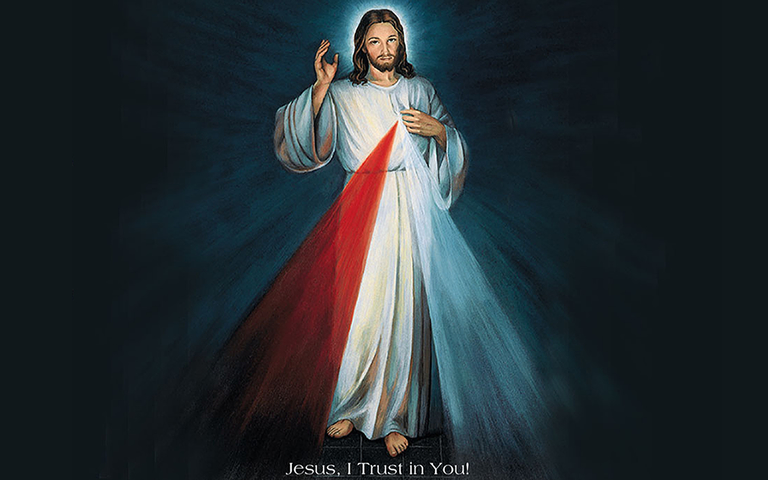



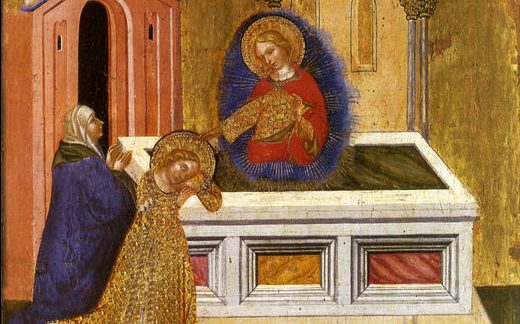
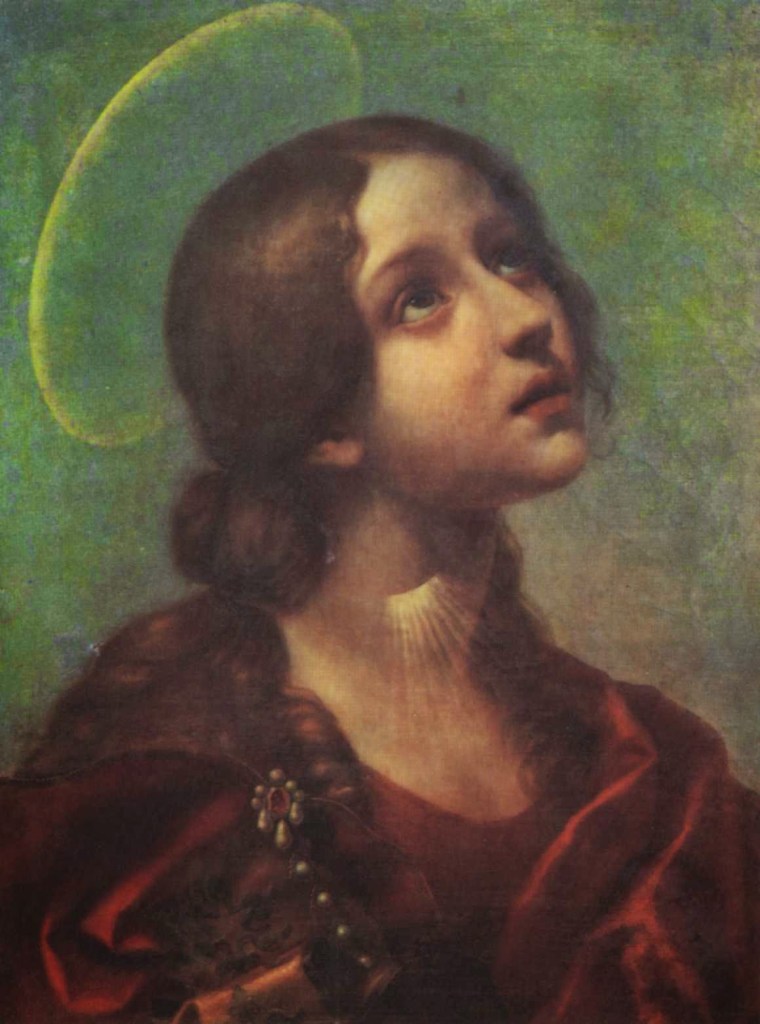
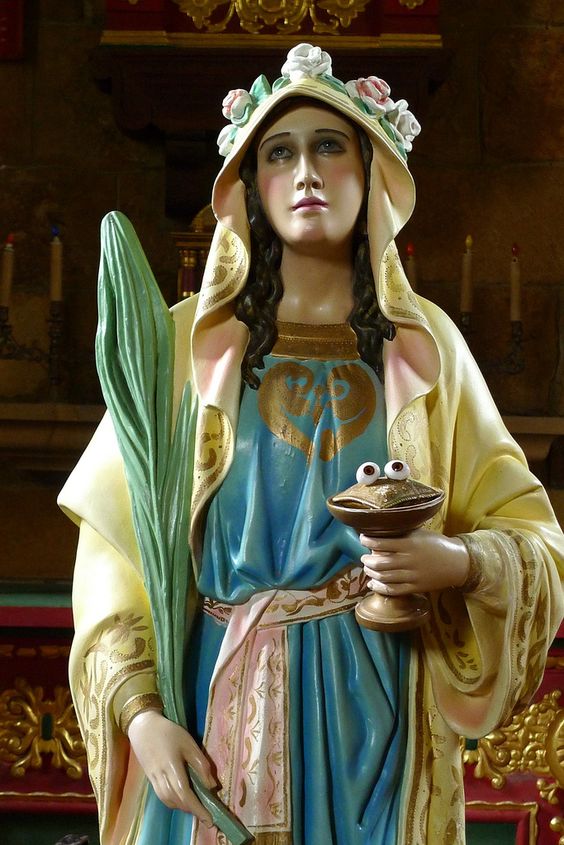
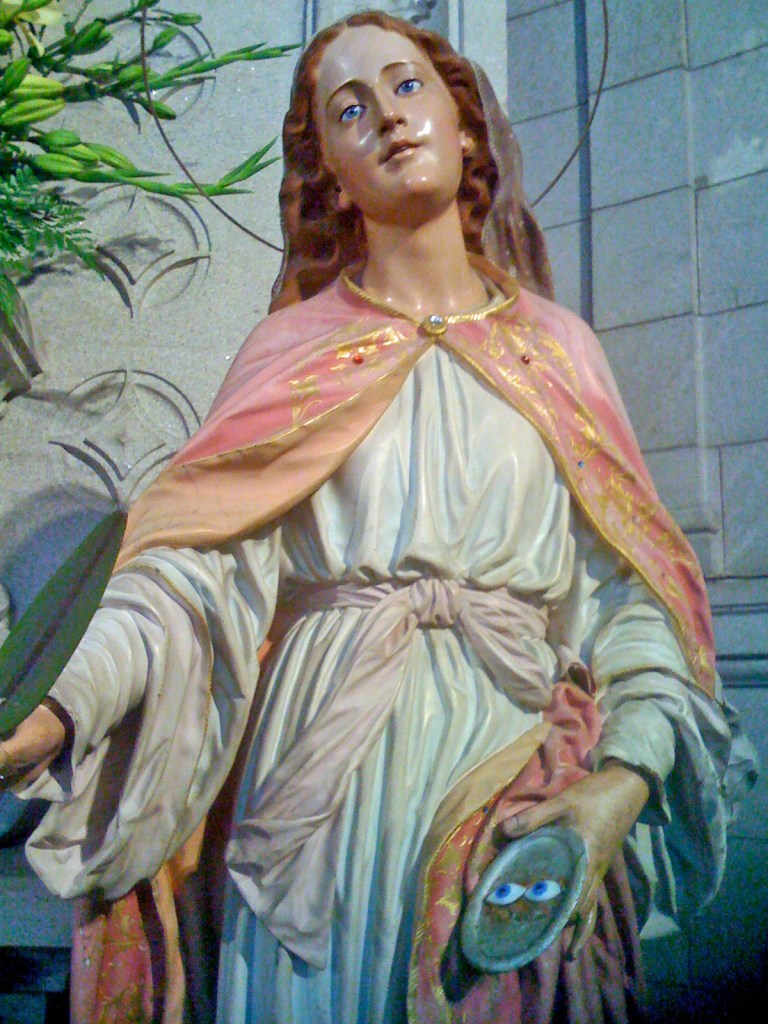


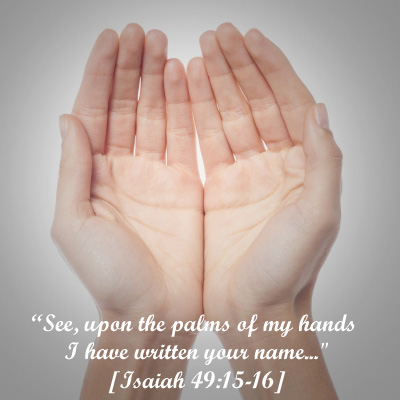





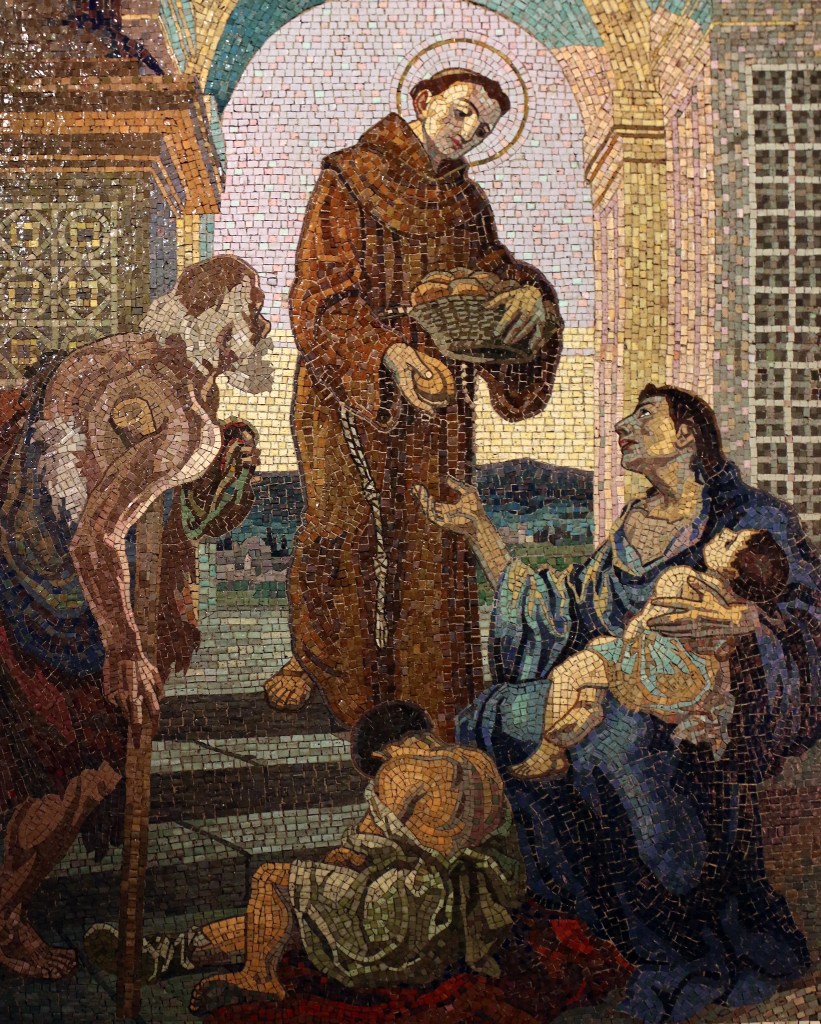








 Everyday Life Spirituality