ST. ROSE OF LIMA: Was She Too Extreme?

To watch the YouTube Video, click arrow on thumbnail below:

Rose had a deep devotion to the Infant Jesus and His Blessed Mother and spent countless hours praying before the Blessed Sacrament. She received Communion three times a week. Although she would have liked to receive daily, in those days young girls were forbidden to go out unless accompanied by an adult woman, and Maria was not always available, perhaps deliberately. Later in her life, Rose was able to receive Communion daily, which was an extremely rare practice at that time.

After reading a book about St. Catherine of Siena, the impressionable young girl adopted the saint as her personal role model. Emulating St. Catherine, Rose fasted three times a week, donned coarse clothing, and cut her beautiful hair short. She concealed her cropped locks with a veil to avoid her parents’ disapproval. When Maria eventually discovered it, she was very angry.

In Rose’s teenage years, her family faced financial hardship when her father’s gold-mining venture failed, leaving them impoverished, with seven children still living at home. Rose, ever resourceful, stepped up to support her family by selling flowers from her own garden and creating exquisite lace and embroidery. Her needlework was of the highest quality, with remarkable beauty and delicacy. Despite long hours of labor, Rose dedicated her evenings to prayer and acts of penance.

Maria had grand aspirations for her beautiful daughter, hoping to secure a marriage into one of Peru’s wealthy and prominent families. She orchestrated opportunities for potential mothers-in-law to admire Rose, but these efforts were in vain, because, contrary to her mother’s wishes, Rose felt a Divine calling to a life of virginity.

When Rose realized she was attracting the notice of suitors, she attempted to deflect their attention by rubbing crushed hot peppers on her beautiful face and lime juice on her hands to roughen them.

PT. 4 of 4: ST. FRANCESCA CABRINI – THE FINAL YEARS

To watch the YouTube video, which includes BOTH Parts 3 & 4, click arrow in thumbnail below:

Click here to read the previous three parts:

Part One: https://everydaylifespirituality.com/2024/12/15/st-francesca-cabrini-part-one/

Part Two: https://everydaylifespirituality.com/2024/12/22/st-francesca-cabrini-part-two/

Part Three: https://everydaylifespirituality.com/2025/01/26/part-3-of-4-st-cabrinis-excellent-adventures/

Although she had become a public figure celebrated for her accomplishments, Mother Cabrini hated the spotlight and refused to allow her picture to be published in newspapers. By this stage in her life, she yearned for a retirement of peaceful contemplation, hoping to pass on the mission work to her younger and stronger nuns, This dream, however, would never materialize.

At the end of 1907, Francesca Cabrini once again set sail for Buenos Aires to visit her school—this time by boat from Barcelona instead of by mule across the Andes! After her visit, she continued on to Brazil, where her Sisters had established a school in São Paulo. Her journey then took her to Rio de Janeiro, but during the train ride through mosquito-infested marshlands, she contracted malaria and fell ill for several weeks. Despite her weakened state, she managed to open a school in Rio; however, shortly after its opening, a smallpox epidemic swept through the city, affecting several of the nuns. The first Sister to contract the disease tragically died because the authorities insisted she be taken to the public plague house, where she received inadequate care. Distraught over this, Francesca quickly arranged for a cottage outside the city for the remaining sick nuns, nursing them tirelessly just as her sister Rosa had cared for her during her own battle with smallpox decades ago in Italy.

After returning to the United States, Francesca dedicated the next two years to visiting all her houses across the country. In 1910, she was approached by the Archbishop of Chicago with a request to open a second hospital. She discovered a prime property in an affluent neighborhood, which was generously donated to the Sisters. However, local wealthy residents opposed having a free hospital in their community and attempted to dissuade Mother Cabrini through bribery and political pressure. When these tactics failed, they resorted to vandalism by cutting the water pipes on a frigid night. The resulting flood froze into thick layers of ice, which Francesca and her Sisters, along with some immigrant supporters, laboriously hacked away with pickaxes. After repairing the damage and making a few rooms livable, Francesca moved in, to ensure that the building remained guarded at night.

Their adversaries were undeterred, and one night arsonists broke into the basement and set it on fire. Fortunately, the Sisters and the fire department managed to extinguish the blaze. The following evening, however, the arsonists returned. This time, Francesca was prepared; she dashed into the street shouting for the police. The frightened criminals fled, and although they were never apprehended, they never returned. Ultimately, the hospital opened and was so well-received that many individuals and organizations within the community rallied together to support its ongoing operation.

Once the hospital was established and thriving, Francesca returned to Italy with plans to announce at the Rome motherhouse her intention to retire, and to request that a replacement be elected as Superior General. However, the Sisters were shocked and dismayed at the thought of losing their beloved Mother-Foundress. They conspired to fulfill her request by electing a Superior who would serve for life—but that Superior turned out to be Mother Cabrini herself! Surrounded by her joyful Sisters at her birthday celebration, where she was informed by the Cardinal of this decision, she graciously accepted their choice and relinquished her dream of a peaceful retirement at West Park.

While in Italy, Francesca sought out Antonia Tondini—her old nemesis who had caused her so much distress while she was a young woman caring for orphans at the House of Providence. Antonia was brought into the convent’s reception room, where Francesca warmly embraced her and said, “Please forgive me for any trouble I involuntarily may have caused you.” Confused, and overwhelmed with emotion, Antonia began to tremble and weep. Afterward, a nun asked Francesca, “Didn’t she make you suffer terribly?” To which Francesca replied with remarkable grace: “Antonia Tondini was given by God not to know any better. She truly thought that when she treated me as she did, it was for my own good.” This exemplified the profound forgiveness that dwelt in Francesca Cabrini’s magnificent heart. She recognized that all she endured at the House of Providence had been a crucible, preparing her for her great mission.

That summer, she embarked on a journey to Paris and London, seeking new houses to replace the original ones that required expansion. Her stay in London lasted 10 months, but before returning to the United States, she was compelled to return to Italy for some much-needed rest. In December, she visited Rome, where she fell gravely ill. By mid-March, her health had improved somewhat, and she abruptly announced her need to return to New York, because the hospital there required her presence. On March 27, 1911, she set sail from Naples on what would become her final sea voyage. She had a strong sense that she would never return to her homeland. As usual, the sea air invigorated her, restoring some of her strength.

Back in New York, she faced challenges in raising the necessary funds for a new Columbus Hospital to replace the old one, whose needs had outgrown its capacity. Undeterred by these obstacles, she enlisted a young architect to design a 10-story building that would eventually rise at 227 E. 19th St. Unfortunately, due to delays caused by World War I, she would not live to see its completion.

In July, while visiting West Park, she burst out of her room one morning, exclaiming that she was dying. Though she did not pass away at that time, the nuns insisted on sending her to the Mount of the Holy Cross in Colorado—a health refuge for sick nuns donated by a benefactor. Once well enough to travel, she made her way there. A fellow nun tended to her needs in a log cabin nestled among glistening snow atop the mountain. She cherished the tranquility of the place and especially loved watching the eagles soar high above her. She spent much time in peaceful meditation, gradually regaining her strength.

As soon as she was able, she ventured to Los Angeles, where another school was desperately needed. She purchased four lots, but struggled to gather enough funds to construct the school. Lacking money for a contractor, she sent for Sister Salesia, a bricklayer’s daughter with considerable building skills. At that time, the Luna Amusement Park was slated for demolition. Mother Cabrini negotiated for the rights to salvage the wooden structures set for destruction. She hired skilled Italian carpenters and laborers on a daily basis and arranged for horses and wagons to transport the materials. The parish community rallied together as well, helping dismantle the frame structures of Luna Park. Francesca was often on-site supervising the work, sporting a wide-brimmed Mexican sombrero and carrying a bamboo cane. At noon each day, she drove a horse and cart between Luna Park and the new building site, delivering wine, coffee, sandwiches and sweets to everyone laboring there. Despite the strenuous work, laughter, singing and prayer lightened their spirits. After a month of hard work collecting building materials, Francesca found herself with more than enough for the Los Angeles school, so she arranged for the surplus materials to be shipped by freight car to expand the Denver orphanage.

Leaving Sister Salesia in charge, Francesca traveled to Seattle, where an orphanage was threatened by a planned highway expansion. The orphans needed relocation, prompting her search for a new site. Exhausted from countless trips through the city, Francesca spread a map of Seattle on the table, pointed to a spot, and instructed the Sisters to explore that location and report back. That evening, the excited nuns returned with news—they had discovered what they called “a little paradise on earth.” With a knowing smile, Francesca replied, “Yes, I knew it would be beautiful. I saw it all in a dream last night.” The following day, they visited the villa, perched on a hill with breathtaking views. The owner revealed that it belonged to his wife who loved the place and would never part with it. As they descended the hill back into town, Francesca firmly declared to her Sisters, “That paradise will be for our orphans…somehow or other.”

As dusk fell, streetcars became scarce. Although hiring a taxi felt extravagant, the exhaustion of her companions made it seem to Francesca the only alternative. But just then, a limousine carrying an elegantly-dressed woman approached them. On impulse, Francesca raised her cane, signaling for assistance. The car stopped, and the lady offered them a ride back to the convent. During their drive together, the woman learned that she was speaking with Mother Cabrini—a woman she greatly admired. When Francesca mentioned the beautiful estate they had seen earlier that day, the woman’s eyes widened in astonishment; it turned out that she owned that very property! After conferring with her husband, they offered Mother Cabrini the estate at an exceptionally reasonable price. A week later, two wealthy American men donated $160,000—sufficient funds for establishing not only an orphanage on the property, but also an adjoining chapel.

Once back in New York, she resolved to establish another orphanage closer to the city. During her search for suitable properties, she stumbled upon a stunning estate right by the river in Dobbs Ferry. One of the Sisters informed her that it was a neighborhood of millionaires, and the prices would be exorbitant; moreover, the building she admired was a private school for affluent Protestant boys. Undaunted, Francesca rang the bell, which was answered by a young man whose father was the president and owner of the school. Initially cool in his demeanor, he informed Francesca that the estate was not for sale. However, as their conversation progressed, Francesca’s charm began to work its magic on him. He graciously offered to give her and the other nuns a tour of the impressive building, which included classrooms, dormitories, a kitchen, dining room, chapel, gymnasium, and swimming pool—all in excellent condition. As they departed, Francesca handed the young man her card, in case his father would consider selling. Just before leaving, she bent down to tie her shoelace, and discreetly pushed a medal of St. Joseph into the soft earth of a flower bed. A few days later, she received a letter from the owner, asking her to make an offer on the property. Armed with her plan, Francesca approached several wealthy businessmen and successfully secured the necessary funds.

With financial backing in place, she and her nuns set to work on the improvements necessary before the March 31st grand opening of what would be known as the Sacred Heart Villa at Dobbs Ferry. Francesca felt inspired by Jesus to undertake the whitewashing of the building herself. Wearing a painter’s cap and pinning up her skirts, she joyfully began painting. However, the can slipped from her hand, splattering paint all over her from head-to-toe. Laughing, she wiped at her clothes and continued with determination. The nuns held the ladder steady as she climbed up; but when they offered to take over for her, she insisted that the whitewashing was her special task. For the next 15 days, she diligently applied her brush until the job was done.

During the opening ceremony, Francesca stood alongside the Cardinal. It was at this time that the last photograph of Francesca Cabrini was taken, capturing her shining eyes and serene smile as she stood observing the happy orphans around her.

On June 28, 1914, the assassination of Archduke Ferdinand of Yugoslavia marked the beginning of the First World War. From that day on, a shadow was cast over Francesca’s heart and she was burdened with sorrow and concern for her Missionary Sisters in Europe. She prayed ceaselessly for their safety, entrusting them to the Sacred Heart of Jesus, their Divine Protector. Her usual smile was now tinged with sadness, and restful sleep eluded her; only her work provided a semblance of relief.

In August 1915, Francesca traveled to Seattle with plans to open an orphanage. The train journey proved arduous as she battled intermittent chills and fever, coupled with excruciating discomfort from sitting upright in coach for days on end. “If my Lord wants this mission accomplished,” she confided to one of the Sisters with her, “He will return to me the strength which has almost totally abandoned me.”  In Seattle, she found a fine building in the heart of the city—the former Perry Hotel, which had gone bankrupt. Her discreet inquiries revealed that the principal trustee was a Mr. Clarke based in New York. Although lacking his first name, Francesca refrained from further inquiries to avoid alerting competing interests to her intentions. She telegraphed her nuns back in New York with a clear directive: “Find a certain Mr. Clarke, who is in possession of the Seattle Hotel Perry, and ask it as a donation to charity.”

This task proved daunting with no first name, as the New York City directory listed at least 200 Clarkes! Undaunted, the Sisters patiently called each number until they finally located the right party—a shrewd Protestant man, who was taken aback by their request for such a large donation to a Catholic charity, and adamantly refused. When they reported back to Mother Cabrini, she instructed them to return and propose the lowest price he would accept. This time, he was struck by their sincere humility and agreed to negotiate. After numerous visits from the Sisters, and exchanging 90 telegrams with Mother Cabrini, he ultimately bypassed the other trustees and offered her the property for $150,000—a bargain at the time. Even the Archbishop encouraged Francesca to accept this deal. Despite her persistent fatigue, she reached out to rich and poor alike, and was able to raise $10,000 as a retainer, which Mr. Clarke accepted. However, opposition soon arose. The other trustees were furious, and influential local figures vehemently opposed an Italian orphanage in that location, out of fear it would diminish property values. They ensured that all banks in Seattle would refuse to issue a loan to Mother Cabrini. From November through April, Francesca faced relentless struggles in securing financing for the property. During Lent, she gathered all her nuns and orphans to pray before the Blessed Sacrament, placing their hopes in Jesus, while she prepared herself to accept His will—whatever it might be.

In the Seattle convent stood a statue of St. Anne holding a book and teaching young Mary to read. In desperation, Francesca wrote “$120,000” in the book held by St. Anne and spent the evening in fervent prayer. While she was praying, the doorbell rang. A young nun entered to inform her that a gentleman wished to see her. When Francesca greeted him, she discovered that he was Mr. Chilberg, the Jewish president of the Scandinavian Bank. He bowed respectfully before Mother Cabrini and apologized for being out of town when she had previously visited his bank. Upon his return, he had learned about her loan denial. He expressed complete faith in her mission and offered to arrange any amount she needed. Leading him to St. Anne’s statue, Francesca told him that the amount she needed was written in the book. He read it and nodded. She then invited him to join her in the reception room for a glass of wine, which he gratefully accepted. The following day, the contract was signed, and on April 30, Mother Cabrini officially took possession of the Perry Hotel. Together with her Sisters, she prayed for abundant blessings upon their great friend Mr. Chilberg for his generous support of their mission.

It became clear that the turmoil of wartime was not an ideal backdrop for fundraising efforts aimed at establishing an orphanage. One night, Francesca had a profound dream. As she recounted to her Sisters, “…St. Anne instructed me to relinquish my desire for a foundling home, and indicated instead a hospital that will do acts of mercy and yet sustain itself.” However, this goal proved to be as challenging as her initial one. The presence of an existing Catholic hospital in Seattle led some within the Church to deem another one unnecessary and unwelcome. Additionally, those who had previously opposed her acquisition of the Perry Hotel were now rallying against her new plans. These factions exerted pressure on local doctors, causing them to withdraw their support from Mother Cabrini’s Seattle Columbus Hospital. The situation escalated to the point where even the Archbishop forbade the opening of the facility. Although initially disheartened, Francesca soon decided to pivot her approach. Instead of a general hospital, she resolved to establish a center focused on physiotherapy and electrotherapy treatments—services that were in high demand and would not directly compete with the other Catholic hospital in Seattle.

One day, a young pregnant woman from a respectable family approached the convent with a request: she wanted her baby to be born at Mother Cabrini’s hospital. Several weeks before the delivery date, Mother Cabrini felt inspired to send a Sister to visit the young woman’s home with an urgent message to summon her doctor and come immediately to Columbus Hospital, where a bed awaited her. The young lady complied, and just hours later, she gave birth to a baby girl. Due to her premature birth, the infant’s survival was uncertain; thus, Mother Cabrini herself baptized the child, naming her Columbina, which means “little dove.”  The joyous event of the baby’s birth, and the happiness of the young parents, their family, friends and doctor, significantly eased the initial hostility towards Columbus Hospital. Over time, as word spread about the Sisters’ compassionate care, the hospital began to flourish.

In the fall of 1916, Francesca sensed that her life was nearing its end and felt compelled to visit some of her other houses. She informed the Sisters in Seattle of her intention to travel to Los Angeles. Her pale and fragile appearance alarmed the nuns in California, who had eagerly awaited her visit. Standing in the garden, she gazed lovingly at the Sisters gathered around her. The orphans burst into the garden, running toward her and joyfully shouting, “Mama Cabrini is here!” Francesca spent the winter in the warm California sun, enjoying long hours of deep meditation amidst the beauty of the garden. The orphans frequently visited her, and she delighted in sharing candy and telling them funny stories. Birds flocked to her feet, drawn by her quiet gentleness as spoke softly to them, scattering crumbs and seeds on the ground.

One of her nuns in Los Angeles, Sister Euphemia, suffered greatly from varicose veins, despite years of treatment from numerous doctors. Francesca suggested that she try wearing silk stockings to ease her discomfort. Taking this advice a step further, Sister Euphemia borrowed a pair of Mother Cabrini’s own cotton stockings and put them on. To her amazement, she found immediate relief. She shared this with Mother Cabrini, who laughed off the notion, but then gently admonished her: “I hope you’re not going to be so foolish as to say that my stockings cured you! It was your faith that did it.”

As Spring approached, Francesca realized she needed to travel to Chicago, due to issues arising at the new hospital. By the time she reached the Chicago Columbus Hospital on April 18, 1917, she appeared thin, bent, and frail, relying on a cane for support as she struggled to walk. The doctors quickly recognized that her malaria had worsened significantly and insisted on immediate treatment. Although the chills and fever eventually subsided over the following weeks, the treatment left her exceedingly weak. She also was suffering from chronic endocarditis, an infection involving the heart’s valves and lining.

Despite her frailty, Francesca rallied enough to participate in spiritual exercises at the convent that summer, being the first to arrive at the chapel each morning at 5:00 AM. Following medical advice, the Sisters arranged for her to be driven into the countryside daily, where she gathered wildflowers to adorn the chapel. Nostalgic for the farm life of her youth, she was inspired to purchase a farm for the Institute that would provide fresh produce for the hospital. After exploring rural areas further afield, she discovered a lovely farm in Park Ridge, Illinois, which she purchased in October. She found immense joy in stocking the farm with horses, cows, goats, pigs, and chickens.

By November, Francesca’s health had once again deteriorated. One morning during Mass, just after receiving Communion, she nearly collapsed. The Sisters quickly carried her to her bed. Though her strength waned daily, she yearned to be with her daughters during their recreation periods. She loved these times with the Sisters, and in the past had delighted them with her stories, and liked to play cards, although she was terrible at it and never won unless her opponents secretly let her. Mother Antonietta Della Casa, the Superior of the Hospital, now implored her to reconsider and conserve her energy. But Francesca firmly replied, “Oh, no! It is only now at their recreation that I can be together with them. If I am not, they will think I do not love them.”

During these cherished recreation times, she would bring them small gifts of fruit, candy, cake, or cookies—tailored to each Sister’s preference—as they gathered around her affectionately. On December 8, the feast of the Immaculate Conception, she asked the Sisters to write verses about the Virgin Mary. This would be the last time she could join them for recreation. Subsequently, she quietly withdrew to spiritually prepare herself for Christmas—a feast that held a special place in her heart. She ordered new habits for all of the Sisters, including one for herself, secretly knowing she would be buried in it. For the Order’s Christmas cards, Francesca requested a verse from the Psalms to be printed: “Oh, send out Thy light and Thy truth; let them lead me; let them bring me unto Thy holy hill, and to Thy tabernacles.” When a Sister objected that the verse seemed more fitting for a funeral than for Christmas, Francesca smiled and insisted, “Yes, I know, but this Christmas that verse goes well. Leave it the way it is.” Upon learning that the 500 children of the parish school would have to go without candy due to the difficult times, she exclaimed, “Oh, no! They must have their candy! Christmas would not be Christmas for them without it!”She instructed the Sisters to purchase the candy at her expense.

On December 21, despite suffering from the final stages of malaria, Francesca attended Mass and joined the Sisters in preparing the Christmas packages of candy for the children. The following morning, December 22, 1917, Mother Della Casa visited Francesca’s room to greet her and consult about the day’s tasks. A young nun came in to ask if Francesca wanted a bowl of broth. She agreed, and requested that her room be tidied so she could sit in her rocking chair. Mother Della Casa returned at 11:40 AM with a question for Francesca. After she left, Francesca locked the door and returned to her chair to pray and meditate in solitude. While sitting there, she felt a sudden pain in her chest and got up to unlock the door and ring for help. When a Sister entered, she found Francesca slumped in her wicker chair, her nightgown and handkerchief stained with blood. The young nun rushed to summon Mother Della Casa, who immediately sent for both the priest and the doctor. All the nuns hurried to Francesca’s room, finding her unconscious. The priest administered Last Rites just as Francesca opened her eyes one final time. She leaned her head against Mother Della Casa’s arm and cast a loving glance at all her Sisters before drawing her last breath.

A solemn Requiem Mass was celebrated by the Archbishop of Chicago, after which Francesca’s body was transported to New York for a second Requiem Mass conducted by Bishop Hayes at St. Patrick’s Cathedral. In accordance with her wishes, her body was interred at her beloved West Park on January 2, 1918. Hundreds of orphans dressed in white, carrying lilies and candles, followed her casket from the convent chapel to her tomb. In 1930, her remains were moved to their current location in the chapel of Mother Cabrini High School (formerly the Sacred Heart Villa) at 701 Ft. Washington Avenue.

In 1928, the process for her canonization began. Two miracles are required for sainthood, and in Francesca’s case, the first miracle involved an infant named Peter Smith, who was born at the New York Columbus Hospital on March 14, 1921. As was customary at the time, a nurse applied a solution of silver nitrate to the infant’s eyes. As she put the bottle down, she realized with horror that in her haste she had used a 50% solution instead of the intended 1%, resulting in severe chemical burns to the baby’s eyes. An eye specialist, along with other doctors, concluded that there was nothing they could do—the corneas of the eyes were destroyed, and the child would be permanently blind. The Mother Superior rushed in with a relic of Mother Cabrini, placed it on the baby’s eyes, and then pinned it to his nightgown. She and the Sisters, along with the nurse involved, spent the entire night praying in the chapel for a miracle.

The following morning, when the doctors returned to examine baby Peter, they were astonished to find his eyes intact and perfectly normal. However, that same day, the infant developed double pneumonia, with a temperature reaching 108°F—just one degree short of fatal. The doctor advised the Mother Superior to start praying again, as the baby’s condition was critical. “Doctor,” she replied confidently, “Mother Cabrini has not cured his eyes just to let him die of pneumonia!” They prayed once more, pleading for a second miracle. By morning, all symptoms of pneumonia had vanished. Peter Smith grew up healthy with normal vision, and as a young man, served as a soldier in the Army. The only remnants of his hospital ordeal were two small scars from the silver nitrate that had leaked from his eyes.

The second miracle involved Sister Delfina Grazioli, who had suffered since 1915 from adhesions of the gallbladder and intestines. Despite undergoing four surgeries, her condition showed no improvement, and she was painfully wasting away. By December 1925, doctors had given up all hope and predicted she had only a day or two left to live. Funeral arrangements were already underway; however, on the night of December 16, after praying to Mother Cabrini, Sister Delfina saw her in a dream. The next morning, although still very weak, she announced that she was cured. The instantaneous healing was confirmed by the doctors, and she never experienced a recurrence of her illness. Mother Francesca Xavier Cabrini was beatified on November 13, 1938, and canonized on July 7, 1946.

Throughout her life, Francesca believed that faith, simplicity, humility, and obedience were the foundations of all spiritual power. She often reminded her Sisters that the only necessary mortification was to perfectly observe the Rule of the Order and wholeheartedly carry out their daily tasks. She prayed fervently that she would never ask her nuns to do anything she herself was unwilling to do. Francesca valued openness and candor in others and detested any pretentious displays of piety. She did not want to see her Sisters carrying rosaries unless they were actively reciting them. Always gentle and kind in her approach, she never hesitated to speak her mind, but did so with compassion. Rather than giving orders, she made requests that were promptly obeyed. She discouraged self-pity and long faces among her Sisters. A sense of humor and fun bubbled out of her spontaneously, gladdening the hearts of everyone who came under the spell of her infectious smile.

In my research for this video series, I came across a quote from one of her biographers that described her life as “a quiet whirlwind.” I can think of no better description. Francesca Cabrini perfectly fulfilled the hope she once wrote in her notebook: “I wish to die of love after a life of total surrender to God….Oh Jesus, I love you so much, so much!….Give me a heart as large as the universe, so that I may love you, if not as much as you deserve, at least as much as I am capable of.”

Releasing Negative Thoughts & Feelings

Girl Blowing on Dandelion-resized
Photo by Nine Köpfer on Unsplash
To listen to the audio version (podcast), click player arrow above

My previous posts (“Time to Wake Up” and “Identifying Habitual Thought Patterns”) addressed the subject of negative thinking and how it can set us up for failure at what we want to be, do, or have in life. It can keep attracting the same bad situations and adversely affect how we act and react to the world around us. We explored a number of common negative thoughts, so that we could identify the areas in which we seem to have the most trouble. In this way, we are “waking up” spiritually and mentally, by recognizing the numerous negative thoughts we have on a daily basis.  If you did not see this list, please read my last post, “Identifying Habitual Thought Patterns” or listen to the audio version: https://anchor.fm/edlspirituality/episodes/IDENTIFYING-HABITUAL-THOUGHT-PATTERNS-e1svc1s

This post will explore in simple steps how to begin to change your circumstances for the better, and how to cooperate with our Creator to bring more joy, peace and abundance into your life.

Turning Negative Thoughts Around

Once we’ve identified some of our negative thought patterns, how do we turn things around? Most negativity is an expression of what we hate, fear, and want to avoid — in other words, all the things we DON’T want! Thoughts are energy, and because “like attracts like,” constantly dwelling on what we don’t want will keep bringing what we don’t want into our lives. The subconscious mind accepts everything you tell it, whether good or bad, positive or negative. For instance, if you keep thinking, “I don’t want to be poor,” “I hate being poor,” “I have no money and no prospects,” or “I need to get out of debt,” you are still focusing on poverty and debt, and probably fearing it, which is subconsciously setting you up to fall prey to more circumstances, people, and bad decisions that will keep you poor and in debt! The negative energy you are emitting will draw those negative circumstances and people to you.

To bring about change, we need to focus on what we love and yearn for, rather than what we don’t love and don’t want. Think of it this way: Supposing you went with a group of friends to an all-you-can-eat buffet. You go down the buffet table, looking at all the varieties of food, and every time you see a food that you dislike and would never want to eat, you add it to your plate. By the time you get to the end of the buffet, your dish is filled with food you can’t stand. You pay for it and go sit at the table with your friends. You sit there, not eating, feeling hungry and miserable, while your friends are heartily eating and enjoying their food.

Now you’re probably thinking, “Who the heck would do that?” Well, we do exactly that every time we waste our valuable energy by thinking and talking about what we DON’T want out of life! The friends who are enjoying their meal represent the people who focus their thoughts and energies on the things they truly want and to which they aspire — the people who love their lives and feel happy and satisfied. Meanwhile, you look on and wonder why you are so miserable. Would it help you to resent and envy them because they are enjoying their food and you’re not? No, because you chose the food yourself!

This life is a precious treasure — God’s gift to you. Your power to co-create with God the kind of life you truly want is part of this gift. Why would you waste it on things you don’t want? Why would you expend your precious time and energy perpetuating a life that is unsatisfying to you?

Remember, a random negative thought or two will not bring a host of bad things upon you. There is a time delay between our thoughts and their consequences, and positive thoughts are a great deal stronger than negative ones. That’s the good news. The bad news, though, is that sustained or habitual negative thoughts, especially when accompanied by strong emotion, will eventually attract negative things into your life. Like the food you chose at the buffet, the currency of your thoughts and feelings is capable of bringing both good and bad things to you. It’s a matter of which ones you choose.

As St. Paul wrote in his letter to the Philippians: “Finally, brethren, whatever is true, whatever is honorable, whatever is right, whatever is pure, whatever is lovely, whatever is of good repute; if there is any excellence, and if anything is worthy of praise, dwell on these things.”

GorgeousSunrise-Sunset_Final
Photo (without text) by Ravi Pinisetti on Unsplash

Because we have tens of thousands of thoughts a day, it is impossible to monitor each one. But an easy way to identify your predominant thoughts is to tune into your feelings, because your feelings are the result of your thoughts. Are you feeling negative emotions, such as boredom, irritability, disappointment, anger, worry, depression, hatred, envy, guilt or fear? Or are you feeling positive emotions like love, gratitude, joy, excitement, enthusiasm, hope, satisfaction?

Don’t feel guilty or afraid because you are experiencing a negative emotion or thinking a negative thought, as that is just adding more negativity! We don’t want to deny our negative emotions and pretend they don’t exist, because they often serve to point out areas in our lives that need our attention. Also, it’s natural to feel negative emotions at particular crisis points in our lives, i.e., loss of a job, end of a relationship, death of a loved one, etc. If this is the case, you must allow yourself to experience the emotions, and seek help if necessary. We’re also not talking here about serious mental or emotional illnesses, for which one needs to be under medical supervision, but rather the typical thoughts and emotions that most of us experience on a regular basis. However, even if you are going through a life crisis or suffering from a mental illness, you can still apply these principles in addition to any other help you may be receiving.

Self-awareness is the key

Once you are aware of why you are feeling a particular way, you can understand what your emotions are telling you and what changes you can make to improve your circumstances. This then allows you to achieve mastery of your conscious thoughts. One way to do this is to practice a simple form of meditation. Don’t let the word “meditation” scare you. I don’t mean that you need to sit in Lotus Position for two hours every day and chant “Om” (although this is perfectly fine if you want to do it)! The objective is simply to quiet your conscious mind for a while. You need only a few minutes, and the following practice is very simple and will become even easier with time:

  • Set a timer for 10 minutes. Sit comfortably in a quiet room. Turn off all electronic devices and ask to not be disturbed. Begin to focus on your breathing and/or picture a blank movie screen in your mind.
  • As you sit there, thoughts will naturally bubble up. Just “watch” the thoughts. Don’t get involved with them; just witness them, and then turn your mind gently but firmly back to your breathing or to the blank movie screen.
  • If the thought that comes up is negative, acknowledge that you had a negative thought. Do not try to resist it, because resistance means you are focused on it with powerful emotion, which only will make it stronger. Just release it without judgement or guilt.
  • Continue this way until the timer goes off.

Make an effort to do this every day, or at least several times a week. You will find that you feel more relaxed and focused after this, and may want to do it for longer periods. Eventually you will reach a point where the intruding thoughts will decrease, and you will experience longer periods of peace as your mind lets go of its constant chatter.

How to Deal with Persistent Negative Thoughts

If you are feeling particularly sad, angry, depressed or fearful, and these same thoughts stubbornly keep recurring, you can use the following, more in-depth exercise to get to the root of your feelings and release them:

  • As in the previous exercise, sit in a quiet place where you will not be disturbed, with all electronic devices turned off or in another room. Focus on your breathing until you become more relaxed.
  • Ask yourself why you are feeling unhappy, and express the reason out loud, i.e., “I am afraid that I won’t find another job,” or “I’m sad and lonely because my love life is terrible right now,” or “I’m depressed because I’m not feeling well.”
  • Once you have identified the emotion and its cause, don’t try to resist it or force it to go away. “Fighting” an emotion — like “fighting” an illness — usually doesn’t work, since it involves negative emotions like anger, resentment or resistance, which actually can attract more negativity to you and make the condition worse.
  • Face the negative emotion and ask it what it might be trying to teach you. Let it speak to you, without forcing it or censoring it. Learn from what it is telling you. For instance, if you are depressed because you’re sick, the reason you might hear when you ask this question is that your life was out of balance. You were stressed, rushing around, not taking time to relax, not eating and sleeping right. The illness was your body’s way of telling you to slow down and take better care of it, to bring your life into a better balance of mind, body and spirit.
  • Now, ask yourself if there are actionable steps you can take at the present time to help ease this negative emotion. Just writing down some small actions you can implement right away is a very effective way to ease the tension and stress you’re feeling. You can follow-up after your meditation session by doing some research for additional ideas. Eventually, you can build upon these small successes, until you begin to see a measurable improvement in your situation and your mood.
  • From now on, reframe your fears and negative statements into positive affirmations. For example, “I have a career that pays well and is personally fulfilling to me;” “I have many positive, loving, and uplifting relationships in my life;” “I feel healthy and whole in body, mind and spirit.” In other words, you are stating what you love and aspire to, rather than focusing on what the less-than-ideal situation might be at the current moment.
  • At the end of your meditation session, thank your subconscious mind for giving you the reasons and the suggestions. Tell it that you will heed the lesson, and that you no longer need to experience the negative emotions. You can picture yourself letting go of the emotion in any way you like: i.e., blowing it away like dandelion fluff, releasing it as a balloon, or watching it wash away like sand in an ocean wave. Once you learn the lessons that your negative emotion is trying to teach you, it will no longer have a strong hold on you. You will be able to release it and move on.

Once again, do not worry or become anxious about having negative thoughts, as this will attract more negative thoughts to you. We all have numerous negative thoughts occurring throughout each day, but they become a problem only when we dwell upon them and repeat them often or infuse them with strong emotion. Instead, say to yourself, “All my negative thoughts are weak, while my positive thoughts are very powerful!”

Simply by having read this post and the last one, you have become much more aware of any negative thought patterns you have. Congratulations! From now on, you will not be on “automatic pilot,” reacting in the same old way to everything that happens in your life. You now will be aware of your reactions (your thoughts) in each situation and can take action on them! Now you are in the driver’s seat of your mind, rather than a helpless and clueless passenger!

Brooding Man_Final
Photo (w/o text) by ANDRIK ↟ LANGFIELD ↟ PETRIDES on Unsplash

The simple forms of meditation practice given here are an excellent way to become more observant of your thoughts and feelings in order to learn to control them. Meditation has tremendous benefits for mind, body and spirit. There are many excellent books, blogs, and videos about meditation if you would like to explore this practice in more depth.

In the words of Charles Haanel, New Thought author who lived from 1866 to 1949: “Be careful of your moods and feelings, for there is an unbroken connection between your feelings and your visible world.”

Next time: How to deal with challenges to staying positive.

Identifying Habitual Thought Patterns

ReceivingAGiftwithcaption_edited-1

My last blog post, “Time to Wake Up,” addressed how what we think consciously and believe subconsciously affects how we act and react to the world around us, and how our thoughts can directly influence our future. This principle, nowadays called “The Law of Attraction (LOA),” has actually been around for thousands of years and can be found in the Bible and many other spiritual texts and teachings. So it is important that we first identify our habitual thought patterns, to see which ones are serving us and which might be holding us back from achieving the sort of life we would like to have.

Following is a series of questions to help you in this thought identification process.

Do you often say or think any of the following:

  • I’m too ___ (tired, sick, achy, weak, old, young, fat, ugly, stupid, etc.)
  • I’ll never be able to _____ (fill in the blank)
  • I’m not ______(fill in the blank)
  • I’m a bad sleeper
  • I can’t relax…I can’t concentrate…I can’t lose weight…I can’t get up early…I can’t _______ (fill in the blank)
  • I’m always late / I’m always running behind schedule
  • I never have any money
  • I’ll never get out of debt
  • I’m never at the right place at the right time
  • It’s all the fault of my dysfunctional parents/family…my bad childhood…the traits I inherited from my parents, etc.
  • I’m just a victim of ______.
  • I have no control over what happens to me
  • I never get a break
  • It’s Murphy’s Law
  • I just look at food and gain weight
  • I’m getting…(old, fat, sick, worn out, forgetful, poorer)
  • I’ve only got a few more years left
  • I’m not ____ enough (i.e., smart, attractive, thin, talented, skilled, educated, rich) — or:  I don’t have enough ______ (brains, education, looks, money, ability, luck, talent, etc.)
  • Something that good can never happen to me
  • I’d never be so lucky
  • I never win anything
  • Other people get everything, and I get nothing
  • This is just my luck (or) I never have any luck
  • I hate that person
  • I look horrible in everything I put on
  • I never take a good picture
  • I’ll never have enough ____ (money, time, ability, health, etc.)
  • I’m so afraid of _____ 
  • I really dread _______
  • I’m not feeling well – it’s probably cancer
  • I will probably get (name the disease), because it runs in my family (or because so many people get it).
  • I live in constant fear of getting (this disease).
  • I HATE (cancer, diabetes, asthma – or any disease)
  • We must FIGHT cancer (or other disease or problem)
  • Getting old sucks
  • I’m getting senile
  • I just can’t lose weight
  • I can’t cope with this
  • What if _____ (imagining something bad and then worrying about it)
  • I always have too much work
  • I hate my job and I’ll never get a better one
  • I don’t have enough to give to or share with anyone else
  • I’ll never forgive _____ (fill in name(s))
  • I’m too…(old, tired, busy, far gone)…to care about my looks or my health anymore
  • Everyone gets (fat, sick, high blood pressure, diabetes, memory loss) as they age.
  • I’m just falling apart
  • It’s hopeless
  • I never get good weather on my vacations or when I plan something

Do you often:

  • Gossip or complain about someone, or join in gossip/complaining about someone?
  • Try to instigate trouble and bad feeling among others?
  • Argue over and/or ridicule someone’s political or spiritual opinions?
  • End a friendship or become estranged from a family member because of differing political or spiritual beliefs?
  • Feel you have nothing to be thankful for?
  • Compare yourself negatively to other people?
  • Make nasty, snide or critical comments or cruel jokes in person or on social media?
  • Refuse to buy something you really wanted or needed, even though you have more than enough money to afford it, because you’re afraid to spend any money?
  • Make self-deprecating comments or denials when someone compliments you?
  • Criticize someone, and/or try to make someone else do things your way?
  • Harbor resentment or bitterness towards someone? Keep thinking about how to get even? Wish bad things on them?
  • Respond instantly with anger to someone else’s words or actions?
  • Try to control and “fix” other people’s lives rather than letting them learn from their experiences in their own way?
  • Frequently make or share self-deprecating remarks or jokes about being stupid, fat, old, forgetful, or other negative things?
  • Forward emails or share social media posts encouraging hatred against anyone or anything (political figures, celebrities, certain races, ethnic groups, religions, etc.)?
  • Say, “I HATE____” (fill in the blanks)?
  • Talk at length and frequently about your illnesses or someone else’s?
  • Feel envy towards someone? Withhold a compliment from someone because you secretly envy them?
  • Try to take something/someone away from a person because you think you deserve it more? Try to turn others against someone because you’re jealous?
  • Constantly worry about your loved ones and what could happen to them, or about losing your partner, your money, your health, etc.?
Photo by Keira Burton at Pexels

Okay, so you probably identified with at least several – and maybe a lot – of these. Some of them might rarely or never pertain to you, while others are fairly frequent. If so, welcome to the human race! We ALL think, say or do these things from time to time. A fleeting thought or occasional slip-up won’t have a significant effect on your life or your future. If, however, you habitually think, do or say any of them, and if the thoughts carry a strong emotional charge, you are setting yourself up to attract exactly what you say you hate, fear and don’t want! This is because our subconscious mind believes everything we tell it, whether it’s true, false, good or bad. It is merely responding to our conscious thoughts, words and actions, like an obedient, cooperative child. It doesn’t analyze whether the thoughts are good or bad for you, positive or negative. Analyzing and choosing are the domain of the conscious mind; the subconscious just accepts what we tell it.

Consequently, with our negative thoughts we will attract, or subconsciously be attracted to, just the circumstances and people that we want so much to avoid! Also, fighting against something negative is never as effective as striving instead to bring about a positive result. For example, instead of hating and “fighting” a disease, it’s better instead to think wellness and health, and do whatever we can to promote these positive qualities. Mother Teresa, now St. Teresa of Calcutta, was quoted as saying:“I was once asked why I don’t participate in anti-war demonstrations. I said that I will never do that, but as soon as you have a pro-peace rally, I’ll be there.”

Negative thinking also will block any good things that God wants to send us. Nothing is forced on us by God, who respects and honors our free will. Negative thinking is like keeping your hands behind your back when someone offers you a gift. You cannot accept the gift unless your hands are open to receive it.

LOA experts recommend that we shift our positive thoughts to at least 51% over the negative ones. Even this 1% over the halfway mark could be enough to dramatically change one’s life. I believe that the more we can shift our thoughts from the negative to the positive, the quicker and more dramatic the change will be!

Legend says that in the Buddha’s travels, he encountered a man who was awed by his peaceful, radiant persona. The man asked, “My friend, what are you? Are you a celestial being? Are you a god? A magician? A wizard?” The Buddha replied, “No. I am awake.”

Jesus told His followers that if they had faith “the size of a mustard seed” they could move mountains. He also told them that, with enough faith and belief, they could do all the things that He had done, and even greater things.

Photo by Marcos Paulo Prado on Unsplash

We cannot even begin to improve our lives unless we become awake and aware of the negative thoughts and lack of faith we harbor on a daily basis. Otherwise, we walk around in a perpetual state of “automatic pilot” and unconsciousness. Once you become aware, you will begin to notice any instances in which you are thinking or speaking negatively. You also will be shocked and dismayed at all the negativity you will notice around you from other people! In upcoming posts we’ll examine these negative thoughts and attitudes and explore ways to bring about positive change and achieve our goals and dreams.

Have a positively wonderful day! 

Getting Life Direction from the Holy Spirit

the-traveler-with-quote

TO WATCH THE YOUTUBE VIDEO, CLICK THE ARROW ON THE THUMBNAIL BELOW:

Do you sometimes feel lost and confused about what direction to take in your life? Some years ago, I was facing a lot of changes and adjustments, as well as new opportunities and possibilities, including a new job. Naturally, I was feeling excited yet stressed, encouraged yet confused. I was praying about all of it, of course. Several years prior, I had discovered Cardinal Mercier’s prayer to the Holy Spirit, which I talk about in my video, “Inviting the Holy Spirit into Your Life.”  If you haven’t seen it, I encourage you to watch it after you have finished this video. Watching my video to the end tremendously helps my channel with YouTube’s algorithm.

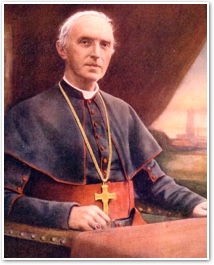
Cardinal Mercier

Anyway, I said Cardinal Mercier’s prayer every morning, adding at the end of it another little prayer based on Psalm 25:4-5: “Show me the path where I should go, O Lord; teach me the right road to walk. Lead me in Your truth and teach me Your ways, for You are God my Savior, and my hope is in You all day long.”

Despite all the prayer, I still felt somewhat overwhelmed. So I asked the Holy Spirit for a sign to help me know what direction to take with some of my goals.  One night, I had the following dream, which I titled “The Unknown Road.”

countryroadwithhills

As the dream begins, I am driving my car along a beautiful but unfamiliar country road. I am alone, with no particular destination in mind – just going for a ride on a beautiful summer day. I am driving carefully, especially at intersections, although there is little traffic in that rural area. The scenery is gorgeous, with gentle, rolling green hills in the distance, and the sky is a lovely blue with some puffy cumulus clouds. But then I notice some wisps of black in the sky and become frightened, thinking a storm is approaching. Then I see some men fixing the road up ahead and realize that it had not been black clouds that I had seen, but smoke rising from a machine that is mixing hot asphalt.

The road then ends at a “T”-type intersection. I don’t know whether to turn left or right. I pull over to the side, stop the car and get out, looking for a street or destination sign, but see none. The scenery here is breathtaking, because up ahead I see beautiful mountains and an enormous cathedral, bigger than any building I’ve ever seen, with the ornate, beautiful architecture common in old cathedrals. As I scan the panorama, I’m dismayed to see some ugly industrial buildings to the right and left in the distance. I think what a shame it is that they’re spoiling the beautiful landscape. The sight of them lends an eerie, desolate aspect to the scenery, giving me a creepy feeling. I wonder if I should ask someone where I am, so that I can figure out how to get back home. At first I resist, because I really had wanted to figure it out for myself, but with no signs to guide me, it doesn’t seem possible.

As the dream ends, I realize that I’ll have to ask someone for directions.

When I awoke, I realized how perfectly symbolic this dream was of my current situation. Roads, of course, symbolize the path we are taking in life. The road I was on, though beautiful, was rather narrow, which brought to mind “the narrow way” mentioned in the Gospels, and it was long and winding, showing that I still have far to go. The black clouds that I saw, which turned out to be harmless smoke from a truck doing street repairs, seemed to mean that some of my fears were groundless, and that my attempts to “repair” the things that are wrong in my life might be scary and upsetting sometimes, but necessary.

The T-intersection symbolized the fact that I can’t travel in the same direction forever; eventually I will come to a crossroads and have to make a decision and choose a new direction. I believed that the great cathedral in the distance represented my spiritual aspirations, and its huge size showed that it was an extremely important aspect of my life. The industrial buildings felt “creepy” and also made me angry with the way they ruined the beautiful landscape. Since industry is another word for work, I felt that they symbolized my fear of being overwhelmed with mundane work to the point where I’d be unable to fulfill my higher ambitions and spiritual goals.

The dream was inconclusive, because it ended with my still being at the crossroads. To get more insight into this dream and what it might be trying to tell me, I put my mind into a passive, receptive state and used my personal method to connect with Divine guidance. I received the following message about my dream, which I believe was inspired by the Holy Spirit:

Become as a traveler who is not totally sure of the way, so he asks Someone who knows the area well to guide him. From the traveler’s viewpoint, sometimes the road will be deceptive. He might think one direction will lead him where he wants to go, only to find that it winds around and around, and he ends up back where he started. The wise traveler will admit his ignorance of the way and seek help. He will follow the direction of a knowledgeable person, even though sometimes the road that is pointed out seems like it could not possibly be the right one. The shortest path is sometimes the wrong one, and the experienced guide will know this, but the traveler, who is unfamiliar with the territory, will not.

“If sometimes the road ahead looks deceptively easy and you are fooled into thinking it is the right one, you might get lost. But if you seek the help of God, Who knows the way, you will never go wrong. You still might have to travel a great distance, go over many obstacles and follow a very tortuous road, but in the end you will reach your goal.

“The traveler who goes nowhere is the one who is too proud to ask directions, who goes his own way no matter what the circumstances. Do not be like this traveler, but like the one who is humble enough to know when he needs guidance.

“Ignore those who will tell you that sometimes you must hurt others to get ahead. If you aspire to this sort of success, you are on the wrong path. ‘Getting ahead’ this way is only a euphemism for selfishly grasping at things that are only temporary. This will give you nothing but grief. You will ponder what you achieved and find it empty. Honor first what God has asked of you — to use your gifts and talents for the benefit of others and to glorify God. If you do this, you will achieve your goals, find true contentment, and overcome the obstacles which hinder your growth. This will give you a freedom that no earthly success can ever give. Do not heed the discordant voices that try to lead you astray. They are only empty noise in a space that is devoid of any true peace or happiness.

I have shared this dream and message to encourage you, if you are feeling lost and confused about what direction to take in your own life. After you consider all the known choices you can make and paths you can take, surrender it to God. Ask to be shown the way, through your own inner guidance. Do not depend only on your intellect; leave room for your intuition and inner knowing. Open your mind to possibilities and opportunities you may have not considered yet, and try not to cling stubbornly to ideas that clearly are not working out and need to be revised or discarded.

It’s funny how we usually trust a GPS system to tell us how to get to a destination. If we make a wrong turn and find ourselves being corrected by the GPS, would we sit in our car and argue with it, insisting that the road we took, which is clearly in the opposite direction, is the right one and that the GPS is wrong? No, most of the time we will follow the GPS directions without question. Yet, when our inner guidance, directed by Higher Power, is emphatically showing us that we need to take a detour, we question and resist it. A GPS system can sometimes be wrong; but God is never wrong. So, let’s give God at least as much trust as we put into our modern-day, man-made technology!

Here are some Scripture verses about God’s guidance. I hope they will inspire you in your own life’s journey:

  • “Trust in the Lord with all your heart, and lean not on your own understanding; In all your ways acknowledge Him, and He shall direct your paths.” ~ Proverbs 3:5-6
  • “I will instruct you and teach you in the way you should go; I will guide you with My eye.” ~ Psalm 32:8
  • “If any of you lacks wisdom, let him ask of God, who gives to all liberally and without reproach, and it will be given to him.” ~ James 1:5
  • “Your ears shall hear a word behind you, saying, ‘This is the way, walk in it,’ whenever you turn to the right hand or whenever you turn to the left.” ~ Isaiah 30:21
  • “Your word is a lamp to my feet And a light to my path.” ~ Psalm 119:105
  • And finally, take comfort in the promise of Isaiah 42:16: “I will bring the blind by a way they did not know; I will lead them in paths they have not known. I will make darkness light before them, And crooked places straight. These things I will do for them, And not forsake them.”

SHARING YOUR GOALS

Photo by Edmond Dantes on Pexels.com

TO WATCH YOUTUBE VIDEO, CLICK ON THUMBNAIL BELOW:

So, you’ve decided on the goals you want to achieve in order to transform your life into something more closely resembling your ideal. You’re very excited and want to share your goals with others, seeking their support and encouragement. But should you rush out and broadcast your precious ambitions to everyone you know? Should you post about it on social media, talk about it with your friends over lunch, call your family and confide all your plans to them? How do you decide how much, if anything, to share, and with whom? This is a complicated issue and a personal decision, which calls for careful consideration.

There are, of course, advantages to sharing your goals with the right people: Speaking your heart’s desire out loud may help it to manifest. It’s fun to share your vision of Your Ideal Life with people you know, especially at the beginning when you’re bursting at the seams to talk about it to someone! Sharing your goals can help keep you accountable, because when other people know about your goals, it makes it harder for you to slack off on working towards fulfilling them.

You may feel it would be helpful to get other people’s opinions on the goals you have chosen. This, however, can be a double-edged sword. It’s true that an objective third party might be able to point out where you possibly can tweak or rethink a certain goal, and upon reflection you might decide they’re right. But on the other hand, these are YOUR goals, and your best source of guidance is to pray about them and follow where your deep intuition leads you, rather than take someone else’s words at face value. Of course, if your Ideal Life will include another person who has similar goals (for instance, a spouse or partner), you can be of great help to one another by sharing your dreams and aspirations. Two people working toward the same goals is doubly powerful!

If you have a very supportive relative or friend whom you trust implicitly and know will support you and have your best interests at heart, sharing your goals with them can be very edifying to you. Because they love you, they will encourage you in any way they can. Sometimes, they even might be able to assist you in practical ways to achieve them.

The important thing, though, is to be very selective and extremely careful about any person to whom you choose to entrust your most cherished dreams. As unpleasant as it may be to acknowledge, there always will be people out there who do not wish the best for you. They will be more than happy to shoot down your most cherished dreams, telling you every conceivable reason why you cannot possibly attain them, thus filling you with doubt and insecurity. This could be because of their natural negativity or bitterness, a narrow-minded, cynical viewpoint, or rigid, fatalistic religious beliefs. If you know people like this, do not share your goals and dreams with them. They will only undermine your confidence and possibly discourage you from even trying.

You also might invite envy from people who are too lazy or uninspired to set and pursue their own goals. Such people might openly ridicule you, both to your face and behind your back, because they envy your ambition and optimism. Sometimes they may actually try to sabotage your efforts to attain your goals. “He who guards his mouth and his tongue, guards his soul from troubles.” Proverbs 21:23

Photo by Peter Forster on Unsplash

Another drawback is that revealing your intentions and plans can put you in the position of having to defend them to other people, which is unnecessary and can cause your confidence to falter. You do not have to defend your goals to anyone; they are yours, and nobody has the right to challenge you about them, as long as they will not cause harm to other people.

Once having spoken about your goals, you might then become fearful of looking foolish if you fail. This lack of confidence can cause you to sabotage your own efforts. Also, sometimes our goals will change with time. If this happens with some of your goals, you might feel silly admitting this to people, who may not take you seriously after that.

Most importantly, sometimes people close to you might feel threatened by this new vision of your Ideal Life. They may feel that you will change and no longer be the person they feel comfortable with. Many times, family, spouses and friends secretly don’t want you to succeed, not necessarily out of malice, but out of fear that it will change your relationship with them. This is possible, because as you grow and change for the better as a result of your goals, you may well lose people who cannot accept the new you, nor grow and change along with you. This is a part of the process that you need to be willing to face.

One very important thing to realize is that the energy we expend by talking about our goals will sometimes seriously deplete the energy we have left to actually pursue them. Ever notice how the people you know who do the most talking usually accomplish the least? Although there is merit in “speaking your goals out loud” to yourself or to a select few people, wasting too much time and energy talking about all the wonderful things you plan to do may mean that by the time you decide to start working on them, you are already tired of the subject and find your enthusiasm has waned, rather than grown stronger. Talkers talk, but doers do — so be a doer, not a talker!

“Stop talking to people about what you will do; show them instead what you are doing.” says British psychologist, author, and broadcaster Robert Holden, PhD.

When you have achieved your goals and are well on the way to your Ideal Life, you’ll find that other people will want to talk to you about what you have accomplished, rather than the other way around. You can then use your experiences and success to help, inspire, and encourage them to work towards their own best life!

In most cases, it might be wise, especially at the beginning, to limit your goals and plans to your vision board, goal scrapbook, treasure box, or Ideal Life screensaver, as described in my previous post, The Power of Visual Imagery.” Cherish your dreams within your heart and talk them over with God, and with your Guardian Angel or Guide if this fits into your personal beliefs. Ask for support and direction from the spiritual realm rather than the earthly one. Create your plan of action and then implement it, instead of wasting time and energy, and risking possible setbacks, by talking about them with other people.

Photo by Tima Miroshnichenko on Pexels

In the words of Benjamin Franklin: “Well done is better than well said….Words may show a man’s wit, but actions his meaning.”

HOUR OF GREAT MERCY

Jesus Divine Mercy image

TO WATCH THE YOUTUBE VIDEO, CLICK ON THUMBNAIL BELOW:

Dedicated to the memory of my mother, Anna, for Divine Mercy Sunday. (Divine Mercy Sunday is celebrated by the Roman Catholic Church on the first Sunday after Easter)

“At three o’clock, implore My mercy, especially for sinners, Jesus told St. Maria Faustina Kowalska in a vision. “This is the hour of great mercy….In this hour I will refuse nothing to the soul that makes a request of Me in virtue of My Passion….In this hour you can obtain everything for yourself and for others for the asking; it was the hour of grace for the whole world — mercy triumphed over justice.”

At 3:00 p.m. daily, all those gathered in the perpetual adoration chapel of my parish fulfill Our Lord’s request by reciting the Chaplet of Divine Mercy for the sick and dying, often called “the 3 o’clock prayer.”  For Catholics, who believe in the Real Presence of Christ in the Eucharist, perpetual adoration is the practice of prayer and worship in the presence of the Blessed Sacrament (consecrated Host), which is usually exposed in a golden receptacle called a monstrance. It is called “perpetual” adoration because there is at least one person voluntarily committed to each hour of the day without intermission. This practice has been carried out by monks and nuns since early Christian times, and eventually spread to lay Catholics in parishes that have a perpetual adoration chapel. 

For many months, my mother and I had been keeping a Holy Hour together once a week from 2:00 – 3:00 p.m. We cherished this weekly vigil, sitting and praying quietly side-by-side in the peaceful atmosphere of the chapel. Since both of us had read Divine Mercy in My Soul (The Diary of St. Faustina), and often prayed the Divine Mercy Chaplet, we gladly stayed the extra ten minutes to recite it for the sick and dying at 3:00 p.m.

Saint Maria Faustina Kowalska
Photo of St. Maria Faustina Kowalska

One terrible afternoon in January 2002 found my mother and me together in a different type of vigil. But this time, the harsh sterility and bustling activity of the hospital’s Surgical Trauma Unit replaced the soft light and peaceful hush of the chapel. Although my mother and I were physically only a foot or two apart, the gulf between us seemed to me unfathomable.

Mom lay motionless and unconscious in a hospital bed, surrounded by tubes and a complex array of blinking, beeping machines. She was dying of complications following emergency surgery to repair a ruptured abdominal aortal aneurysm. Amazingly, she had survived the four-hour operation, but the massive amounts of blood she had lost made it impossible to stabilize her. I sat at her bedside, my eyes glued to readouts on the machine that monitored her heartbeat and blood pressure. The rosary clutched in my hand was my only weapon against the icy grip of fear and despair that grew tighter as it became increasingly clearer to me that all the heroic efforts of the medical team were not going to save my beloved mother. With each agonizing minute, my prayers were changing gradually from a hopeful plea for healing to the prayer of Gethsemane: “Not my will, but Yours be done.”

My mother and I had always shared a deep spiritual bond and had often discussed the afterlife. Neither of us feared death itself, but we had the natural apprehension about what form it would take and the suffering that might precede it. I knew that my mother was spiritually ready to face God, and since she already had been given Last Rites, the one remaining gift I could give this woman who had given me so much was to let her go.

“It’s alright, Mom, ” I told her silently. “If it’s your time to go Home, you go ahead and don’t worry. I won’t hold you back — I want you to be happy.”

My mother died at 3:20 that afternoon. Although I was too overcome with grief to think about it at the time, I later realized that she had passed into eternity during the Hour of Great Mercy, just minutes after the adorers at my parish’s chapel would have finished praying the Chaplet of Divine Mercy for the sick and dying. The same prayers my mother and I had recited so many times for other souls in need had come back to us, easing my mother’s transition into the next life and giving me the strength to accept and bear the greatest loss of my life. Furthermore, I was grateful that my mother had been spared the painful and lingering death she had always feared.

For several years afterward, I still kept my weekly hour in the chapel, although the first few times there without my mother were so painful I couldn’t even bear to sit in the same place I used to sit with her. But now, every time I say the Divine Mercy Chaplet at 3:00 p.m. for the sick and dying, it is much more meaningful to me than it was before her death.

Now when I pray, I see images in my mind of families gathered around sickbeds, keeping vigil with a loved one they can’t bear to lose but know they must let go; of souls closing their eyes to darkness and opening them to a Light so brilliant their sufferings fall away like dying leaves. I see people whose time on earth is not yet through, gaining strength of body and mind through the healing energy of a stranger’s prayers.

With a certainty that surpasses understanding, I know that all souls are connected in ways more profound and mysterious than we can ever imagine. I feel reassured that each one of us praying the Chaplet will be blessed with the same sustaining light of God for which we are offering ourselves as channels today.

I sense my mother’s presence with me and I recall Our Lord’s words to St. Faustina: “Encourage souls to say the Chaplet which I have given to you….Whoever will recite it will receive great mercy at the hour of death….When they say this chaplet in the presence of the dying, I will stand between My Father and the dying person, not as the Just Judge but as the Merciful Savior….”

As the Chaplet ends, I silently add St. Faustina’s prayer of praise: “Divine Mercy, embracing us especially at the hour of death, I trust in You.”

(For more information on Divine Mercy, visit: http://www.thedivinemercy.org/message/devotions/chaplet.php)

Studio portrait photo of my mother, Anna
My beautiful mother, Anna

YOUR IDEAL LIFE BLUEPRINT

TO WATCH THE VIDEO, CLICK ON THE THUMBNAIL BELOW:

In a previous post, “Your Ideal Life,” the first in this series, we discussed how to identify what would constitute Your Ideal Life and make a list of all the factors involved: where you would live, what job or career you would have, who you would want with you, what you’d like to achieve, and so on.  In the second post of the series, “The Power of Visual Imagery,” you learned how to make a visual image of all your goals, such as a Vision Board or Ideal Life Scrapbook. You began meditating upon your goals every day. If you missed these previous blog posts, please check them out. 

Now comes the all-important next step: to develop an Ideal Life Blueprint, which will be your plan to actually begin to make that Ideal Life a reality.

Laptop computer with planner, blueprint, coffee cup and notebook
Photo by: pexels-mikhail-nilov

To create the blueprint, you can use a special notebook or create a document on your computer. Many experts believe that writing things by hand actually is more effective in imprinting your ideas onto your subconscious mind, but do whatever works best for you.

To begin, use one section of your notebook or computer document for each aspect of Your Ideal Life. You’ll need to allow enough room to develop your blueprint for each goal. Another method, if you don’t mind your blueprint being on display and you have enough wall space, is to get a large bulletin board or whiteboard and divide it into sections for each of your goals, upon which you will pin or write each step in your blueprint. This last method has the advantage of being frequently in sight, which will keep your goals top-of-mind. If you have a Vision Board, hang your blueprint board alongside it, if possible.

The easiest way to create your blueprint is to start with the fulfillment of each goal and figure out what you might do to get there by following these steps:

Step 1. Ask yourself such questions as “what,” “where,” “when” and “why.” Bear in mind that the “how” isn’t always possible to know, especially at the beginning. To keep asking howsomething that seems unattainable right now could possibly happen can become a major stumbling block in believing that it’s possible at all. The “how” is usually God’s department. Your job is to have a clear understanding of what your goals are, and what you need to get there, by answering the other questions to the best of your ability.

Here’s an example: Supposing one of your goals is to buy a house one day. It’s helpful to figure out where you might want to live, and what kind of a house. Then ask yourself when would be a reasonable timeline in which to buy the house. For motivation, ask yourself “why” you want to own a house. Your answers might be, “It’s a good investment,” “It will give me enough room to raise a family,” “I want to live in a better neighborhood,” etc. Be honest with yourself as to whether your reasons resonate with you on a deep level, or whether they are superficial. For instance, “Because it’s expected of me,” or “Because all my friends own homes,” or “Because I want to brag that I live in that area” are shallow reasons that will make believing in your goal much more difficult. This probably won’t bring the happiness and fulfillment you might expect, especially if deep-down you know that you don’t really want the expense and work of upkeeping a big house and yard, and would prefer an apartment or condo.

Step 2. Now that you’ve answered the “what,” “where,” “when” and “why” questions to your satisfaction, the next step is to do your research. If the goal is a house in a particular neighborhood, begin to research the area you chose and the cost of homes similar to what you would like in that area.  Plan a visit to experience the area in person.

Beautiful house in suburbs with "For Sale" sign in front yard.
Photo by Pixabay

If your goal is a particular career, research what qualifications, skills or education you need. If your goal is to find a life partner, list the particular qualities you are seeking in a partner.

Step 3. Now that you’ve done your research, and have a better idea of the specifics of your goal, it’s time to figure out what you would need to get there from here. For instance, now you know how much that 4-bedroom home with the big yard in your chosen neighborhood would cost. Add in the other expenses such as real estate taxes, insurance, maintenance, etc., and you can figure out exactly how much money you would need for a down payment, and what sort of income would be required to pay the mortgage and maintain that home.

For your dream job, you’ll need to figure out how you might acquire the necessary skills or education you might not yet possess.

To find your life partner, perhaps you’ll want to explore what avenues might help lead to your meeting such a person.

 Step 4. Devise a short-term plan, listing practical steps you can take right now. To avoid becoming overwhelmed by how far you might have to go to reach your goal, set your plan to a manageable time-frame, such as one year.

Your list might read as follows:

  • For your dream home: Set up a budget, figuring out how you can cut costs or earn more money, and deciding how much you can reasonably put in the bank each month to save towards a down payment.
  • To find a life partner: Enlist the aid of friends who might be able to introduce you to someone. Explore reputable online dating services, groups, clubs or volunteer organizations that you might join in order to meet more people with similar interests to yours.
Man andn woman looking at menus in a restaurant
Photo by pexels-jep-gambardella

  • For your ideal career: Take some night or online college courses to begin acquiring the degree you might need. Or make time to develop the gift you have that you want to turn into a career, to bring it up to the level required.

After the year is up, re-evaluate your goals and your progress, and devise a new short-term plan for the coming year.

Step 5. Keep in mind that there may be many steps along the way to your Ideal Life. You might meet a lot of frogs before you find your Prince. You might have to put up with jobs you don’t love in order to acquire the experience and skills that will lead to your dream job. You  first may need to buy a smaller house in a less-than-ideal neighborhood, in order to acquire enough equity to one day sell it and move up to a better home.

Step 6. Leave room for the magic, the mystery, and the wonder! You may not be sure that your short-term goals will work, and you probably are not sure what will follow after that. Just realize that you do not have to know all that right now. That comes under the “how” heading, and remember, you’re putting that part of your plan in God’s hands! Your only job right now is to do the very best you can with what you have and your present ability. Sometimes, things may seem to be going in the exact opposite direction from what you want. This is where the trust comes in. You have to believe that, as long as you’re doing the best you can, there is a plan behind everything that happens. You might not understand it right away, but it will make sense later on. It’s like looking at the reverse side of a tapestry: all you see is a tangle of threads that don’t seem to make any sense. But when you turn it over and see the beautiful image on the other side, you understand how all those seemingly random threads all worked together to create the final product.

Step 7. Pray that God will lead you to the life that will make you the happiest and most fulfilled. By doing this, you can rest assured that you will be guided in the attainment of your true goals.  Remember that our goals evolve over time. You may change some of them, eliminate others because they no longer resonate with you, and add new ones. This is nothing to be ashamed of or get anxious about. It’s normal. You’re not a failure if you change your mind about a goal. It just means that, due to your development as a person, the things that were important to you a few years ago may no longer be as important now. New ambitions and dreams will have taken their place. It’s part of our journey here on earth, so just trust the inner guidance you’ve been praying for.

Photo by Ben White on Unsplash

God puts aspirations and desires into our hearts and souls. Not everything we think we want is a genuine goal. By praying for guidance, eventually the false goals will fall away, and you will be redirected to the ones that will accomplish your life’s mission and bring you the greatest fulfillment.

Next Time: Should You Share Your Goals?

MEDITATION ON MANIFESTING YOUR GOALS

To watch the YouTube video, click on the play arrow in the thumbnail below:

I’d like to share a simple meditation exercise to help you manifest your goals for Your Ideal Life, once you have determined what they are. The best way to utilize this meditation technique is to first read it all the way through once, to familiarize yourself with it, then when you’re ready, implement it step-by-step:

  • The first step is to choose a quiet spot at a time when you’re least likely to be disturbed.
  • Turn off your cell phone and any other distracting devices that might be in the room. If noise might be a problem, use earplugs or noise-cancelling headphones through which you can play white noise, soothing nature sounds, or soft music. Be sure not to choose music which might be distracting to you. It should be calm and mellow, preferably instrumental.
  • Sit comfortably and begin to breathe deeply. Inhale through your nose to a count of four, hold for a count of two, then exhale through your mouth slowly to a count of 6. Do this for a couple of minutes, until you find your body relaxing and your mind slowly starting to let go of its chatter and settle into a quieter, more receptive mode.
  • Now, begin to meditate one-by-one on each aspect of your Ideal Life. Don’t use too much force; use a very gentle approach. I find it helpful to pretend I’m sitting in a darkened theatre, looking at a blank movie screen. Don’t get hung up on the word “visualize.” Some people will see vivid mental images start to appear on their inner movie screen, and others will get just a subtle impression. It doesn’t matter; the visualization still works either way. Treat it lightly but confidently. Visualize anything that gives you “all the feels” of achieving this goal.
  • See yourself immersed in the scene you hold in your mind’s eye. Use ALL of your senses. If you’re visualizing your ideal place to live, see yourself there, smiling and happy. Notice all the details about it, such as how your house looks and where it is located. Here’s an example, which you can alter to fit your own particular scenario: If your ideal place to live is by the seashore, see the beautiful blue-green water and smell the salty ocean air. Feel the gentle sea breeze caress your face and ruffle your hair. Wiggle your toes and feel the sand beneath them. Hear the crash of the waves, and the cry of the sea gulls as they fly in the air above you. Then, walk into your home and go through every room, seeing, feeling, smelling and touching everything you encounter until you really feel as though you are there. If you would like to share this home with a person or pet, see them there with you, also looking happy.
couple walking along the seashore at sunrise or sunset

This is a good time to mention something important about goals that involve another person: It’s fine to visualize a particular someone you’d like to be with; but remember, we cannot control the destiny of another person. Your Ideal Life scenario needs to be one that they also would like to share, or it will not happen. We cannot force our dreams on someone else. Even if you managed to do so, it ultimately would lead to unhappiness. So, unless you are already with the person and they share a goal similar to yours, be willing to open to other possibilities. You can visualize that special someone, but your ultimate wish should be for whatever would be the highest good for all concerned.

  • Once you have thoroughly immersed yourself in one particular aspect of your Ideal Life, move on to the next one. Don’t try to force any impression that doesn’t come naturally. The important thing is that you give yourself a feeling of certainty that achieving your goal will happen. Use any means to do this. For instance, If you want to write a book, visualize an image of your book’s front cover, your name in the byline, and your picture on the back cover. See other people reading this book, enjoying it, and deriving benefit from it. 
  • After you have visualized each aspect of your Ideal Life, your goals and aspirations, say to yourself the following affirmation: “I have what it takes to be ___________ and have __________!” Fill in the blanks with whatever is appropriate to your goal. See yourself enjoying your new life, and giving Light to others with your gifts. See yourself shining with Light, following the path of Higher Power, spreading your Light to other people in your own unique, God-given way. 
  • Close with the following statement, which I learned from Shakti Gawain’s wonderful book, Creative Visualization: “All this or something better now manifests for me in totally satisfying and harmonious ways, for the highest good of all concerned.” This is, I think, the most important step in the whole process of manifesting your Ideal Life. It acknowledges our humility and leaves the door open to God’s greater wisdom to give us what we truly need, and what will give us true joy and fulfillment.
  • Now, gently turn your attention back to the present time, and slowly open your eyes. If you were able to really immerse yourself the visualization process, you will feel as though you truly were in that new life for a little while.

Take a few minutes every day to visualize your Ideal Life. You don’t have to spend hours or force yourself, but do it on a regular basis. Also spend some time daily developing your gifts, and over time you will become more skilled and successful at them. Don’t obsess over it; don’t overtire yourself or get anxious and troubled. Stay open, calm and hopeful.

There is no better way to spend one’s life than to give it to God with trust that God will do with it what is right. Tell God sincerely, “Thank You for all my many blessings. I give You all I own, all I have within me, and all I am. Take these and use them to do what You will. Help me to do Your work and use Your gifts. Open me to whatever You want for me.” Say this prayer in the morning and when you go to bed at night. This is enough to ensure that your life will be well lived. Don’t worry about the details – God will take care of them. But it’s important to truly and sincerely mean it when we give God our life! We cannot give Him only some of it and withhold a portion for ourselves.  Giving Him all that we have is a difficult, but very powerful, thing to do.

Photo by Engin Akyurt at Pexels

As you visualize your goals, you will run up against doubts and questions. Write them down in a notebook. At the top of the page, put the date, then write out the gift or goal you want to manifest, and all your questions and problems regarding this goal, no matter how small. If you write them down and meditate on them with trust (but not fixate on them with worry or anxiety), the guidance you need eventually will come. By doing this step, you are acknowledging that you have questions and doubts about manifesting your goals, because to repress and ignore them would interfere with your ability to visualize freely. But at the same time, you are releasing them as something to be dealt as you go along, rather than an obstacle to you right now.

You might find that just by writing down these questions and concerns, something might happen to give you the answer. For instance, a friend might say something that answers your question; you might come across a book or article that gives you information you need; you might spontaneously get an insight or inspiration that gives you a new perspective on the situation; or you may awaken from a dream that gave you some guidance. You might not always know immediately that you got your answer, but if you write it all down, over time you will find that the concern is no longer troubling you. Write down that fact as well, and indicate that you are no longer troubled by this concern. Most importantly, express gratitude to God for His help!

In upcoming posts, we’ll explore how to develop a plan of action for manifesting your Ideal Life.

THE POWER OF VISUAL IMAGERY

Follow Your Dreams Scrapbook
Photo by Lisa Fotios at Pexels

TO WATCH THE YOUTUBE VIDEO, CLICK ARROW ON THE THUMBNAIL BELOW:

In my last post, we talked about how to imagine the way you would like your life to be if you had no restrictions or limitations. This week we’re going to take the first step in the plan to transform those dreams into achievable goals, by creating a visual representation of Your Ideal Life. To participate in this week’s exercise, you will need the list you created from the last episode, describing every aspect of your Ideal Life. For instance, where you would live, who you’d be with, your job or career, places you’d like to visit, your achievements, etc. If you don’t have such a list, please read my last post, “Your Ideal Life,” which will prompt you with some questions to create it.

You can choose one or more of the following – or even do them all! It’s your dream, so do whatever works. Be sure to include in whatever version you choose a photo of yourself, smiling and happy!

  1. CREATE A VISION BOARD: Get a large piece of poster board or foam-core board, or even one of those memory boards that people use for photos. On this vision board, you will post at least one picture for each aspect of Your Ideal Life. You can write “My Ideal Life” at the top of the board if you wish. Cut pictures from magazines, print out online pictures, or draw your own. Attach the pictures to your vision board, and in the center of the board put the smiling, happy picture of yourself. Place the vision board where you will see it every day.
  2. MAKE AN “IDEAL LIFE” SCREENSAVER: This is similar to the vision board, except that you will save the pictures to your computer as a screensaver. This is a great way to keep your goals always before your eyes! You also can post them in the image gallery of your smartphone, where you can look at them every day, or make a collage of them in a photo-editing program and use them as the home screen on your phone. The next time you have a few free minutes, browse through these images instead of checking your social media feed. Spending a few minutes focusing on your Ideal Life will be of much more benefit to you than seeing photos of what your friend from high school ate for lunch!
  3. CREATE AN “IDEAL LIFE” SCRAPBOOK: If you enjoy scrapbooking, or simply are the type of person who feels more connected by holding a tangible object like a book, buy yourself an attractive scrapbook and mount Your Ideal Life pictures inside it. Have a separate page for each aspect of Your Ideal Life. Give the page a title, and decorate it with appropriate stickers, or draw designs on it that represent your goals. Keep it in a safe place but where it is easily accessible to you.
  4. MAKE A TREASURE BOX: Buy an attractive box with a hinged lid, or use a decorative photo box with a lid. Embellish it any way you like with beads, glass gems, stickers, paint, etc. Inside the box put pictures and symbolic objects that represent each aspect of Your Ideal Life. For instance, if you want better finances, put some money in the box. If you want to live by the seashore, find a pretty shell and place that in the box. You can also write down each aspect of your dream on  slips of paper or index cards and place those in the box as well. Don’t forget to include a smiling photo of yourself! Some people also like to put in the box a symbol of their particular faith or spiritual ideal: For example, a cross or Star of David, a holy picture or medal, a small statue, a crystal, some incense, etc. Keep the box in a prominent place of honor where you will see it often.

I have used all of these methods at one time or another. The first one I tried was the scrapbook. I was amazed a few years later when I came across the scrapbook again and saw that every one of the goals depicted in it had come true — some in a slightly different form, but very close! The scrapbook remains my favorite tool for goal visualization.

Whatever visual representation you choose, keep it handy and look at it often. You can add or subtract images to it as your ideals develop or change. You don’t have to keep it in open view if you are afraid that other people will make fun of it or otherwise discourage you (more about sharing your goals in a future post). Just make sure it’s in a place where you can easily access it.

Whenever you have enough time to give it attention, sit in a quite, comfortable place with your visual representation, and let the images, designs, objects and words permeate your consciousness. Smile as you immerse yourself in this visual representation of Your Ideal Life. If you are a meditator, incorporate this manifestation ritual into your daily meditation practice. Use a recorded guided meditation on manifesting, if it helps you focus better. I will share a guided meditation in my next post.

Another excellent way to impress your ideals on your subconscious mind is to visualize Your Ideal Life every night as you are falling asleep. It’s a great way to put yourself in a positive mood at bedtime, which also can lead to better sleep!

Once daily is enough time to spend with Your Ideal Life exercise. Do not obsess over it. You must live in the present at the same time you are visualizing your future. If you get obsessive about your goals, constantly comparing your dreams to your current less-than-ideal situation, you’ll just get depressed and discouraged about how far away you feel you are from them. When you do get disheartened because your dreams seem unattainable, just remind yourself that although you are not there yet, you are getting closer every day to a better life.

Also stay open to the idea that you might get something different from what you expect will make you happy right now, but it will be something that is actually more appropriate and attainable for you. This means remaining flexible to God’s greater wisdom, and being ready to shift gears if and when it becomes necessary.

Photo by Pixabay

Hold your dreams, but hold them lightly. Think of them as a little baby bird you have in your hand, who will get crushed if you squeeze it too hard. Only if you hold it gently will it grow healthy and strong enough to be able to soar one day.

Next time: A guided meditation to help you visualize your goals.