ST. CLARE OF ASSISI: “The Other Francis”

Chiara Offreducio, known as St. Clare of Assisi

To watch the YouTube video, click arrow in the thumbnail below:

The honey-colored stone buildings gleamed in the bright Italian sunshine as dawn broke over the town of Assisi one day during Lent in the year 1212. The lively medieval town, perched on the slopes of Monte Subasio in the heart of the Umbria region of Italy, offered breathtaking views of the surrounding misty valleys and rolling green hills. The scent of freshly baked bread wafted through the air, mingling with the earthy aroma of livestock and the pungent smell of tanned leather. As the sun climbed higher, the narrow, winding streets echoed with the sounds of daily life – merchants hawking their wares, craftsmen at work, and the distant chiming of church bells. To everyone else in Assisi, it was just an ordinary day. But for a young woman named Chiara Offreduccio, it was the day that would determine her destiny.

Morning in Assisi, Italy in the 1200s

In the modest church of San Giorgio on the outskirts of town, Chiara (Italian for Clare) sat with her family during the Lenten service, listening to the preaching of a young man named Francesco Bernardone. The more he spoke, the more Clare was riveted by his words about a life dedicated to truly living the Gospel values. His radical ideas were beginning to take root, attracting admiration, as well as scorn and suspicion, from his fellow citizens.

She glanced at her two younger sisters, Beatrix and Catarina, sitting on either side of her, and then turned her head slightly to look at her mother. They all were listening politely, but none appeared moved and inspired as Clare herself was feeling. She had heard the gossip around Assisi about Francesco (Italian for Francis), a wealthy, charismatic, handsome young man who loved parties and revelry, but had suddenly decided to leave his family and their thriving silk business to pursue a life of poverty, humility and service to others in imitation of Christ.

As she walked home with her mother and sisters, Clare thought about her own life. She knew she was fortunate and blessed to belong to a wealthy and noble family. Born on July 16, 1194, she was the eldest daughter of Favorino Sciffi, the Count of Sasso-Rosso, and his wife, Ortolana. Their family legacy traced back to an ancient Roman lineage, their wealth evident in the grand palace that graced Assisi and the castle perched on Mount Subasio’s slope. Ortolana, noble and deeply pious, had embarked on pilgrimages to Rome, Santiago de Compostela, and the Holy Land. Her faith was etched into her very being, and she had instilled her deep spirituality into her daughters from their early childhood.

As was typical for most young women of her status, Clare had received a basic education in reading, writing, a little Latin, and basic arithmetic, along with religious instruction. She spent her days learning household management, personal hygiene, skincare, fashion, sewing and embroidery. In her leisure time she could pursue dancing, music, poetry or painting as she wished. Her wardrobe consisted of elegant garments made of the finest materials, often decorated with elaborate embroidery and fur. As a young woman of marriageable age, she attended social events, feasts and tournaments. Marriages among the wealthy were often arranged for political or economic advantages and were crucial for forming alliances and consolidating wealth and power. Clare was expected to marry well, and for the past several years had been facing increasing pressure from her family, especially her father, to do so. She finally had persuaded her parents to let her delay marriage until she was 18, and that time was fast approaching.

But for years now, Clare had found herself detaching from all the worldly trappings of her life, wanting a more deeply meaningful and spiritual existence. She spent many hours in prayer and contemplation, and practiced penances to achieve greater virtue. Unlike most of her friends, who were caught up in frivolous pursuits, she saw all the poor people of Assisi and its surrounding areas, and felt a deep compassion and sense of responsibility for them. As a child, she sometimes had hidden food from her plate to later give to the poor. Little by little, Clare found herself torn between two worlds. But despite all her inner turmoil, she did not know what to do or what God expected of her.

That is, until today.

Francis’ words stirred the depths of Clare’s soul

Francis’s words stirred the depths of her soul, and she finally had a focus for the nagging restlessness and dissatisfaction with her life that had haunted her throughout her teenage years. Francis and his followers exuded a peace that seemed sorely lacking in the people around her, who were mainly focused on material possessions and power. Clare now knew that her heart beat to a different rhythm—one that echoed the footsteps of the wandering friar named Francis, called “Il Poverello” or “The Little Poor Man”— a radical path that led not to marriage and privilege, but to a sacred union with Christ. That day marked the beginning of her profound spiritual journey, guided by Francis’s teachings and example. From then on, every chance she got, Clare listened to Francis preaching.

Her father announced that it was time she prepared to get married, and that he had an eligible suitor in mind for her. Clare realized that she didn’t have much time left to make a major change in her life before it was too late. She went to see Francis and poured out her heart to him. After listening carefully, Francis, recognizing her sincerity and devotion, advised her to leave behind her worldly possessions and follow the path of humility, simplicity, poverty and service to God, as he had.

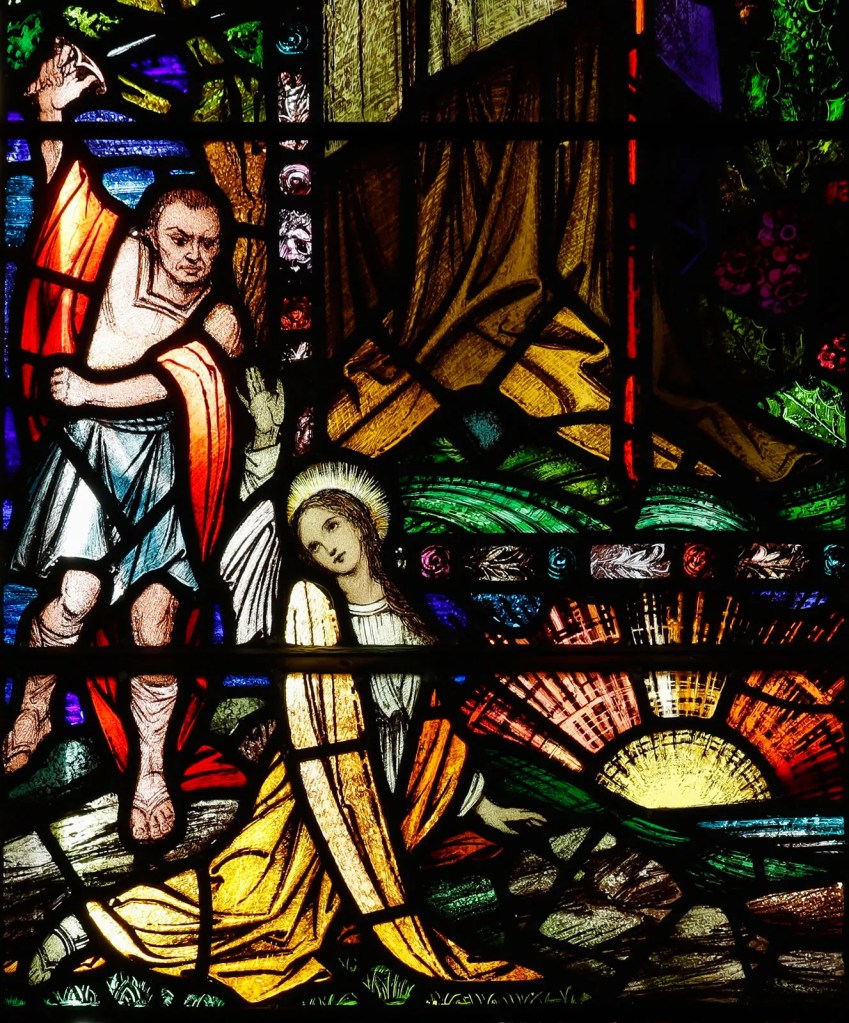
On the night of Palm Sunday, March 20, 1212, with the consent of the Bishop, Clare, along with her Aunt Bianca and a cousin, set out for a prearranged meeting with Francis and his companions. Their meeting place was the Portiuncula, a small chapel dedicated to the Blessed Mother, which Francis had restored. There, in the soft glow of the candles, Francis cut off Clare’s beautiful golden hair, a symbolic act demonstrating that she was no longer bound by the laws of man or society, but by the will of God. Clare then exchanged her exquisite dress for a rough woolen habit and veil, her fine leather shoes for wooden sandals, and her jeweled belt for a knotted rope. Francis then brought her to the convent of the Benedictine nuns of San Paulo, since she was the first woman follower of Francis, and there was no residence for her as yet. With the Benedictine Sisters, Clare would learn how to live the life of a nun in a religious community.

It didn’t take long for Clare’s father to find her and attempt to force her back home. She adamantly refused, professing that she would have no other husband than Jesus Christ. Clare’s family, desperate to reclaim their daughter, tried every tactic. They dangled jewels and whispered promises of status and prestige. When persuasion failed, they resorted to force. One day, they stormed the chapel where Clare sought solace. She clung to the cold stone of the altar and defiantly revealed her cropped hair. The scissors had severed more than her lovely hair; they had cut her ties to earthly things. Her family, stunned by her resolve, finally relented and left Clare in peace.
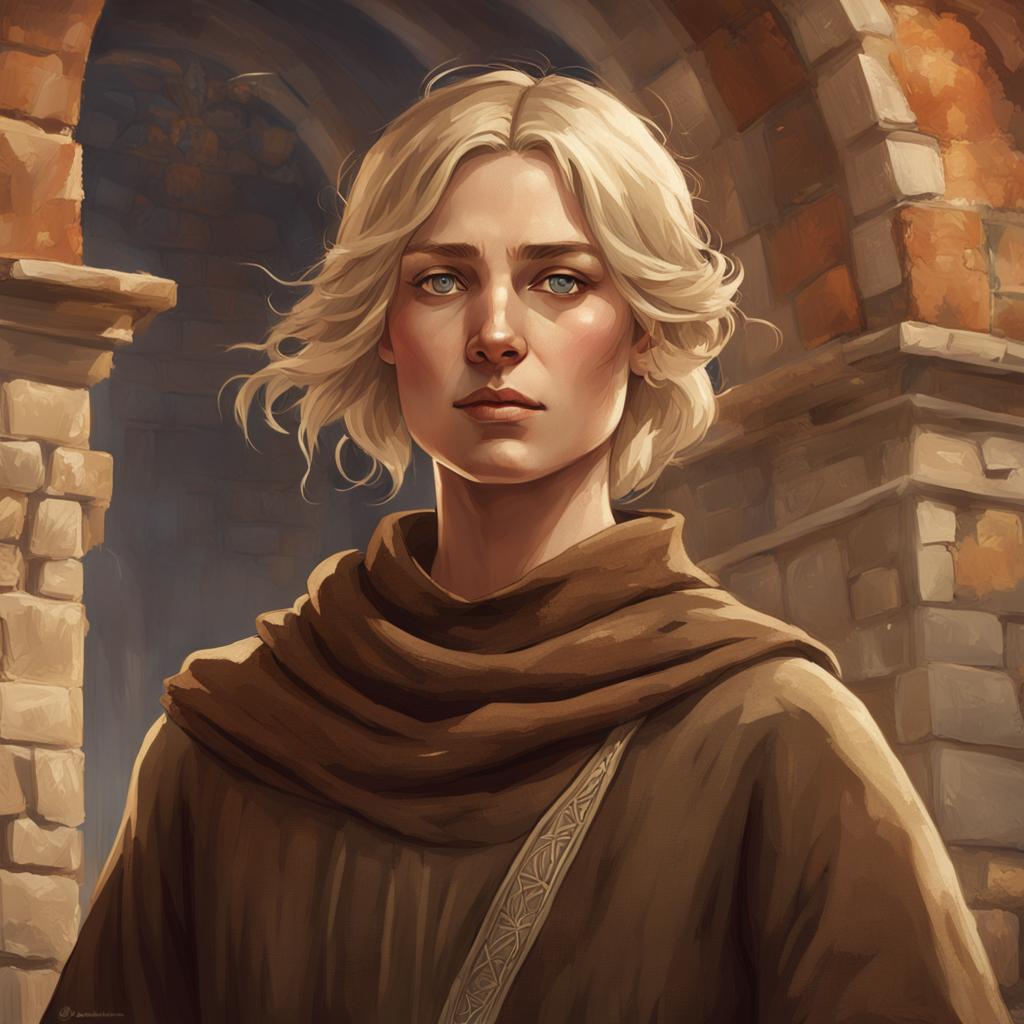
Clare’s hair was cut as a symbol of her renunciation of worldy things and her commitment to God.

In order to give her the greater solitude she needed, Francis then sent Clare to Sant’ Angelo in Panzo, another Benedictine convent, nestled on the flanks of Subasio. There, Clare’s days were spent in prayer and contemplation. But fate wove another thread into her story: Sixteen days later, her sister Catarina arrived, also wanting to pursue the path Clare had chosen. Catarina shed her former name and embraced a new one—Agnes. The family had now lost two daughters to a higher love than human marriage. Soon their father’s brother Monaldo arrived, flanked by a group of stern men. As Clare prayed for Agnes’ safety, Monaldo demanded Agnes’s return, but Agnes would not be swayed. Eventually, their uncle gave up and left.

It wasn’t long before other women joined Clare and Agnes. It was obvious that a convent would have to be built for them as soon as possible. Their dwelling, hastily constructed near the church of San Damiano, became a peaceful sanctuary of simplicity, poverty, austerity and seclusion. This was the first community of the Poor Ladies of San Damiano, as they called themselves — the Second Order of Francis. After Clare’s death, they would become known as the Clarisse, or Poor Clares in English.

In the beginning, having no formal rule to guide them, Clare and her companions followed a simple formula vitae, or life formula, given to them by Francis, which can still be found among his works. Unlike the Franciscan friars who roamed the countryside preaching and evangelizing, Clare’s nuns found their sanctuary within the sturdy walls of enclosure. For women, an itinerant life such as the friars led was a distant dream. Their days were etched with the simplicity of manual labor and prayer. The daily life of the Poor Ladies of San Damiano combined the joy and simplicity of the Franciscan call within the framework of their contemplative community.

Their days began with Morning Prayer, Mass and reception of the Eucharist—the heartbeat of their existence. Throughout the day, they prayed the Canonical Hours, read Scripture and other spiritual literature, and lived mostly in silence. Clare considered work a grace—a way to banish idleness without extinguishing the spirit of prayer. They made altar breads (hosts), tended to secretarial tasks, sewed, cooked, and maintained the monastery. Two sacred hours were set aside for private prayer—one at dawn, the other in the evening. Some sought to pray before the Blessed Sacrament; others communed with God in nature. Music—from Gregorian chants to contemporary compositions—enriched their days, echoing Francis’s love for all things. This was a time of great simplicity and devotion, where the women relied solely on their faith and the teachings of Francis. They imitated Christ, following His footsteps with joy, trusting to God for their daily existence.

In 1215, at the insistence of Francis, Clare reluctantly accepted the mantle of Abbess at San Damiano at the age of 21. She continued in that role until her death in 1253. She preferred the titles “mother,” “handmaid,” or “servant.” Shyness veiled her authority, and when she gave orders, it was with humility. The tedious tasks, like scrubbing floors and mending habits, she reserved for herself. The nuns were her flock, and she looked after them with maternal tenderness.

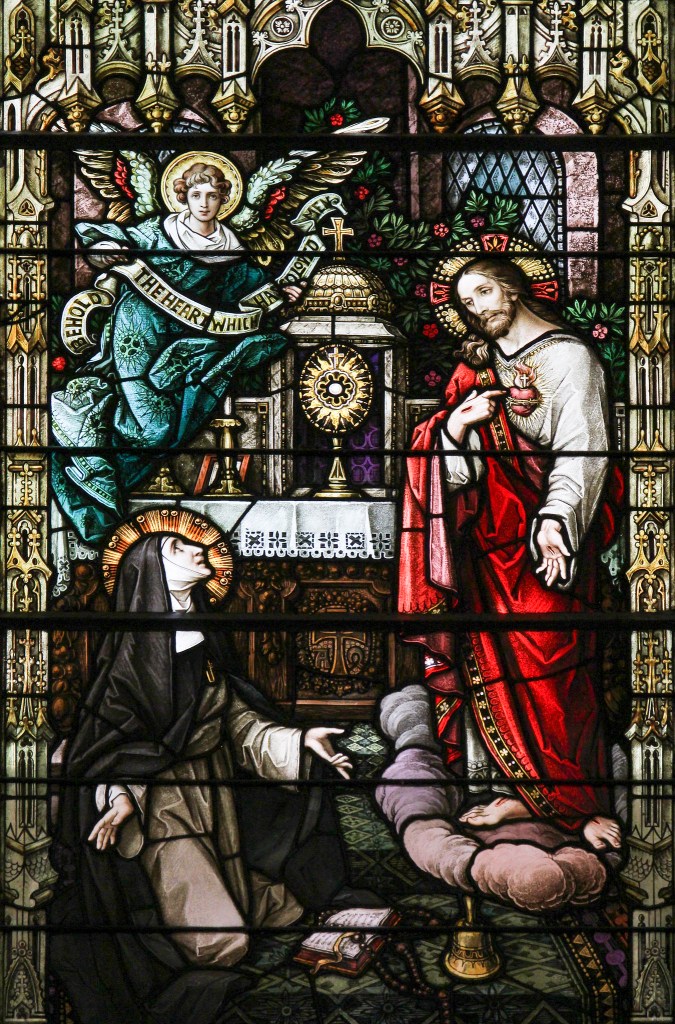
Clare had a profound and special devotion to the Holy Eucharist. To deepen her love for Christ crucified, she memorized the Office of the Passion, a beautiful book of prayers composed by Francis himself. She would emerge from prayer with her face luminous, glowing with peace and joy. Eyewitnesses claimed she possessed a radiant beauty, even without the luxurious trappings of her earlier life. Under Clare’s wise and gentle and guidance, the community of San Damiano flourished. It became a sanctuary of every virtue, a true nursery of saints. The nuns there lived lives of simplicity and holiness, inspired by Clare’s example. They called her “alter Franciscus”—”another Francis” — because she so perfectly mirrored his virtues, his simplicity.

Francis and Clare shared a rare and enduring friendship and spiritual bond. Francis was Clare’s inspiration, her touchstone, her spiritual father figure. When residing at Assisi, he often visited Clare to give her holy counsel, to which she trustingly deferred. Clare, in turn, played an important role in supporting and encouraging Francis throughout his life, especially during times when he was assailed with doubts. When he expressed to Clare his wish to lead a more contemplative life, Clare persuaded him to continue his mission of working among the people.

St. Francis & St. Clare

Clare’s heart was filled with joy as she saw her family join her in this sacred journey. Her younger sister Beatrix, her widowed mother Ortolana, and her faithful Aunt Bianca, all eventually followed Agnes into the Order, creating a close-knit family of faith. However, as the community grew, so did the need for a more structured rule. In 1219, while Francis was away in the East, Cardinal Ugolino, the protector of the Order, drafted a written rule for the Poor Ladies, based on the Rule of St. Benedict. Unfortunately, this new rule, approved by Pope Honorius III, inadvertently stripped the Poor Ladies of their Franciscan identity of absolute poverty, making them more like a congregation of Benedictines. When Clare discovered that the new rule allowed the holding of property in common, she was deeply troubled. This was entirely against the intentions of Francis, who had forbidden both his friars and the Poor Ladies from possessing any worldly goods, even in common. They were to depend entirely on what the Friars Minor could beg for them. Clare’s resistance to these changes was both courageous and steadfast.

When Francis, ill and with failing eyesight, came to visit to San Damiano for what would be the last time, Clare provided a small hut for him in an olive grove near the monastery and served as his caretaker. In this peaceful and secluded place, Francis composed his famous “Canticle of the Sun.” After Francis’s death, Clare and her community had the opportunity to venerate his remains, especially the stigmata on his hands and feet, a moment poignantly captured in one of Giotto’s frescoes.

In 1228, Cardinal Ugolino, now Pope Gregory IX, visited Assisi for the canonization of Francis. He took this opportunity to visit Clare at San Damiano and urged her to accept some provision for the unforeseen needs of the community. Clare, however, firmly refused. When Gregory offered to absolve her from her vow of strict poverty, she responded with unwavering conviction, “Holy Father, I crave for absolution from my sins, but not to be absolved from the obligation of following Jesus Christ.” The Pope was deeply moved by Clare’s heroic commitment to poverty. His admiration and fatherly affection for Clare is evident in his letters to her, which still exist today.

Ultimately, on September 17, 1228, he granted her the unique privilege — the first of its kind ever issued by the Vatican — that allowed Clare and her community to continue living in absolute poverty as St. Francis had intended. The original autograph copy of this privilege is preserved in the archive at Santa Chiara in Assisi, a testament to Clare’s unwavering faith and dedication.

THE RULE OF THE POOR CLARES:

Clare’s loyalty to Francis’s ideals and teachings was evident throughout her life. Always dedicated to his rule and mission, she was the embodiment of the spirit of the Franciscan movement.  The Rule of the Order of the Poor Ladies, written by Clare of Assisi in the 13th century, is a set of guidelines for the nuns in this religious community. The Rule emphasizes simplicity, humility, and a deep commitment to spiritual life, inspired by the teachings of St. Francis of Assisi.

Here are the key points in simple terms:

  1. Poverty: The nuns live a life of extreme poverty, owning nothing personally or as a community. They rely entirely on donations and alms for their needs.
  2. Chastity: They take a vow of chastity, dedicating their lives to God and refraining from marriage and romantic relationships.
  3. Obedience: The nuns vow to obey their superiors and the rules of the Order.
  4. Enclosure: They live in a cloistered environment, meaning they stay within the confines of their monastery and do not go out into the world.

There is no evidence that Clare ever ventured beyond the boundaries of San Damiano. Yet, her influence was so great that Popes, Cardinals and Bishops often came to consult her. Although we do not have too many details of her life in the cloister, “hidden with Christ in God” to use the words of St. Paul, we do know that, inspired by Francis, Clare embraced a life of profound poverty, humility, and self-denial. She became a living reflection of St. Francis’s virtues, dedicating herself entirely to the service of God. Clare also witnessed the foundation of monasteries of Poor Ladies spreading far and wide across Europe, a testament to the enduring legacy of her devotion and leadership.

THE EUCHARISTIC MIRACLE OF ST. CLARE

In the year 1234, the valley of Spoleto was under siege by the army of Frederick II. As the soldiers prepared to assault Assisi, they scaled the walls of San Damiano under the cover of night, much to the horror of the nuns. Despite being ill at the time, Clare went to the chapel and prayed, “Behold, my Lord, is it possible You want to deliver into the hands of pagans Your defenseless handmaids, whom I have taught out of love for You? I pray You, Lord protect these Your handmaids whom I cannot now save by myself.” She suddenly heard a voice from the tabernacle say, “I will always protect you.” Clare then calmly took the ciborium – a large covered cup containing the Eucharist — from the altar and approached an open window where the invaders had placed a ladder. With unwavering faith and courage, Clare raised the Blessed Sacrament high. Miraculously, the soldiers who were about to enter the monastery fell back as if blinded by a dazzling light, and those who were ready to follow them fled in terror.

Eucharistic Miracle of St. Clare

This miraculous event, an account of which is recorded in the writings of Tommaso da Celano, a Franciscan Friar who lived during the time of St. Clare, is the reason St. Clare is often depicted in art holding a ciborium.

Some time later, a larger force led by General Vitale di Aversa, who had not been present during the first attack, returned to launch another assault on Assisi. Clare and her nuns knelt and begged God that the town be spared. Suddenly, a violent storm arose, scattering the soldiers’ tents. They fled in panic. The grateful people of Assisi attributed their deliverance from harm to Clare’s intercession. Their love for Clare, whom they called “the Seraphic Mother,” became even more fervent as she neared the end of her life.

Even as the years etched lines on her face, Clare’s heart remained aflame with the love of Christ. She outlived Francis by 27 years, but suffered serious illness for most of those years. On a cold Christmas Eve in 1252, Clare  lay in her humble cell at the convent of San Damiano. She was gravely ill, her frail body unable to join her fellow Sisters at the Midnight Mass in the new Basilica of St. Francis, one mile from the convent. Her heart ached with longing to be present at the celebration of the Holy Eucharist. As the night progressed, feeling lonely and on the verge of tears, she closed her eyes and poured out her soul to God, expressing her sorrow and yearning.

Suddenly, a miraculous vision unfolded before her. The bare wall of her cell transformed into a vivid scene of the Midnight Mass at the Basilica. She could see the altar, the flickering candles, and the priests in their vestments. The sacred hymns and prayers filled her ears as if she were physically present in the Basilica. Her heart swelling with joy and gratitude, Clare watched the entire Mass unfold, recognizing the familiar faces of the friars and the faithful gathered there. The vision was so clear and detailed that she could recount every moment the next day. This miraculous event brought immense comfort to Clare, reaffirming her deep connection with the Divine, even in her physical weakness. It was a testament to her steadfast faith and the special graces bestowed upon her. Because of this vision, Pope Pius XII designated Clare as the patron saint of television in 1958.  

Having heard that Clare was seriously ill, Pope Innocent IV came to visit her a few days before she died, and gave her absolution. On August 11, 1253, she breathed her last, after murmuring softly to herself, “Go forth in peace, for you have followed the good road. Go forth without fear, for He Who created you has made you holy, has always protected you, and loves you as a mother. Blessed be You, my God, for having created me.”

Wax figure of St. Clare at the Basilica di Santa Chiara in Assisi

Clare was canonized on September 26, 1255 by Pope Alexander IV. Just a year after her canonization, the foundations of the Basilica di Santa Chiara began to take shape beside the ancient church of San Giorgio. But Saint Clare’s influence extends far beyond Assisi, with her name gracing numerous places worldwide.

A charming tradition that has endured through the centuries is an offering of eggs to the Poor Clares as a plea for good weather, especially for weddings. This custom is particularly cherished in the Philippines, at the Real Monasterio de Santa Clara in Quezon City and in Obando, Bulacan. The practice is said to have originated from the dual meaning of Clare’s name in Castilian, where “clara” signifies both a clear interval in weather and the white of an egg.

St. Clare of Assisi’s feast day is celebrated in the Roman Catholic Church on August 11, and in the Church of England and other Anglican Communion churches with a Lesser Festival on the same date, ensuring that her spirit and contributions to faith and community remain vibrant and honored across the world.

SPIRITUAL LESSONS FROM ST. CLARE OF ASSISI

Beyond her miracles, St. Clare of Assisi’s life offers several inspiring aspects:

  1. Radical Poverty: St. Clare embraced a life of radical poverty, following in the footsteps of St. Francis. She renounced material wealth, choosing simplicity and dependence on God. “If we love things, we become a thing,” she said. “If we love nothing, we become nothing.” Although we may not choose or be able to embrace poverty to such an extreme as she did, her commitment to poverty was a powerful witness to the Gospel. Clare’s life reminds us that material success and possessions will not follow us into eternity. Rather than obsess over money or allow it to cause us undue anxiety, we can embrace Christ’s words during the Sermon on the Mount: “Do not worry and say, ‘What are we to eat or drink?’ or ‘What are we to wear?’ All these things the pagans seek. Your heavenly Father knows that you need them all. Seek first the kingdom of God and his righteousness, and all these things will be given you besides.  Do not worry about tomorrow; tomorrow will take care of itself. Sufficient for the day is its own evil.”  Matt. 6:25-34
  2. Courage and Perseverance: Clare’s decision to cut her hair and leave her family to join Francis was bold and courageous. Despite societal norms, she stood firm in her faith and vocation. In this way, she stands as a role model for modern women to pursue their own path fearlessly, in accordance with God’s plan. Her perseverance in discerning and following God’s call to live a life of prayer and service is admirable, inspiring us to discern and follow God’s call in our own lives.
  3. Deep Prayer Life: Clare’s devotion to prayer was steadfast. She spent hours in contemplation, seeking intimacy with God. Her reliance on prayer sustained her during trials and inspired others.
  4. Compassion for the Poor: St. Clare cared for the poor and marginalized. She established the Order of Poor Ladies, later known as the Poor Clares, to serve those in need. Her compassion extended beyond words to practical acts of love.
  5. Eucharistic Devotion: During the siege of Assisi, Clare’s faith and unwavering belief in Christ’s Real Presence in the Eucharist led her to courageously hold up the Blessed Sacrament, resulting in the enemy’s retreat. She was, in today’s vernacular, “willing to bet her life on it.”
  6. Sisterhood and Community: Clare fostered a strong sisterhood within her order. Her leadership and commitment to communal life created a supportive environment where women could grow spiritually together, inspiring us to help one another to do the same.
  7. Joy Amid Suffering: Despite physical ailments, Clare radiated joy. Her joy came from her relationship with God, and she shared it with others. Her example teaches us to find joy even in adversity.

St. Clare’s life inspires us to live authentically, love selflessly, and seek God above all else. She followed in the footprints of Christ, leaving her own behind for others to follow.

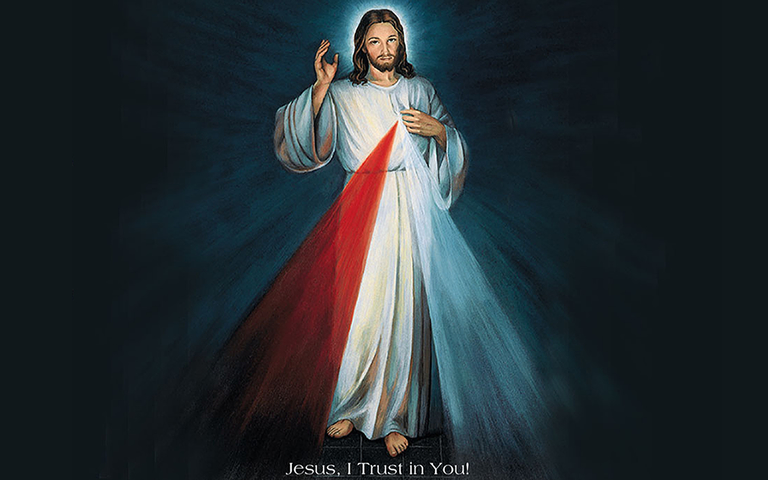
Clare followed in the footsteps of Jesus

POWERFUL PRAYER TO ST. CLARE

O glorious Saint Clare!

God has given you the power of working miracles continually, and the favor of answering the prayers of those who invoke your assistance in misfortune, anxiety, and distress.

We beseech you, obtain for us from Jesus, through Mary, His Blessed Mother, what we beg of you so fervently and hopefully, if it be for the greater honor and glory of God and for the good of our souls.

O Blessed Saint Clare, your life shines like a beacon and casts its light down the ages of the Church to guide the way of Christ. Look with compassion on the poor and humble who call on you for help.

As you bow before your Eucharistic Lord in Heaven, speak to Him of my afflicted body and my broken spirit. Ask Him to heal me and to wash away my sins in His precious Blood.

Great Servant of Christ, remember the needs of my family and all those I pray for. Defend us from everything that would threaten our faith.

Hear the cry of the poor and make it a song of intercession, rising from your poor heart to the Eucharistic Heart of Jesus, our Healer, our Savior, and our Lord. Amen.

Saint Clare, Pray For Us!
Amen.

St. Clare of Assisi, pray for us!

KATERI TEKAWITHA, “Lily of the Mohawks”

First Native American Woman Saint

To watch the YouTube video, click on the arrow in the thumbnail below:

Kateri Tekakwitha, “Lily of the Mohawks”

Around 1656 in the Mohawk village of Ossernenon, located in what is now northeastern New York State, a baby girl was born. Little did anyone know that this child would grow up to become a significant figure in both Native American and Catholic history. Her parents named her “Little Sunshine,” because she was born at sunrise and had a cheerful disposition. Her father, Kenneronkwa, was a Mohawk chief of the Turtle Clan, one of the three separate extended family networks of the Mohawk nation, the other two being the Wolf clan and the Bear clan. Her mother was an Algonquin woman named Kahenta, who had been captured by Mohawk warriors and brought to their homeland. She was eventually adopted and assimilated into the tribe, but with one important difference: before her capture, Kahenta had been baptized as a Catholic and educated by French missionaries. Kenneronkwa wished to maintain peace between the Mohawk nation and the French, and was tolerant of the spread of the Catholic faith. Kahenta likely introduced Little Sunshine to Jesus, Mary, and the Christian faith as she grew up in a fully Mohawk culture, although Kenneronkwa did not consent to the baptism of his children.

Their village was a melting pot of cultures and traditions. Because the Mohawk had lost so many of their people  to warfare and disease, they actively absorbed captured natives from other tribes, particularly their rivals, the Huron. This diversity would have exposed the children of the village to a rich tapestry of Native American cultures from an early age.

Four years later, a devastating smallpox epidemic swept through the village, claiming the lives of Kenneronkwa, Kahenta, and their baby boy. Little Sunshine survived, but the disease left its mark – her face was scarred, her eyesight impaired. She was adopted by her father’s sister, and her aunt’s husband, who had succeeded Kenneronkwa as the new chief of the Turtle Clan. In their Haudenosaunee culture, this adoption meant that they treated her exactly as if she were their own biological child. Haudenosaunee parents typically gave their children names later in life, after observing unique traits about them. The little girl’s adoptive parents renamed her ‘Tekakwitha,’ which in English means ‘she walks groping for her way’ or ‘she puts things in their place.’ This name reflected both her physical reality—having to feel her way around due to her impaired vision—and her personality traits. Little Tekakwitha, now an orphan, indeed had to navigate her way through her new life while dealing with the physical and emotional scars of her ordeal.

Tekakwitha’s childhood and teenage years were set against a backdrop of considerable upheaval. The Mohawk were caught between French and Dutch colonists competing for control of the lucrative fur trade. In 1666, when Tekakwitha was about 10 years old, a significant French military campaign targeted the Mohawk territory. The Mohawk, facing overwhelming odds, strategically withdrew from their settlements rather than engage in direct conflict. The French resorted to destructive measures by burning Mohawk towns and destroying food supplies, thus creating a severe threat of famine. But the Mohawk people, including young Tekakwitha, managed to survive, aided by the support of the other Haudenosaunee nations and their traditional practice of maintaining substantial food reserves. In the aftermath, the Mohawk rebuilt their communities, with each clan establishing new primary settlements.

In 1667, when Tekakwitha was 11, three Jesuit missionaries arrived in her village. She was fascinated by these strange men in black robes, speaking of a God she had never known. Her uncle did not want Tekakwitha to convert. He was wary of Christians and often opposed them, which created tension when she began showing interest in Christianity. But this encounter with the Jesuits eventually would prove to be a great turning point in Tekakwitha’s life.

Despite her interest in Christianity, Tekakwitha continued to grow up immersed in Mohawk culture. Over the years, her eyesight had improved somewhat, and she became skilled in the traditional women’s arts of learning to make clothing, weave mats, process animal pelts, tend crops, and prepare food. But there was something different about Tekakwitha – she was described as a modest girl who often avoided social gatherings.

Despite the turmoil around her, Tekakwitha’s strength of character shone brightly. In the summer of 1669, when she was around 13, she shocked everyone by refusing to consider marriage. In a bold statement to her confessor, she declared, “I can have no spouse but Jesus,” and even went as far as to say, “I have the strongest aversion to marriage.”

That same year, Mohican warriors attacked her village. Instead of hiding, Tekakwitha joined other girls in helping a priest named Jean Pierron tend to the wounded, bury the dead, and carry food and water to those in need, demonstrating her compassionate and caring nature.

As Tekakwitha grew older, the pressure to conform to traditional expectations intensified. When she was about 17, her adoptive mother and another aunt tried to arrange her marriage to a young Mohawk man. But Tekakwitha stood her ground. In a dramatic turn of events, she fled from her cabin and hid in a nearby field to avoid the marriage. Her determination was so strong that eventually, her aunts gave up their efforts to marry her off.

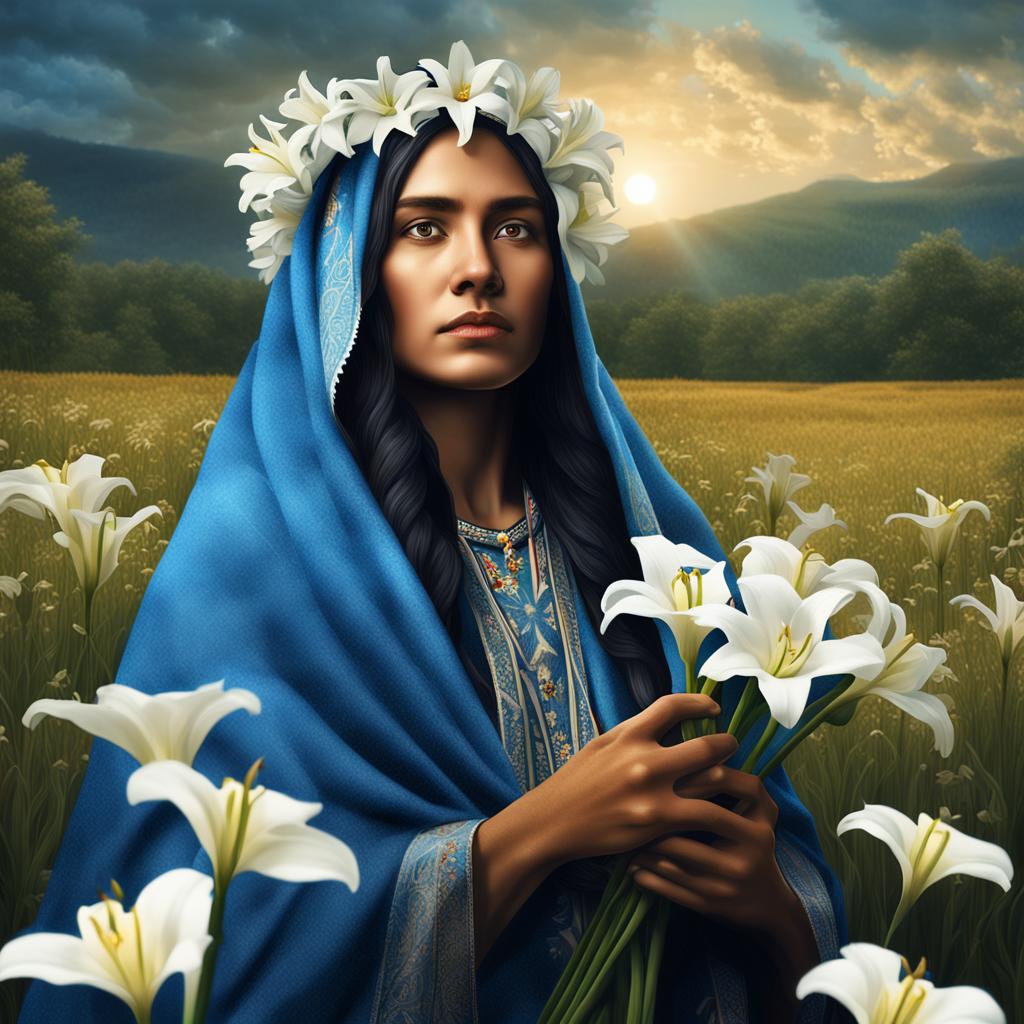
In the 1600’s, the Haudenosaunee men and women donned cloth garments, adapting their attire to various occasions, much like we do in our modern world. The women’s fashion, in particular, was a vibrant tapestry of colors, adorned with intricate beadwork that told stories of their rich culture. Unmarried Mohawk women of that era had a unique custom of leaving their hair loose and unbraided, a symbol of their status and freedom. Tekakwitha, however, stood out from the crowd with her distinctive choice of attire. While her peers favored the popular red shawl draped over their shoulders, Tekakwitha opted for a Marian blue shawl that she wore over her head. This wasn’t merely a fashion statement; it served a practical purpose, shielding her sensitive eyes and partially concealing her scarred face. Although self-conscious about her smallpox scars, she embraced them with true humility, viewing them as a blessing that allowed her to focus more on her spiritual life rather than receiving attention for her appearance.

In the spring of 1674, when Tekakwitha was 18, she met Jesuit priest Jacques de Lamberville, who was visiting her village. In a brave move, Tekakwitha openly shared her story with him and expressed her desire to become a Christian. This marked the beginning of her formal Christian education as she started studying the catechism with Lamberville.

Tekakwitha’s journey to Catholicism was significantly influenced by Mohawk converts who had embraced the faith. These role models lived out their faith in a way that made a deep impression on her. Their commitment to Jesus Christ and their ability to integrate their Catholic faith with their Mohawk culture showed Kateri that she could do the same. However, her decision to convert was not an easy path, as it sometimes led to tensions within her family and community, particularly given the complex political landscape of the time. Even before her religious conversion, her refusal to marry and start a family – values deeply ingrained in Mohawk culture – strained her relationship with her adopted parents. Her embrace of Catholicism in 1676 only increased the tensions.

Tekakwitha’s baptism on Easter Sunday of 1676 marked a significant milestone in her spiritual journey. The choice of her baptismal name, “Kateri,” which means “Catherine” in English, remains a topic of speculation. Some biographers suggest she named herself after St. Catherine of Siena, the contemplative mystic, while others propose St. Catherine of Alexandria, who was martyred for her faith. It’s possible that Kateri identified with both the mystic and the martyr, adding profound meaning to her chosen name and identity. Her baptism marked the beginning of her deep and personal relationship with God. Her faith was not just a set of beliefs but a way of life that influenced every aspect of her existence.

Holy Mohawk Catholics played a significant role in Kateri’s conversion. Many lay Catholics bore witness to their faith, sharing their testimonies of life in Jesus Christ and inviting their fellow Mohawk to follow Him. While Jesuit priests were involved in her instruction, it was the evangelization by Mohawk Catholics, living out their faith within their culture, that deeply impressed her. By this time, some of the Mohawk Catholics advocated for re-establishing themselves at the St. Francis Xavier du Pres settlement at Caughnawaga — now known as Kahnawake. It was situated on their traditional northern frontiers in what is now southern Quebec. Known as “the praying village,” it was founded by a devout Oneida married couple, in conjunction with the Jesuits. Migrating to Caughnawaga would allow Mohawk Catholics to live their faith intentionally and position them to dominate a trading route with the French, while also guarding the southern approach to Montreal.

Kateri Tekakwitha found herself at the center of a cultural and spiritual storm. Her adopted father took a very harsh approach to maintaining unity and keeping people rooted in Mohawk territory. This stance, largely supported by the influential clan mothers, led to severe consequences for those who chose to leave. But rather than convincing them to stay, the chief’s stringent policies actually encouraged Mohawk Catholics more than ever to migrate to Caughnawaga. Kateri, as the daughter of a Turtle clan chief, was in a quandary further complicated by her adopted sister’s conversion and subsequent move to Caughnawaga with her husband.

As a devout Catholic, Kateri’s decision to observe Christian practices, such as refraining from work on Sundays and holy days, was perceived by many as shirking her duties to the Mohawk nation. Yet, despite facing opposition from her tribe and even her own family, Kateri remained steadfast and courageous in her faith. She endured escalating hostility, including being insulted and ostracized, harsh labor, having stones thrown at her, and being denied food, yet she persevered in her Christian beliefs. Even as she faced persecution from her own people, Kateri prayed for their conversion and forgiveness, showing a remarkable capacity for love and understanding. In a particularly cruel attempt to prevent her departure, one of her aunts falsely accused Kateri of incest with an uncle, figuring that this would make her unwelcome in the praying village.

Aided by the encouragement of a Jesuit priest, Kateri’s unwavering faith led her to Caughnawaga in 1677, a year after her conversion. In this welcoming community, she could fully embrace her identity as a Mohawk Catholic woman. Kateri showed exceptional devotion to her faith, particularly to the Blessed Sacrament, which she visited frequently throughout the day. She attended daily morning Mass and was often the first to arrive at the chapel, even in harsh winter conditions. At Mass, the priests would pray in Latin, while the congregation sang in their native language. The sermons were preached by Haudenosaunee catechists. Kateri participated in Vespers and Benediction of the Blessed Sacrament in the evening, and received the sacraments regularly. She spent many hours in prayer, both in the chapel and in nature. Along with the other residents, she prayed the Rosary as she worked in the fields. She also worked alongside the Jesuits in caring for the sick, wounded and elderly. Because of her personal sanctity and exemplary virtue, Kateri was soon invited to join the Holy Family Confraternity, a spiritual community at Caughnawaga dedicated to living out Gospel values. They would meet every Sunday afternoon and prayed a special form of the rosary. Her profound spirituality attracted a group of devout women, known as “Kateri’s band,” with whom she contemplated establishing a culturally-aligned religious order, but was discouraged from doing so by the Jesuits, probably because of her poor health. She formed close bonds with Marie-Thérèse Tegaiaguenta, an Oneida convert about her age, and Father Claude Chauchetière, who became her spiritual advisor. Throughout her time in Caughnawaga, St. Kateri’s guiding principle was reflected in her motto, “Who will teach me what is most agreeable to God, so that I may do it?

Still experiencing pressure from her relatives to marry, on March 25, 1679, at the age of 23, she made her consecration of virginity, framing her commitment in matrimonial terms. Instead of getting married in the traditional sense, she decided to become a “bride of Christ.” In this way, St. Kateri demonstrated that she was not rejecting the traditional Mohawk values of marriage and family. Instead, she chose to live out these values spiritually through her union with Jesus. Making a private vow of perpetual virginity was unusual for a young woman in her culture. Her biographer, Fr. Claude Chauchetière, described her chastity as “the most beautiful flower in her crown”.

Kateri’s Vow of Chastity

However, even in this rose garden of spirituality that was Caughnawaga, she wasn’t immune to the thorns of human nature. A painful incident arose when a woman in the community, driven by jealousy and misunderstanding, falsely accused St. Kateri of seducing her husband during a hunting trip. This accusation was particularly hurtful, as it echoed similar false claims made against her in her homeland. Despite the pain this caused, Kateri’s response was one of grace and restraint. She denied the accusation, as did the woman’s husband, but chose not to retaliate. Instead, she made the personal decision to abstain from future hunting trips, wanting to avoid even the appearance of impropriety. Eventually, the the woman  realized her error of rash judgement and repented. But the shadow of this accusation lingered, prompting a Jesuit priest to seek confirmation of St. Kateri’s innocence on her deathbed. While this questioning was undoubtedly distressing for Kateri in her final moments, it served a greater purpose. The priest’s intention was to secure a deathbed testimony that would silence any future detractors and preserve Kateri’s legacy of purity and devotion. This poignant episode highlights Kateri’s unwavering faith and character in the face of adversity, further cementing her status as a model of Christian virtue.

Kateri Tekakwitha’s relationship with nature and creation was deeply intertwined with her faith and cultural heritage. She had a profound connection with the natural world, which was a significant part of her Mohawk heritage. The Haudenosaunee people, including the Mohawks, held a deep respect for nature, seeing it as a gift from the Creator. This respect was reflected in their daily lives, rituals, and spiritual practices. For Kateri, nature was not just a backdrop for her life but a living testament to God’s presence and creation. She often found solace and inspiration in the natural world, which she saw as a reflection of God’s beauty and handiwork. This connection with nature was evident in her prayer life and her contemplative practices.

Kateri would often retreat to the woods to pray, finding in the quiet and solitude of nature a perfect setting to commune with God. The forests, rivers, and fields around her were not just physical spaces but sacred places where she could feel closer to the Creator. Her deep love for the natural world was a way for her to express her gratitude and reverence for God’s creation. She saw the land as a sacred trust, something to be cared for and preserved for future generations. Her relationship with nature resonated with the Haudenosaunee belief in responsible stewardship of the earth, and also was in harmony with her Catholic faith, which teaches respect for God’s creation and the importance of caring for the environment.

Kateri’s devotion manifested in intense ascetic practices that often surpassed the expectations and comfort levels of her Jesuit mentors. These penances, driven by an ardent love for Christ, included extreme fasting and bodily mortifications, which she often concealed from the concerned Jesuits and shared only with close confidantes like Marie-Therese. The severity of Kateri’s self-imposed disciplines reflected a 17th-century Western Catholic theology that emphasized Christ’s suffering. Another intention behind her penances seemed to be reparation: Kateri took on her own body the punishments due to sin that might otherwise fall on the Mohawk nation, whom she loved deeply. Kateri’s asceticism also incorporated traditional Mohawk practices designed to prepare individuals to display their orenda, or “greatness of spirit,” in the face of extreme pain, such ritual torture and death at the hands of enemies. When Marie-Therese informed the Jesuit father that Kateri was lying on a bed of thorns, he ordered her to stop out of obedience.

After a painful illness that left her bedridden in the longhouse, Kateri died on Holy Wednesday, April 17, 1680, softly repeating her last words, “Jesus, Mary, I love you,” in her native language. She was buried according to her people’s traditional customs. The Haudenosaunee Catholics of Caughnawaga honored her with the highest praise they could give: “She died as she lived. That is, a saint.” Upon drawing her last breath, her skin became clear and smooth, with no sign of smallpox scars.  Her face radiated a smiling beauty and serenity which remained until her burial.

Immediately following her death, Kateri appeared in visions to some of her loved ones, assuring them that she was going home to God. These apparitions held a deeper meaning in traditional Haudenosaunee culture than might be apparent to Catholics accustomed to European culture. According to Haudenosaunee beliefs, the souls of the dead would visit their loved ones before departing to the village of the dead.

One night, one of the Jesuits had a dream in which St. Kateri appeared to him. In the dream, their chapel was overturned, and one of Caughnawaga’s Catholics was burning at the stake. This prophecy seemed to come true when a powerful windstorm flattened the church, nearly killing the Jesuits inside. They prayed to Kateri for protection and credited their survival to her intercession. This event, along with the eventual martyrdom of Caughnawaga’s Haudenosaunee Catholics, reinforced their belief in her protective presence. This vision of the overturned church and the persecuted indigenous Christian might have multiple fulfillments. Further south, the La Florida Mission Martyrs, primarily Appalachee and Timucua Catholics, were killed for their faith during an invasion and persecution led by the English. The vision’s fulfillment has likely repeated itself in more recent times, particularly during the 19th and 20th centuries.

Although St. Kateri did not experience martyrdom herself, her witness and prayers had a profound impact on the Haudenosaunee Catholics of Caughnawaga, deepening their commitment to the Catholic faith.

Kateri Tekakwitha’s journey to sainthood is a fascinating tale that intertwines Native American and Catholic traditions. The first written account of her life didn’t appear until 1715, decades after her death. Her commitment to chastity earned her the title “Lily of the Mohawks,” drawing on the flower’s symbolism of purity in Christian iconography. Artistic depictions of Tekakwitha often feature a lily and cross, with feathers or a turtle added to acknowledge her Mohawk heritage. She acquired several other poetic titles, including “the Mohawk Maiden,” “the Pure and Tender Lily,” and “the New Star of the New World.” Her gravestone bears the inscription “the fairest flower that ever bloomed,” reflecting how she was viewed by both her tribal community and European settlers.

Tekakwitha’s legacy sparked an increase in Native American participation in Catholicism. In the 1730s, a convent for Native American nuns opened in Mexico. By the 1880s, Indian Catholic missions and bishops were petitioning for her official veneration alongside Jesuit martyrs Isaac Jogues and René Goupil.

Over the centuries, devotion to Kateri Tekakwitha grew, and numerous miracles were attributed to her intercession. Her reputation spread across North America, with French Canadians reporting miraculous recoveries. People would take dirt from her grave and touch it to their bodies. Many personal miracles were attributed to St. Kateri, and among the French, she was known as the “Genevieve of Canada” for her aid during times of conflict and famine. Native communities across the continent heard of Kateri Tekakwitha long before any Catholic missionaries arrived there.

The path to Tekakwitha’s canonization began in earnest at the Third Plenary Council of Baltimore in 1885. Support came from both U.S. and Canadian Catholics, with 906 Native Americans signing letters advocating for her sainthood. Her cause progressed steadily: her spiritual writings were approved in 1936, she was declared Venerable by Pope Pius XII in 1943. There were so many reports of miracles that St. John Paul II waived the first miracle requirement for her beatification in 1980.

The miracle that led to St. Kateri’s canonization was the healing of a five-year-old boy, Jacob Finkbonner, a descendant of the Lummi nation in Washington state. He was cured of a fatal flesh-eating disease that had attacked his face. Doctors had given up all hope of his recovery. Interestingly, one of Finkbonner’s ancestors had signed a petition to canonize Kateri back in the 19th century.

On Oct. 21, 2012, Kateri Tekakwitha was canonized by Pope Benedict XVI. Although St. Juan Diego is considered the first indigenous saint of the Americas, Kateri Tekakwitha is the first Native American woman saint. Along with St. Francis of Assisi, she is the patron saint of ecology and the environment. Her patronage also includes Native Americans, orphans, people in exile, those ridiculed for their faith, and World Youth Day. She is also one of the patron saints of Canada. Her feast day in the United States is July 14; in Canada, it is celebrated on April 17.

St. Kateri Tekakwitha’s canonization has sparked a renewed interest in the Native American roots of Catholicism in North America, fostering a deeper appreciation for indigenous contributions to the faith, and has reinvigorated efforts to recognize other Native American holy figures, such as the Martyrs of La Florida Missions, Nicholas Black Elk, and Rose Prince. These emerging stories of Native American saints and martyrs are enriching the Catholic Church’s understanding of its diverse heritage in North America.

St. Kateri Tekakwitha was a remarkable figure whose life bridged Indigenous and European cultures during a tumultuous period in North American history. Her life was a powerful witness to the transformative power of faith. Despite the challenges she faced, including the loss of her family, physical ailments, and cultural pressures, St. Kateri remained committed to her spiritual path. Her ability to integrate her Catholic beliefs with her Mohawk identity, her devotion to prayer and the sacraments, and her unwavering commitment to purity and holiness all highlight the central role that faith played in her life. Her legacy remains complex. She is viewed by some as a symbol of religious transformation. Others regard her as a victim of colonization, even though Christianity was never forced upon her; she willingly chose it and embraced it with her entire being. Regardless of interpretation, her story continues to inspire many, showing that true sanctity is possible even in the face of great adversity.

St. Kateri Tekakwitha,
First Native American Woman Saint

PRAYER TO ST. KATERI TEKAKWITHA

by Harold Caldwell

O Saint Kateri, Lily of the Mohawks,
Your love for Jesus,
so strong, so steadfast,
pray that we may become like you.

Your short and painful life 
showed us your strength and humility.
Pray that we may become 
forever humble like you.

Like the bright and shining stars at night,
we pray that your light 
may forever shine down upon us, 
giving light, hope, peacefulness
and serenity in our darkest moments.

Fill our hearts, Saint Kateri Tekakwitha
with your same love for Jesus 
and pray that we have the 
strength and courage 
to become one like you in heaven.
Through Christ our Lord.

Amen.

LORENZO RUIZ, First Filipino Saint – 6 Spiritual Lessons

PATRON OF ALTAR SERVERS, FILIPINO YOUTH, THE PHILIPPINES, PEOPLE WORKING OVERSEAS

St. Lorenzo Ruiz
St. Lorenzo Ruiz

TO WATCH THE YOUTUBE VIDEO, CLICK ARROW ON THUMBNAIL BELOW:

In the bustling streets of 17th century Manila, a young man named Lorenzo Ruiz lived an ordinary life. Born around 1600 to a Chinese father and Filipino mother, Lorenzo grew up in the Binondo district, the heart of Manila’s Chinese community. He learned Chinese from his father and Tagalog from his mother. From his early childhood, Lorenzo’s parents instilled in him a deep Catholic faith. He became an altar boy and sacristan at the local church, where the Spanish Dominican friars took him under their wing and taught him to read and write.

As he grew up, Lorenzo’s skills in calligraphy earned him a reputation as a talented “escribano,” serving as a clerk, notary and translator for the Spanish. He became known for his honesty, trustworthiness, and reliability. He joined the Confraternity of the Holy Rosary and continued to maintain close ties with the Dominican friars, acting as their unofficial messenger. He also helped them minister to people in Manila, particularly in the Binondo area.

Lorenzo the "escribano"
Lorenzo, the “escribano”

Life seemed to be following a predictable path for Lorenzo when he married a native Filipino woman named Rosario. They had two sons and a daughter. Lorenzo was a loving husband and father, who regularly participated in church activities, prayers and devotions. His faith was an integral part of his daily life, influencing his work, relationships and character. Lorenzo, Rosario and their three children lived a simple, ordinary, yet happy and comfortable life.

But fate had other plans for this seemingly ordinary man. In June of 1636, Lorenzo found himself falsely accused of murdering a Spaniard. Fearing that he almost certainly wouldn’t get a fair trial, thus facing death for a crime he didn’t commit, Lorenzo sought the assistance of his good friends, the Dominicans. They secured asylum for Lorenzo with a group of missionary priests and a lay leper, on a small ship headed for Japan.

It’s unclear whether or not Lorenzo realized at first that the others were missionaries. But faced with no other choice, he had to make the heart-wrenching decision to leave his beloved family behind, departing suddenly and secretively under cover of darkness. He bid a hasty and heart-wrenching farewell to his wife and promised to send her money as soon as he could. Most likely, he planned to relocate his family at some point, once he was settled, as he probably could never return to Manila.

Lorenzo bids farewell to Rosario
Farewell to Rosario

The ship left Manila in mid-June 1636, embarking on an arduous journey across treacherous seas. Little did Lorenzo know that he was sailing into the jaws of an even greater danger. At that time, Japan was ruled by the Tokugawa Shogunate, which, though successful in restoring order and unity to the country, was vehemently anti-Western and anti-Christian. The ship’s original destination was a more tolerant portion of the country, but a storm forced them ashore near Okinawa. Lorenzo and his companions were shocked to discover that they had landed in a place where Catholic Christians were despised. The Tokugawa Shogunate was in the midst of a brutal campaign to eradicate Christianity from their shores. Within days of their arrival, Lorenzo and his companions were arrested. For two long years, they endured horrific conditions in Japanese prisons, where they were treated worse than animals. Meanwhile, in Manila, Lorenzo’s family waited in vain for news of him.

In 1637, Lorenzo and his fellow prisoners were transferred to Nagasaki, where they faced gruesome torture and trials for their faith. The Japanese authorities demanded that they recant their Catholic beliefs, but Lorenzo and his companions stood firm. Being only human, Lorenzo suffered a brief period of spiritual darkness and was tempted to renounce his faith. But he found renewed courage in prayer, especially the rosary, and in turn comforted and strengthened his prison companions.

St. Lorenzo Ruiz, praying in prison
Lorenzo Ruiz praying in prison

Then came the ultimate test. On Sept. 27, 1637, Lorenzo and the others were subjected to an excruciating form of torture called tsurushi. They were hung upside down over a pit lined with excrement, their bodies tied to slow the circulation of blood, thus prolonging their agony. One hand was left untied so that the victims could signal if they were ready to renounce their faith and be released. The torturers made cuts in the victims’ heads every few hours to relieve the pressure of blood buildup, thus further delaying their death and lengthening their time of suffering.

Despite unimaginable pain, Lorenzo refused to deny his faith. After three days of this brutal torture, Lorenzo died as a martyr on September 29, 1637. According to historical accounts, Lorenzo’s last words were, “I wholeheartedly accept death for God. Had I a thousand lives, all these to Him I should offer. You may kill me, if that is what you want. To die for God—such is my will.His five companions also died as martyrs. The six bodies were burned, and their ashes scattered into Nagasaki harbor.

Lorenzo’s extraordinary story of faith and courage didn’t end with his death. Centuries later, in 1981, Pope John Paul II beatified Lorenzo Ruiz in the first beatification ceremony ever held outside the Vatican. The ceremony took place in the Philippines, Lorenzo’s homeland.

Beatification of Lorenzo Ruiz
in Manila, Philippines – 1981

The process of becoming a saint in the Catholic Church requires at least one verified miracle attributed to the person after their death, leading to beatification and the title “Blessed.” A second verified miracle is then needed for canonization, where the Pope officially declares the person a saint. Martyrs such as Lorenzo, who died for their faith, are an exception: They can be beatified without a miracle, though they still need one for full sainthood (canonization). These miracles typically result from prayers to the deceased and must be significant events that defy natural explanation. The Church believes that the miracles are performed by God and prove that the deceased person is in heaven and interceding to God on our behalf.

In 1983, just two years after Lorenzo Ruiz’s beatification, a miracle was attributed to his intercession: A two-year-old girl named Cecilia Alegria Policarpio was miraculously cured of hydrocephalus, a buildup of fluid in the brain. Medical professionals had little hope for her recovery. In desperation, Cecilia’s family turned to the intercession of St. Lorenzo Ruiz. Remarkably, Cecilia began to show signs of improvement. One source claims that Cecilia, now known as “Ria,” recounted a vision during her illness. She described seeing a man holding a rosary and looking up to heaven, emanating a bright light. The following morning, her symptoms had vanished, and she could sit up in bed without assistance for the first time. By April 25, 1985, she had recovered to the point where she could walk unassisted.

The case was thoroughly investigated and ultimately recognized by the Vatican as the miracle that supported Lorenzo Ruiz’s canonization on October 18, 1987. Also canonized at that time were Lorenzo’s companion martyrs: the three Dominican priests — St. Antonio Gonzalez, St. Guillaume Courtet, and St. Miguel de Aozaraza — a Japanese priest, St. Vicente Shiwozuka de la Cruz; and the lay leper, St. Lazaro of Kyoto.

Today, St. Lorenzo Ruiz is revered as the patron saint of Filipino youth, the Philippines, people working overseas, and altar servers. His feast day is celebrated on September 28th.

St. Lorenzo Ruiz & Companions, Martyrs
St. Antonio Gonzalez, St. Guillaume Courtet, St. Miguel de Aozoraza, St. Vicente Shiwozuka de la Cruz, Lazaro of Kyoto, St. Lorenzo Ruiz & Companions

SPIRITUAL LESSONS FROM ST. LORENZO RUIZ:

I don’t know about you, but martyrs always intimidate me, because I can never imagine myself aspiring to such bravery as they demonstrated in enduring horrible tortures and death for their faith. But I still believe these heroes can inspire us in many ways that we can relate to, even in our unremarkable, everyday lives. Here are 6 spiritual lessons we can learn from St. Lorenzo Ruiz:

  1. Faithfulness in the small things: St. Lorenzo’s life teaches us that extraordinary courage can be found in ordinary people. Faithfulness in small things prepares us for greater challenges. Through his daily devotion to his faith, his family, and his work, Lorenzo prepared himself for the ultimate test of martyrdom. As we reflect on his life, we’re challenged to consider how we’re living our own ordinary lives. Do we see God’s hand in the mundane and typical? What kind of saints is God preparing us to be?
  2. Daily Prayer and Devotion: Lorenzo found comfort in prayer throughout his life, especially the rosary, which lifted him from the spiritual darkness of imprisonment and torture. This highlights the sustaining power of regular prayer, and inspires us to be faithful to our own prayer life, always striving to find new ways to enhance and enrich it.
  3. Faith in Action: In the Gospel of John we read, “Let us not love in word or talk, but in deed and in truth.”[1 John 3:18] Lorenzo’s active participation in church activities, such as serving as an altar boy and sacristan, demonstrated his religious devotion. Are there ways in which we can more fully participate in the life of our church or community? Are there any volunteer opportunities to which we can lend our time and expertise?
  4. Courage in the face of adversity: Lorenzo’s story teaches us about finding courage to stand firm in our convictions, even in life-threatening situations. Do we speak up when we see injustice or wrong-doing? Or on the other hand, do we attack the people we disagree with, rather than addressing the issue itself?
  5. Trust in God’s Grace During Trials: Lorenzo’s ability to endure torture and still remain faithful shows how God’s grace can support us through unimaginable difficulties. When life seems unbearable, and we think God has abandoned us, we can take comfort in knowing that God is always present, sustaining us even when we don’t perceive His presence with our limited, human senses.
  6. Willingness to Sacrifice Our Own Plans for God’s Greater Plan: Lorenzo apparently loved his life, his work, and his family. It seems likely that he would have been perfectly content to live out the rest of his years in this peaceful, if unremarkable, way. But God had plans for Lorenzo’s greatness, even though in earthly terms it cost Lorenzo everything he loved, and ultimately his life. When at times we find our own plans unravelling, and it seems like we’re losing everything we care about, we can find comfort and inspiration in knowing that God’s plans are always for our greatness and ultimate victory in His Kingdom.
Lorenzo Ruiz, devoted husband and father

At Lorenzo’s canonization, Pope John Paul II said, “Lorenzo Ruiz…reminds us that everyone’s life must be at Christ’s disposal. Christianity means daily giving, in response to the gift of Christ, who came into the world so that all might have life and have it to the full….To die for the faith is a gift to some; to live the faith is a call for all.”

No matter how ordinary we may feel, we can draw inspiration from the life of St. Lorenzo Ruiz, the first Filipino saint, whose unwavering faith and courage in the face of unimaginable suffering continue to inspire millions around the world. Although we may never be called to die for our faith as he did, we still can strive to live our faith as he did.

St. Lorenzo Ruiz
St. Lorenzo Ruiz, pray for us

Prayer to St. Lorenzo Ruiz

O most merciful and almighty God,
You bestowed as gift to Lorenzo Ruiz
The strength to withstand
The overpowering forces of death
For the sake of his faith in You.

Through his prayers,
Help us to follow his example
By overcoming all life’s trials
And eventually, increase
Our hope and love in You.

O St. Lorenzo Ruiz,
You brought honor to your country,
Having been a level-headed
And prudent father of the family,
A witness of Christ in your life
Until your death.

We present all our petitions
To God through your help
So that by our actions,
We may know more and love more
Jesus our Lord and Savior.

We humbly implore
Your intercession O dear St. Lorenzo,
For the infinite glory of God
And in honor of your triumph
As a martyr of Christ
And defender of Christianity. Amen.

ST. MARGARET MARY ALACOQUE, Sacred Heart Visionary

St. Margaret Mary Alacoque

To watch the YouTube video, click arrow on thumbnail below:

“I need nothing but God, and to lose myself in the heart of Jesus.” Those were the words written by an extraordinary woman whose life was utterly transformed by mystical encounters with Christ. Her name was St. Margaret Mary Alacoque, and her powerful visions of the Sacred Heart of Jesus left a lasting impact on the entire Church. If you’re ready to be inspired by the remarkable journey of this visionary saint – her profound faith, incredible supernatural encounters, and the great spiritual legacy she left behind – then keep reading as we explore the extraordinary life and mission of St. Margaret Mary, the Visionary of the Sacred Heart.

Margaret Mary Alacoque was born on July 22, 1647 in Verosvres, a small town in Burgundy, France, a region surrounded by a chain of jagged mountain peaks. She was the fifth of seven children born to Claude, the royal notary of the town, and Philiberte Lamyn Alacoque. Margaret had three older brothers and one younger brother, and two sisters, one older, one younger than she. Both sisters died young, leaving Margaret as the only surviving daughter of the family. The house of her birth consisted of two large buildings separated by a courtyard. The first house, called the cabinet house, was where Margaret was born and today is a chapel devoted to the Sacred Heart of Jesus.

During the 1600’s, the Catholic Church in France was plagued with schisms and heresy, especially Jansenism, a strict, puritanical interpretation of morality with a very limited view of salvation. The dogma of God’s infinite love for man was looked upon with coldness, indifference and doubt. Despite this, Margaret Mary’s family were devout Catholics, and Margaret was devoted to Jesus Christ from early childhood. To make her behave, all an adult had to tell her was that her behavior was offensive to God, and she altered her conduct immediately. When she was 4-1/2, Margaret went to live with her godmother, Mademoiselle de Fautrieres de Corcheval, who was childless and greatly wanted Margaret with her. Since her godmother’s castle was near Margaret’s home, and her father often traveled and would be able to visit regularly, her parents consented.

The Château de Corcheval was an imposing castle, surrounded by mountains and forests. Margaret deeply appreciated its air of solitude. Just outside the gates of the castle was a chapel shaded by trees, where she often went to pray. Two of Mme. de Corcheval’s lady companions taught Margaret to pray, read and write, and als0 taught her catechism. She developed a great and tender devotion to the Blessed Virgin Mary.

Whenever her friends couldn’t find her in prayer at home, they looked in the church, where she usually was found in deep prayer before the Blessed Sacrament. This great love of prayer helped to make her one of the greatest contemplatives of the Church. Margaret wrote in her autobiography, “I was constantly urged to repeat these words, the sense of which I did not understand: ‘My God, I consecrate to Thee my purity! My God, I make to Thee a vow of perpetual chastity!’…I did not know what I had done nor what the words ‘vow’ and ‘chastity’ signified.” She only understood them as giving the complete gift of herself to God.

In 1655, when Margaret was eight, her godmother died, and Margaret returned to her family. At the end of that same year, her father, Claude, who was only 41, died of pneumonia. Though an honest, devout Christian, he was a poor businessman who did not pay his debts nor collect his fees, leaving his family only a modest amount. Margaret’s mother was determined to remedy their financial situation, which caused her to have to travel frequently. So, her two eldest sons were sent to Cluny and the other two went to their Uncle Antoine Alacoque, a priest and the cure’ of Verosvres. Margaret was sent to the Poor Clares of Charolles. Her time there made such an impression on her that she realized this was the kind of life God wanted her to have, even though the Poor Clares Order was not hidden enough to suit her. The nuns prepared her for First Holy Communion at the age of nine. She was a lively little girl who loved playtime and amusements, but after her First Communion she no longer found them as attractive.

Shortly thereafter, she became seriously ill and had to return back home, where she was tenderly cared for by her mother and brothers. Despite their excellent care, she did not seem to be getting better. In Margaret’s own words, “They could find no cure for my malady till they gave me to the Blessed Virgin. They promised her if I were cured, I should someday be one of her daughters. They had no sooner made the vow than I was cured. I ever after experienced the Blessed Virgin’s protection…as of one belonging entirely to her.” During her long hours of convalescence, Margaret felt strongly attracted to prayer. She was more determined than ever to belong unreservedly to God.

It was only after she recovered from her illness that Margaret noticed all the unfortunate changes that had come over the household. Her mother’s efforts to reestablish the family fortune had not succeeded. A new lease of the land was made in the name of her Uncle Touissant Delaroche, who took over its management. His wife became the absolute mistress of the home, where Margaret’s grandmother Mme. Alacoque and her unmarried daughter Catherine were already living. Margaret’s mother was pushed aside, divested of any influence in the household, and treated very unkindly.

Of this Margaret wrote: “God permitted my mother to be deprived of authority in her own house and forced to yield to others. Those in charge so lorded it over her that both she and I were soon reduced to a state of captivity….We had no freedom in our own house, everything was under lock and key, so that I could not even find my apparel when I wished to go to Holy Mass. I was even obliged to borrow clothes. It was at this time that with all my strength I sought my consolation in the most Blessed Sacrament.” But because they lived in the country, far from the church, Margaret could not go to church without the permission of the family. This often was withheld with an absurd accusation that Margaret was covering up a secret rendezvous under the pretense of going to Mass or Benediction.

Hurt and frustrated, Margaret would hide in a corner of the garden, in the stable, or in some other secluded place, where she knelt and poured out her heart in tears to the  Blessed Virgin. She remained there for days without eating or drinking. The other people in the village, pitying her, would come in the evening to give her some food. She would finally return to the house fearful and trembling, where she then was accused of neglecting the house and children, and was not allowed to speak in her own defense. God was her only refuge from all her trials. She prayed continuously, and began to practice austere penances.

But the greatest cross to Margaret at this time was her inability to help her mother in any significant way. When her mother became ill, she was left entirely in Margaret’s care. Margaret was unable to obtain from the head of the household the necessary nourishment for her mother, so she had to beg for eggs and other nutritious food from the people in the village. This was a great trial to Margaret, who was naturally timid and often was received very rudely. One time, her mother was gravely ill, and the doctor said that nothing short of a miracle could save her life. Margaret ran to the church and begged God to heal her mother. When she returned home, her mother was much improved and was completely healed within a few days.

Enduring her relatives’ cruelty was heroic for Margaret. She had a tender, sensitive nature and blossomed under attention and affection, which was sorely lacking in her present environment. Aside from church, her favorite spot was a little wooded area in a valley right outside the gardens that surrounded the house. This would become Margaret’s chosen refuge, where she liked to pray and where she had her first visions. From there she could see the main altar of the church, which was less than half a mile away. Leaning on a rock, she would spend hours in contemplation. At night from her window she could see the little lamp burning before the tabernacle.

It was during this difficult period that the Lord Jesus began to appear to Margaret. In her innocent way, she thought that everyone was favored with such visions, so she did not think it out of the ordinary. She usually saw Jesus crucified or carrying His cross. These visions allowed her to regard her malicious relatives as instruments through whom God would accomplish His holy will, and she was able to treat them with charity.

When Margaret was 17, her circumstances dramatically changed for the better. Her eldest brothers, who were now of age, took charge of the business affairs. Her mother was once again in a position of authority in the household. During the previous 10 years, their Uncle Toussaint, who had most likely died by this time, had regained the fortunes of the family. This meant that now Margaret and her siblings were free to enjoy their lives once again. Since most of them were of marriageable age, there was much social activity at the house. Margaret herself was attracting a lot of attention, and had already received a few good offers of marriage. In appearance, Margaret is said to have been a little above average height and of a delicate constitution. She had an expressive face with soft, clear eyes. Her personality was agreeable and  vivacious, her manner cheerful and graceful, yet with keen intelligence, solid judgement, a noble soul and a great heart.

Young Margaret

Although she maintained her pure, innocent nature, once released from her previous adversity, she now delighted in parties and amusements, cut her prayers short, and stayed away from confession. Lively and bright, she was so fond of fun that it could have led her astray, had she not constantly sought the guidance of Our Lord. At times she would be pierced by remorse, beg God for forgiveness and undertake severe penances. “In spite of all this,” she said. “I fell once again into vanity, and again I offered the same resistance.” One day, during Carnival time, she returned from a masked ball to find the Lord waiting for her. She wrote of this encounter: “My Sovereign Master presented Himself before me all disfigured as He was during his flagellation. He reproached me saying that…I was losing infinitely precious time, of which he would demand of me a rigorous account.” After this experience, Margaret wept bitterly and again subjected herself to severe penances.

She had not forgotten her vow of chastity, and did not want to marry. She felt great pressure to do so by her family, however, especially her mother, who seemed to feel that her own future would be more secure once Margaret was married and settled. On the other hand, Margaret strongly felt God’s urging to honor her earlier vow. Torn between love for God and love for her mother, Margaret suffered much mental anguish for the next several years. She wondered whether she was truly bound by her childhood vow, since she had not fully understood it at the time. She also felt that she was not worthy of a religious vocation. She decided to devote herself to the service of the poor, giving whatever extra money she had to needy children. She also taught them prayers and catechism in a large room within the Alacoque home. She visited their families and nursed the sick ones, despite the fact that she had a horror of blood, wounds and disease.

When Margaret was 20 years old, and still torn between loyalty to her mother and loyalty to God, her two older brothers died within a short time of one another. Her brother Chrysostom then became sole proprietor of the estate and head of the family, and married at the age of 22. James, her youngest brother, was preparing for Holy Orders. Her mother, remembering her past sufferings at the hands of relatives, did not want to live in a household ruled by a daughter-in-law. She tearfully begged Margaret to make a decision to marry and bring her to live with her and her husband. Chrysostom told Margaret it was high time she got married, and James offered her half of his inheritance as a dowry, to further persuade her.

In the midst of all this pressure, God came to the rescue. One day, after Holy Communion, He said to her, “If you are faithful to me, I shall never leave you. I will render you victorious over all your enemies….If you are faithful to me, I shall teach you to know me and shall manifest myself to you.” Arriving home from church, she told her family of her decision. Her mother, convinced that Margaret really meant it, no longer insisted that she marry. In her memoirs, Margaret wrote, “After this, my mother shed no more tears in my presence, but she wept before all with whom she spoke on the subject. Those persons never failed to tell me that if I left her, I would be the cause of her death.”

Despite Margaret’s resolve, her family was not yet convinced. But now she was sure of what she was going to do and lived in peace about her decision. While visiting some relatives in Macon, she learned that her cousin, a pious young woman, was preparing to enter the Ursuline convent. She urged Margaret to come with her. But Margaret preferred to enter a convent where she knew no one, so that her only motive would be the love of God.

Around this time, her brother Chrysostom arrived to take her home, because her mother was very sick and not expected to live. Margaret wrote, “They made me understand that my mother could not live without me, and that I should have to answer to God for her death. This was told to me even by ecclesiastics, which caused me cruel suffering, as I tenderly loved my mother. The devil made use of this ruse to make me believe that my mother’s death would be the cause of my eternal damnation.”

In this state of mental torment, Margaret poured out her tears and prayers at the foot of the crucifix. God answered her prayers by gradually changing the hearts of her family members. A visiting priest of the Order of St. Francis became friendly with the family and had a serious discussion with Chrysostom about his opposition to Margaret’s vocation. Fearful of offending God, Chrysostom had a long talk with Margaret and realized how determined she was about her vocation. He immediately arranged for her departure and accompanied her to the Convent of the Visitation in Paray-le-Monial, which she had decided upon. No sooner had she crossed the threshold than she heard an interior voice whisper, “Here it is that I wish you to be.” She returned home to say her last, heart-rending farewells. Upon leaving her mother, she was swept with a terrible wave of bitterness. “It seemed to me,” she said, “that my soul was being torn from my body.”

She entered the convent of the Visitation on May 25, 1671, at the age of 23. Shortly thereafter, she asked Mother Thouvant, the Mistress of Novices, just what she could do to give herself entirely to God. MotherThouvant answered, “Go place yourself before God like canvas before a painter.”

On Aug. 25, 1671, Margaret received her habit. Almost immediately afterwards, she began to sense the constant presence of the Lord. As one witness at her canonization described, “She was so united to God that, whether working, writing, or reading, she was always on her knees with such recollection as one might expect to see in church.”

The Lord appeared to her in visions from time to time, encouraging and consoling her, and sometimes reproving her for her faults. The other nuns, not knowing about this, were baffled by her behavior. As one biographer put it: “What most astonished the Sisters was not only the long hours that she passed on her knees in the choir or in her cell, her face radiant, her eyes full of tears, but the state of constant abstraction from which it was necessary to arouse her. Her work fell from her hands, and she forgot everything. The poor child’s soul was in heaven, and she did not know how to conduct herself on earth.”

Margaret Mary as a novice,
in an ecstatic state

The Mistress of Novices told Margaret that her behavior was not in accordance with the spirit of the Visitation Order, and if she did not change it she would not be allowed to profess her final vows.

Of this Margaret wrote: “I made every effort to follow the method of prayer taught me, along with other practices; but my mind retained nothing of all those teachings. The beautiful points of prayer vanished, and I could neither learn nor retain anything but what my Divine Master taught me. This made me suffer greatly, for His operations in me were frustrated as much as possible, and I had to resist Him as much as I was able.” To help her overcome her state of absorption, Margaret Mary was assigned as an aide to the Mistress of the Infirmary, who was told to keep her constantly employed. Margaret swept floors, cleaned the nuns’ cells, weeded the garden, and other such tasks. Not being allowed time for prayer, she went to the Mistress and asked if she could resume it. She was reprimanded sharply, told she needed to learn how to unite prayer and labor, and sent on to other numerous and demanding tasks.

It was now August 1672, and Margaret was not yet called to her final vows. She was admired for her humility, obedience, and charity, and although not skillful in domestic ways, she was so willing and eager that the other nuns were touched by her goodness of heart. Yet, as one witness at her canonization attested, “I heard from the Superioress and Mistress of Novices that she would one day be a saint, but that she was so extraordinary that perhaps she was not intended to live out her life at the Visitation.”

Around this time, 52-year-old Mother Marie-Francoise de Saumaise became the Superior of the Visitation convent. She possessed good judgement and fairness, was extremely kind, and had a perfect understanding of the rules of the Visitation Order.  She immediately recognized in Margaret Mary the workings of the Spirit of God, and decided she should be allowed to take her final vows on Nov. 6, 1672. Following this, Margaret rapidly increased in virtue to the point that the whole community was astonished. She entered into a state of entire absorption in God. The other Sisters constantly were having to rouse her from this absorption, and they found her often in the chapel, where she knelt motionless for hours with closed eyes and joined hands, seeing and hearing nothing. But if she was asked to do something in the name of obedience, she responded immediately.

Another Sister once asked her, “My dear Sister, how can you remain kneeling so long?” Margaret replied, “At such times I do not even know that I have a body.”  In today’s terms, it would seem that these were out-of-body experiences, where her spirit resided in the heavenly realm while her body remained on earth. The Sisters called her an “ecstatic.” Other saints who were considered ecstatics were Francis of Assisi, Catherine of Siena and Teresa of Avila, to name just a few.

It was during such ecstatic episodes that Margaret received the grand revelations of the Sacred Heart of Jesus. There were four distinct revelations in all, each separated by a considerable period of time. The first occurred on Dec. 27, 1673. As Margaret Mary knelt before the Blessed Sacrament, she felt entirely filled with the Divine Presence. The Lord said to her,

“My Divine Heart is so passionately in love with humankind that it cannot contain itself within the flames of its ardent charity. It must spread them abroad by your means, and manifest Itself to them.”

He told Margaret Mary nothing more at this point, except that He was going to use her to make this known to the world, but did not tell her when or how. Then Jesus asked for her heart, which she willingly gave, and placed it within His Sacred Heart.

The second revelation took place on July 2, 1674. Margaret wrote: “The Divine Heart was presented to me in a throne of flames, more resplendent than a sun, transparent as crystal. It was surrounded with a crown of thorns, signifying the punctures made in it by our sins, and a cross above.”

During the third revelation, Jesus appeared brilliant with glory, His five wounds shining like five suns. He revealed to Margaret His wish to be known, loved, and honored by all, and to draw them away from damnation. He said that the ingratitude He received from humankind in return for His great love was much more painful to Him than all He had suffered during His Passion. He promised that if an image of His Heart was venerated and worn over a person’s heart, He would “imprint His love on their hearts and destroy all unruly inclinations.”

Sacred Heart of Jesus Revelation to
St. Margaret Mary

Shortly after this vision, Margaret Mary came down with a fever that resisted every remedy. The Mother Superior commanded her to ask God for healing, saying that she would recognize such a healing as a sign of the genuinely supernatural character of Margaret’s visions. After Margaret Mary obediently said a short prayer, her fever vanished, her pulse steadied, and the physician pronounced her cured. Now Mother de Saumaise was faced with a dilemma. The instantaneous cure seemed an acknowledgment of Sr. Margaret’s sanctity. But although Margaret’s visions were extraordinary, she was only 26 and had been a nun for merely two years. After seeking counsel, the Mother Superior concluded that Margaret Mary’s case might involve an overactive imagination and maybe some cleverly disguised illusion of the evil spirit.

When she was told this, Margaret Mary did not know what to do. She tried to resist the interior attractions, fearing that she was in error. “But I could not succeed,” she wrote. “It was impossible for me to resist the spirit that moved me.” One day, while pouring out her heart in prayer, she heard a voice say to her: “Have patience, and await My servant.” She didn’t know what the words meant, but felt comforted knowing that she would receive God’s assistance when the time was right.

It wasn’t long before Margaret Mary met this foretold “servant of the Lord,” who would become her spiritual director, invaluable friend and ally. He was Claude de la Colombiere, a 32-yr.-old Jesuit priest who arrived at the convent to give a conference to the Sisters. When Margaret Mary arrived at the conference, she naturally had no idea he was. But she distinctly heard an interior voice say, “Behold him whom I send to you.” When Fr. de la Colombiere later heard Margaret Mary’s confession, he spoke as if he knew everything that was going on in her soul. Although hesitant at first, before the priest left Paray, Margaret Mary confided everything to him. She emerged from this conversation enlightened and consoled. Father de la Colombiere had told her not to fear the guidance of the Spirit, as long as it did not interfere with her religious obedience. He advised her to follow Its instructions, and that she should make continual thanksgiving for such great favors.

Fr. Claude de la Colombiere

On June 16, 1675, the last of the four Sacred Heart revelations took place, during which Jesus showed His Heart to St. Margaret Mary, saying “Behold the Heart that has so loved men…Instead of gratitude, I receive from most only ingratitude.” He made known to Margaret His requests for devotion to His Sacred Heart, and also made 12 promises of graces that would be bestowed upon all who follow the devotion.

For more about the Sacred Heart devotion and promises, check out my post, “Unlock the Power: The Sacred Heart Devotion”.

Then Jesus charged her with her great public mission to make devotion to His Sacred Heart known throughout the world. Margaret Mary asked, “Lord, how can I?” But Jesus told her to address herself to that servant of God who had been sent to her expressly for the accomplishment of this task — meaning, of course, Father de la Colombiere. When Margaret Mary confided all this to the priest, he asked for a written account that he could study. After examining it carefully and seeking the guidance of the Holy Spirit, Father de la Colombiere told Margaret that she could rely on it, for it indeed came from Heaven. On June 21, Margaret Mary and Father de la Colombiere solemnly consecrated themselves to the Divine Heart of Jesus.

After the last revelation, Margaret fell into a period of intense physical and mental suffering. Her health failed, and she became an object of speculation and suspicion to the other Sisters, who could not comprehend her strange mystical behavior. This is understandable, since they did not know about her visions and revelations. Only her Superiors and Father de la Colombiere knew of these. The Community was divided in opinion about her. They acknowledged her virtue, but her conduct was baffling to them. Some of the Sisters wondered if she were possessed by the devil, and some even sprinkled holy water when they passed her.

In June 1678, Mother Greyfie was elected Superior in place of Mother de Saumaise. She was an austere, rigorous character who had “an extreme distrust for the guidance of extraordinary souls.” It seems that God brought her to the convent to prove beyond a doubt the authenticity of Sister Margaret Mary’s mission. Mother Greyfie, who had heard from Mother de Saumaise about the four Sacred Heart revelations, resolved to ignore them and to see that Margaret adhered in all things to the common life of the Community. She called Margaret Mary to account for whatever went wrong in the convent, and began to take away the permissions that Margaret had previously been granted. One of these was the Holy Hour every week on the night between Thursday and Friday that our Lord had requested of her. Margaret obeyed, but when the Lord in a vision appeared irritated, she feared that a terrible punishment would come upon the community. She told this to Mother Greyfie, who paid no attention. But one day shortly thereafter, one of the youngest and most likable sisters died suddenly and unexpectedly. Mother Greyfie took this as a sign of the Lord’s anger, and quickly restored Margaret’s permission to resume her Holy Hour.

Mother Greyfie still enforced the rest of her orders upon Margaret Mary, however, and paid no attention to Margaret’s physical maladies. Even when Margaret was sick with a high fever, she was obliged to follow every exercise of the Community. Mother Greyfie did not act this way to be cruel; she was responsible for the souls of the Sisters in her charge, and did not want to be a victim of deception. To rise above her doubts once and for all, she resolved to demand a miracle that would have many witnesses. She commanded that Mary Margaret should follow all the Community exercises for five months without once returning to the infirmary due to illness. She told Margaret Mary to ask the Lord to grant her the health to be able to carry this out and not be a burden to the Community, until the the feast day of the Presentation of Our Lady, 5 months in the future. Margaret Mary proceeded to follow these instructions to the letter. There occurred an instantaneous cure, followed by perfect health. But at the end of the five months, on the day designated by Mother Greyfie, Margaret Mary’s condition relapsed so severely that God’s intervention seemed evident.

Shortly thereafter, Father de la Colombiere returned to France and once again visited the Convent in Paray. He had long conversations with Mother Greyfie about Margaret Mary, whom he had always held in high esteem. He told Mother Greyfie that he truly believed that “what passed in this dear Sister came from God.” Upon meeting with Margaret Mary again, it appeared to him that Mother Greyfie’s severity had served to increase Margaret’s virtue and the divinity of her revelations. Father de la Colombiere was by this time extremely ill, and spent his last 6 months of life in Paray. His final wish was to be buried near the altar where Jesus had appeared to Margaret Mary. He died on Feb. 15, 1682. Today he is known as St. Claude de la Colombiere, having been canonized by Pope John Paul II on May 31, 1992.

Mother Greyfie’s six years of being Superior were ending, and Mother Marie-Christine Melin took her place. She was exceedingly kind, and her personality was directly opposite from the severity of her predecessor. She understood the workings of Margaret’s soul and shared with her all the new devotions. She appointed Sister Margaret Mary Mistress of Novices. The novices loved her, because Margaret enkindled the fire of Divine love in their hearts, animated them with her words, and inspired them by example to emulate her. Without disclosing her part in the revelations, she spoke to them of the beauty and treasures of the Sacred Heart of Jesus and the graces they could obtain through devotion to it.

“The Divine Heart is an ocean full of all good things, wherein poor souls can cast all their needs,” she said. “It is an ocean full of joy to drown all our sadness, an ocean of humility to drown our folly, an ocean of mercy to those in distress, an ocean of love in which to submerge our poverty.”

Up to now, none of the Sisters except the Superiors knew that Margaret was the recipient of the Sacred Heart apparitions. But this secret was revealed one day by accident. Mother Melin asked one of the Sisters to read to the Community some notes written by Father de la Colombiere during a retreat. Towards the end of these notes, he described a conversation he’d had with the person who had received the Sacred Heart revelations. Although he did not mention Margaret Mary by name, the nun who was reading suddenly discerned that it was Margaret Mary. As she later said, “When I came to what concerned the revelation of the Sacred Heart, I looked at the venerable Sister. She was sitting with her eyes lowered and looking profoundly annihilated…The Community, feeling the same emotions, understood then that it was Margaret who had made these predictions.”

Devotion to the Sacred Heart slowly began to spread from convents and monasteries to the faithful public.. On Feb. 4, 1689, on the First Friday of the month, the first Catholic Mass in honor of the Sacred Heart of Jesus took place in the chapel of the Convent of the Visitation, in the presence of only the Community. The first public Mass in honor of the Heart was celebrated on the Feast of the Sacred Heart, 19 days after Pentecost, in the Church of the Visitation.

In 1690, Margaret Mary felt her life was drawing to a close, and she begged the Mother Superior to destroy everything that she had ever written, so that no attention would be given to her after her death. Of course, this request, made out of humility, was ignored. She was regarded by all the Sisters as a holy and privileged soul, and they privately looked upon her as already a saint. Despite her angelic and pure expression, her clear gaze seemed to penetrate one’s very soul, and she often had the ability to read hearts. But this was not intimidating, because of her sweetness and modesty. Small miracles seemed to follow her. One day, another Sister wounded herself while splitting wood with an axe. Not wanting to create a fuss, she hid the wound, but when Margaret passed nearby, she secretively touched her wound to Margaret’s garment. The next morning, there was no trace of the wound.

Margaret spoke often of her impending death, but since she was only 43 yrs. old and relatively healthy, no one took it seriously. But she sweetly and humbly insisted that it would be that year, and even told them how it would happen at a time when they were least expecting it. She even named the two Sisters whose arms would hold her as she died.

In the Fall of 1690, the day before she was to begin her retreat she came down with a slight fever. The doctor reassured the Sisters that it was nothing serious, and to all outward appearances, this seemed to be the case. But Margaret Mary, knowing better, asked for a particular Sister, saying that she wanted her nearby when she died. To this Sister, she looked to be suffering, not so much physically, but from inner, spiritual pains that were difficult to discern. Margaret Mary told the other Sister of her all-consuming desire to be with God in Heaven, but said she would remain on earth as long as God willed it.

On Oct. 16, she begged to be given Last Rites, but as she did not appear to be dying, it was refused. So she asked at least to be given Holy Communion. When the Host was brought to her, she opened her arms wide and fervently thanked Jesus for coming to her. She then received what was to be her last Communion on earth.

The next day, she had some fainting spells and again asked for Last Rites, and was again refused. The doctor said he did not feel she was near death, but Margaret replied, “You’ll see!” That evening, she had a slight convulsion, and the Sister tending her ran to call the Mother Superior. When she came, and mentioned summoning the doctor, Margaret said, “Mother, I no longer need anyone but God alone, and to be buried in the Heart of Jesus.” All the Sisters gathered around her bed, weeping. Margaret Mary rallied enough to tell them all to love God without division or reserve. She then asked once again for the Last Rites. As the priest administered the Sacrament, she tried to raise herself up for the anointing. Two Sisters went spontaneously to support her in their arms. Though no one remembered until later, these were the same two Sisters that Margaret had predicted would be holding her when she died.

Death of St. Margaret Mary

Margaret Mary passed from this life to the next at 7:00 p.m. on Oct. 17, 1690, with the name of Jesus on her lips. At that moment, the cry “The saint is dead!” was proclaimed throughout the town. For two days, the townspeople came to view her body, and touched it with chaplets, medals and crucifixes to obtain a blessed relic. She was buried near the spot upon which she had knelt when the Lord appeared to her.

In 1824, the cause for the canonization of Margaret Mary Alacoque was begun.  Two extraordinary cures followed. She was beatified on Sept. 4, 1864 and canonized on May 13, 1920. St. Margaret Mary is the patron saint of devotees of the Sacred Heart, those suffering from polio, and those who have lost parents. Her feast day is celebrated on October 16.

The Sacred Heart of Jesus

PRAYER OF ST. MARGARET MARY TO THE SACRED HEART OF JESUS

Lord Jesus, let my heart never rest until it finds You, who are its center, its love, and its happiness. By the wound in Your heart, pardon the sins that I have committed, whether out of malice or out of evil desires. Place my weak heart in Your own divine Heart, continually under Your protection and guidance, so that I may persevere in doing good and in fleeing evil until my last breath. Amen.  

– St. Margaret Mary Alacoque

UNLOCK THE POWER! THE SACRED HEART DEVOTION

Sacred Heart of Jesus

To watch the YouTube video, click arrow on thumbnail below:

Is your prayer life dull and dry? Do you feel bored and stagnant in your spiritual growth? Or are you looking for a more intimate relationship with Jesus Christ? If you answered yes to any of these questions, get ready to supercharge your spiritual life and benefit from the 12 awe-inspiring promises of Jesus to all those who embrace devotion to His Sacred Heart!

“In the Sacred Heart, every treasure of wisdom and knowledge is hidden,” said St. John Paul II. “In that divine heart beats God’s infinite love for everyone and for each of us as individuals.” 

You’ve probably seen those iconic images – the heart of Jesus aflame, encircled by thorns, and crowned with a cross. But where did this devotion come from, and why has it captured hearts worldwide? Get ready to be enlightened and inspired as we delve into the rich history and profound spiritual depths of the Sacred Heart of Jesus.

HOW IT BEGAN

Although the modern devotion to the Sacred Heart of Jesus was popularized by St. Margaret Mary Alacoque, a French nun who had several visions of Christ in the late 17th century, it actually had its roots in early Church history. Church Fathers such as St. Justin Martyr, St. Irenaeus, and St. Augustine, made references to the Heart of Jesus as a symbol of Christ’s love for humanity.

In the Middle Ages, the devotion grew through the writings and visions of mystics such as St. Bernard of Clairvaux and St. Anselm in the 12th century, who referred directly to the love of the Sacred Heart. In the 13th century, the writings of St. Gertrude the Great spoke extensively of the love of the Sacred Heart for humanity on earth and the souls in Purgatory. During the same century, the Franciscan and Dominican Orders also helped spread this devotion through their preaching on the Sacred Heart as a symbol of Divine Love. All of this laid the groundwork for the revelations of Jesus to St. Margaret Mary Alacoque, a nun of the Visitation Order in Paray-le-Monial, France, from 1673 to 1675.

During the 1600’s, the Catholic Church in France was plagued with schisms and heresy, especially Jansenism, a strict, puritanical interpretation of morality with a very limited view of salvation. The dogma of God’s infinite love for man was looked upon with coldness, indifference and doubt.

But on Dec. 27, 1673, during the first revelation of the Sacred Heart to St. Margaret Mary, Jesus told her, “My Divine Heart is so passionately in love with humankind that it cannot contain itself within the flames of its ardent charity. It must spread them abroad by your means, and manifest Itself to them.”

Vision of the Sacred Heart of Jesus to St. Margaret Mary Alacoque

Of the second vision, Margaret wrote: The Divine Heart was presented to me in a throne of flames, more resplendent than a sun, transparent as crystal. It was surrounded with a crown of thorns, signifying the punctures made in it by our sins, and a cross above.”

During the third revelation, Jesus appeared brilliant with glory, His five wounds shining like five suns. He revealed to Margaret His wish to be known, loved, and honored by all, and to draw them away from damnation. He said that the ingratitude He received from humankind in return for His great love was much more painful to Him than all He had suffered during His Passion. He asked that an image of His Heart be venerated and worn over a person’s heart, promising to “imprint His love on their hearts and destroy all unruly inclinations.”

During the last of the four Sacred Heart revelations, Jesus made known to St. Margaret Mary His requests for devotion to His Sacred Heart and His promises to those that followed it. He charged her with the mission of making this devotion known throughout the world. Keep reading to find out more about the requests and the promises of Jesus!

Because of the visions and revelations of St. Margaret Mary, devotion to the Sacred Heart slowly began to spread from convents and monasteries to the faithful public. It began with images of the Heart, and then with little devotional booklets, which met with considerable success and soon spread to areas outside of France. But so far the devotion was on a private, individual level. For it to be raised to the level of public devotion, it would need the approval of the Pope.

As is usually the case when the Church approves a new revelation or devotion, this was very slow in coming. But public celebrations were allowed on a diocesan level with the permission of the Bishop. On Feb. 4, 1689, on the First Friday of the month, the first Roman Catholic Mass in honor of the Sacred Heart of Jesus was celebrated in France. It took place in the chapel of the Convent of the Visitation in the presence of only the Community. The first public celebration of Mass in honor of the Heart took place that same year on the Feast of the Sacred Heart, 19 days after Pentecost, in the Church of the Visitation.

After this, spread of devotion to the Sacred Heart of Jesus gradually grew. Progress was slow, however, until 1720, thirty years after Margaret Mary’s death, when an outbreak of bubonic plague swept through the city of Marseilles, France, killing 40,000 people. On Nov. 2 of that year, the prelate of Marseilles, Msgr. de Belsunce, solemnly consecrated his diocese to the Heart of Jesus. From that day on, the plague disappeared from Marseilles. Other cities followed the Monsignor’s example, and soon the whole south of France proclaimed devotion to the Sacred Heart. It gradually spread from France throughout the Mediterranean countries. But still Rome had not given its final approval.

Then, on Jan. 25, 1765, Pope Clement XIII officially approved the devotion to the Sacred Heart of Jesus in all the dioceses of France, for Poland, and the Archconfraternity of the Sacred Heart in Rome. In 1856, Pope Pius IX established the feast for the whole Church. A Portuguese nun named Sister Mary of the Divine Heart received visions from 1863-1899, requesting that the whole world be consecrated to the Sacred Heart. This was done by Pope Leo XIII in 1899.

The first church dedicated to the Sacred Heart of Jesus was in the United States, in the little Pennsylvania town of Conewago, not far from Gettysburg. The year 1787 is cut into a stone near the roof, just above a slab of marble bearing a Heart encircled with a crown of thorns and surmounted by a cross.

The Sacré-Cœur (Sacred Heart) Basilica in Paris, France, was built in response to the violence and war in France over the previous century. The church is located on the Montmartre hill, where the first Christians of Paris were martyred in the 3rd century. The site is also traditionally associated with the martyrdom of Saint Denis, the patron saint of Paris. Construction of the Basilica began in 1875 and ended in 1914, after delays due to World War I. It was formally consecrated in 1919, after the War. The basilica has maintained a perpetual adoration of the Holy Eucharist since 1885, and attracts pilgrims from all over the world. 

Sacred Heart of Jesus

WHAT IS THE DEVOTION TO THE SACRED HEART OF JESUS?

The Sacred Heart devotion focuses on the physical heart of Jesus as representing his Divine love for humanity. On June 16, 1675, during the last of the four Sacred Heart revelations, Jesus showed His Heart to St. Margaret Mary, saying “Behold the Heart that has so loved men…Instead of gratitude, I receive from most only ingratitude.” He made known to her the following requests for devotion to His Sacred Heart:

  1. Reception of Holy Communion on the First Fridays: Jesus asked for the faithful to receive Holy Communion on the first Friday of each month for nine consecutive months, a practice intended to honor His Sacred Heart and to promote a deeper communion with Him.
  2. The Holy Hour: Jesus requested the observance of a “Holy Hour” of prayer to provide an opportunity for the faithful to spend time in adoration and reparation to His Sacred Heart.
  3. Consecration to the Sacred Heart: Jesus called for the faithful to consecrate themselves to His Sacred Heart, an act of dedication and acknowledgment of His sovereignty and love.
  4. The Celebration of the Feast of the Sacred Heart: Jesus desired the establishment of a feast day in honor of His Sacred Heart, 19 days after Pentecost, on a Friday, as a liturgical expression of devotion and love towards His Heart.
  5. The Exposition and Veneration of an Image of the Sacred Heart: Jesus requested that an image of His Sacred Heart be publicly exposed and venerated, promising blessings to those who honor the image, thereby fostering a visual reminder of His love and presence.
  6. Acts of Reparation for the indifference and ingratitude shown towards His love, encouraging the faithful to express sorrow and atonement for their own sins and those of others.
  7. Spreading the Devotion: Jesus asked St. Margaret Mary to spread devotion to His Sacred Heart, promising that it would be a source of grace and blessing for those who embraced it, aiming to rekindle love and faith in the hearts of believers.

THE 12 PROMISES OF JESUS

To those who practice devotion to His Sacred Heart, as revealed to St. Margaret Mary, Jesus made the following 12 promises:

  1. I will give them all the graces necessary in their state of life.
  2. I will establish peace in their homes. 
  3. I will comfort them in all their afflictions.
  4. I will be their secure refuge during life, and above all, in death.
  5. I will bestow abundant blessings upon all their undertakings.
  6. Sinners will find in My Heart the source and infinite ocean of mercy.
  7. Lukewarm souls shall become fervent.
  8. Fervent souls shall quickly mount to high perfection.
  9. I will bless every place in which an image of My Heart is exposed
    and honored.
  10. I will give to priests the gift of touching the most hardened hearts.
  11.    Those who shall promote this devotion shall have their names written in My              Heart.
  12.   I promise you in the excessive mercy of My Heart that My all-powerful love will grant to all those who receive Holy Communion on the First Fridays for nine consecutive months, the grace of final perseverance; they shall not die in My disgrace, nor without receiving their sacraments. My divine Heart shall be their safe refuge in this last moment.

For more about the life of St. Margaret Mary Alacoque, be sure to check out my upcoming post, “St. Margaret Mary, Sacred Heart Visionary.” Subscribe so you won’t miss any of my upcoming posts!

A SHORT ACT OF CONSECRATION TO THE SACRED HEART

Sacred Heart of Jesus, filled with infinite love, broken by my ingratitude, pierced by my sins, yet loving me still, accept the consecration that I make to You, of all that I am and all that I have. Take every faculty of my soul and body, and draw me, day by day, nearer and nearer to Your Sacred Side, and there, as I can bear the lesson, teach me Your blessed ways. Amen.
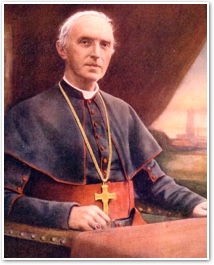
Sacred Heart of Jesus & St. Margaret Mary Alacoque

Getting Life Direction from the Holy Spirit

the-traveler-with-quote

TO WATCH THE YOUTUBE VIDEO, CLICK THE ARROW ON THE THUMBNAIL BELOW:

Do you sometimes feel lost and confused about what direction to take in your life? Some years ago, I was facing a lot of changes and adjustments, as well as new opportunities and possibilities, including a new job. Naturally, I was feeling excited yet stressed, encouraged yet confused. I was praying about all of it, of course. Several years prior, I had discovered Cardinal Mercier’s prayer to the Holy Spirit, which I talk about in my video, “Inviting the Holy Spirit into Your Life.”  If you haven’t seen it, I encourage you to watch it after you have finished this video. Watching my video to the end tremendously helps my channel with YouTube’s algorithm.

Cardinal Mercier

Anyway, I said Cardinal Mercier’s prayer every morning, adding at the end of it another little prayer based on Psalm 25:4-5: “Show me the path where I should go, O Lord; teach me the right road to walk. Lead me in Your truth and teach me Your ways, for You are God my Savior, and my hope is in You all day long.”

Despite all the prayer, I still felt somewhat overwhelmed. So I asked the Holy Spirit for a sign to help me know what direction to take with some of my goals.  One night, I had the following dream, which I titled “The Unknown Road.”

countryroadwithhills

As the dream begins, I am driving my car along a beautiful but unfamiliar country road. I am alone, with no particular destination in mind – just going for a ride on a beautiful summer day. I am driving carefully, especially at intersections, although there is little traffic in that rural area. The scenery is gorgeous, with gentle, rolling green hills in the distance, and the sky is a lovely blue with some puffy cumulus clouds. But then I notice some wisps of black in the sky and become frightened, thinking a storm is approaching. Then I see some men fixing the road up ahead and realize that it had not been black clouds that I had seen, but smoke rising from a machine that is mixing hot asphalt.

The road then ends at a “T”-type intersection. I don’t know whether to turn left or right. I pull over to the side, stop the car and get out, looking for a street or destination sign, but see none. The scenery here is breathtaking, because up ahead I see beautiful mountains and an enormous cathedral, bigger than any building I’ve ever seen, with the ornate, beautiful architecture common in old cathedrals. As I scan the panorama, I’m dismayed to see some ugly industrial buildings to the right and left in the distance. I think what a shame it is that they’re spoiling the beautiful landscape. The sight of them lends an eerie, desolate aspect to the scenery, giving me a creepy feeling. I wonder if I should ask someone where I am, so that I can figure out how to get back home. At first I resist, because I really had wanted to figure it out for myself, but with no signs to guide me, it doesn’t seem possible.

As the dream ends, I realize that I’ll have to ask someone for directions.

When I awoke, I realized how perfectly symbolic this dream was of my current situation. Roads, of course, symbolize the path we are taking in life. The road I was on, though beautiful, was rather narrow, which brought to mind “the narrow way” mentioned in the Gospels, and it was long and winding, showing that I still have far to go. The black clouds that I saw, which turned out to be harmless smoke from a truck doing street repairs, seemed to mean that some of my fears were groundless, and that my attempts to “repair” the things that are wrong in my life might be scary and upsetting sometimes, but necessary.

The T-intersection symbolized the fact that I can’t travel in the same direction forever; eventually I will come to a crossroads and have to make a decision and choose a new direction. I believed that the great cathedral in the distance represented my spiritual aspirations, and its huge size showed that it was an extremely important aspect of my life. The industrial buildings felt “creepy” and also made me angry with the way they ruined the beautiful landscape. Since industry is another word for work, I felt that they symbolized my fear of being overwhelmed with mundane work to the point where I’d be unable to fulfill my higher ambitions and spiritual goals.

The dream was inconclusive, because it ended with my still being at the crossroads. To get more insight into this dream and what it might be trying to tell me, I put my mind into a passive, receptive state and used my personal method to connect with Divine guidance. I received the following message about my dream, which I believe was inspired by the Holy Spirit:

Become as a traveler who is not totally sure of the way, so he asks Someone who knows the area well to guide him. From the traveler’s viewpoint, sometimes the road will be deceptive. He might think one direction will lead him where he wants to go, only to find that it winds around and around, and he ends up back where he started. The wise traveler will admit his ignorance of the way and seek help. He will follow the direction of a knowledgeable person, even though sometimes the road that is pointed out seems like it could not possibly be the right one. The shortest path is sometimes the wrong one, and the experienced guide will know this, but the traveler, who is unfamiliar with the territory, will not.

“If sometimes the road ahead looks deceptively easy and you are fooled into thinking it is the right one, you might get lost. But if you seek the help of God, Who knows the way, you will never go wrong. You still might have to travel a great distance, go over many obstacles and follow a very tortuous road, but in the end you will reach your goal.

“The traveler who goes nowhere is the one who is too proud to ask directions, who goes his own way no matter what the circumstances. Do not be like this traveler, but like the one who is humble enough to know when he needs guidance.

“Ignore those who will tell you that sometimes you must hurt others to get ahead. If you aspire to this sort of success, you are on the wrong path. ‘Getting ahead’ this way is only a euphemism for selfishly grasping at things that are only temporary. This will give you nothing but grief. You will ponder what you achieved and find it empty. Honor first what God has asked of you — to use your gifts and talents for the benefit of others and to glorify God. If you do this, you will achieve your goals, find true contentment, and overcome the obstacles which hinder your growth. This will give you a freedom that no earthly success can ever give. Do not heed the discordant voices that try to lead you astray. They are only empty noise in a space that is devoid of any true peace or happiness.

I have shared this dream and message to encourage you, if you are feeling lost and confused about what direction to take in your own life. After you consider all the known choices you can make and paths you can take, surrender it to God. Ask to be shown the way, through your own inner guidance. Do not depend only on your intellect; leave room for your intuition and inner knowing. Open your mind to possibilities and opportunities you may have not considered yet, and try not to cling stubbornly to ideas that clearly are not working out and need to be revised or discarded.

It’s funny how we usually trust a GPS system to tell us how to get to a destination. If we make a wrong turn and find ourselves being corrected by the GPS, would we sit in our car and argue with it, insisting that the road we took, which is clearly in the opposite direction, is the right one and that the GPS is wrong? No, most of the time we will follow the GPS directions without question. Yet, when our inner guidance, directed by Higher Power, is emphatically showing us that we need to take a detour, we question and resist it. A GPS system can sometimes be wrong; but God is never wrong. So, let’s give God at least as much trust as we put into our modern-day, man-made technology!

Here are some Scripture verses about God’s guidance. I hope they will inspire you in your own life’s journey:

  • “Trust in the Lord with all your heart, and lean not on your own understanding; In all your ways acknowledge Him, and He shall direct your paths.” ~ Proverbs 3:5-6
  • “I will instruct you and teach you in the way you should go; I will guide you with My eye.” ~ Psalm 32:8
  • “If any of you lacks wisdom, let him ask of God, who gives to all liberally and without reproach, and it will be given to him.” ~ James 1:5
  • “Your ears shall hear a word behind you, saying, ‘This is the way, walk in it,’ whenever you turn to the right hand or whenever you turn to the left.” ~ Isaiah 30:21
  • “Your word is a lamp to my feet And a light to my path.” ~ Psalm 119:105
  • And finally, take comfort in the promise of Isaiah 42:16: “I will bring the blind by a way they did not know; I will lead them in paths they have not known. I will make darkness light before them, And crooked places straight. These things I will do for them, And not forsake them.”

ST. DYMPHNA, Patron of Mental Wellness

St. Dymphna of Ireland

TO WATCH THE YOUTUBE VIDEO, CLICK ON THE ARROW IN THE THUMBNAIL BELOW:

According to the World Health Organization (WHO), in 2019, 1 in every 8 people — or 970 million people — around the world were living with a mental disorder. The most common mental disorders were anxiety and depression. An extensive international study by researchers from Harvard Medical School and the University of Queensland found that one out of every two people in the world will develop a mental health disorder in their lifetime.

Chances are you or someone close to you has suffered from an mental, nervous or emotional crisis at one time or another. If so, Saint Dymphna can be a beacon of hope in your life and the lives of your loved ones!

I first heard about St. Dymphna when I was a little girl. A close family member, who was suffering from a severe emotional crisis and depression, found a small article about St. Dymphna in a Catholic magazine and sent away for a prayer booklet. She began praying fervently to St. Dymphna, and forever afterwards claimed that the saint had helped her through the dark times of her struggle, guiding her to a wonderful doctor who was able to give her the treatment she required. As I grew up, I began praying to St. Dymphna myself over the years, as I experienced the emotional lows and mental stresses that all of us face at one time or another. As a result, I became very devoted to her, and a prayer to St. Dymphna is part of my daily morning devotions.

Like many early saints and martyrs who lived during the first centuries of the Church, there is not a great wealth of information about her, as there is about many of the more contemporary saints. But her story is one of great courage and fortitude in the face of extremely disturbing and alarming circumstances.

Dymphna was born in Ireland in the 7th-century. Her father, a pagan man named Damon, was the King of Oriel, an Irish over-kingdom or petty kingdom. Her mother, name unknown, was of noble birth and a devout Christian, admired for her extraordinary beauty and sweet, pious nature. As Dymphna grew up, she greatly resembled her mother both in her physical beauty and gentle disposition.

Dympha greatly resembled her mother in every way

She was showered with love and attention by her devoted parents, and was loved throughout the kingdom. She was brought up in the Christian faith and baptized by Father Gerebrand (JEER-brand), who also taught Dymphna to read and write along with religious instruction. At the age of 14, she took a vow of chastity and consecrated herself and her life to Christ.

Dymphna’s life and home were happy and secure until tragedy struck the household with the untimely death of Dymphna’s beautiful and beloved mother. Her father, who deeply loved his young wife, was devastated by her death. Although his sorrow was shared by his daughter, he did not have Dymphna’s faith to sustain him in his grief as she did. As time wore on, and King Damon grew more and more despondent, his counsellors advised that he remarry. He agreed only on the condition that a woman could be found who was equal to his deceased wife in both beauty and character.

The King was inconsolable after the death of his wife

Despite all the efforts of members of the King’s court to find such a woman for the King to marry, he was not satisfied with any of the prospective brides. It was at this time that some evil members of the court suggested to King Damon that he marry his own daughter, Dymphna, who was the very image of his late wife in every way. By this time, Damon’s mind was so disordered that, although the idea was repugnant to him at first, he eventually allowed himself to be persuaded to approach Dymphna with this horrific and indecent proposal.

Naturally, Dymphna was shocked and revolted. To buy herself time, she requested of her father if she could have 40 days in which to consider his proposal. He agreed, and she immediately sought the counsel of her dear friend and spiritual advisor, Fr. Gerebrand. He told her that for the sake of her virtue and safety, she needed to leave the country at once. Dymphna, together with Fr. Gerebrand and a few trusted servants, set sail for the continent of Europe. Eventually they landed in Antwerp in present-day Belgium, and eventually settled in the town of Gheel, near the shrine of St. Martin of Tours.

Tradition says that in Gheel, Dymphna cared for the sick and the poor, and eventually used the money she had brought with her to open a hospice. All was well until the King’s spies landed in Gheel. When the innkeeper noticed that the coins they gave him were similar to those that Dymphna was using in the town, he innocently mentioned this to the men. They were then able to trace Dymphna’s whereabouts, and notified the King.

Upon hearing the news, King Damon immediately set out for Gheel. When he found Dymphna, Fr. Gerebrand and their companions, he controlled his anger with great effort and went about trying to persuade Dymphna to accept his proposal. He begged her to come back home,  promising her great wealth and power as the new Queen. Fr. Gerebrand came to her defense, admonishing the King for his evil intentions, and protesting that Dymphna should remain in Gheel.

Enraged by the priest’s interference and Dymphna’s refusals, the King ordered his men to kill them both. They dutifully killed Fr. Gerebrand by striking him on the neck with a sword, but one tradition states that they could not bring themselves to kill the beloved Princess. King Damon was so consumed with insane rage and frustration by this point, that he drew his own sword and cut off the head of his daughter, who fell to her death at his feet. This took place on May 15, sometime between the years 620 and 640 AD. At the age of only 15, Dymphna earned the crown of martyrdom by refusing to give up her Christian faith, her moral values, and her vow of virginity.

Martyrdom of St. Dymphna

The bodies of Dymphna and Fr. Gerebrand remained where they had been struck down, until the King and his men returned home to Ireland. Then the citizens of Gheel brought the bodies to a cave, where they customarily interred the remains of the deceased. Several years later, it was decided by the townspeople that these two heroic souls deserved a more suitable burial place. Tradition says that when the workmen opened the cave’s entrance, to everyone’s astonishment they discovered within the cave two beautiful tombs carved of white stone. When Dymphna’s tomb was opened, a red tile was found within which read: “Here lies the holy Virgin & Martyr, Dymphna.” Her remains were  moved to the church in Gheel. She was canonized in the year 1247 and was known as the “Lily of Eire.” Fr. Gerebrand also was canonized, and his remains eventually moved to Xanten (ZAN-tin), Germany.

In 1349, a church was built in Gheel in honor of St. Dymphna. Pilgrims began visiting the church from far and wide, seeking treatment for mental and nervous disorders. Many cures were attributed to the intercession of St. Dymphna. Eventually, the number of pilgrims became so great that the church had to expand their housing with an annex to the church. When that, too, was overflowing, residents of Gheel began caring for the patients in their own homes. As a result, for the past 700 years Gheel has been world-famous for its care of the mentally afflicted. A hospital for the mentally ill was built, called “The Infirmary of St. Elizabeth” run by the Sisters of St. Augustine. The patients, after initial treatment in the hospital, were placed into the care of the citizens of Gheel, who welcomed them into their homes, a practice that still continues to this day. They are not referred to as “patients,” but as “guests” or “boarders.” Many of them work at the local farms, and are treated with great kindness and respect as ordinary and useful members of the community.

The original Church of St. Dymphna in Gheel burned to the ground in 1489, and a new, even more magnificent church in her honor was built, and consecrated in 1532. It still stands today, above her original burial site. A silver reliquary containing St. Dymphna’s mortal remains is housed in the church. Some of her remains also are found at the U.S. National Shrine of St. Dymphna inside St. Mary’s Catholic Church in Massillon, Ohio. St. Dymphna’s Special School in Ballina, County Mayo, Ireland, caters to Primary and Post Primary pupils from 5 to 18 years of age with Mild General Learning Needs.

St. Dymphna, “The Lily of Eire (Ireland)”

Today, St. Dymphna is invoked as the patron saint of those suffering from mental, nervous and emotional disorders, as well as victims of rape, incest and sexual abuse, runaways, orphans, and mental health professionals and caregivers. She usually is depicted in art wearing a crown and holding a sword, both symbols of her martyrdom. She also is sometimes shown holding a lamp, or a book and white lilies. Her feast day is May 15.

TRADITIONAL PRAYER TO ST. DYMPHNA:

Lord God, Who has graciously chosen Saint Dymphna to be the patroness of those afflicted with mental and nervous disorders, and has caused her to be an inspiration and a symbol of charity to the thousands who invoke her intercession, grant through the prayers of this pure, youthful martyr, relief and consolation to all who suffer from these disturbances, and especially to those for whom we now pray. (Here mention those for whom you wish to pray.)

We beg You to accept and grant the prayers of Saint Dymphna on our behalf. Grant to those we have particularly recommended patience in their sufferings and resignation to Your Divine Will. Fill them with hope and, if it is according to Your Divine Plan, bestow upon them the cure they so earnestly desire. Grant this through Christ Our Lord. Amen.

SHARING YOUR GOALS

Photo by Edmond Dantes on Pexels.com

TO WATCH YOUTUBE VIDEO, CLICK ON THUMBNAIL BELOW:

So, you’ve decided on the goals you want to achieve in order to transform your life into something more closely resembling your ideal. You’re very excited and want to share your goals with others, seeking their support and encouragement. But should you rush out and broadcast your precious ambitions to everyone you know? Should you post about it on social media, talk about it with your friends over lunch, call your family and confide all your plans to them? How do you decide how much, if anything, to share, and with whom? This is a complicated issue and a personal decision, which calls for careful consideration.

There are, of course, advantages to sharing your goals with the right people: Speaking your heart’s desire out loud may help it to manifest. It’s fun to share your vision of Your Ideal Life with people you know, especially at the beginning when you’re bursting at the seams to talk about it to someone! Sharing your goals can help keep you accountable, because when other people know about your goals, it makes it harder for you to slack off on working towards fulfilling them.

You may feel it would be helpful to get other people’s opinions on the goals you have chosen. This, however, can be a double-edged sword. It’s true that an objective third party might be able to point out where you possibly can tweak or rethink a certain goal, and upon reflection you might decide they’re right. But on the other hand, these are YOUR goals, and your best source of guidance is to pray about them and follow where your deep intuition leads you, rather than take someone else’s words at face value. Of course, if your Ideal Life will include another person who has similar goals (for instance, a spouse or partner), you can be of great help to one another by sharing your dreams and aspirations. Two people working toward the same goals is doubly powerful!

If you have a very supportive relative or friend whom you trust implicitly and know will support you and have your best interests at heart, sharing your goals with them can be very edifying to you. Because they love you, they will encourage you in any way they can. Sometimes, they even might be able to assist you in practical ways to achieve them.

The important thing, though, is to be very selective and extremely careful about any person to whom you choose to entrust your most cherished dreams. As unpleasant as it may be to acknowledge, there always will be people out there who do not wish the best for you. They will be more than happy to shoot down your most cherished dreams, telling you every conceivable reason why you cannot possibly attain them, thus filling you with doubt and insecurity. This could be because of their natural negativity or bitterness, a narrow-minded, cynical viewpoint, or rigid, fatalistic religious beliefs. If you know people like this, do not share your goals and dreams with them. They will only undermine your confidence and possibly discourage you from even trying.

You also might invite envy from people who are too lazy or uninspired to set and pursue their own goals. Such people might openly ridicule you, both to your face and behind your back, because they envy your ambition and optimism. Sometimes they may actually try to sabotage your efforts to attain your goals. “He who guards his mouth and his tongue, guards his soul from troubles.” Proverbs 21:23

Photo by Peter Forster on Unsplash

Another drawback is that revealing your intentions and plans can put you in the position of having to defend them to other people, which is unnecessary and can cause your confidence to falter. You do not have to defend your goals to anyone; they are yours, and nobody has the right to challenge you about them, as long as they will not cause harm to other people.

Once having spoken about your goals, you might then become fearful of looking foolish if you fail. This lack of confidence can cause you to sabotage your own efforts. Also, sometimes our goals will change with time. If this happens with some of your goals, you might feel silly admitting this to people, who may not take you seriously after that.

Most importantly, sometimes people close to you might feel threatened by this new vision of your Ideal Life. They may feel that you will change and no longer be the person they feel comfortable with. Many times, family, spouses and friends secretly don’t want you to succeed, not necessarily out of malice, but out of fear that it will change your relationship with them. This is possible, because as you grow and change for the better as a result of your goals, you may well lose people who cannot accept the new you, nor grow and change along with you. This is a part of the process that you need to be willing to face.

One very important thing to realize is that the energy we expend by talking about our goals will sometimes seriously deplete the energy we have left to actually pursue them. Ever notice how the people you know who do the most talking usually accomplish the least? Although there is merit in “speaking your goals out loud” to yourself or to a select few people, wasting too much time and energy talking about all the wonderful things you plan to do may mean that by the time you decide to start working on them, you are already tired of the subject and find your enthusiasm has waned, rather than grown stronger. Talkers talk, but doers do — so be a doer, not a talker!

“Stop talking to people about what you will do; show them instead what you are doing.” says British psychologist, author, and broadcaster Robert Holden, PhD.

When you have achieved your goals and are well on the way to your Ideal Life, you’ll find that other people will want to talk to you about what you have accomplished, rather than the other way around. You can then use your experiences and success to help, inspire, and encourage them to work towards their own best life!

In most cases, it might be wise, especially at the beginning, to limit your goals and plans to your vision board, goal scrapbook, treasure box, or Ideal Life screensaver, as described in my previous post, The Power of Visual Imagery.” Cherish your dreams within your heart and talk them over with God, and with your Guardian Angel or Guide if this fits into your personal beliefs. Ask for support and direction from the spiritual realm rather than the earthly one. Create your plan of action and then implement it, instead of wasting time and energy, and risking possible setbacks, by talking about them with other people.

Photo by Tima Miroshnichenko on Pexels

In the words of Benjamin Franklin: “Well done is better than well said….Words may show a man’s wit, but actions his meaning.”

HOUR OF GREAT MERCY

Jesus Divine Mercy image

TO WATCH THE YOUTUBE VIDEO, CLICK ON THUMBNAIL BELOW:

Dedicated to the memory of my mother, Anna, for Divine Mercy Sunday. (Divine Mercy Sunday is celebrated by the Roman Catholic Church on the first Sunday after Easter)

“At three o’clock, implore My mercy, especially for sinners, Jesus told St. Maria Faustina Kowalska in a vision. “This is the hour of great mercy….In this hour I will refuse nothing to the soul that makes a request of Me in virtue of My Passion….In this hour you can obtain everything for yourself and for others for the asking; it was the hour of grace for the whole world — mercy triumphed over justice.”

At 3:00 p.m. daily, all those gathered in the perpetual adoration chapel of my parish fulfill Our Lord’s request by reciting the Chaplet of Divine Mercy for the sick and dying, often called “the 3 o’clock prayer.”  For Catholics, who believe in the Real Presence of Christ in the Eucharist, perpetual adoration is the practice of prayer and worship in the presence of the Blessed Sacrament (consecrated Host), which is usually exposed in a golden receptacle called a monstrance. It is called “perpetual” adoration because there is at least one person voluntarily committed to each hour of the day without intermission. This practice has been carried out by monks and nuns since early Christian times, and eventually spread to lay Catholics in parishes that have a perpetual adoration chapel. 

For many months, my mother and I had been keeping a Holy Hour together once a week from 2:00 – 3:00 p.m. We cherished this weekly vigil, sitting and praying quietly side-by-side in the peaceful atmosphere of the chapel. Since both of us had read Divine Mercy in My Soul (The Diary of St. Faustina), and often prayed the Divine Mercy Chaplet, we gladly stayed the extra ten minutes to recite it for the sick and dying at 3:00 p.m.

Saint Maria Faustina Kowalska
Photo of St. Maria Faustina Kowalska

One terrible afternoon in January 2002 found my mother and me together in a different type of vigil. But this time, the harsh sterility and bustling activity of the hospital’s Surgical Trauma Unit replaced the soft light and peaceful hush of the chapel. Although my mother and I were physically only a foot or two apart, the gulf between us seemed to me unfathomable.

Mom lay motionless and unconscious in a hospital bed, surrounded by tubes and a complex array of blinking, beeping machines. She was dying of complications following emergency surgery to repair a ruptured abdominal aortal aneurysm. Amazingly, she had survived the four-hour operation, but the massive amounts of blood she had lost made it impossible to stabilize her. I sat at her bedside, my eyes glued to readouts on the machine that monitored her heartbeat and blood pressure. The rosary clutched in my hand was my only weapon against the icy grip of fear and despair that grew tighter as it became increasingly clearer to me that all the heroic efforts of the medical team were not going to save my beloved mother. With each agonizing minute, my prayers were changing gradually from a hopeful plea for healing to the prayer of Gethsemane: “Not my will, but Yours be done.”

My mother and I had always shared a deep spiritual bond and had often discussed the afterlife. Neither of us feared death itself, but we had the natural apprehension about what form it would take and the suffering that might precede it. I knew that my mother was spiritually ready to face God, and since she already had been given Last Rites, the one remaining gift I could give this woman who had given me so much was to let her go.

“It’s alright, Mom, ” I told her silently. “If it’s your time to go Home, you go ahead and don’t worry. I won’t hold you back — I want you to be happy.”

My mother died at 3:20 that afternoon. Although I was too overcome with grief to think about it at the time, I later realized that she had passed into eternity during the Hour of Great Mercy, just minutes after the adorers at my parish’s chapel would have finished praying the Chaplet of Divine Mercy for the sick and dying. The same prayers my mother and I had recited so many times for other souls in need had come back to us, easing my mother’s transition into the next life and giving me the strength to accept and bear the greatest loss of my life. Furthermore, I was grateful that my mother had been spared the painful and lingering death she had always feared.

For several years afterward, I still kept my weekly hour in the chapel, although the first few times there without my mother were so painful I couldn’t even bear to sit in the same place I used to sit with her. But now, every time I say the Divine Mercy Chaplet at 3:00 p.m. for the sick and dying, it is much more meaningful to me than it was before her death.

Now when I pray, I see images in my mind of families gathered around sickbeds, keeping vigil with a loved one they can’t bear to lose but know they must let go; of souls closing their eyes to darkness and opening them to a Light so brilliant their sufferings fall away like dying leaves. I see people whose time on earth is not yet through, gaining strength of body and mind through the healing energy of a stranger’s prayers.

With a certainty that surpasses understanding, I know that all souls are connected in ways more profound and mysterious than we can ever imagine. I feel reassured that each one of us praying the Chaplet will be blessed with the same sustaining light of God for which we are offering ourselves as channels today.

I sense my mother’s presence with me and I recall Our Lord’s words to St. Faustina: “Encourage souls to say the Chaplet which I have given to you….Whoever will recite it will receive great mercy at the hour of death….When they say this chaplet in the presence of the dying, I will stand between My Father and the dying person, not as the Just Judge but as the Merciful Savior….”

As the Chaplet ends, I silently add St. Faustina’s prayer of praise: “Divine Mercy, embracing us especially at the hour of death, I trust in You.”

(For more information on Divine Mercy, visit: http://www.thedivinemercy.org/message/devotions/chaplet.php)

Studio portrait photo of my mother, Anna
My beautiful mother, Anna

YOUR IDEAL LIFE BLUEPRINT

TO WATCH THE VIDEO, CLICK ON THE THUMBNAIL BELOW:

In a previous post, “Your Ideal Life,” the first in this series, we discussed how to identify what would constitute Your Ideal Life and make a list of all the factors involved: where you would live, what job or career you would have, who you would want with you, what you’d like to achieve, and so on.  In the second post of the series, “The Power of Visual Imagery,” you learned how to make a visual image of all your goals, such as a Vision Board or Ideal Life Scrapbook. You began meditating upon your goals every day. If you missed these previous blog posts, please check them out. 

Now comes the all-important next step: to develop an Ideal Life Blueprint, which will be your plan to actually begin to make that Ideal Life a reality.

Laptop computer with planner, blueprint, coffee cup and notebook
Photo by: pexels-mikhail-nilov

To create the blueprint, you can use a special notebook or create a document on your computer. Many experts believe that writing things by hand actually is more effective in imprinting your ideas onto your subconscious mind, but do whatever works best for you.

To begin, use one section of your notebook or computer document for each aspect of Your Ideal Life. You’ll need to allow enough room to develop your blueprint for each goal. Another method, if you don’t mind your blueprint being on display and you have enough wall space, is to get a large bulletin board or whiteboard and divide it into sections for each of your goals, upon which you will pin or write each step in your blueprint. This last method has the advantage of being frequently in sight, which will keep your goals top-of-mind. If you have a Vision Board, hang your blueprint board alongside it, if possible.

The easiest way to create your blueprint is to start with the fulfillment of each goal and figure out what you might do to get there by following these steps:

Step 1. Ask yourself such questions as “what,” “where,” “when” and “why.” Bear in mind that the “how” isn’t always possible to know, especially at the beginning. To keep asking howsomething that seems unattainable right now could possibly happen can become a major stumbling block in believing that it’s possible at all. The “how” is usually God’s department. Your job is to have a clear understanding of what your goals are, and what you need to get there, by answering the other questions to the best of your ability.

Here’s an example: Supposing one of your goals is to buy a house one day. It’s helpful to figure out where you might want to live, and what kind of a house. Then ask yourself when would be a reasonable timeline in which to buy the house. For motivation, ask yourself “why” you want to own a house. Your answers might be, “It’s a good investment,” “It will give me enough room to raise a family,” “I want to live in a better neighborhood,” etc. Be honest with yourself as to whether your reasons resonate with you on a deep level, or whether they are superficial. For instance, “Because it’s expected of me,” or “Because all my friends own homes,” or “Because I want to brag that I live in that area” are shallow reasons that will make believing in your goal much more difficult. This probably won’t bring the happiness and fulfillment you might expect, especially if deep-down you know that you don’t really want the expense and work of upkeeping a big house and yard, and would prefer an apartment or condo.

Step 2. Now that you’ve answered the “what,” “where,” “when” and “why” questions to your satisfaction, the next step is to do your research. If the goal is a house in a particular neighborhood, begin to research the area you chose and the cost of homes similar to what you would like in that area.  Plan a visit to experience the area in person.

Beautiful house in suburbs with "For Sale" sign in front yard.
Photo by Pixabay

If your goal is a particular career, research what qualifications, skills or education you need. If your goal is to find a life partner, list the particular qualities you are seeking in a partner.

Step 3. Now that you’ve done your research, and have a better idea of the specifics of your goal, it’s time to figure out what you would need to get there from here. For instance, now you know how much that 4-bedroom home with the big yard in your chosen neighborhood would cost. Add in the other expenses such as real estate taxes, insurance, maintenance, etc., and you can figure out exactly how much money you would need for a down payment, and what sort of income would be required to pay the mortgage and maintain that home.

For your dream job, you’ll need to figure out how you might acquire the necessary skills or education you might not yet possess.

To find your life partner, perhaps you’ll want to explore what avenues might help lead to your meeting such a person.

 Step 4. Devise a short-term plan, listing practical steps you can take right now. To avoid becoming overwhelmed by how far you might have to go to reach your goal, set your plan to a manageable time-frame, such as one year.

Your list might read as follows:

  • For your dream home: Set up a budget, figuring out how you can cut costs or earn more money, and deciding how much you can reasonably put in the bank each month to save towards a down payment.
  • To find a life partner: Enlist the aid of friends who might be able to introduce you to someone. Explore reputable online dating services, groups, clubs or volunteer organizations that you might join in order to meet more people with similar interests to yours.
Man andn woman looking at menus in a restaurant
Photo by pexels-jep-gambardella

  • For your ideal career: Take some night or online college courses to begin acquiring the degree you might need. Or make time to develop the gift you have that you want to turn into a career, to bring it up to the level required.

After the year is up, re-evaluate your goals and your progress, and devise a new short-term plan for the coming year.

Step 5. Keep in mind that there may be many steps along the way to your Ideal Life. You might meet a lot of frogs before you find your Prince. You might have to put up with jobs you don’t love in order to acquire the experience and skills that will lead to your dream job. You  first may need to buy a smaller house in a less-than-ideal neighborhood, in order to acquire enough equity to one day sell it and move up to a better home.

Step 6. Leave room for the magic, the mystery, and the wonder! You may not be sure that your short-term goals will work, and you probably are not sure what will follow after that. Just realize that you do not have to know all that right now. That comes under the “how” heading, and remember, you’re putting that part of your plan in God’s hands! Your only job right now is to do the very best you can with what you have and your present ability. Sometimes, things may seem to be going in the exact opposite direction from what you want. This is where the trust comes in. You have to believe that, as long as you’re doing the best you can, there is a plan behind everything that happens. You might not understand it right away, but it will make sense later on. It’s like looking at the reverse side of a tapestry: all you see is a tangle of threads that don’t seem to make any sense. But when you turn it over and see the beautiful image on the other side, you understand how all those seemingly random threads all worked together to create the final product.

Step 7. Pray that God will lead you to the life that will make you the happiest and most fulfilled. By doing this, you can rest assured that you will be guided in the attainment of your true goals.  Remember that our goals evolve over time. You may change some of them, eliminate others because they no longer resonate with you, and add new ones. This is nothing to be ashamed of or get anxious about. It’s normal. You’re not a failure if you change your mind about a goal. It just means that, due to your development as a person, the things that were important to you a few years ago may no longer be as important now. New ambitions and dreams will have taken their place. It’s part of our journey here on earth, so just trust the inner guidance you’ve been praying for.

Photo by Ben White on Unsplash

God puts aspirations and desires into our hearts and souls. Not everything we think we want is a genuine goal. By praying for guidance, eventually the false goals will fall away, and you will be redirected to the ones that will accomplish your life’s mission and bring you the greatest fulfillment.

Next Time: Should You Share Your Goals?