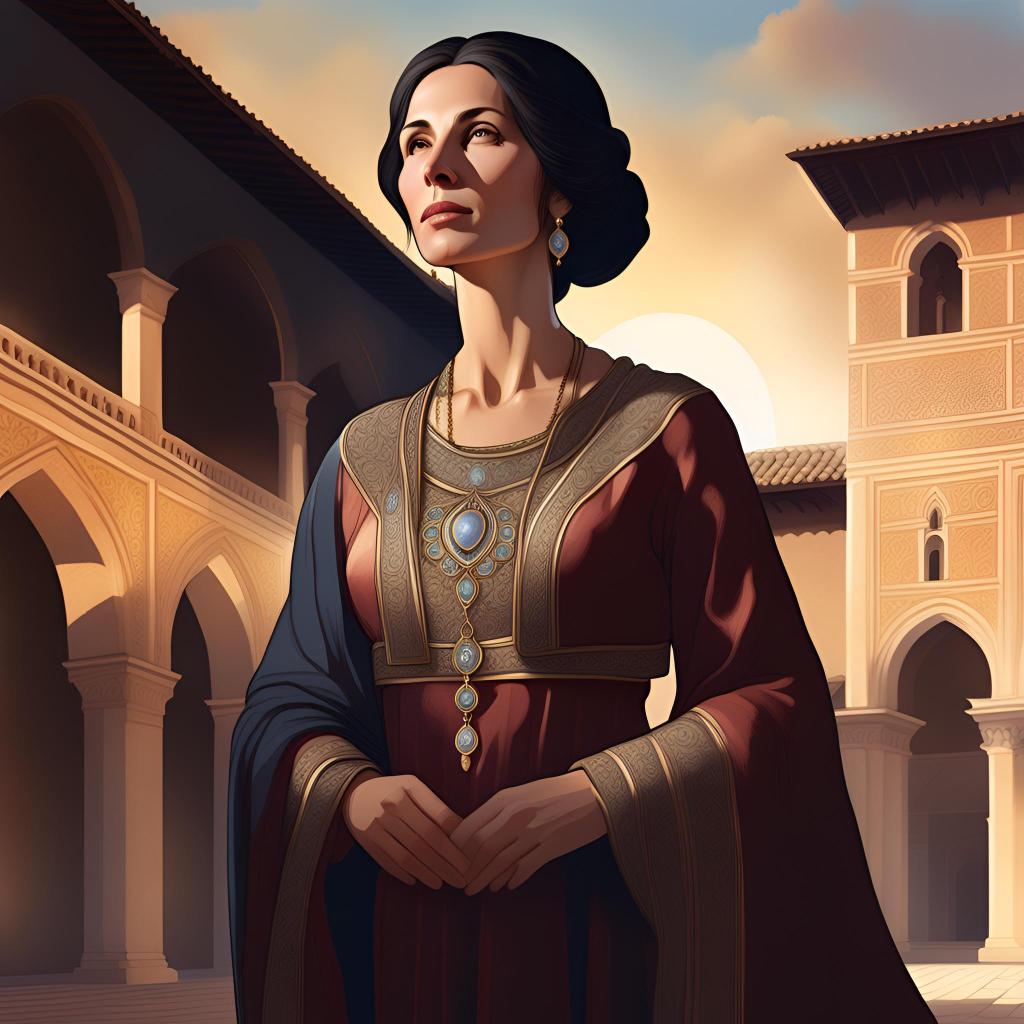
VENERABLE PIERRE TOUSSAINT: From Haitian Slave to Hairstylist to Holiness

To watch the YouTube video, click on arrow in thumbnail below:

On a summer’s day, in the lush, tropical country of Saint-Domingue, now known as Haiti, a slave woman named Ursule cradled her newborn son in her arms. She gazed out the window, her eyes taking in the green, fertile fields of the sprawling Bérard family sugar-cane plantation located on the banks of the Artibonite River, near the port town of Saint-Marc. This land was her home, where she lived and worked as a personal maid to Madame Berard. Even though she knew that her son, too, would be a slave, in her heart she dared to hope for greater things in his future. Little did she know that this baby boy was destined to play an important role, not only in the history of her people, but of the Catholic Church as well.

The infant had been given the name Pierre, after the owner’s father, Pierre Berard. The date of Pierre’s birth is recorded in many sources as June 27, 1766; however, based on the more recent research of journalist and biographer Arthur Jones, Pierre’s year of birth is now believed to have been 1781. His father’s name is unknown. The roots of Pierre’s family tree stretched back to Africa, where his great-grandmother Tonette had been born and raised before being taken across the Atlantic as a slave to toil on the sugar-rich soils of Saint-Domingue. Pierre’s grandmother, Zenobe Julien, had earned her freedom through years of loyal service to the Bérard family. Five years after Pierre’s birth, his sister Rosalie was born, who would become his steadfast companion throughout the years ahead.

As Pierre grew, the Bérard family, recognizing something special in the young boy, had him educated by their children’s tutors. In the grand house, far removed from the backbreaking labor of the fields, Pierre’s mind blossomed. Intelligent and eager, he learned to read, write, and think critically — skills that would one day prove instrumental in shaping not just his own destiny, but in helping and influencing many others. Jacques Berard allowed Pierre free access to his library, where the curious boy spent many hours avidly reading books on many diverse topics, further broadening his education. He was a playmate to the Berard children, and raised with knowledge of all the social niceties. Tall and mild-mannered, he was trained to courteously greet and serve the family’s guests, and had an excellent command of the French language, both written and spoken. He was also musically inclined and a talented fiddler. Pierre was baptized and raised a Catholic, and found solace in the rituals and teachings of the Church. Yet, as he matured, he couldn’t help but wonder at the contradictions between the Christian message of universal love and equality and the harsh realities of plantation life.

When the senior Bérards returned to France, their son Jean Bérard took over the plantation. Soon, tensions began to escalate, which eventually would lead to enslaved and free people of color uprising in the Haitian Revolution. In 1797, as conditions became more dangerous, Jean & Marie Berard fled for New York City, taking with them 16-year-old Pierre, his younger sister, Rosalie, his aunt, and two other house slaves. They arrived in the young country of the United States shortly after George Washington, its first President, had completed his two terms in office. They were among many French aristocrats, from St. Domingue and from Europe–where the French Revolution had ended in 1794–who were seeking refuge in America.

Once settled in a stylish rented house in lower Manhattan, Jean Bérard signed Pierre up as apprentice to a Mr. Merchant (first name unknown). He was a hairdresser, who taught Pierre the art of hair styling, a skill in which he quickly excelled. This was a wise move on Berard’s part, since the city was full of wealthy society women whose lifestyle required elaborate hairstyles for their frequent social engagements. Male hairdressers, while popular in France, were a fairly new phenomenon in America, where wealthy women generally had their hair done by their lady’s maid.

Berard allowed Pierre to keep most of what he earned as a hairdresser. Pierre quickly mastered all the latest hairstyles of the French, including powdered wigs and false hair additions, along with the chignons and face-framing curls that were trendy among the Americans. He became what one biographer described as “the Vidal Sassoon of his day.” His client list read like a “Who’s Who” of 18th-century New York society: Elizabeth Schuyler Hamilton, wife of Alexander Hamilton, and their daughter, Eliza Holly Hamilton, were among his important clients, along with Catherine Church Cruger, known as “Kitty,” whose father would give the pistols to Hamilton for his duel with Aaron Burr. Another client, a  prominent socialite named Mary Anna Sawyer Schuyler, also related to the Hamiltons, became Pierre’s close friend, referring to him as “my Saint Pierre.” Most of his women clients were Protestant, but they deeply admired Pierre’s devotion to his faith, along with his pious, kind and gentle nature. Hannah Farnham Sawyer Lee, Pierre’s first biographer and the sister of Mary Anna Schuyler, recounts, “He often quoted in his native language from the Sermon on the Mount, and the Beatitudes seemed to have found their way into his heart.”

Pierre also met some French emigrants in NY who knew the senior Berards in France, with whom he corresponded for decades, generously assisting his godmother, Aurora Berard, who had fallen on hard financial times in Paris. He also regularly corresponded with friends in Haiti. A prolific writer, his letters filled 15 bound volumes and served as part of the documentation submitted to the Vatican for his canonization process.

After a while, Jean Berard returned to Saint-Domingue to check on his property there. While in Haiti, he learned that his plantation was lost. He planned to return to New York; however, he developed pleurisy, an inflammation of the lungs, and died while still in Haiti. Soon after his death, his widow, Marie, learned that she was completely destitute. By then, Pierre was earning good money as a hairdresser. He voluntarily continued to care for the widow Marie, allowing her to lead a life of dignity, and assumed financial responsibility for the household. Marie eventually remarried to Gabriel Nicolas, who was also from Saint-Domingue. Pierre and Rosalie continued to live in the Nicolas household.

Eventually, Marie’s health began to fail. Pierre knew that having company lifted her spirits, so he encouraged her to entertain, and would buy tropical fruit and ice cream for the guests. Before they arrived, he would style Marie’s hair, adorning it with a flower as a finishing touch. In 1807, on her deathbed, Marie gave Pierre his freedom. In 1811, he bought the freedom of his sister, Rosalie, and also of his fiancé, Marie-Rose Juliette Gaston, whom he had known in Saint-Domingue.

Pierre’s relationship with the abolitionist movement was complicated. From the growing number of Haitian refugees in New York, he heard reports of murder and devastation from the island of his birth. Despite his intimate knowledge of slavery’s evils and his awareness of New York’s abolitionist movement, he refrained from active participation and hesitated to engage in America’s abolition debate, mindful of the immense toll paid to end slavery on his native island. He avoided anything that could incite violence, explaining, “They have not seen the blood flow as I have.”  This stance led some Black Catholics in the 1990s to oppose his candidacy for sainthood, viewing him as too accepting of enslavement. However, the truth is that Pierre’s inner freedom transcended his legal status as a slave. He consciously chose to embrace God’s grace daily, becoming a powerful symbol of Divine generosity. Pierre himself articulated it this way: “I have never felt I am a slave to any man or woman, but I am a servant of almighty God who made us all. When one of His children is in need I am glad to be His slave.”

This perspective echoes that of Saint Josephine Bakhita, another former slave who expressed similar sentiments about her time of enslavement and her relationship with God. Pierre chose to exemplify human dignity and Christian charity to both the affluent and impoverished in the city. However, after gaining freedom, he chose the surname Toussaint, likely in honor of Toussaint Louverture [Loo-vah-TOUR], the leader of the Haitian Revolution. This choice suggests a connection to revolutionary ideals, despite his apparent reluctance to engage in overt abolitionist activities.

In his later years, Toussaint was reluctant to discuss the atrocities he had witnessed in Haiti. His approach focused on living out his faith through acts of kindness and generosity, becoming a beacon of hope and compassion in 19th-century New York.

Pierre and Juliette wed on Aug. 5, 1811. For the next four years, they continued to board at the Nicolas house. In 1815, Gabriel Nicolas, who had remarried, moved down South with his wife, and the Touissants purchased a home of their own in Manhattan. Although they never had biological children, when Pierre’s sister Rosalie died of tuberculosis, he and Juliette adopted Rosalie’s daughter, Euphemia. They enrolled Euphemia in a school for Black children in New York. Pierre tutored her in French and taught her to write in both French and English. She also had piano lessons from an accomplished musician named Cesarine Meetz, who gave recitals at City Hotel. Cesarine’s father, Raymond, owned a musical depository on Maiden Lane and was a minor composer and music teacher. When Euphemia died at the age of 14, also of tuberculosis like her mother, Pierre and Juliette were devastated with grief, for they had loved her as their own child.
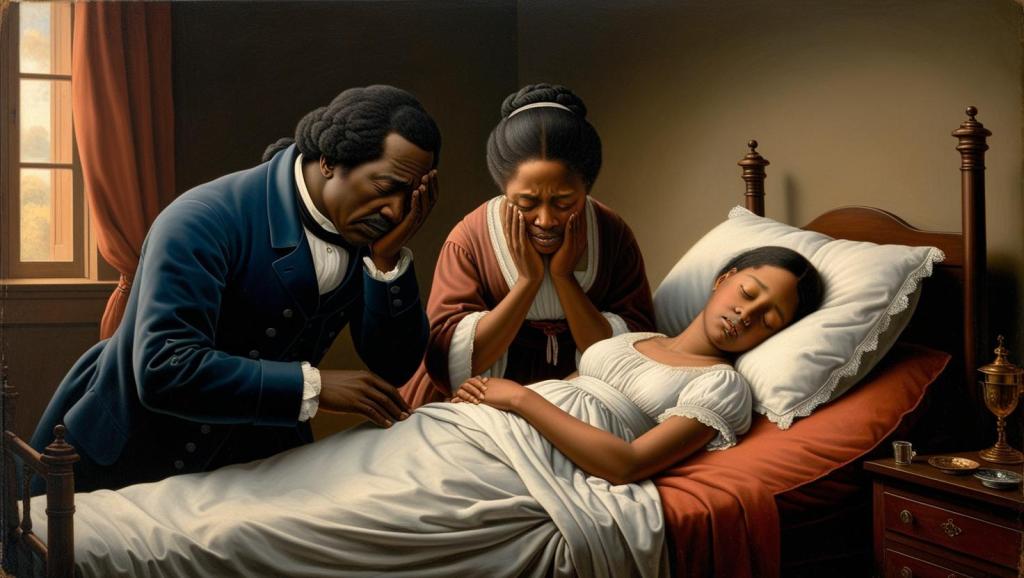
The Touissants lived a life of charity, compassion and generosity in New York City. They frequently visited the Orphan Asylum, bringing joy to the children with baked treats as well as financial support. Their home became a sanctuary, where they fostered a succession of orphan boys, providing them with education and vocational training. Pierre and Juliet established a credit bureau and an employment agency, offering crucial support to those in need. Their home also served as a refuge for priests and travelers seeking shelter. Pierre’s bilingual skills in French and English made him an invaluable asset to Haitian refugees arriving in New York. He assisted these newcomers by organizing sales of goods, helping them secure funds for their livelihood.

Pierre and his family attended St. Peter’s Church on Barclay Street. He went to Mass every morning at 6:00 a.m., until in his later years illness prevented him from doing so. He was devoted to the rosary and had an excellent command of Scripture. St. Peter’s was the same parish that Saint Elizabeth Ann Seton had attended for a few years after her conversion to Catholicism in 1805, before moving to Maryland, where she founded the Sisters of Charity, America’s first community of nuns. There is no record of Seton and Touissant ever meeting one another; however, he played an important role in later raising funds for the Sisters of Charity’s orphanage in New York, even though it admitted only white children.

The Touissants’ contributions to the Catholic community were significant, including fundraising for the construction of Old St. Patrick’s Cathedral on Mulberry Street. They supported various Catholic institutions, including orphanages and schools, and also helped establish the first Catholic school for Black children in New York City, at St. Vincent de Paul on Canal Street. Pierre Touissant is called the “father of Catholic Charities,” because his legacy of compassion and service laid the foundation for what would later become the Catholic Charities organization.

During a cholera epidemic, Pierre fearlessly crossed barricades to care for quarantined patients. On at least one occasion, he brought a sick priest back to his house to nurse him back to health. He also showed heroic charity in his response to the outbreaks of yellow fever that occurred every summer in New York, something he had seen often back in Saint-Domingue. Hannah Sawyer Lee wrote the following about one such epidemic:“When the yellow fever prevailed in New York, by degrees Maiden Lane was almost wholly deserted, and almost every house in it closed. One poor woman, prostrated by the terrible disorder, remained there with little or no attendance, till Toussaint, day by day, came through the lonely street, crossed the barricades, entered the deserted house where she lay, and performed the nameless offices of a nurse, fearlessly exposing himself to the contagion.”

Despite his success, Toussaint faced significant challenges as a free Black man in New York, where slavery remained legal until 1829. He risked abduction by bounty hunters, and was barred from public transportation, forcing him to walk to his clients’ homes. His Catholicism added to his vulnerability, as anti-Catholic prejudice was widespread in New York at the time. Conversely, his reputation as an entrepreneur and highly-skilled master of his trade made him welcome in the homes of New York’s society families, not only as a hairdresser but as a trusted friend and confidante. Many clients came to view Pierre as more than just a hairdresser, seeking his advice on personal matters. His wisdom and discretion made him a trusted advisor. His clients were deeply impressed by his staunch commitment to discretion and his refusal to engage in gossip. This level of trust allowed them to confide in him freely, knowing their secrets were safe. One client remarked, “It was like the confessional to talk to Toussaint, you were so sure of his secrecy.” This steadfast refusal to share gossip was seen as evidence of his strong moral character. When pressed for information, Pierre would simply state, “Toussaint, Madame, is a hairdresser. He does not gather news.” This polite but firm response became well-known among his clientele, further establishing his reputation for discretion.

A significant friendship blossomed on Franklin Street in New York City, where Pierre and Juliette lived at number 144. Just down the street at number 70 resided the Moore siblings – Nathaniel Fish Moore, an enthusiastic amateur photographer and the future president of Columbia University, and his sister Sarah Ann. Toussaint’s skillful hands had long been tending to Sarah Ann’s hair, their relationship evolving from that of stylist and client to genuine friendship. Evidence of their bond survives in the Pierre Toussaint papers at the New York Public Library, where two letters from Sarah Ann reside. One, undated, simply requests a hairdressing appointment. The other, penned in 1840, speaks of a more personal connection – Sarah Ann had thoughtfully brought Pierre a rosary from her and Nathaniel’s pilgrimage to the Holy Land.

It was through this connection that Toussaint came to sit for Nathaniel Fish Moore’s camera. Nathaniel, ever eager to practice his craft, captured a striking portrait of  Toussaint in his later years. For decades, this photographic image lay dormant, passed down through the Moore family until 1944, when William Hodges, Sarah Ann’s grandson, donated it along with other salt prints to Columbia University’s Columbiana Collection. Initially misidentified and incorrectly credited, the photograph’s true significance remained hidden until many years after Pierre’s passing. But more about that later!

Through the 1820s and early 1830s, Pierre Toussaint’s fortune grew steadily through his tireless work.His days often stretched beyond 12 hours as he traversed New York’s streets, styling hair in the city’s most prestigious homes. Yet, this demanding work was not for personal gain; rather, it was a means to generate more resources for the less fortunate. When a friend suggested he had amassed enough to retire comfortably, Toussaint responded with characteristic selflessness: “Madam, I have enough for myself, but if I stop work, I have not enough for others.”

In 1835, disaster struck New York City, when the Great Fire of New York engulfed lower Manhattan, destroying between 530 and 700 buildings across 13 acres. Witnesses described the inferno as “immense iron furnaces in full blast,” with copper roofs melting and “fiery tongues of flame” leaping from buildings. This catastrophe is believed to have cost Pierre investments equivalent to almost a million dollars in today’s currency. Despite this significant financial setback, he persevered in his charitable endeavors.

Hannah Sawyer Lee eloquently captured the essence of his philanthropy in her 1854 memoir: “It must not be supposed that Toussaint’s charity consisted merely in bestowing money; he felt the moral greatness of doing good, of giving counsel to the weak and courage to the timid, of reclaiming the vicious, and above all, of comforting the sick and sorrowful.”

The 1840s brought stark reminders of the persistent racism in American society. Although New York had abolished slavery, prejudice and violence against Black individuals remained commonplace. In 1842, Toussaint and his wife faced a painful incident at Old St. Patrick’s Cathedral on Mulberry Street – a church whose construction he had helped finance. Unaware of his prominent status, ushers turned them away due to their race. As they turned to leave, some Cathedral trustees saw what was happening and rushed to apologize and welcome them into the church. But the damage had been done, underscoring the pervasive discrimination of the era. By contrast, Pierre’s own charity and inclusivity stood as a shining example of true Christian virtue, to be emulated not only in his day, but in ours.

Though he continued to grow steadily in spiritual strength and beauty, Pierre gradually began to decline physically during the following decade. On May 14, 1851, his beloved wife and partner, Juliette, died and was buried in the cemetery of St. Patrick’s Old Cathedral beside their adoptive daughter, Euphémia. It was at this time that Pierre demonstrated the assertiveness he could summon when it truly mattered. At Juliette’s funeral, he requested that only Black attendees follow the procession to the graveyard, although white mourners were welcome at the graveside. This practice was repeated at his own funeral.

After Juliette’s death, Pierre’s health further deteriorated. He became increasingly inactive and was often bedridden. Two days before he died, he uttered the words, “God is with me.”  When someone asked him if he wanted anything, he replied, “Nothing on Earth.” Those were his last recorded words. Pierre Toussaint entered into his eternal home on June 30, 1853.

At his funeral Mass, St. Peter’s Church overflowed with mourners of all types – rich and poor, Black and white – wishing to pay their respects to the man whose kindness, dignity and charity illuminated the lives of everyone he encountered. Pierre Toussaint had managed the incredible feat of displaying true Christian charity, compassion, respect and mercy that transcended all the levels of society in which he moved. Father Quinn, who gave the eulogy, said that Pierre Touissant was “one who always had wise counsel for the rich and words of encouragement for the poor.”

As the funeral service concluded, Pierre’s white friends and associates honored his final request, stepping back to allow members of the Black community to bear his casket through the streets to St. Patrick’s Cemetery on Mulberry Street, as they had for Juliette two years earlier. At the graveside, people from all walks of life united in prayer as Toussaint was laid to rest beside his wife Juliette and adopted daughter, Euphemia.

New York’s newspapers paid tribute to Pierre Toussaint’s passing with lavish praise. One obituary eloquently stated: “His charity was of the efficient character which did not content itself with a present relief of pecuniary aid, but which required time and thought by day and by night, and long watchfulness and kind attention at the bedside of the sick and the departing.”

In 1854, Hannah Sawyer Lee’s biography, “Memoir of Pierre Toussaint, Born a Slave in St. Domingo,” published in Boston, became crucial in preserving details of his extraordinary life through notes left by her sister, Mary Anna Schuyler, and other sources. But in the turbulent decades following Toussaint’s death, as America grappled with political upheaval leading to the Civil War and its aftermath, his remarkable story faded from public memory, persisting mainly as oral history within Haitian-American and Black Catholic communities. A few decades later, the Touissant archives at the NY Public Library were compiled by Mary Ann Schuyler’s granddaughter Georgina.

But these did not draw much public attention until the 1930s, when Garland White, Jr., a young African-American student preparing for Confirmation challenged his teacher, a seminarian named Charles McTague, with the words, “You can’t name me one Black Catholic that white people respected!” McTague did not back down from the challenge. He managed to locate a Jesuit priest named John LaFarge, who remembered his grandmother’s stories about a devout Black man who had been her hairdresser for many years. McTague rediscovered Toussaint’s family gravestone in the Mulberry Street cemetery, where the inscription had faded to the point of being illegible. This discovery generated new interest in Toussaint’s extraordinary life and works.

In the 1950s, research and promotion of Pierre Touissant’s life was begun by the John Boyle O’Reilly Committee for Interracial Justice, an Irish-American group dedicated to social justice and equality. In 1951, a petition for the canonization of Pierre Toussaint was begun, and Cardinal Francis Spellman blessed a plaque to mark Touissant’s headstone. Spellman’s successor, Cardinal Terence Cooke, initiated the cause of canonization in 1968, which gained momentum over the following decades.

Fast forward to 1990, when, as part of Toussaint’s canonization process, his remains needed to be exhumed, examined and identified. Columbiana Curator Hollee Haswell provided the photograph taken in 1850 by Nathaniel Fish Moore to a team of forensic anthropologists, who compared it against Toussaint’s exhumed skull, leading to positive identification. Cardinal John O’Connor arranged for Pierre’s remains to be interred in the crypt beneath the altar of St. Patrick’s Cathedral, an honor usually reserved only for high-ranking clerics. Pierre Touissant thus became the only lay person, and the only Black person, to be buried in this crypt. A portrait of Touissant by Hunt Slonem now also hangs in the Cathedral.

In 1996, Pope John Paul II declared Pierre Toussaint “Venerable,” advancing him one step closer to sainthood. As of now, Toussaint’s canonization cause awaits an intercessory miracle — specifically, the instantaneous, complete, permanent, and medically-inexplicable healing of a serious medical condition — to progress to the next step of beatification. A second miracle is required for canonization. He is one of six North Americans under consideration for sainthood, potentially becoming the first Black North American saint.

Pierre’s legacy continues to thrive in the Archdiocese of New York and beyond. The Pierre Toussaint Guild, actively involved in advancing his cause for sainthood, also works to share his inspiring story globally. The Pierre Toussaint Scholarship Fund, managed by the archdiocese’s Black Ministry Office, perpetuates his mission by providing financial grants, mentorship, and opportunities for students to develop both their faith and careers. The foundation’s impact extends internationally, supporting the College Pierre Toussaint in Sassier, Haiti, enabling young Haitians to acquire skills to serve their community. In Miami, Florida, the Pierre Toussaint Haitian-Catholic Center bears his name, offering support services to Haitian immigrants. Though there are too many to list here, Pierre Touissant’s legacy extends to charitable and education institutions throughout the United States and beyond.

Additionally, Toussaint’s memory is honored through various public recognitions. A series of portraits in Gracie Mansion commemorates his good works. In April 2021, a significant portion of Church Avenue in Brooklyn, New York, was co-named Pierre Toussaint Boulevard. Additionally, the intersection near St. Peter’s Church in Manhattan, Toussaint’s former parish, was named after him in 1998. Most recently, in February 2024, Toussaint was featured in the New York Times’ “Overlooked No More” series of articles, which highlight remarkable individuals whose deaths originally went unreported in The Times.

In 1999, at a Mass in Toussaint’s honor, Cardinal O’Connor said, “If ever a man was truly free, it was Pierre Toussaint…. If ever a man was a saint, in my judgment, it was Pierre Toussaint. … No one can read this man’s life…without being awed by his holiness. He is now buried beneath this high altar with all of the bishops, archbishops and cardinals of New York. It will be a great privilege for me to be buried in a vault in the same section with Pierre Toussaint.”  Cardinal O’Connor further stated that it was not necessary to wait for Pierre’s official sainthood to emulate his virtues. “Beatified or not,” he said, “Pierre Toussaint remains a wonderful model, and I wish he were here.”

THE BLESSED FAMILY OF ASSISI

The Family of St. Clare

To watch the YouTube video, click arrow in thumbnail below:

The Offreduccio clan of Assisi, the family of St. Clare, didn’t just produce ONE saint – they gave the world an entire holy dynasty! This family certainly carried the holiness gene – sanctity seemed to permeate their DNA!😇

In this post, we’ll explore the surprising spiritual journeys of Clare’s mother, two sisters, an aunt, and a cousin. Learn how this remarkable wealthy and noble family embraced poverty and revolutionized religious life in medieval Italy. From midnight escapes to miracle healings, their story is filled with drama, devotion, and Divine inspiration.

BLESSED ORTOLANA OF ASSISI

Ortolana Offreduccio knelt in the tranquil embrace of the church, the cool air wrapping around her like a comforting shawl. Her gaze drifted to the statue of the Blessed Virgin nestled in the alcove to her left, then shifted to the crucifix looming above the altar. It was the Fall of 1193, a time of joy and trepidation, for she had recently discovered she was with child. The news brought exhilaration to her and her husband, Favarone, yet a flutter of anxiety stirred within her. Childbirth in those days was fraught with peril, often claiming the lives of both mother and infant.

In the stillness, with only the flickering candlelight to accompany her, Ortolana placed a gentle hand on her barely noticeable belly, closed her eyes, and offered a heartfelt prayer to Jesus and His Blessed Mother, beseeching for a safe delivery and a healthy child. Just then, a voice broke the silence, soothing and resonant: “Fear not, for you will safely give birth to a light which will shine on all the earth.” Startled, she opened her eyes and scanned the empty church. Soon realizing the voice was of Divine origin, her worries dissipated, replaced by a profound sense of peace that enveloped her throughout her pregnancy.

Born into the noble Fiumi family, Ortolana (sometimes called Hortulana) was a descendant of a lineage of knights and was raised with deep Catholic faith and piety. Before her marriage, she embarked on numerous pilgrimages to sacred sites, including Rome and the Shrine of Archangel Michael on Mount Gargano in southeastern Italy. Pilgrimages in those days typically included a retinue of nobles, knights, and their attendants. Among her companions was a woman named Pacifica, described by some as a friend, though it remains uncertain if she was the same Pacifica who was Clare’s cousin. Ortolana and Pacifica even ventured to the Holy Land, a perilous but not uncommon undertaking in the wake of the Crusades, fully aware of the dangers that lay ahead on their journey.

Upon her return from her pilgrimages, Ortolana married the man chosen by her parents: Sir Favarone Scifi de Offreduccio, a knight hailing from one of Assisi’s most esteemed noble families. In her new life in Favarone’s elegant palace, Ortolana embodied kindness, love, and loyal devotion as a wife, nurturing her faith with the same fervor she had shown on her journeys.

On July 16, 1194, joy filled the household as she welcomed a beautiful, golden-haired baby girl into the world. As she gazed into her daughter’s innocent face, memories of the heavenly words she had heard in church months earlier, proclaiming her child to be a “light to the world,” echoed in her mind. In that moment, she decided to name her daughter “Chiara,” the Italian form of Clare, which means “clear, bright, and shining.”

Ortolana and Baby Chiara (Clare)

Ortolana’s family soon expanded with the arrival of four more children: Don Boso, Penenda, Agnes, and Beatrice. True to her name, which means “the gardener,” she lovingly referred to Clare and her other daughters as “her little plants.” Years later, Clare would embrace the title of “the little plant” of St. Francis, who, as she described, “took so much care, through his words and through his works” to “cultivate and make it grow.”

However, in 1200, turmoil struck Assisi with an uprising that forced the nobility, including Favarone, Ortolana, and their children, to flee to Perugia, while war raged against their city. The battle of Collestrada in 1202 saw Assisi’s defeat, leading to the capture and imprisonment of many knights, including Francesco, the son of a prosperous silk merchant, Pietro Bernadone. Francesco endured nearly a year in captivity. Finally, peace returned in 1210, allowing Ortolana, her husband, and their children to return to their beloved Assisi.

Ortolana’s piety and faith permeated every aspect of her life, and she passed these virtues on to her children. The family lived near the Cathedral, often visiting to pray and attend Mass. Gracious and charitable, Ortolana frequently ventured out to the poor neighborhoods of Assisi, offering aid and sustenance to those in need. Ortolana and Clare became very well-respected in Assisi because of their pious and charitable way of life.

During this time, Francesco Bernardone, whom we now know as St. Francis of Assisi, underwent a profound conversion and transformation following his time as a prisoner of war. He left his family and their thriving business to pursue a life of poverty, humility and good works in imitation of Christ. By 1210, now a deacon, he was entrusted by the Bishop to preach during Lent. Ortolana and her daughters attended one of his sermons, eager to hear to the words of this young man who had become such a controversial figure in Assisi. This moment proved pivotal for Clare, who was captivated by Francis’ eloquent preaching and fervent spirituality.

On the night of Palm Sunday in 1212, she made the courageous decision to join Francis’ burgeoning movement, becoming his first female follower and the founder of the Poor Ladies of San Damiano, now known as the Poor Clares.

I won’t delve deeply into Clare’s life here, as I covered her remarkable journey in a previous post titled “The Life of St. Clare of Assisi:‘The Other Francis’.” I encourage you to check it out for a more detailed exploration of her story.

Little is known of Ortolana’s initial reaction when her daughter Clare left home to follow Francis. Perhaps the apparent betrayal deeply wounded the kind-hearted mother — or maybe, with a mother’s intuition, she had sensed it coming. Regardless, the family was in for another shock when, just 16 days after Clare’s departure, her younger sister, 14-year-old Catarina, inspired by her sister’s courage and dedication, also ran away from home to join Clare.

After Favarone’s death, Ortolana, now a widow, made the decision to follow in both of her daughters’ footsteps. Around 1226, she disposed of her wealth, distributing the proceeds to the poor, and wrote a farewell letter to her family. Ortolana then joined The Poor Ladies at the San Damiano convent, where she was personally invested into the Order by Francis himself. True to her name, Ortolana was entrusted by Clare with the care of the monastery’s vegetable garden, a vital role in ensuring the survival of a community that subsisted on what they could grow and what was donated.

One day, a gravely-ill boy was brought to Clare and Ortolana at their monastery, with the hope that the prayers of these two devout women would bring about a miraculous cure. To the amazement of all, the child was healed. Clare attributed the miracle to Ortolana’s heartfelt prayers; however, Ortolana humbly insisted that it was Clare’s prayers that had brought about the healing. The truth of whose prayers truly obtained this grace remains a mystery, but it seems likely that the intercession of both saintly women played a part. This miraculous cure serves as a testament to the power of prayer and the holiness of this remarkable family.

Within the walls of the monastery, Ortolana continued to dedicate herself to hidden sacrifices for Jesus. Her days were filled with prayer, penance, and labor, all aimed at serving God and her fellow sisters. The miracles attributed to her during her life and after her death reflect the strength of her faith and the sanctity of her actions.

Ortolana passed away around 1238. Her cause for canonization was initiated in recognition of her virtuous life and the miracles attributed to her. Ortolana of Assisi was declared a Blessed by the Catholic Church, although the exact date of her beatification is not well-documented. Her legacy is particularly honored as the mother of Saint Clare and Saint Agnes of Assisi, both canonized saints, as well as Beatrice, who also is recognized as a Blessed.

At St. Clare’s canonization, Pope Alexander IV said, “Her mother, named Ortolana, [was] intent upon pious deeds, followed her daughter’s footprints, and afterwards accepted this religious way of life. In this excellent garden which had produced such a plant for the Lord, she happily ended her days.” (Bull Can., 10: CAED 241).

CATARINA/ST. AGNES OF ASSISI

Catarina Offreduccio

Just 16 days after Clare’s departure, inspired by her sister’s example, Agnes made the dramatic decision to run away from home and join Clare at the convent of the Benedictine nuns in San Paolo, where Francis had taken Clare temporarily until a residence could be built for her.

Favarone, enraged at the loss of yet another daughter, sent his brother Monaldo, accompanied by some other relatives and armed knights, to storm the convent and persuade – or force – Catarina to return home. When they arrived and confronted her, only to be met with her staunch refusal to leave, Monaldo drew his sword to frighten her. But he was struck with a violent pain in his arm, causing him to drop the sword. Then the other men forcibly pulled Catarina from the monastery by her long hair, striking her as she resisted with all her might. Two different accounts describe what happened next: In one version, they dragged her down the mountainside with such force that she was rendered unconscious. In the other account, when Clare arrived to defend her, Catarina’s body became miraculously heavy, making it impossible for them to carry her. In any case, it became clear to the men that they were up against supernatural forces, and they ultimately left her behind.

Catarina ran back to the convent, overjoyed to be able to remain with her sister. Francis, for his part, was impressed and deeply moved at Catarina’s heroic resistance to the threats of her family, and he realized what spiritual treasures dwelt in the soul of this young girl. As he had done with Clare, he cut off Catarina’s long, lovely hair, and gave her a rough, penitential garment and veil similar to Clare’s. At receiving the habit, Catarina chose as her new name “Agnes,” which means “pure” or “holy,” reflecting the values that Catarina embraced as she dedicated herself to a spiritual path. The name Agnes also carries a legacy of sainthood, being associated with Saint Agnes of Rome, a martyr of the 4th century known for her purity and faith. Some sources say that Francis himself suggested this name, because Catarina reminded him of a gentle and innocent lamb, and the name also honored Christ, the spotless Lamb of God.

St. Agnes of Assisi

As one of the Poor Ladies of San Damiano, Agnes exhibited such a high degree of virtue and faithfulness to Clare’s ideals, inspired by Francis, that her fellow nuns believed she had discovered a road to perfection known only to herself. At the young age of 22, she was appointed by Francis as Abbess of a new community of Poor Ladies in Monticello, near Florence. Agnes governed the community with wisdom and charity, teaching the nuns to love and embrace Lady Poverty and the difficult but rewarding life of virtue. Though life in the convent was harmonious, Agnes’ great cross was being separated from her beloved sister Clare, as evidenced by a moving letter she wrote, expressing her heartache at the separation. Describing herself as “extremely distressed and saddened,” she wrote: “What shall I say, now that I can no longer hope to see my sisters again?” Still, she carried on bravely with her new duties, offering her sufferings to Jesus, the Lamb of God.

Agnes went on to establish Poor Ladies communities in Mantua, Padua and Venice, inspiring many young women to leave their worldly lives to pursue a life consecrated to God in monastic seclusion. Like her sister Clare, she embodied the Franciscan spirit and lived in humble faithfulness. Agnes was favored with many extraordinary graces from God. It is said that she experienced levitation during prayer, similar to St. Francis, and was blessed with a vision of the Infant Jesus. One year, from Holy Thursday until Holy Saturday, she became so immersed in prayer that she lost all track of time, believing she had prayed for only one hour when, in fact, three days had passed.

In 1253, Agnes was summoned to Assisi because Clare was dying. She devoted herself to nursing Clare until her sister’s death on August 11, and took on the solemn task of planning her funeral. Just before Clare passed away, she comforted Agnes with the words, “My beloved sister, it is the will of God that I go, but be comforted, you will soon come and rejoin me with our Lord.” This prophecy was indeed fulfilled when Agnes died three months later, on November 16, and was buried next to Clare and their mother, Ortolana.

Agnes’ tomb became a site of numerous reported miracles. In 1753, the year marking the 500th anniversary of her death, she was canonized as St. Agnes of Assisi by Pope Benedict XIV.

One well-known quote from St. Agnes during her lifetime resonates powerfully even in the 21st century: “The most deadly poison of our times is indifference. And this happens, although the praise of God should know no limits. Let us strive, therefore, to praise him to the greatest extent of our powers.”

BLESSED BEATRICE OF ASSISI

Beatrice Offreduccio

In the year 1229, Beatrice Offreduccio found herself at a crossroads. Because of her mother’s decision to join the Poor Ladies of San Damiano, Beatrice at 18 years of age had become the sole heiress to the Offreduccio family fortune. The weight of responsibility pressed upon her, urging her towards marriage and a life of nobility. However, the path her sisters had chosen beckoned to her as well.

Inspired by Clare and Agnes, Beatrice made a decision that would alter the course of her life, as it had that of her sisters. She turned her back on wealth and privilege, choosing instead to join the Order of the Poor Ladies at San Damiano. Within the austere walls of the monastery, Beatrice immersed herself in prayer, embraced mortification, practiced fasting, and performed good works. She outlived her mother and her sisters Clare and Agnes, becoming a pillar of the community at San Damiano.

Blessed Beatrice of Assisi

Beatrice’s devotion to her sister Clare extended beyond Clare’s earthly life. During Clare’s canonization process, Beatrice served as the ninth witness. Her testimony provided invaluable insights into Clare’s childhood, her embrace of St. Francis’s teachings, and her leadership as Abbess of the Poor Ladies.

Beatrice died in 1260, and was laid to rest in the church of St. George, which later became part of the Basilica of Santa Chiara in Assisi. In recognition of her pious life, the Catholic Church eventually declared Beatrice a Blessed, cementing her place in religious history.

BIANCA

Bianca

Bianca was either the sister or sister-in-law of Favorino Offreduccio, Clare’s father. As such, she was aunt to Clare, Agnes, and Beatrice. But Bianca was more than just a relative; she was a confidante and co-conspirator in Clare’s spiritual journey.

On that fateful night of Palm Sunday in 1212, when Clare made the daring decision to leave her family’s home, it was Bianca who stood by her side. Together with Clare’s cousin Pacifica, who may have been Bianca’s daughter, they slipped away under the cover of darkness. Their destination: the humble Portiuncula chapel, where Francis of Assisi awaited.

In that small, candlelit sanctuary, Clare took her first steps towards a life of radical poverty and devotion. Bianca witnessed as Francis cut Clare’s hair and gave her a simple habit, marking the birth of the Second Order of Francis, a profound moment that would ripple throughout history.

But Bianca’s role didn’t end there. Inspired by Clare’s courage and conviction, she too eventually joined the Poor Ladies of San Damiano. This decision wasn’t made lightly; it meant abandoning the comforts of a noble life for a path of austerity and prayer. Yet Bianca embraced it wholeheartedly, her choice a testament to the powerful bonds of family and faith that fueled the Order’s growth.

While the details of Bianca’s daily life within the convent walls are lost to us, her presence alongside Clare speaks volumes. In those early, uncertain years, as the Poor Ladies faced opposition and struggled to establish their way of life, Bianca’s staunch support must have been a real source of strength for Clare.

From aunt and niece to sisters in faith, Bianca and Clare’s relationship evolved into something profound. Together, they helped forge a new path for women seeking a life of deep spiritual devotion. Bianca’s story, though less celebrated than Clare’s and Agnes’, is a reminder of the quiet supporters who often play crucial roles in monumental changes.

Bianca of Assisi stands as a symbol of loyalty, courage, and the transformative power of faith. Her legacy lives on in the Order she helped establish, a testament to the enduring impact of those who choose to follow their convictions, no matter the cost.

BROTHER RUFFINO

Ruffino & Clare

Ruffino Offreduccio was a relative of St. Clare’s, most probably her cousin.  He was one of St. Francis of Assisi’s first 12 followers. Ruffino’s spiritual journey was marked by an intensity that captured the admiration of Francis, who used him as example of the “ideal friar.” Francis often praised Ruffino’s “virtuous and incessant prayer,” marveling at how Ruffino seemed to commune with the Divine even in sleep. A man of angelic purity, so profound was Ruffino’s piety that Francis used to say that he was “canonized in Heaven” while still walking the earth, and often referred to him as “Saint Ruffino,” except in his presence.

Yet Ruffino was no preacher. His was a contemplative nature, more comfortable in silent communion with God than addressing crowds. His focus on the Divine was so complete that the world around him often faded into insignificance. This single-minded devotion, while admirable, posed challenges when Francis sought to broaden Ruffino’s ministry.

In a tale recounted in “The Little Flowers of St. Francis,” Francis once instructed the reluctant Ruffino to preach in Assisi. When Ruffino hesitated, Francis, in a dramatic gesture of spiritual authority, ordered him to strip to his undergarments, go the the church and preach that way, as a gesture of holy obedience and humility. The scene that unfolded in the church was at first comical, with townsfolk laughing at the half-naked friar. But Francis, moved by Ruffino’s obedience, began to question himself: “How could you, a humble son of a merchant, send the distinguished Ruffino to preach as if he were a madman? You shall do the same thing you have ordered him to do!”

He then removed his own mantle and habit and went to the church, carrying both his and Ruffino’s garments. The people, seeing Francis also in his underwear, believed he and Ruffino had truly lost their minds from excessive penance. While Ruffino was preaching, Francis ascended the pulpit and began to speak about holy penance, voluntary poverty, and the nakedness of Christ during His Passion. This moved the crowd to tears, so deeply inspired were they by the actions of both Ruffino and Francis. From that day on, they were so greatly revered by the people that those who managed to touch the hem of their garments considered themselves blessed.

Ruffino’s spiritual journey was not without trials. In a harrowing episode, he faced severe temptation from the devil, who appeared to him as a crucifix, sowing doubt about his salvation. The demon told him that all his good deeds were in vain, because he was not among the elect destined for eternal life. This caused Ruffino great distress and doubt, both about his faith and his following of Francis.

Brother Masseo, another early follower of Francis, tried to console Ruffino, but it was Francis who ultimately helped him overcome the crisis. Through Divine revelation, Francis learned of Ruffino’s condition and confronted him, revealing the details of his temptation. Francis assured Ruffino that it was the devil, not Christ, who was tormenting him. Moved by Francis’s words, Ruffino confessed his struggles and found great comfort and consolation. Francis encouraged him to continue his prayers and advised him on how to boldly respond to the devil’s accusations the next time he appeared. He assured him that this trial would ultimately be beneficial. When the devil returned, Ruffino responded as Francis had instructed, and the devil was unable to harm him. The demon fled in rage, causing a landslide of rocks from Mt. Subasio. Ruffino was then consoled by a real vision of Christ.

Brother Ruffino was one of the four brothers who were close to Francis during his last illness, and he was privileged to see the stigmata wound in Francis’ side before he died. In 1246, along with Brothers Angelo and Leo, Brother Ruffino provided crucial material for the “Legend of the Three Companions,” a pivotal biographical work that would shape future narratives about Francis.

Ruffino passed away around 1270. Though never officially beatified or canonized, his legacy as a paragon of Franciscan spirituality endures.

Brother Ruffino

The sanctity of the Offreduccio family members reflects their steadfast commitment to embodying the Franciscan ideals of poverty, humility, and prayer. Their lives were characterized by profound faith and a selfless dedication to serving others, creating a powerful legacy that continues to inspire future generations. Through their actions, they set a remarkable example of how to live a life devoted to God and the well-being of those around them, demonstrating that true greatness lies in humility and love.

ST. CLARE OF ASSISI: “The Other Francis”

Chiara Offreducio, known as St. Clare of Assisi

To watch the YouTube video, click arrow in the thumbnail below:

The honey-colored stone buildings gleamed in the bright Italian sunshine as dawn broke over the town of Assisi one day during Lent in the year 1212. The lively medieval town, perched on the slopes of Monte Subasio in the heart of the Umbria region of Italy, offered breathtaking views of the surrounding misty valleys and rolling green hills. The scent of freshly baked bread wafted through the air, mingling with the earthy aroma of livestock and the pungent smell of tanned leather. As the sun climbed higher, the narrow, winding streets echoed with the sounds of daily life – merchants hawking their wares, craftsmen at work, and the distant chiming of church bells. To everyone else in Assisi, it was just an ordinary day. But for a young woman named Chiara Offreduccio, it was the day that would determine her destiny.

Morning in Assisi, Italy in the 1200s

In the modest church of San Giorgio on the outskirts of town, Chiara (Italian for Clare) sat with her family during the Lenten service, listening to the preaching of a young man named Francesco Bernardone. The more he spoke, the more Clare was riveted by his words about a life dedicated to truly living the Gospel values. His radical ideas were beginning to take root, attracting admiration, as well as scorn and suspicion, from his fellow citizens.

She glanced at her two younger sisters, Beatrix and Catarina, sitting on either side of her, and then turned her head slightly to look at her mother. They all were listening politely, but none appeared moved and inspired as Clare herself was feeling. She had heard the gossip around Assisi about Francesco (Italian for Francis), a wealthy, charismatic, handsome young man who loved parties and revelry, but had suddenly decided to leave his family and their thriving silk business to pursue a life of poverty, humility and service to others in imitation of Christ.

As she walked home with her mother and sisters, Clare thought about her own life. She knew she was fortunate and blessed to belong to a wealthy and noble family. Born on July 16, 1194, she was the eldest daughter of Favorino Sciffi, the Count of Sasso-Rosso, and his wife, Ortolana. Their family legacy traced back to an ancient Roman lineage, their wealth evident in the grand palace that graced Assisi and the castle perched on Mount Subasio’s slope. Ortolana, noble and deeply pious, had embarked on pilgrimages to Rome, Santiago de Compostela, and the Holy Land. Her faith was etched into her very being, and she had instilled her deep spirituality into her daughters from their early childhood.

As was typical for most young women of her status, Clare had received a basic education in reading, writing, a little Latin, and basic arithmetic, along with religious instruction. She spent her days learning household management, personal hygiene, skincare, fashion, sewing and embroidery. In her leisure time she could pursue dancing, music, poetry or painting as she wished. Her wardrobe consisted of elegant garments made of the finest materials, often decorated with elaborate embroidery and fur. As a young woman of marriageable age, she attended social events, feasts and tournaments. Marriages among the wealthy were often arranged for political or economic advantages and were crucial for forming alliances and consolidating wealth and power. Clare was expected to marry well, and for the past several years had been facing increasing pressure from her family, especially her father, to do so. She finally had persuaded her parents to let her delay marriage until she was 18, and that time was fast approaching.

But for years now, Clare had found herself detaching from all the worldly trappings of her life, wanting a more deeply meaningful and spiritual existence. She spent many hours in prayer and contemplation, and practiced penances to achieve greater virtue. Unlike most of her friends, who were caught up in frivolous pursuits, she saw all the poor people of Assisi and its surrounding areas, and felt a deep compassion and sense of responsibility for them. As a child, she sometimes had hidden food from her plate to later give to the poor. Little by little, Clare found herself torn between two worlds. But despite all her inner turmoil, she did not know what to do or what God expected of her.

That is, until today.

Francis’ words stirred the depths of Clare’s soul

Francis’s words stirred the depths of her soul, and she finally had a focus for the nagging restlessness and dissatisfaction with her life that had haunted her throughout her teenage years. Francis and his followers exuded a peace that seemed sorely lacking in the people around her, who were mainly focused on material possessions and power. Clare now knew that her heart beat to a different rhythm—one that echoed the footsteps of the wandering friar named Francis, called “Il Poverello” or “The Little Poor Man”— a radical path that led not to marriage and privilege, but to a sacred union with Christ. That day marked the beginning of her profound spiritual journey, guided by Francis’s teachings and example. From then on, every chance she got, Clare listened to Francis preaching.

Her father announced that it was time she prepared to get married, and that he had an eligible suitor in mind for her. Clare realized that she didn’t have much time left to make a major change in her life before it was too late. She went to see Francis and poured out her heart to him. After listening carefully, Francis, recognizing her sincerity and devotion, advised her to leave behind her worldly possessions and follow the path of humility, simplicity, poverty and service to God, as he had.

On the night of Palm Sunday, March 20, 1212, with the consent of the Bishop, Clare, along with her Aunt Bianca and a cousin, set out for a prearranged meeting with Francis and his companions. Their meeting place was the Portiuncula, a small chapel dedicated to the Blessed Mother, which Francis had restored. There, in the soft glow of the candles, Francis cut off Clare’s beautiful golden hair, a symbolic act demonstrating that she was no longer bound by the laws of man or society, but by the will of God. Clare then exchanged her exquisite dress for a rough woolen habit and veil, her fine leather shoes for wooden sandals, and her jeweled belt for a knotted rope. Francis then brought her to the convent of the Benedictine nuns of San Paulo, since she was the first woman follower of Francis, and there was no residence for her as yet. With the Benedictine Sisters, Clare would learn how to live the life of a nun in a religious community.

It didn’t take long for Clare’s father to find her and attempt to force her back home. She adamantly refused, professing that she would have no other husband than Jesus Christ. Clare’s family, desperate to reclaim their daughter, tried every tactic. They dangled jewels and whispered promises of status and prestige. When persuasion failed, they resorted to force. One day, they stormed the chapel where Clare sought solace. She clung to the cold stone of the altar and defiantly revealed her cropped hair. The scissors had severed more than her lovely hair; they had cut her ties to earthly things. Her family, stunned by her resolve, finally relented and left Clare in peace.

Clare’s hair was cut as a symbol of her renunciation of worldy things and her commitment to God.

In order to give her the greater solitude she needed, Francis then sent Clare to Sant’ Angelo in Panzo, another Benedictine convent, nestled on the flanks of Subasio. There, Clare’s days were spent in prayer and contemplation. But fate wove another thread into her story: Sixteen days later, her sister Catarina arrived, also wanting to pursue the path Clare had chosen. Catarina shed her former name and embraced a new one—Agnes. The family had now lost two daughters to a higher love than human marriage. Soon their father’s brother Monaldo arrived, flanked by a group of stern men. As Clare prayed for Agnes’ safety, Monaldo demanded Agnes’s return, but Agnes would not be swayed. Eventually, their uncle gave up and left.

It wasn’t long before other women joined Clare and Agnes. It was obvious that a convent would have to be built for them as soon as possible. Their dwelling, hastily constructed near the church of San Damiano, became a peaceful sanctuary of simplicity, poverty, austerity and seclusion. This was the first community of the Poor Ladies of San Damiano, as they called themselves — the Second Order of Francis. After Clare’s death, they would become known as the Clarisse, or Poor Clares in English.

In the beginning, having no formal rule to guide them, Clare and her companions followed a simple formula vitae, or life formula, given to them by Francis, which can still be found among his works. Unlike the Franciscan friars who roamed the countryside preaching and evangelizing, Clare’s nuns found their sanctuary within the sturdy walls of enclosure. For women, an itinerant life such as the friars led was a distant dream. Their days were etched with the simplicity of manual labor and prayer. The daily life of the Poor Ladies of San Damiano combined the joy and simplicity of the Franciscan call within the framework of their contemplative community.

Their days began with Morning Prayer, Mass and reception of the Eucharist—the heartbeat of their existence. Throughout the day, they prayed the Canonical Hours, read Scripture and other spiritual literature, and lived mostly in silence. Clare considered work a grace—a way to banish idleness without extinguishing the spirit of prayer. They made altar breads (hosts), tended to secretarial tasks, sewed, cooked, and maintained the monastery. Two sacred hours were set aside for private prayer—one at dawn, the other in the evening. Some sought to pray before the Blessed Sacrament; others communed with God in nature. Music—from Gregorian chants to contemporary compositions—enriched their days, echoing Francis’s love for all things. This was a time of great simplicity and devotion, where the women relied solely on their faith and the teachings of Francis. They imitated Christ, following His footsteps with joy, trusting to God for their daily existence.

In 1215, at the insistence of Francis, Clare reluctantly accepted the mantle of Abbess at San Damiano at the age of 21. She continued in that role until her death in 1253. She preferred the titles “mother,” “handmaid,” or “servant.” Shyness veiled her authority, and when she gave orders, it was with humility. The tedious tasks, like scrubbing floors and mending habits, she reserved for herself. The nuns were her flock, and she looked after them with maternal tenderness.

Clare had a profound and special devotion to the Holy Eucharist. To deepen her love for Christ crucified, she memorized the Office of the Passion, a beautiful book of prayers composed by Francis himself. She would emerge from prayer with her face luminous, glowing with peace and joy. Eyewitnesses claimed she possessed a radiant beauty, even without the luxurious trappings of her earlier life. Under Clare’s wise and gentle and guidance, the community of San Damiano flourished. It became a sanctuary of every virtue, a true nursery of saints. The nuns there lived lives of simplicity and holiness, inspired by Clare’s example. They called her “alter Franciscus”—”another Francis” — because she so perfectly mirrored his virtues, his simplicity.

Francis and Clare shared a rare and enduring friendship and spiritual bond. Francis was Clare’s inspiration, her touchstone, her spiritual father figure. When residing at Assisi, he often visited Clare to give her holy counsel, to which she trustingly deferred. Clare, in turn, played an important role in supporting and encouraging Francis throughout his life, especially during times when he was assailed with doubts. When he expressed to Clare his wish to lead a more contemplative life, Clare persuaded him to continue his mission of working among the people.

St. Francis & St. Clare

Clare’s heart was filled with joy as she saw her family join her in this sacred journey. Her younger sister Beatrix, her widowed mother Ortolana, and her faithful Aunt Bianca, all eventually followed Agnes into the Order, creating a close-knit family of faith. However, as the community grew, so did the need for a more structured rule. In 1219, while Francis was away in the East, Cardinal Ugolino, the protector of the Order, drafted a written rule for the Poor Ladies, based on the Rule of St. Benedict. Unfortunately, this new rule, approved by Pope Honorius III, inadvertently stripped the Poor Ladies of their Franciscan identity of absolute poverty, making them more like a congregation of Benedictines. When Clare discovered that the new rule allowed the holding of property in common, she was deeply troubled. This was entirely against the intentions of Francis, who had forbidden both his friars and the Poor Ladies from possessing any worldly goods, even in common. They were to depend entirely on what the Friars Minor could beg for them. Clare’s resistance to these changes was both courageous and steadfast.

When Francis, ill and with failing eyesight, came to visit to San Damiano for what would be the last time, Clare provided a small hut for him in an olive grove near the monastery and served as his caretaker. In this peaceful and secluded place, Francis composed his famous “Canticle of the Sun.” After Francis’s death, Clare and her community had the opportunity to venerate his remains, especially the stigmata on his hands and feet, a moment poignantly captured in one of Giotto’s frescoes.

In 1228, Cardinal Ugolino, now Pope Gregory IX, visited Assisi for the canonization of Francis. He took this opportunity to visit Clare at San Damiano and urged her to accept some provision for the unforeseen needs of the community. Clare, however, firmly refused. When Gregory offered to absolve her from her vow of strict poverty, she responded with unwavering conviction, “Holy Father, I crave for absolution from my sins, but not to be absolved from the obligation of following Jesus Christ.” The Pope was deeply moved by Clare’s heroic commitment to poverty. His admiration and fatherly affection for Clare is evident in his letters to her, which still exist today.

Ultimately, on September 17, 1228, he granted her the unique privilege — the first of its kind ever issued by the Vatican — that allowed Clare and her community to continue living in absolute poverty as St. Francis had intended. The original autograph copy of this privilege is preserved in the archive at Santa Chiara in Assisi, a testament to Clare’s unwavering faith and dedication.

THE RULE OF THE POOR CLARES:

Clare’s loyalty to Francis’s ideals and teachings was evident throughout her life. Always dedicated to his rule and mission, she was the embodiment of the spirit of the Franciscan movement.  The Rule of the Order of the Poor Ladies, written by Clare of Assisi in the 13th century, is a set of guidelines for the nuns in this religious community. The Rule emphasizes simplicity, humility, and a deep commitment to spiritual life, inspired by the teachings of St. Francis of Assisi.

Here are the key points in simple terms:

  1. Poverty: The nuns live a life of extreme poverty, owning nothing personally or as a community. They rely entirely on donations and alms for their needs.
  2. Chastity: They take a vow of chastity, dedicating their lives to God and refraining from marriage and romantic relationships.
  3. Obedience: The nuns vow to obey their superiors and the rules of the Order.
  4. Enclosure: They live in a cloistered environment, meaning they stay within the confines of their monastery and do not go out into the world.

There is no evidence that Clare ever ventured beyond the boundaries of San Damiano. Yet, her influence was so great that Popes, Cardinals and Bishops often came to consult her. Although we do not have too many details of her life in the cloister, “hidden with Christ in God” to use the words of St. Paul, we do know that, inspired by Francis, Clare embraced a life of profound poverty, humility, and self-denial. She became a living reflection of St. Francis’s virtues, dedicating herself entirely to the service of God. Clare also witnessed the foundation of monasteries of Poor Ladies spreading far and wide across Europe, a testament to the enduring legacy of her devotion and leadership.

THE EUCHARISTIC MIRACLE OF ST. CLARE

In the year 1234, the valley of Spoleto was under siege by the army of Frederick II. As the soldiers prepared to assault Assisi, they scaled the walls of San Damiano under the cover of night, much to the horror of the nuns. Despite being ill at the time, Clare went to the chapel and prayed, “Behold, my Lord, is it possible You want to deliver into the hands of pagans Your defenseless handmaids, whom I have taught out of love for You? I pray You, Lord protect these Your handmaids whom I cannot now save by myself.” She suddenly heard a voice from the tabernacle say, “I will always protect you.” Clare then calmly took the ciborium – a large covered cup containing the Eucharist — from the altar and approached an open window where the invaders had placed a ladder. With unwavering faith and courage, Clare raised the Blessed Sacrament high. Miraculously, the soldiers who were about to enter the monastery fell back as if blinded by a dazzling light, and those who were ready to follow them fled in terror.

Eucharistic Miracle of St. Clare

This miraculous event, an account of which is recorded in the writings of Tommaso da Celano, a Franciscan Friar who lived during the time of St. Clare, is the reason St. Clare is often depicted in art holding a ciborium.

Some time later, a larger force led by General Vitale di Aversa, who had not been present during the first attack, returned to launch another assault on Assisi. Clare and her nuns knelt and begged God that the town be spared. Suddenly, a violent storm arose, scattering the soldiers’ tents. They fled in panic. The grateful people of Assisi attributed their deliverance from harm to Clare’s intercession. Their love for Clare, whom they called “the Seraphic Mother,” became even more fervent as she neared the end of her life.

Even as the years etched lines on her face, Clare’s heart remained aflame with the love of Christ. She outlived Francis by 27 years, but suffered serious illness for most of those years. On a cold Christmas Eve in 1252, Clare  lay in her humble cell at the convent of San Damiano. She was gravely ill, her frail body unable to join her fellow Sisters at the Midnight Mass in the new Basilica of St. Francis, one mile from the convent. Her heart ached with longing to be present at the celebration of the Holy Eucharist. As the night progressed, feeling lonely and on the verge of tears, she closed her eyes and poured out her soul to God, expressing her sorrow and yearning.

Suddenly, a miraculous vision unfolded before her. The bare wall of her cell transformed into a vivid scene of the Midnight Mass at the Basilica. She could see the altar, the flickering candles, and the priests in their vestments. The sacred hymns and prayers filled her ears as if she were physically present in the Basilica. Her heart swelling with joy and gratitude, Clare watched the entire Mass unfold, recognizing the familiar faces of the friars and the faithful gathered there. The vision was so clear and detailed that she could recount every moment the next day. This miraculous event brought immense comfort to Clare, reaffirming her deep connection with the Divine, even in her physical weakness. It was a testament to her steadfast faith and the special graces bestowed upon her. Because of this vision, Pope Pius XII designated Clare as the patron saint of television in 1958.  

Having heard that Clare was seriously ill, Pope Innocent IV came to visit her a few days before she died, and gave her absolution. On August 11, 1253, she breathed her last, after murmuring softly to herself, “Go forth in peace, for you have followed the good road. Go forth without fear, for He Who created you has made you holy, has always protected you, and loves you as a mother. Blessed be You, my God, for having created me.”

Wax figure of St. Clare at the Basilica di Santa Chiara in Assisi

Clare was canonized on September 26, 1255 by Pope Alexander IV. Just a year after her canonization, the foundations of the Basilica di Santa Chiara began to take shape beside the ancient church of San Giorgio. But Saint Clare’s influence extends far beyond Assisi, with her name gracing numerous places worldwide.

A charming tradition that has endured through the centuries is an offering of eggs to the Poor Clares as a plea for good weather, especially for weddings. This custom is particularly cherished in the Philippines, at the Real Monasterio de Santa Clara in Quezon City and in Obando, Bulacan. The practice is said to have originated from the dual meaning of Clare’s name in Castilian, where “clara” signifies both a clear interval in weather and the white of an egg.

St. Clare of Assisi’s feast day is celebrated in the Roman Catholic Church on August 11, and in the Church of England and other Anglican Communion churches with a Lesser Festival on the same date, ensuring that her spirit and contributions to faith and community remain vibrant and honored across the world.

SPIRITUAL LESSONS FROM ST. CLARE OF ASSISI

Beyond her miracles, St. Clare of Assisi’s life offers several inspiring aspects:

  1. Radical Poverty: St. Clare embraced a life of radical poverty, following in the footsteps of St. Francis. She renounced material wealth, choosing simplicity and dependence on God. “If we love things, we become a thing,” she said. “If we love nothing, we become nothing.” Although we may not choose or be able to embrace poverty to such an extreme as she did, her commitment to poverty was a powerful witness to the Gospel. Clare’s life reminds us that material success and possessions will not follow us into eternity. Rather than obsess over money or allow it to cause us undue anxiety, we can embrace Christ’s words during the Sermon on the Mount: “Do not worry and say, ‘What are we to eat or drink?’ or ‘What are we to wear?’ All these things the pagans seek. Your heavenly Father knows that you need them all. Seek first the kingdom of God and his righteousness, and all these things will be given you besides.  Do not worry about tomorrow; tomorrow will take care of itself. Sufficient for the day is its own evil.”  Matt. 6:25-34
  2. Courage and Perseverance: Clare’s decision to cut her hair and leave her family to join Francis was bold and courageous. Despite societal norms, she stood firm in her faith and vocation. In this way, she stands as a role model for modern women to pursue their own path fearlessly, in accordance with God’s plan. Her perseverance in discerning and following God’s call to live a life of prayer and service is admirable, inspiring us to discern and follow God’s call in our own lives.
  3. Deep Prayer Life: Clare’s devotion to prayer was steadfast. She spent hours in contemplation, seeking intimacy with God. Her reliance on prayer sustained her during trials and inspired others.
  4. Compassion for the Poor: St. Clare cared for the poor and marginalized. She established the Order of Poor Ladies, later known as the Poor Clares, to serve those in need. Her compassion extended beyond words to practical acts of love.
  5. Eucharistic Devotion: During the siege of Assisi, Clare’s faith and unwavering belief in Christ’s Real Presence in the Eucharist led her to courageously hold up the Blessed Sacrament, resulting in the enemy’s retreat. She was, in today’s vernacular, “willing to bet her life on it.”
  6. Sisterhood and Community: Clare fostered a strong sisterhood within her order. Her leadership and commitment to communal life created a supportive environment where women could grow spiritually together, inspiring us to help one another to do the same.
  7. Joy Amid Suffering: Despite physical ailments, Clare radiated joy. Her joy came from her relationship with God, and she shared it with others. Her example teaches us to find joy even in adversity.

St. Clare’s life inspires us to live authentically, love selflessly, and seek God above all else. She followed in the footprints of Christ, leaving her own behind for others to follow.

Clare followed in the footsteps of Jesus

POWERFUL PRAYER TO ST. CLARE

O glorious Saint Clare!

God has given you the power of working miracles continually, and the favor of answering the prayers of those who invoke your assistance in misfortune, anxiety, and distress.

We beseech you, obtain for us from Jesus, through Mary, His Blessed Mother, what we beg of you so fervently and hopefully, if it be for the greater honor and glory of God and for the good of our souls.

O Blessed Saint Clare, your life shines like a beacon and casts its light down the ages of the Church to guide the way of Christ. Look with compassion on the poor and humble who call on you for help.

As you bow before your Eucharistic Lord in Heaven, speak to Him of my afflicted body and my broken spirit. Ask Him to heal me and to wash away my sins in His precious Blood.

Great Servant of Christ, remember the needs of my family and all those I pray for. Defend us from everything that would threaten our faith.

Hear the cry of the poor and make it a song of intercession, rising from your poor heart to the Eucharistic Heart of Jesus, our Healer, our Savior, and our Lord. Amen.

Saint Clare, Pray For Us!
Amen.

St. Clare of Assisi, pray for us!

10 Ways to Stay Hopeful in a Troubled World

Staying Hopeful in a Troubled World, Sunset-Sunrise, mountains, trees.

TO WATCH THE YOUTUBE VIDEO, CLICK ON THUMBNAIL BELOW:

Does this sometimes happen to you? You wake up in the morning, feeling hopeful and looking forward to your day. Then you switch on the TV or or check out your favorite online news source, and there it is: another war, terrorist attack, school shooting, or other heinous, senseless act of violence. Disturbing images of death, horror and destruction instantly transform your positive, optimistic mood into one of sorrow, disgust and fear. Even the commercials are depressing, constantly filling our minds with messages about terrible diseases, and drugs with horrific side effects. It’s as if they want to brainwash us into becoming sick by constantly suggesting it to us.

Terrifying questions and scenarios fill your mind: Where will the next attack happen? What if my loved ones or I are the next victims? Will there ever be peace on earth? Is it futile to plan, hope and dream about the future?  Do we even have a future? How can I stay hopeful when the world is such a mess?

During these troubled times, we are naturally concerned about our own country and the world. We wonder what we possibly can do to stay hopeful and to do our part to help. Excessive grief, fear and anxiety about the world’s troubles will keep us from functioning effectively. It’s important to maintain the right perspective so that we don’t become frightened and discouraged. Each one of us is on earth to fulfill a unique purpose, and unless we do, we will never feel peace, regardless of what is happening in the world. As we go about our day-to-day lives, we need to stay hopeful and open to God’s Light and love, grounding ourselves in prayer, reflection, meditation, and living our beliefs as authentically as possible.

In John 15:17-19, Jesus tells His apostles: “This I command you: love one another. If the world hates you, remember that it hated me first. If you belonged to the world, the world would love its own, but because you do not belong to the world, the world hates you.”

The world is not troubled because of God, but because it ignores what God is and how God wishes people to live. God is Love, and knows no other way to be.  If humankind truly understood this, it would open our eyes forever, and evil and hatred would cease to have any power in the world. But we will not be able to recognize God as long as we are too busy deciding what we think God should be, trying to force the Boundless and Unlimited to fit into our limited, human perception. Spontaneous glimpses of God occur when human beings are focused on one another instead of on themselves. If we wish to see God here on earth, we must seek God in one another. We must spread Divine Light and love wherever and whenever we can.

The world won’t be saved by violence or empty words, but by love and truth. Strictly human ideas of God give opinions, not truth, and result in discord and hatred.  Through troubled times, we must keep honoring Truth and giving it to others. God is truly recognized only when people stop fighting about who or what God is and instead aspire to the highest of all human endeavors: the simple ability to love. That’s all God wants of us. What we can do to help the world is love and work and stop dwelling on fear and anxiety. We can concentrate on only one thing at a time; if we fill our minds with Light, there will be no room for darkness and fear.

Inner peace is independent of what goes on around us. It’s like armor, shielding our souls from the evil and turmoil of the world, allowing us to stay positive, calm, and strong. Regardless of whether times are good or bad, we give our lives meaning by never losing sight of our high ideals or our purpose. If conflict appears to surround us, if we feel doubt and confusion about religious or political views and other issues, we shouldn’t dwell on these things until we lose all hope. Answering to the world instead of to our higher purpose will prevent us from living out God’s plan for our lives. We must not get discouraged or frightened when restless and misguided people threaten peace on earth. The world cannot destroy our inner peace unless we let it.

10 tips to stay positive and hopeful:

  1. When worry and sorrow threaten your peace of mind, take some time to quiet your mind. Learn how to meditate, even if for just a few minutes a day. Keep a journal in which you record your thoughts, fears, and prayers. Talk to God about your anxieties and concerns, then release them into God’s care. Above all, quiet your mind to hear God’s gentle whispers of reassurance within your soul.
  2. Don’t stay glued to news programs! Nowadays, news is available 24/7 in all its gory detail, and while you’re watching one horrible news story, there is a crawl at the bottom of the screen telling about still more depressing news. So it’s important to strictly limit the amount of time you spend absorbing all this negativity. Decide that you will spend a brief period of time every day catching up on important events. Set a time limit (i.e., 15 minutes) and stick to it. Then turn your attention to other, more productive, positive things and do not look at or read the news again until the following day.
  3. Read or listen to positive, motivating, spiritually-uplifting material. Copy in your journal any passages you read/hear that speak to your soul.
  4. Post some comforting quotes and/or scripture verses where they will constantly remind you that God is holding you with loving care, and ultimately all will be well.
  5. Listen to soothing and/or inspirational music. Classical music works particularly well in having a quieting effect on the mind.
  6. Spend time with loved ones — human and animal — and in activities that nurture your spirit and remind you that the world is still a beautiful place filled with much love and goodness.
  7. Physical activity reduces stress and restores equilibrium. Whether you enjoy walking in nature, working out at the gym, dancing, or doing yoga, moving your body will help relax and refresh your mind and spirit.
  8. Continue to plan, dream and set goals. “Where there’s life there’s hope” may be a cliche, but it’s true! Planning for our future keeps us hopeful and focused on the positive.
  9. Don’t underestimate the power of doing good right where you are. A man who was distraught and heartbroken over all the trouble in the world cried out to God, “Why don’t you send help?” God replied, “I did send help. I sent you!” The ripple effect is a reality; however, it works for both good and bad actions. Drop your pebble of love and kindness into the lake of your daily life, and the ripples will keep spreading outward. You may never see all the results during your earthly life, but trust that they are happening!
  10. The next time a frightening news report or act of violence disturbs your inner peace, stay hopeful by remembering God’s own promises:
  • “Trust in the Lord with all your heart, and lean not on your own understanding; In all your ways acknowledge Him, and He shall direct your paths.” ~ Proverbs 3:5-6
  • “I will instruct you and teach you in the way you should go; I will guide you with My eye.” ~ Psalm 32:8
  • “If any of you lacks wisdom, let him ask of God, who gives to all liberally and without reproach, and it will be given to him.” ~ James 1:5
  • “Your ears shall hear a word behind you, saying, ‘This is the way, walk in it,’ whenever you turn to the right hand or whenever you turn to the left.” ~ Isaiah 30:21
  • “Your word is a lamp to my feet And a light to my path.” ~ Psalm 119:105
  • And finally, take comfort in the promise of Isaiah 42:16: “I will bring the blind by a way they did not know; I will lead them in paths they have not known. I will make darkness light before them, And crooked places straight. These things I will do for them, And not forsake them.”
Isaiah 49:15-16
Upon the palms of my hands I have written your name
Image courtesy of stockimages at FreeDigitalPhotos.net

PRAYER FOR PEACE IN THE WORLD

Heavenly Creator, human rights are precious in your Your sight, and we ask you to answer our prayers for freedom, justice, and peace for all the nations of the world. Give our military the power to stand firm against its attackers. Make them aware of their responsibility to represent our nation with honor, truth, spiritual fortitude and moral courage, that our freedom may endure and spread outward to touch others who desperately need to be free.

Honoring our nation should not take precedence over honoring You, so let our leaders be governed by Your will. You are not a God of violence, but of Light and love. Help others to see You this way, and not use Your name as an excuse to hurt their fellow humans. Give us Your gifts of strength and peace. Help us to see ourselves without the self-righteous arrogance that spurns those who are different, yet with enough self-respect to fight for what is right and just.

We pray that You will bring an end to hatred and evil, and grant us safe and fruitful times blessed by Your peace and love. Help our nation to recognize its great power to help and guide its fellow nations, yet keep us ever humble as children of Your great mercy and truth. Honoring Your will is the only road that leads to peace. Gently guide our steps on the path You have set before us. Amen.

Soldier in war

UNCOVERING YOUR HEART’S TRUE INTENTIONS with St. Teresa of Calcutta

Loving Hands
Give with open hands and open heart

Image courtesy of hyena reality at FreeDigitalPhotos.net

TO VIEW THE YOUTUBE VIDEO, CLICK ON THUMBNAIL BELOW:

In his book, The Healing Power of Doing Good, Allan Luks tells the story of a well-meaning, charitable woman who desperately wanted to help humankind. Although she was not famous like Mother Teresa, she spent much of her life working with the homeless and destitute. But as time went on, she became more and more fixated on the outcome of what she was doing. When she couldn’t permanently change the conditions that were causing such misery, she became increasingly angry and frustrated. Without realizing it, she had become focused on personal power. This attitude eventually destroyed both her physical and emotional health.

Why are some people able to accomplish so much good and elevate their souls to great heights, while others become bitter and disillusioned? The difference is in their motivation. To God, only the heart’s true intention is important. Heroic deeds, showy displays of pious devotion, and eloquent words, do not mean as much to God as one small gesture made out of genuine love.

Personal gratification is its own reward, and sometimes God allows it in order to encourage us. It’s natural to be happy when we receive gratitude for our service to others; it is human nature to want love and approval from other people. It’s also true that the very act of helping others brings with it a feeling of deep satisfaction and often lifts our own mood when we are feeling depressed or troubled. To enjoy these positive feelings does not mean that we are selfishly motivated.

But this alone is not the criteria by which we should judge which deeds are of the most value. We might envision ourselves accomplishing wonderful things that show us in the best possible light, but our most worthwhile achievements will not always be the ones that satisfy our ego or have an immediately apparent outcome. Rather, they might consist of things we consider insignificant.

When an actor is working on a scene, the director or drama coach will challenge the actor by asking, “What’s your motivation?” By analyzing what drives the character, the actor will understand the character’s motives and be able to portray him more believably. It might benefit us to take a cue from the actor and ask ourselves, “What’s my motivation?” before we embark on any undertaking. For me as a Christian, I must ask myself not only “What would Jesus do?” but “Why would Jesus do it?”

Here’s a checklist for determining your motivation (you have to be totally honest for it to work!):

  • Am I doing good works or helping someone so I can feel important and/or show everyone how virtuous I am? For some of us, this is often the true, secret motivation lurking behind the outward altruism. When our efforts become unrewarding and tedious, when it feels like work, when the gratitude and accolades stop coming (or never come at all), will we then simply move on to something more personally gratifying? If so, our only motivation was to please ourselves, not help others or honor God.

Mother Teresa of Calcutta once said: “We must not drift away from the humble works, because these are the works nobody will do. They are never too small. We are so small we look at things in a small way. Even if we do a small thing for somebody, God, being almighty, sees everything as great. For there are many people who can do big things. But there are very few people who will do the small things.”

Mother Teresa herself suffered from spiritual desolation for a decade, during which she did not tangibly feel God’s presence, and sometimes even doubted His existence. Because she was human like the rest of us, she was subject to this “dark night of the soul.” But through it all, she continued to do her work to help others and glorify the God from Whom she felt separated. This is what elevates her soul above the ordinary, and why today we call her “Saint Teresa of Calcutta.” And this is why we can take courage and inspiration from her advice.

  • Am I trying to force someone to be more like me? I heard Joel Osteen confess in one of his inspiring talks that he used to criticize his wife’s habits, until one day he realized he was trying to make her over to be more like himself, even though they had distinctly different ways of doing things. This got me to thinking that all of us probably are guilty of this at one time or another. We think that just because someone doesn’t do something “our way,” he/she must be defective and needs to be made over into a “mini-me.” God has purposely created people with different personalities and ways of doing things, for a good reason! If everyone were the same, the world would be totally unbalanced. And I don’t know about you, but if I’m honest about it, the thought of everyone being like me is more than a little scary!
  • Do I want to “save” someone? It’s important to realize that of our own power we cannot truly save anyone. Only God has the power to save a person, and although He might sometimes use us as instruments to accomplish this, God will not force Himself or His will on anyone. A person must want to be saved, must decide they sincerely want to overcome whatever is holding them back from spiritual development or a better, more productive life. “Behold, I stand at the door and knock. If anyone hears my voice and opens the door, I will enter his house and dine with him, and he with me” [Rev. 3:20]. God will not break down a locked door, and only the person needing help can turn that key, not us! We cannot take away anyone’s suffering or figure out the reasons for it. We cannot “save” anyone. We can only offer ourselves as channels of God’s healing and love, realizing that the person we are trying to help must do their own part to open to it. 
  • Am I making someone dependent on me? A common source of confusion is the concept of helping people versus taking over their responsibility, making them rely too much on us, or enabling them to continue on a destructive course. Many people subconsciously derive satisfaction from controlling others and making them feel indebted or dependent in an unhealthy way. Parents often do this with their children, but this co-dependent situation can exist in any relationship. Our role is not to make people dependent on us, but to help them achieve the self-respect and personal growth that come only out of effort and hardship. We also need to remember that God might have a different path in mind for this person than what we think is the “right way.” 
  • Do I fulfill my religious obligations only when I’m in the mood or only because I fear God’s punishment? True, it might be better to do it for those reasons than not at all, and we all have times when we’re less than enthusiastic about our prayer time or attending religious services as we know we should. However, it would benefit us spiritually much more if we recognized these things as opportunities to show love and gratitude to God and enrich our souls. Fulfilling our spiritual obligations when we’re not in the mood is probably even more pleasing to God, because it shows Him that we are putting Him before our own feelings.

People often say, “I don’t get anything out of going to church/synagogue.” This is true for everyone at one time or another. There are times you might just sit there and not feel attentive or uplifted at all. However, you might also find, as I often have, that once you are in a place of worship, the peace and quiet and sense of God’s presence will soothe you and lift your spirits more than you expected it would. But even if this doesn’t always happen, the point is not for us to get anything out of it but to give something to God. Remember that God is never outdone in generosity – if you give Him this little bit of time out of your busy week, He will repay you in blessings a hundredfold! Of course, if you are avoiding in-person religious services due to health or other valid reasons, this is a different matter. But we can still spend some “quality time” with God in other ways. The important thing is to honor God by setting aside some time out of our lives that is strictly for God alone.

  • Do I try to “bargain” with God? Sometimes we might promise God all sorts of things, and make the effort to do good works, in order to barter with God for favors (“I’ll do this for You if You give me what I want”). Then when we conclude that God did not keep “His end of the bargain,” we become bitter and disillusioned. Even if things do work out as we hoped, we often forget to keep our promises to God, or we drop our good works because we have gotten what we wanted. God does not bargain with us. He already knows what we really need (not just what we think we want) and the best possible outcome for any situation, not only for us but for others who might be involved.

God gives us blessings out of His infinite love for us, not because He is swayed by our impressive bargaining power! If God grants you a blessing and you want to do something for Him to show your gratitude, this is wonderful. But don’t dangle a carrot in front of God. He doesn’t need our carrots. Give from your heart; don’t give with strings attached.

  • Am I too focused on the outcome of my efforts? This is a tough one! We all want to know that our efforts meant something, that they had a positive effect. But not seeing results doesn’t mean our efforts were in vain or that God is displeased with our work. It simply means that the time is not yet right, or our efforts were thwarted by another person’s attitude or lack of openness. Sometimes, God has plans for our work or for another soul that do not conform to our own ideas. Having the right motives means that if God wills a different outcome, or if he doesn’t let us see successful results from our efforts, we will trust His better judgment and infinite wisdom. The only thing that matters to God is the effort we made and our intentions when we did it.

Our true worth is not measured by talent, intelligence, or worldly success, but by how much we love and how open we are to others. When we strive to be of service to God or to our fellow humans for God’s sake, rather than our own ulterior motives, our smallest actions take on a Divine magnificence, which shines through our words and actions as an inspiration to others. We all will leave this earth one day, and our deeds might be forgotten. But if our motives were pure, our actions will be glorified in eternity and our souls will be radiant reflections of God’s all-encompassing love. Our reward will far surpass our greatest efforts or any earthly satisfaction. This should be our primary motivation.

Again, quoting St. Teresa of Calcutta:

Mother Teresa-2

INVITING THE HOLY SPIRIT: A LIFE-CHANGING DECISION

Are you looking for guidance and direction in your life? A deeper connection with God? Are you ready for a life-changing experience?  In this blog post, I share how I invited the Holy Spirit into my life and experienced the transformative power of His presence, and how you, too, can cultivate a relationship with the Spirit, allowing Him to touch your life in ways you never imagined, through His powerful wisdom, guidance and great love. Let the Holy Spirit be your companion on life’s journey; He is the best friend you’ll ever have!

Some years ago, I experienced a time of intense spiritual searching. I had always believed in God and had always been able to speak to Him as a Friend and Father. However, at this time I had many unresolved questions about my destiny, my purpose, and life in general. I was at the time of life that many of us eventually encounter, when we search for deeper meaning and purpose in our existence.

In church one day, during this period of questioning and searching, I found a prayer to the Holy Spirit written by Cardinal Mercier, a Belgian Cardinal of the Roman Catholic Church, who lived from 1851 to 1926. The prayer was short and simple and promised to be a life-changer if said faithfully every day. The prayer card quoted Cardinal Mercier as follows:

I am going to reveal to you a secret of sanctity and happiness. For five minutes every day quiet your imagination, close your eyes to everything visible, and your ears to all external sounds, and withdraw into the sanctuary of your baptized soul, which is the temple of the Holy Spirit, and say to Him:

‘O Holy Spirit, beloved of my soul, I adore You. Enlighten, guide, strengthen and console me. Tell me what I should do; give me Your orders. I promise to submit myself to all that You desire of me and to accept all that You permit to happen to me. Let me know only Your Will.’”

Cardinal Mercier went on to say that if you said the prayer daily, you would receive the serenity, consolation, grace and strength of the Holy Spirit, even in the midst of trials.

I didn’t know much at that time about the Holy Spirit, except for what most Christians know: He is the Third Person of the Trinity, He came to the Apostles at Pentecost, and at Confirmation He infuses us with His gifts of wisdom, understanding, counsel, knowledge, fortitude, piety, and fear of the Lord (awe). But all of these were only facts I had learned in Catechism class, not truths that I felt or understood on a deep, personal level. However, I decided to say the prayer every day and see what happened.

What gradually did occur when I put my trust in the Holy Spirit transformed my life and my relationship with God in ways I never imagined. I didn’t get all the answers to every question I had, but insights started to emerge – not the faltering human attempts at reason that the conscious mind produces, but serene, gracious, perfectly wise and loving answers that I knew were coming from a Source far greater than anything in my own power. I knew with deepest certainty that they were the true answers, because they reflected only the highest values and motives that I knew to be Truth, even at times when my human, conscious mind had been thinking just the opposite or had no answers at all.

Other changes began occurring. Because of the loving wisdom I was now perceiving in my life, God’s love became truly personal to me, a tangible thing, not merely the abstract concept I had grasped only partially before, which had consisted of thoughts like, “Yeah, I know God loves me. He has to love me, since God is Love and He created me.” Now God’s love and guidance became a real, vibrant force, not just an idea or theory. Now when I heard Scripture being read or a sermon being given, I was grasping them with an understanding that really related them to my own life. I became aware that I was surrounded by love, protection and guidance from unseen sources that were as real as anything that existed in the material world – actually, more real! The gifts and fruits of the Holy Spirit took on meaning as powerful graces that were alive and working in my life and were mine for the asking, not just words to be memorized. I entrusted my life and my future to the Holy Spirit’s guidance, and asked Him to bless me with the gifts necessary to do whatever work God had planned for me.

At this time, I was also doing a lot of dream work, studying about dreams and keeping a dream journal. Many times, I would pray and meditate upon a question at bedtime and see what insights I might receive in my dreams. I was a vivid dreamer, and would often have detailed dreams full of personal symbolism and meaning, which I faithfully recorded and worked on interpreting (more about dreams in a future blog post)!

Photo by Negative Space at Pexels

I began praying to the Holy Spirit at bedtime, asking Him: “Please help my unbelief, and show me what serving You will mean to me.” I also requested that the Holy Spirit would show me a way to visualize Him that would be more personal than the customary depiction of Him as a dove, tongues of fire, or wind, which were hard for me to relate to. I asked Him to send me a “Divine dream.”

One night shortly thereafter, I received an answer in the form of the following dream, which I call “The Smiling Man:”

In the dream, I am in a building that resembles an office building. I don’t know where or why I am there. As I walk through this building, I pass a man dressed in a business suit, who is looking at me with a big, friendly smile. I don’t recognize him as anyone I know. I am wondering who he is. He certainly seems to know me, since he is smiling at me in such a familiar way. So I ask a woman nearby who that man is. She replies, “Oh, that’s the Holy Spirit!” I am thrilled and awed to be seeing Him, yet I’m surprised that he looks like a mortal, human man.

Man with smiling mask

I don’t recall now exactly what He looked like, but the thing that stands out in my memory was that radiant smile He was directing at me. He looked like an ordinary person – no fanfare, no great rays of light beaming from Him, no resplendent garments, nothing “biblical” in the least – just an ordinary man with a beautiful smile.

In the next scene of the dream, I am starting a new job in that same office building, and I am introduced to the group of men for whom I will be working. They all look like the man who had been identified to me as the Holy Spirit! I remark to someone standing nearby, “Well, since they all resemble the Holy Spirit, at least I’ll get a chance to see what it’s like to work for Him! I’ll see what kind of a boss He is!” There the dream ended.

Upon awakening from this dream (it was the middle of the night), I immediately closed my eyes again to see if I could get back into the dream or see some imagery to expand upon the dream. After a few seconds of lying there with my eyes closed, I suddenly saw an image of a page with writing on it that looked like a piece of verse. I barely had time to read it before it faded and I woke up completely. I grabbed my notebook and wrote down the words of the verse:

“Every time you hear selfless human words,

Feel loving emotions,

Or help another soul,

I am there.

My Truth is in everything you do with high motives.

Live your life with spiritual Light –

You will know Me.”

These beautiful words made clear to me the meaning of the dream: The Holy Spirit had looked like an “ordinary person” because He wants me to know that God is within every person we meet. We don’t always recognize Him  — as I didn’t recognize the man in my dream as being the Holy Spirit — but He knows us intimately and loves us with an unsurpassed love, symbolized by the man’s bright, beautiful, loving smile.

In the dream I was working for men who also “resembled the Holy Spirit” and I was curious to see what working for Him would be like, what kind of “boss” He would be. To me, this part of the dream symbolizes that when we serve our fellow humans, we are serving God as well.  The opportunities to serve God are often disguised as ordinary tasks of daily life.  This answered my bedtime prayer of asking the Holy Spirit to “show me what serving You would mean to me.” (Thank You, Holy Spirit!)

I later came across this quote by Chip Ingram, American Christian pastor, author, and teacher:As you spend time in God’s Word and understand his love, the Holy Spirit will create new desires within you to love and serve others like never before.

As Pentecost Sunday approaches, I share this dream as an encouragement to anyone who has not yet discovered what a wonderful Friend (and “Boss”) the Holy Spirit can be.  I urge you to seek Him out, ask Him to manifest in your life and draw you closer to Him. He will enlighten and guide You and share His marvelous gifts with you, if you will only open up and let His light in. He will also pray on our behalf when we cannot find the words. As St. Paul wrote in his letter to the early Christians in Rome: “Likewise the Spirit helps us in our weakness. For we do not know what to pray for as we ought, but the Spirit himself intercedes for us with groanings too deep for words. Romans 8:26. As my dream symbolized, by serving our fellow humans and living in the light of the Holy Spirit, we will find true happiness and peace, and we will know God.

Let this Pentecost Sunday be the day that you let the Holy Spirit unleash his great power in your life. Invite him to reveal his great love and caring wisdom and guidance. He’s the best friend you’ll ever have. As my dream symbolized, by serving our fellow humans and living in the light of the Holy Spirit, we will find true happiness and peace. And we will know God.

In the words of Robert Tillman Kendall, Christian writer, speaker, and teacher: The Holy Spirit has His own personality. He therefore moves in at will when we least expect it, and sometimes when we are least deserving of it.

Happy Pentecost!

Have you experienced the Holy Spirit in your own life? Comment below!

Tongues of Fire descending on the Apostles on Pentecost

BREAKING THE CYCLE OF STAGNATION: TIPS & TRICKS

Photo courtesy of Unsplash

TO LISTEN TO THE PODCAST VERSION, CLICK ARROW IN PLAYER BELOW. TO FIND PODCAST ON OTHER PLATFORMS, CLICK HERE

Once upon a time, a beautiful fruit tree found itself afflicted with arrested growth and tired, droopy leaves, tested by drought, wind and storms. It asked itself, “Why is this happening to me? I’ve tried very hard to grow and give of my fruit. I guess I must have done something wrong. I should just give up and forget about any fruit I could have grown!

The tree asked itself over and over how it could return to the state of fruitful and productive growth it once had, because it felt useless and put-upon and shriveled up. But no matter how much it tried, nothing changed. The tree stayed barren.

A time came, however, when the sun shone, the gentle rain fell, and the troubled period of dormancy passed. It turned this tired old tree into a newly-blossoming thing of great beauty. It felt eager to grow again, and it saw itself bear wonderful fruit. 

Are you feeling stagnated in your life? Do you feel confused, uncertain about your future and your goals, about how to keep growing, feel more useful, and use your gifts? Nothing can make us more downhearted than to feel useless or as if we’re stuck in a rut. This quickly can lead to depression, so it’s best to deal with feelings of stagnation as soon as they arise.

Here are some practical ways to help you overcome this condition and get you out of that rut:

  1. Think of your life as the tree in the preceding story, which has no trouble bearing fruit when conditions are right, but which withers under constant heat, or grows too many leaves and not enough fruit when atmospheric conditions are unfavorable. Under adverse conditions, your gifts become dormant and seem to no longer exist. But a time will come when you will feel better, you’ll see your life improve, you will open your mind to Light once again and share that Light with others.He shall be like a tree planted by the rivers of water, that brings forth his fruit in his season; his leaf also shall not wither; and whatsoever he does shall prosper.[Psalms 1:3]
  2. Make a list of past achievements about which you are justifiably proud. If you’ve had recent failures or setbacks, remembering all the times you succeeded in overcoming obstacles will reassure you that you can do it again! For some tips to help you deal with setbacks, see my prior post, “Changing Setbacks Into Success: Finishing the Race.”
  3. Keep learning new things. Some people think that once they’re out of school, there is no longer a need to learn anything new. Although this often is a problem with older people, especially after they retire, it can be a problem at any age or stage of life. Never stop striving to acquire knowledge, learn new skills and formulate new goals. This keeps us young, keeps our brains sharps, and makes us more interesting to other people as well.
  4. Feeling overwhelmed by a task, situation, or trying to assimilate too much information at once can paralyze us. Give your brain some rest while it subconsciously assimilates all the new information you’ve been feeding it. Read a lighthearted novel, watch an entertaining show on Netflix, or enjoy some outdoor activities for a while. If a task is overwhelming, break it down into manageable steps and try to do something every day in relation to the task, no matter how small. Give yourself a little reward for each accomplishment. You will find that you’ll build momentum from even the smallest actions.
  5. Let go of unreasonable expectations about yourself. Maybe what you’ve been trying to accomplish is out of your skill set right now, or perhaps the time frame you’ve given yourself is too limiting. Re-evaluate your expectations and adjust them to a more reasonable level.
  6. Evaluate criticism from others to determine whether it’s justified and constructive. If it is, consider utilizing the other person’s advice; if it isn’t, dismiss it and trust your own inner guidance. Remember that many people who accomplished great things did not at first have the approval of other people.
  7. Give yourself time to adapt to big life changes. Entering a new phase of life, brought on by events such as graduation, marriage, relocation, retirement, etc., even if happy, can be very stressful. Once the initial excitement wears off, we might feel let down and not know what our next step should be. So be patient with yourself. You’ll find that in time, as you adjust to your new situation, your enthusiasm and ambition will return.
  8. Dealing with recent grief and loss can make us feel stuck in sorrow and inertia. This is a normal part of the grieving process, as we learn to cope with the “new normal.” Remember that although things will never be quite the same, life still can be very good. As you emerge from the worst of the grief, you will begin to regain your vitality. If, however, you find that you are unable to cope with the loss on your own, seek the help of a professional counselor or therapist.
  9. Realize that you might be on the brink of a big breakthrough. Sometimes a period of inertia and stagnation precedes a great change in our lives and a new goal or direction that we didn’t foresee. This is like planting a seed: You might not see anything happening above the ground, but underneath there is great activity! So keep on praying, and hold on to your dream, but don’t get anxious about it. Relax, and give it some time to emerge.
  10. Determine what your gifts and strengths are. It’s hard to set goals when we’re not sure of what we’re good at. Figure out what makes you unique, what special gifts you possess that can bring you fulfillment and make the world a brighter place. You can find lots of useful tips in my three-part series, 7 Steps to Sharing Your Talents & Gifts
  11. Give yourself some downtime. When we have been relentlessly pursuing our dreams and working very hard to accomplish things, it’s inevitable that at some point we just run out of steam, leading to exhaustion and burnout. Take some time to decompress and recharge your batteries!
  12. Do not neglect your own needs while taking care of others. Remember that you cannot be of much help to other people if you’re not seeing to your own health and mental well-being. My post, “What’s Your Motivation?” may help give you insights into this situation.
  13. If you’re experiencing a lack of confidence, fear of failure, or fear of new things, the only solution is to power through, and take the plunge of embracing new challenges and pursuing your goals, in spite of these feelings. Turning to God and seeking the support of loving family and friends can be a great help at times like this. In the words of Mark Twain, “Courage is resistance to fear, mastery of fear, not absence of fear.”
  14. Is there a lack of challenge or excitement in your life? We all go through times when life just isn’t all that interesting or stimulating. The reasons for these barren periods are numerous, but they can sink us into a state of apathy and boredom that’s hard to shake. Do some soul-searching about what you truly want out of life and what new interests you can pursue. Refer to my post, “Your Ideal Life” for some useful tips. Also think about what you might have once loved to do but gave up for one reason or another. This might be the time to revive that old passion! Consider taking a trip for a change of scenery and some new adventures. You don’t have to go very far or spend a lot of money. Sometimes, just a day trip or a weekend away to someplace nearby but different can lift your spirits and pull you out of your rut.
  15. Stay connected to God and your inner guidance. Feeling distant at times from Higher Power is part of being human, and it happens to even the greatest saints and spiritual masters. Change things up by finding a new prayer or meditation routine, pick up an inspiring book, listen to a motivating speaker, visit a different church, or go out in nature to seek God in the beauty of His creation. The feeling of disconnection eventually will pass, if you just trust the process and don’t give up trying to stay attuned to Higher Power.
  16. Take care of yourself. If we’re not healthy physically, not taking proper care of ourselves, we won’t have the energy to feel enthused about anything. Be sure to eat right, get enough rest and exercise, avoid smoking, drugs or excessive alcohol consumption.
  17. Recognize the importance of the little things you do. You might be frustrated at not being able to accomplish the big things you envision, leading to the feeling that you may as well not do anything at all. Realize that it is not necessarily the size or importance of the things we do that make them worthwhile. In this age of social media, with things going viral and people attaining ridiculously high numbers of followers in ways that sometimes are baffling, we can feel diminished in our own eyes if our efforts go unrecognized by the world’s standards. It helps to realize that sometimes it’s the things we do that we consider trivial that might make the most impact on other lives or be the most valued by God. Be consistent and sincere in your efforts, rather than worry about grandiose deeds or viral success, which often are fleeting and insubstantial, or even harmful to your soul in the long run. In the words of St. Teresa of Calcutta, “Not all of us can do great things, but we can do small things with great love.”
FruitTree
Photo courtesy of Unsplash

If you’re tired and discouraged right now, stuck in a rut of stagnation, afraid that you will never grow or be productive again, realize that this is just your perception, not truth. You are experiencing a necessary dormancy, just as vital to your continued growth as it was for the tree. Trust in the cycles of life, and know that the breath of God will infuse new energy into you when the time is right.

***

SOME PAST BLOG POSTS THAT CAN HELP:

Spiritual Lessons from St. Bernadette – Pt. 1

young- st. bernadette soubirous
Bernadette Soubirous

TO WATCH THE YOUTUBE VIDEO (PARTS 1 & 2 COMBINED), CLICK ON THE THUMBNAIL BELOW:

This post and the next will focus on St. Bernadette Soubirous, the visionary who saw the apparition of the Blessed Virgin Mary in Lourdes, France on February 1858 and subsequently brought forth the miraculous spring that brings comfort and healing –  sometimes miraculous ones – to the millions of people who visit the shrine each year, Catholic and non-Catholic alike.

Some of the non-Catholic readers out there might be wondering, “What’s up with Catholics and their saints?” Contrary to the erroneous beliefs of some, Catholics do NOT “worship” the Blessed Mother or canonized saints, as worship and adoration belong to God alone. We do, however, respect and honor them, due to the fact that a human being is declared a saint by the Church because they are deemed to have exhibited “heroic virtue” during their life on earth. During the lengthy canonization process, every aspect of the candidate’s life is scrutinized meticulously by the Church. This process can take many years, even decades or centuries before they are declared canonized saints. As saints, they become role models to whom we look to for inspiration, and for whose intercession we ask. Catholics do not believe that the saints of their own power grant our requests, but that they pray to God on our behalf, just as you might ask a friend here on earth to pray for you when you are in need. So to Catholics, asking a saint to intercede for us is no different, as we consider them our heavenly friends.

If you are interested in learning more about the canonization process, the miraculous healings at Lourdes, or other aspects of St. Bernadette or Our Lady of Lourdes, I have included some links in these posts for your convenience. There also are many other resources available, online and otherwise, where you can obtain more information.

PART ONE OF TWO

On January 9, 1844 in Lourdes, a town at the foot of the Pyrenees in southwest France, two-day-old Bernadette Soubirous was being baptized. Much to the embarrassment of her relatives, she wailed incessantly throughout the entire ceremony. “All she does is cry,” her godfather complained on the way home. “She’ll be a bad one!”

Bernadette, the first child of the miller François and his wife, Louise, spent the first 10 years of her life at the Boly Mill, which her father operated. Then, in 1854, the business fell on hard times. The family, which now had grown to six, was evicted and forced to move into the dungeon room of a former prison, considered too damp and unhealthy to house criminals any longer. Despite their extreme poverty and deplorable living conditions, the Soubirous were a devout and close-knit family.

Spirited, fun-loving Bernadette was petite and pretty, with a round face, beautiful chestnut hair and gentle, velvety dark-brown eyes. As the eldest daughter, she cheerfully and efficiently performed all the traditional family duties expected of her. Although of delicate health, she was to all outward appearances an ordinary, unremarkable young girl. But on February 11, 1858, when Bernadette was 14, she had an experience that would change her life beyond anyone’s wildest dreams.

While gathering wood in the grotto at Massabielle, she saw an indescribably beautiful young lady dressed in a white veil and a white gown tied with a blue sash, standing in a niche above her. The Lady had a rosary on her arm and golden roses on her bare feet. She smiled at Bernadette and held out her arms in welcome. The astonished girl fell to her knees, instinctively reached for her rosary, and began to pray.

our-lady-of-lourdes
The Lady of Lourdes (“Aquero”), as described by Bernadette

This was the first of 18 apparitions occurring over a five-month period. During the third apparition, the Lady spoke for the first time. With a tender smile, she asked Bernadette, “Would you have the kindness to come here for 15 days?” At Bernadette’s consent, the Lady added, “I do not promise to make you happy in this world, but in the next.”

For many weeks, Bernadette had no idea who the Lady was; she referred to her simply as “Aquero” (“that one” or “that of which I speak”). When, at the urging of her companions, Bernadette offered the Lady pen and paper to write her name, the Lady laughed gently and replied, “It is not necessary.” On February 25, at the Lady’s direction, Bernadette unearthed an underground spring, which ever since has been a miraculous source of spiritual and physical healing.

“Aquero” finally revealed her identity during the 16th apparition on March 25, feast of the Annunciation. Folding her hands and raising her eyes to heaven, she said: “Que soy era Immaculada Counchetsiou (I am the Immaculate Conception).”

The Immaculate Conception is a doctrine of the Church that refers to the condition that the Virgin Mary was free from Original Sin from the first moment of her conception in the womb of her mother, St. Anne. This doctrine was declared a dogma of the Church on Dec. 8, 1854; however, it would not have been part of the religious instruction curriculum during Bernadette’s childhood. Thus, the words would have been strange and incomprehensible to her. So as not to forget, Bernadette silently kept repeating the unfamiliar words all the way to the rectory, where she dutiful nadette finally knew that “Aquero”  was the Blessed Virgin Mary.

In July 1866, Bernadette left Lourdes forever to join the order of the Sisters of Charity at Nevers, where she took the name Sr. Marie-Bernarde and served as Infirmarian and Sacristan. Her health continue to decline steadily, and she died on April 16, 1879, at the age of 35. She was beatified on June 14, 1925 and canonized on December 8, 1933. She is buried at the Convent of St. Gildard at Nevers. Her body remains partially incorrupt to this day.

THE SPIRITUALITY OF BERNADETTE

Bernadette’s holiness was humble, straightforward, and unpretentious. She possessed no great knowledge of theology; she was, in fact, a poor student who struggled to memorize her lessons. Her nurse, Marie Lagues, became so frustrated trying to teach the young Bernadette catechism, she threw a book across the room and shouted at the crying girl, “You’ll never know anything!”

Bernadette did not perform heroic deeds or suffer martyrdom; she died quietly in a French convent after a long and painful illness. She did not seek out suffering or extreme mortification, but accepted with grace and courage the many trials, pain, and humiliations life handed her.

She has been compared with St. Therese of Lisieux, who was 6½ years old when Bernadette died in 1879. In actuality, Bernadette was living the “Little Way” years before Therese was born. Yet, unlike Therese, who left such prolific spiritual writings that she was declared a Doctor of the Church, Bernadette has been called “the most secretive of all the saints,” because she was not given to deeply analytical, sentimental, or effusive discourses on spiritual matters. She lived her faith naturally and instinctively.

In this simplicity lies Bernadette’s appeal. She is a model we can emulate, someone whose common-sense spirituality is down-to-earth and approachable. In fact, Bernadette herself insisted on learning about the faults and spiritual trials of the saints, which humanized them and inspired her to overcome her own shortcomings. Similarly, in this series we will explore the virtues and struggles of this charmingly simple, humble saint.

Mirror of Mary

Like Mary of Nazareth, Bernadette’s life was one of poverty, humility, obedience, fortitude, and total dedication to doing the will of God. In his excellent biography, Bernadette Speaks, Fr. Rene Laurentin writes: “Chosen by God, Bernadette splendidly demonstrated the happiness of the poor. This child, unknown or disregarded, would be proclaimed blessed by all.” Father Raffin, a witness at Bernadette’s beatification process, stated: “She delighted in saying that if she had been chosen…by the Blessed Virgin, it was because of her littleness, her lowliness, so that all honor would revert to the Blessed Virgin and to the glory of God.”

Humility

Bernadette did not take pride in the great spiritual favors she had been accorded or feel she deserved them; yet neither did she resort to contrived displays of false humility. Her attitude was well-balanced and tinged with good-natured humor. “The Blessed Virgin picked me up like a pebble,” she would remark. Bernadette’s humility was the result of her awareness of being only an instrument of the Divine, of being nothing without God’s great love. “I was like a broomstick for the Blessed Virgin. When she no longer needed me, she put me in my place behind the door,” she said, adding happily, “Here I am and here I’ll stay!”

For Bernadette, poverty was a means of preserving humility. “I want to stay poor,” she told a journalist who was laying out before her the prospect of wealth. She repeatedly turned down gifts of money that well-meaning people tried to press on her and her family. “It burns me!” she would say.

Even in the convent, she received many visitors who wanted to see her and hear about her extraordinary experiences. These visits became a great trial to Bernadette, who wanted nothing more than to remain hidden and be just an ordinary nun. She did, however, dutifully see visitors when directed to do so by her superiors.

Bernadette Soubirous kneeling in the grotto at Lourdes before vision of Our Lady, with crowd surrounding her.
Illustration of the grotto and miraculous spring at Lourdes during an apparition of the Blessed Virgin to Bernadette Soubirous

One evening, a woman named Felicitie Benoit visited the convent and hoped to meet the famed visionary. While taking a walk with a short, unfamiliar nun, Felicitie asked if she could see Bernadette. “Oh, Mademoiselle!” the sister replied, “Bernadette is just like everyone else!” Felicitie later repeated to another nun her request to see Bernadette. “What?” the sister said in surprise. “You didn’t recognize her? Why, just a little while ago you were strolling with her!”

Sr. Marthe du Rais, a contemporary of Bernadette’s, described her humility: “When she received undeserved reprimands, she would say, ‘The good Lord sees my intentions. Fiat!’ and preserve the same serenity of soul. She remained friendly as before towards people who had caused her pain.” But Bernadette was realistic enough to know that pride is an elemental part of human nature. During a discussion on self-esteem, she made a circle with her thumb and forefinger and said, “Let her who doesn’t have any, put her finger here.”

Acceptance

What hurt Bernadette most was feeling useless and being called “good for nothing.” But she accepted this without bitterness, remaining always grateful to God for the many graces she had received, and to the Congregation at Nevers, whom she felt had accepted her out of charity. Like Therese of Lisieux, she wanted to do great and wonderful deeds for God, but was prevented from doing much because of poor health. She once referred to being sick as “her job.” Believing she was a burden on the motherhouse, especially as her health deteriorated, she would say, “I’m good for nothing. The only thing I can do is pray.”

Obedience

Obedience did not come easily to Bernadette, because of her quick temper, strong will, and exuberant personality. She found it hard to adjust to the strict and confining life of the convent, and sometimes reacted spontaneously despite her best efforts to conform. She would get discouraged, but this only caused her to depend more totally on God’s grace. “How I need the help of God!” she would exclaim.

Perhaps the hardest test of Bernadette’s obedience was the strict order of her superiors at Nevers not to speak to her fellow nuns about the visions of Lourdes. She naturally would have longed to share her extraordinary experience, and the other sisters were bursting with curiosity. Yet, with unflinching  obedience, she kept silent about it.

“Above all, the depth of her obedience was dependent on its relationship to God,” writes René Laurentin. “He is the one whom she obeyed in all things.”

(In Part Two: Bernadette’s characteristics and challenges)

“Seventy Times Seven:” The Challenge of Forgiveness – Part 1

CoupleHavingArgument
Image courtesy of David Castillo Dominici at FreeDigitalPhotos.net

To listen to audio version, click below:

Are you having trouble forgiving someone?

Everyone deals with the challenge of forgiveness at one time or another.

Then Peter came to [Jesus] and asked, “Lord, how often should I forgive someone who sins against me? Seven times?”

 “No!” Jesus replied, “Seventy times seven!” [Matt. 18:21-22]

Forgiveness is an integral part of living a spiritually mature life, yet it is a complex and distressing issue for many of us, Christian and non-Christian alike. This two-part series will explore the challenge of forgiveness and present steps to help us in the process of forgiveness.   

What is forgiveness?

One big stumbling block is confusion over what forgiveness actually means. The dictionary defines it as “granting pardon without harboring resentment.” Forgiveness is an altruistic outpouring of love and compassion towards those who offend us. It does not mean ignoring or denying that we have been hurt; condoning, justifying, or making excuses for someone’s actions; nor does it mean that persons committing an offense should not be held accountable for their actions.

It’s normal to feel hurt, anger, fear, or betrayal when someone offends us. But when we dwell excessively upon the offense, nurse our wounded pride and focus on revenge, our hearts become hardened with the unforgiving emotions of bitterness, resentment, even hatred.  That’s why we must take steps to transform these destructive emotions into positive ones.

We need to realize that forgiveness does not mean we allow someone to continue hurting us through abusive relationships, perpetual irresponsibility and disregard for our feelings, or persistent behavior that is destructive to themselves and others. In such cases, we may need to avoid future emotional entanglements until and unless serious steps have been taken to resolve the problems. But we still can let go of our bitterness. Even after forgiving someone, the relationship and your feelings for the person may never be the same. Forgiveness involves non-possessive, “agape” love (charity), not necessarily an intimate, personal, or physically-demonstrative affection.

The degree of difficulty in granting forgiveness does not always depend upon the gravity of the offense. We may be able to forgive certain actions, yet struggle with others because they injure our feelings more deeply or trigger memories of past hurts. Some people are openly antagonistic towards us for no apparent reason.  This blow to our ego is hard to take. But being spiritually mature means learning to forgive those who do not or cannot love us back.

 Why should we forgive?

Forgiveness is a recurring theme throughout the Scriptures. In the Lord’s Prayer, Christians ask God to forgive us in the same way that we forgive others. Forgiveness is one of the most compelling lessons taught, and perhaps the most challenging.

Here are three reasons why forgiving others is important:

  • It blesses the person who offended us.
  • We have an obligation to forgive as we have been forgiven by God and by other people; for Christians, forgiveness follows Christ’s own example.
  • Forgiving others benefits us physically, mentally, and spiritually. Our emotions always turn back upon us. An unforgiving attitude makes peace of mind impossible, and some experts believe that harboring negative emotions like bitterness, resentment, and hatred for long periods of time can even lead to physical illness.

Steps Toward Forgiveness

Forgiveness is a process that can be broken down into manageable steps.  As with any important undertaking, adequate preparation is essential.

How to Prepare:

Step 1 – Pray for the gift of being able to forgive

Prayer softens the heart, opening it to receive God s grace. Also pray for the person(s) who hurt you. It’s difficult to stay angry with a person for whom you are praying. Here is a suggested prayer:

“Lord, I want to forgive ______, who has hurt me deeply, but I feel no forgiveness, compassion, or charity in my heart. Every time I try to forgive, I just get more frustrated. I don’t want to honor only my human feelings and continue to live with heartache over this, so I’m asking You to help me. Give me a little of Your great capacity for love and compassion. Help me to act with high-mindedness, not just human emotion. Place within my heart the determination to be selfless and forgiving.

Please bless this person I am trying to forgive, and heal any pain or bitterness that is in their heart. If it is Your will that I continue to have this person in my life, please heal our relationship and help us to work out our differences with mutual respect and charity. I promise that as You help me, I will help others; as You forgive me, I will forgive; as You believe in me, I will believe in the value of others; and as You love me, I will love others in return.  Lord, make me a soul who reflects Your Light. Amen.”

FoldedHandsonBible
Image courtesy of graur razvan ionut at FreeDigitalPhotos.net

Step 2 – Seek inspiration:

Reading the Scriptures and other inspirational material can also open the mind and heart to forgiveness. Here are some relevant Scripture passages about God’s forgiveness of us, and our obligation to forgive others:

If You, Lord, should mark iniquities, O Lord, who could stand?  But there is forgiveness with You, that You may be feared.

[Psalm 130:3-4]

For I will forgive their wickedness and will remember their sins no more.

[Jer. 31:34].

Where is another God like You, who pardons the sins of the survivors among his people? You cannot stay angry with your people forever, because you delight in showing mercy. Once again You will have compassion on us. You will trample our sins under Your feet and throw them into the depths of the ocean.

[Micah 7:18,19].

For if you forgive those who sin against you, your heavenly Father will forgive you. But if you refuse to forgive others, your Father will not forgive your sins.

[Matt. 6:12].

Never take your own revenge, beloved, but leave room for the wrath of God, for it is written, “Vengeance is Mine, I will repay,” says the Lord. But if your enemy is hungry, feed him, and if he is thirsty, give him a drink; for in so doing, you will heap burning coals on his head. Do not be overcome by evil, but repay evil with good.

[Romans 12:19-21]. 

Step 3 – Make a conscious effort to begin the forgiveness process:

Don’t wait for a warm, fuzzy feeling towards your offender. You probably won’t feel like forgiving someone who has caused you pain, and it will take an act of will to take the first step.  If warm feelings toward the other person do happen, it will be the result of forgiveness, not vice versa.

(In Part 2, we’ll further examine the process of forgiveness as a series of steps, and explore some tips on how to follow through on your resolution to forgive.)

Forgive Note


SECRET SILVING LININGS: ADVERSITY’S HIDDEN BLESSINGS

Consider It All Joy-Bird
TO LISTEN TO AUDIO VERSION, CLICK ARROW IN PLAYER ABOVE

A legend tells how, once upon a time, birds had no wings and couldn’t fly. One day, God handed them each a pair of wings, which God instructed them to carry. It was grueling at first, because the wings were heavy and cumbersome. But the birds obediently carried the wings at their sides and struggled along. Gradually, the wings began to merge into the birds’ bodies. Their resilience in dealing with this adversity, which had seemed like a burden, soon freed the birds from their earthbound state and enabled them to experience the miracle of flight.

As the legend illustrates, God’s plan is always far greater in scope and better for us than anything we could imagine with our limited perspective. When we are too complacent, we can get lazy. Instead of seeking new opportunities for personal and spiritual growth, we cling to the job, routine, environment, and people that feel comfortable and safe. We are like children who fear the first day of school because it is a new and unfamiliar experience. But if children are to learn and mature, they need to trust and obey their parents, get an education, and face new challenges. Likewise, if we are to grow spiritually and reach our full potential, God has to “shake us up” a bit. This often involves adversity in the form of unwelcome changes, difficult situations, painful events, or the loss of someone or something we cherish. 

Continue Reading