ST. ROSE OF LIMA: Was She Too Extreme?

To watch the YouTube Video, click arrow on thumbnail below:

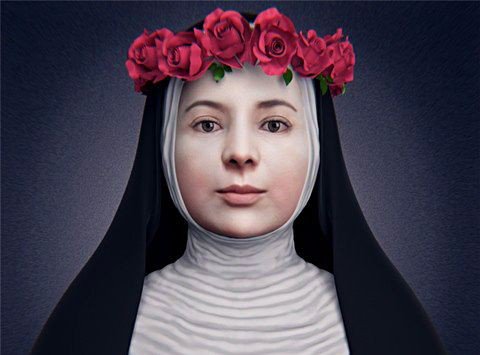
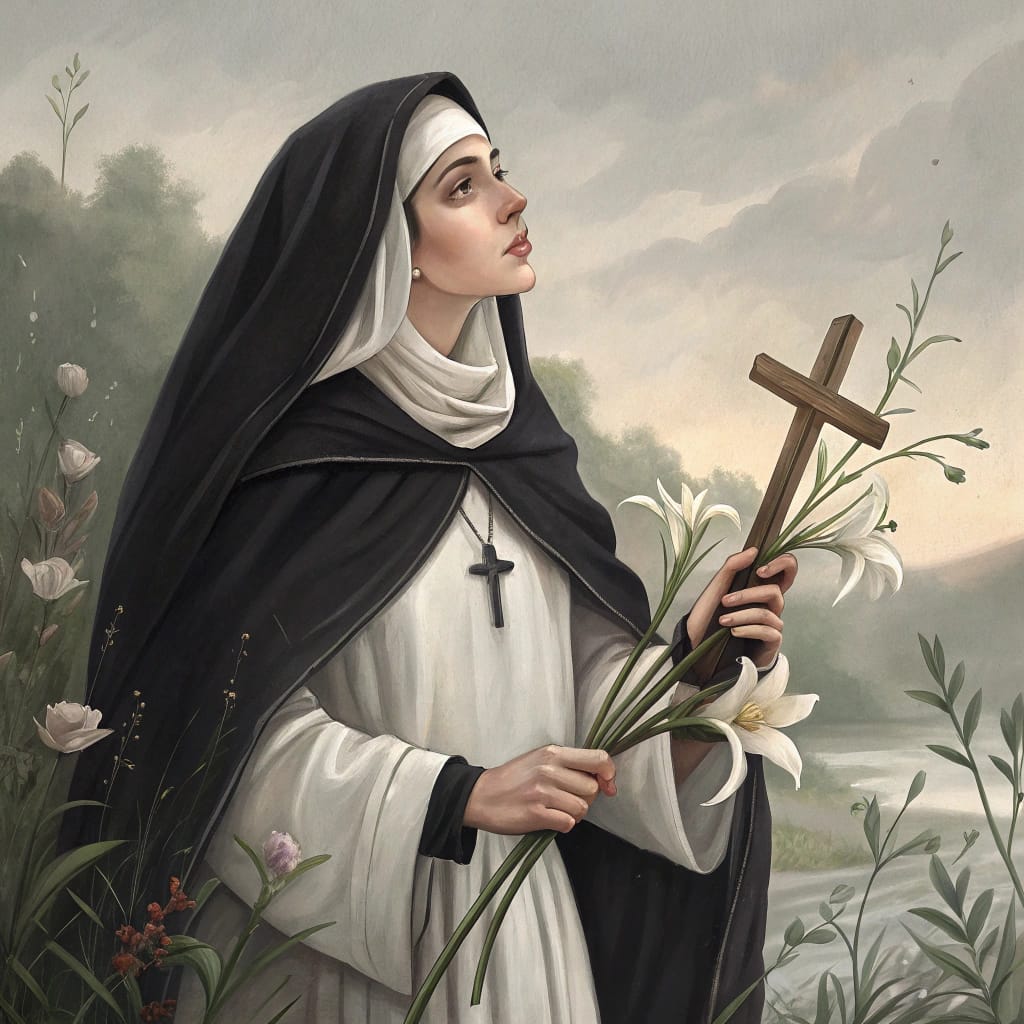
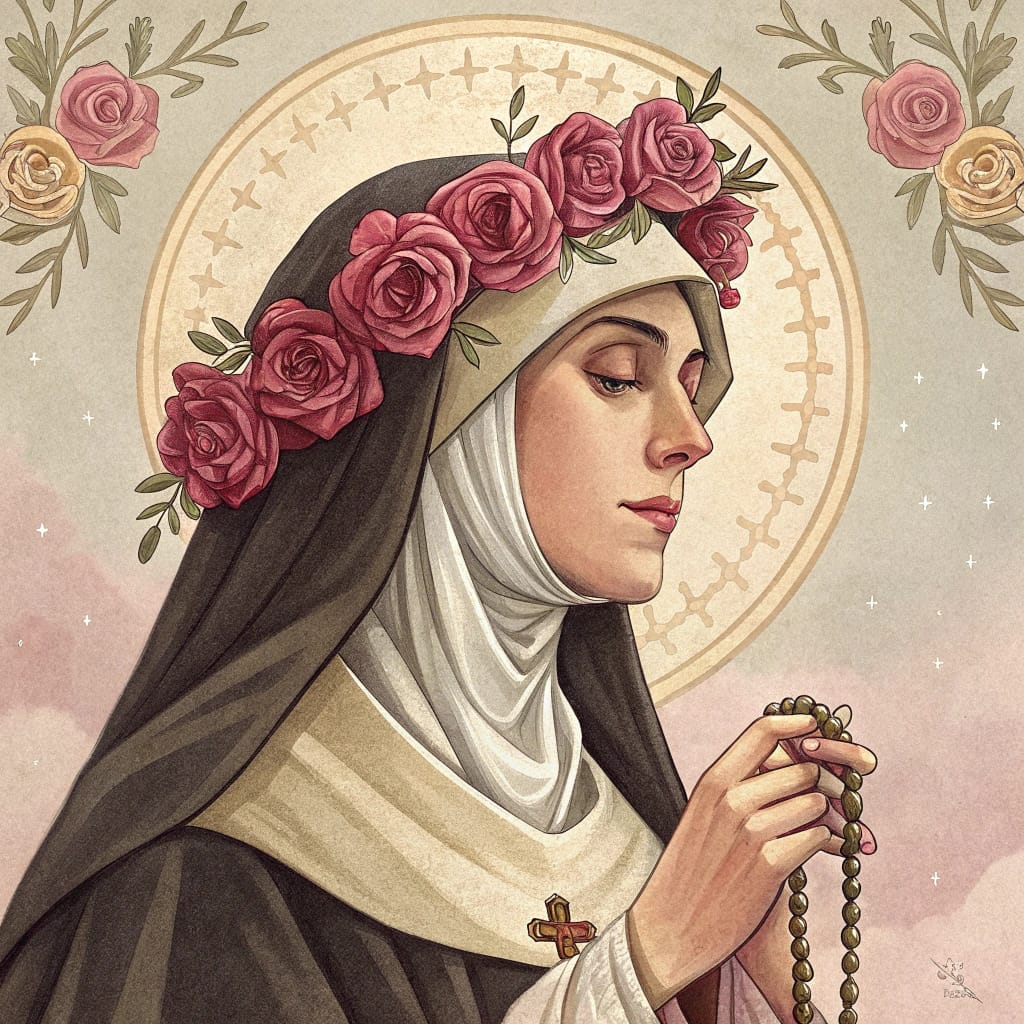
Rose had a deep devotion to the Infant Jesus and His Blessed Mother and spent countless hours praying before the Blessed Sacrament. She received Communion three times a week. Although she would have liked to receive daily, in those days young girls were forbidden to go out unless accompanied by an adult woman, and Maria was not always available, perhaps deliberately. Later in her life, Rose was able to receive Communion daily, which was an extremely rare practice at that time.

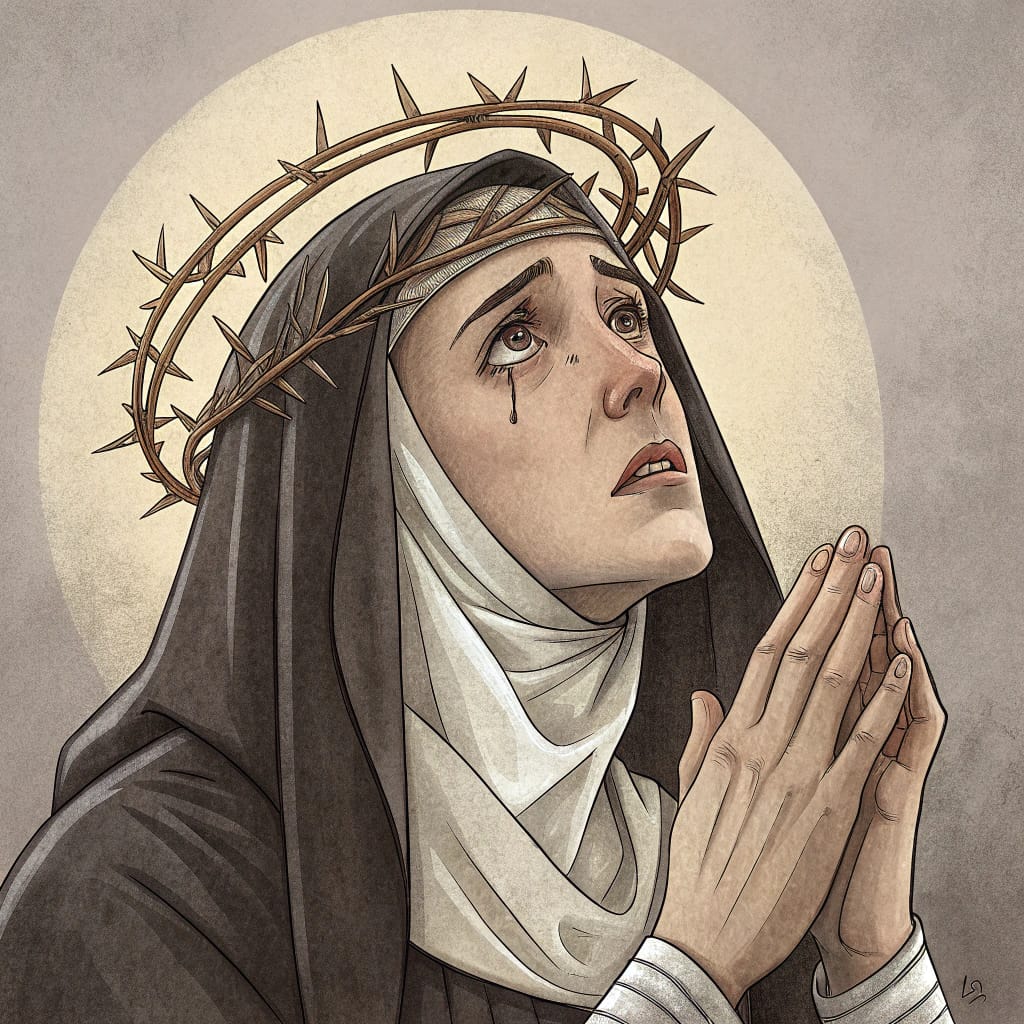
After reading a book about St. Catherine of Siena, the impressionable young girl adopted the saint as her personal role model. Emulating St. Catherine, Rose fasted three times a week, donned coarse clothing, and cut her beautiful hair short. She concealed her cropped locks with a veil to avoid her parents’ disapproval. When Maria eventually discovered it, she was very angry.

In Rose’s teenage years, her family faced financial hardship when her father’s gold-mining venture failed, leaving them impoverished, with seven children still living at home. Rose, ever resourceful, stepped up to support her family by selling flowers from her own garden and creating exquisite lace and embroidery. Her needlework was of the highest quality, with remarkable beauty and delicacy. Despite long hours of labor, Rose dedicated her evenings to prayer and acts of penance.

Maria had grand aspirations for her beautiful daughter, hoping to secure a marriage into one of Peru’s wealthy and prominent families. She orchestrated opportunities for potential mothers-in-law to admire Rose, but these efforts were in vain, because, contrary to her mother’s wishes, Rose felt a Divine calling to a life of virginity.

When Rose realized she was attracting the notice of suitors, she attempted to deflect their attention by rubbing crushed hot peppers on her beautiful face and lime juice on her hands to roughen them.

VENERABLE PIERRE TOUSSAINT: From Haitian Slave to Hairstylist to Holiness

To watch the YouTube video, click on arrow in thumbnail below:

On a summer’s day, in the lush, tropical country of Saint-Domingue, now known as Haiti, a slave woman named Ursule cradled her newborn son in her arms. She gazed out the window, her eyes taking in the green, fertile fields of the sprawling Bérard family sugar-cane plantation located on the banks of the Artibonite River, near the port town of Saint-Marc. This land was her home, where she lived and worked as a personal maid to Madame Berard. Even though she knew that her son, too, would be a slave, in her heart she dared to hope for greater things in his future. Little did she know that this baby boy was destined to play an important role, not only in the history of her people, but of the Catholic Church as well.

The infant had been given the name Pierre, after the owner’s father, Pierre Berard. The date of Pierre’s birth is recorded in many sources as June 27, 1766; however, based on the more recent research of journalist and biographer Arthur Jones, Pierre’s year of birth is now believed to have been 1781. His father’s name is unknown. The roots of Pierre’s family tree stretched back to Africa, where his great-grandmother Tonette had been born and raised before being taken across the Atlantic as a slave to toil on the sugar-rich soils of Saint-Domingue. Pierre’s grandmother, Zenobe Julien, had earned her freedom through years of loyal service to the Bérard family. Five years after Pierre’s birth, his sister Rosalie was born, who would become his steadfast companion throughout the years ahead.

As Pierre grew, the Bérard family, recognizing something special in the young boy, had him educated by their children’s tutors. In the grand house, far removed from the backbreaking labor of the fields, Pierre’s mind blossomed. Intelligent and eager, he learned to read, write, and think critically — skills that would one day prove instrumental in shaping not just his own destiny, but in helping and influencing many others. Jacques Berard allowed Pierre free access to his library, where the curious boy spent many hours avidly reading books on many diverse topics, further broadening his education. He was a playmate to the Berard children, and raised with knowledge of all the social niceties. Tall and mild-mannered, he was trained to courteously greet and serve the family’s guests, and had an excellent command of the French language, both written and spoken. He was also musically inclined and a talented fiddler. Pierre was baptized and raised a Catholic, and found solace in the rituals and teachings of the Church. Yet, as he matured, he couldn’t help but wonder at the contradictions between the Christian message of universal love and equality and the harsh realities of plantation life.

When the senior Bérards returned to France, their son Jean Bérard took over the plantation. Soon, tensions began to escalate, which eventually would lead to enslaved and free people of color uprising in the Haitian Revolution. In 1797, as conditions became more dangerous, Jean & Marie Berard fled for New York City, taking with them 16-year-old Pierre, his younger sister, Rosalie, his aunt, and two other house slaves. They arrived in the young country of the United States shortly after George Washington, its first President, had completed his two terms in office. They were among many French aristocrats, from St. Domingue and from Europe–where the French Revolution had ended in 1794–who were seeking refuge in America.

Once settled in a stylish rented house in lower Manhattan, Jean Bérard signed Pierre up as apprentice to a Mr. Merchant (first name unknown). He was a hairdresser, who taught Pierre the art of hair styling, a skill in which he quickly excelled. This was a wise move on Berard’s part, since the city was full of wealthy society women whose lifestyle required elaborate hairstyles for their frequent social engagements. Male hairdressers, while popular in France, were a fairly new phenomenon in America, where wealthy women generally had their hair done by their lady’s maid.

Berard allowed Pierre to keep most of what he earned as a hairdresser. Pierre quickly mastered all the latest hairstyles of the French, including powdered wigs and false hair additions, along with the chignons and face-framing curls that were trendy among the Americans. He became what one biographer described as “the Vidal Sassoon of his day.” His client list read like a “Who’s Who” of 18th-century New York society: Elizabeth Schuyler Hamilton, wife of Alexander Hamilton, and their daughter, Eliza Holly Hamilton, were among his important clients, along with Catherine Church Cruger, known as “Kitty,” whose father would give the pistols to Hamilton for his duel with Aaron Burr. Another client, a  prominent socialite named Mary Anna Sawyer Schuyler, also related to the Hamiltons, became Pierre’s close friend, referring to him as “my Saint Pierre.” Most of his women clients were Protestant, but they deeply admired Pierre’s devotion to his faith, along with his pious, kind and gentle nature. Hannah Farnham Sawyer Lee, Pierre’s first biographer and the sister of Mary Anna Schuyler, recounts, “He often quoted in his native language from the Sermon on the Mount, and the Beatitudes seemed to have found their way into his heart.”

Pierre also met some French emigrants in NY who knew the senior Berards in France, with whom he corresponded for decades, generously assisting his godmother, Aurora Berard, who had fallen on hard financial times in Paris. He also regularly corresponded with friends in Haiti. A prolific writer, his letters filled 15 bound volumes and served as part of the documentation submitted to the Vatican for his canonization process.

After a while, Jean Berard returned to Saint-Domingue to check on his property there. While in Haiti, he learned that his plantation was lost. He planned to return to New York; however, he developed pleurisy, an inflammation of the lungs, and died while still in Haiti. Soon after his death, his widow, Marie, learned that she was completely destitute. By then, Pierre was earning good money as a hairdresser. He voluntarily continued to care for the widow Marie, allowing her to lead a life of dignity, and assumed financial responsibility for the household. Marie eventually remarried to Gabriel Nicolas, who was also from Saint-Domingue. Pierre and Rosalie continued to live in the Nicolas household.

Eventually, Marie’s health began to fail. Pierre knew that having company lifted her spirits, so he encouraged her to entertain, and would buy tropical fruit and ice cream for the guests. Before they arrived, he would style Marie’s hair, adorning it with a flower as a finishing touch. In 1807, on her deathbed, Marie gave Pierre his freedom. In 1811, he bought the freedom of his sister, Rosalie, and also of his fiancé, Marie-Rose Juliette Gaston, whom he had known in Saint-Domingue.

Pierre’s relationship with the abolitionist movement was complicated. From the growing number of Haitian refugees in New York, he heard reports of murder and devastation from the island of his birth. Despite his intimate knowledge of slavery’s evils and his awareness of New York’s abolitionist movement, he refrained from active participation and hesitated to engage in America’s abolition debate, mindful of the immense toll paid to end slavery on his native island. He avoided anything that could incite violence, explaining, “They have not seen the blood flow as I have.”  This stance led some Black Catholics in the 1990s to oppose his candidacy for sainthood, viewing him as too accepting of enslavement. However, the truth is that Pierre’s inner freedom transcended his legal status as a slave. He consciously chose to embrace God’s grace daily, becoming a powerful symbol of Divine generosity. Pierre himself articulated it this way: “I have never felt I am a slave to any man or woman, but I am a servant of almighty God who made us all. When one of His children is in need I am glad to be His slave.”

This perspective echoes that of Saint Josephine Bakhita, another former slave who expressed similar sentiments about her time of enslavement and her relationship with God. Pierre chose to exemplify human dignity and Christian charity to both the affluent and impoverished in the city. However, after gaining freedom, he chose the surname Toussaint, likely in honor of Toussaint Louverture [Loo-vah-TOUR], the leader of the Haitian Revolution. This choice suggests a connection to revolutionary ideals, despite his apparent reluctance to engage in overt abolitionist activities.

In his later years, Toussaint was reluctant to discuss the atrocities he had witnessed in Haiti. His approach focused on living out his faith through acts of kindness and generosity, becoming a beacon of hope and compassion in 19th-century New York.

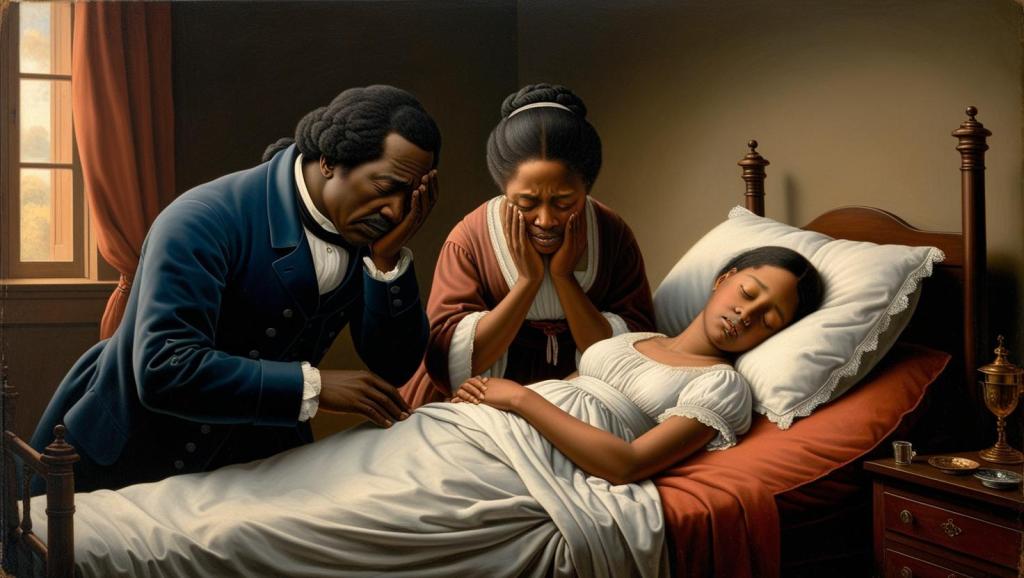
Pierre and Juliette wed on Aug. 5, 1811. For the next four years, they continued to board at the Nicolas house. In 1815, Gabriel Nicolas, who had remarried, moved down South with his wife, and the Touissants purchased a home of their own in Manhattan. Although they never had biological children, when Pierre’s sister Rosalie died of tuberculosis, he and Juliette adopted Rosalie’s daughter, Euphemia. They enrolled Euphemia in a school for Black children in New York. Pierre tutored her in French and taught her to write in both French and English. She also had piano lessons from an accomplished musician named Cesarine Meetz, who gave recitals at City Hotel. Cesarine’s father, Raymond, owned a musical depository on Maiden Lane and was a minor composer and music teacher. When Euphemia died at the age of 14, also of tuberculosis like her mother, Pierre and Juliette were devastated with grief, for they had loved her as their own child.

The Touissants lived a life of charity, compassion and generosity in New York City. They frequently visited the Orphan Asylum, bringing joy to the children with baked treats as well as financial support. Their home became a sanctuary, where they fostered a succession of orphan boys, providing them with education and vocational training. Pierre and Juliet established a credit bureau and an employment agency, offering crucial support to those in need. Their home also served as a refuge for priests and travelers seeking shelter. Pierre’s bilingual skills in French and English made him an invaluable asset to Haitian refugees arriving in New York. He assisted these newcomers by organizing sales of goods, helping them secure funds for their livelihood.

Pierre and his family attended St. Peter’s Church on Barclay Street. He went to Mass every morning at 6:00 a.m., until in his later years illness prevented him from doing so. He was devoted to the rosary and had an excellent command of Scripture. St. Peter’s was the same parish that Saint Elizabeth Ann Seton had attended for a few years after her conversion to Catholicism in 1805, before moving to Maryland, where she founded the Sisters of Charity, America’s first community of nuns. There is no record of Seton and Touissant ever meeting one another; however, he played an important role in later raising funds for the Sisters of Charity’s orphanage in New York, even though it admitted only white children.

The Touissants’ contributions to the Catholic community were significant, including fundraising for the construction of Old St. Patrick’s Cathedral on Mulberry Street. They supported various Catholic institutions, including orphanages and schools, and also helped establish the first Catholic school for Black children in New York City, at St. Vincent de Paul on Canal Street. Pierre Touissant is called the “father of Catholic Charities,” because his legacy of compassion and service laid the foundation for what would later become the Catholic Charities organization.

During a cholera epidemic, Pierre fearlessly crossed barricades to care for quarantined patients. On at least one occasion, he brought a sick priest back to his house to nurse him back to health. He also showed heroic charity in his response to the outbreaks of yellow fever that occurred every summer in New York, something he had seen often back in Saint-Domingue. Hannah Sawyer Lee wrote the following about one such epidemic:“When the yellow fever prevailed in New York, by degrees Maiden Lane was almost wholly deserted, and almost every house in it closed. One poor woman, prostrated by the terrible disorder, remained there with little or no attendance, till Toussaint, day by day, came through the lonely street, crossed the barricades, entered the deserted house where she lay, and performed the nameless offices of a nurse, fearlessly exposing himself to the contagion.”

Despite his success, Toussaint faced significant challenges as a free Black man in New York, where slavery remained legal until 1829. He risked abduction by bounty hunters, and was barred from public transportation, forcing him to walk to his clients’ homes. His Catholicism added to his vulnerability, as anti-Catholic prejudice was widespread in New York at the time. Conversely, his reputation as an entrepreneur and highly-skilled master of his trade made him welcome in the homes of New York’s society families, not only as a hairdresser but as a trusted friend and confidante. Many clients came to view Pierre as more than just a hairdresser, seeking his advice on personal matters. His wisdom and discretion made him a trusted advisor. His clients were deeply impressed by his staunch commitment to discretion and his refusal to engage in gossip. This level of trust allowed them to confide in him freely, knowing their secrets were safe. One client remarked, “It was like the confessional to talk to Toussaint, you were so sure of his secrecy.” This steadfast refusal to share gossip was seen as evidence of his strong moral character. When pressed for information, Pierre would simply state, “Toussaint, Madame, is a hairdresser. He does not gather news.” This polite but firm response became well-known among his clientele, further establishing his reputation for discretion.

A significant friendship blossomed on Franklin Street in New York City, where Pierre and Juliette lived at number 144. Just down the street at number 70 resided the Moore siblings – Nathaniel Fish Moore, an enthusiastic amateur photographer and the future president of Columbia University, and his sister Sarah Ann. Toussaint’s skillful hands had long been tending to Sarah Ann’s hair, their relationship evolving from that of stylist and client to genuine friendship. Evidence of their bond survives in the Pierre Toussaint papers at the New York Public Library, where two letters from Sarah Ann reside. One, undated, simply requests a hairdressing appointment. The other, penned in 1840, speaks of a more personal connection – Sarah Ann had thoughtfully brought Pierre a rosary from her and Nathaniel’s pilgrimage to the Holy Land.

It was through this connection that Toussaint came to sit for Nathaniel Fish Moore’s camera. Nathaniel, ever eager to practice his craft, captured a striking portrait of  Toussaint in his later years. For decades, this photographic image lay dormant, passed down through the Moore family until 1944, when William Hodges, Sarah Ann’s grandson, donated it along with other salt prints to Columbia University’s Columbiana Collection. Initially misidentified and incorrectly credited, the photograph’s true significance remained hidden until many years after Pierre’s passing. But more about that later!

Through the 1820s and early 1830s, Pierre Toussaint’s fortune grew steadily through his tireless work.His days often stretched beyond 12 hours as he traversed New York’s streets, styling hair in the city’s most prestigious homes. Yet, this demanding work was not for personal gain; rather, it was a means to generate more resources for the less fortunate. When a friend suggested he had amassed enough to retire comfortably, Toussaint responded with characteristic selflessness: “Madam, I have enough for myself, but if I stop work, I have not enough for others.”

In 1835, disaster struck New York City, when the Great Fire of New York engulfed lower Manhattan, destroying between 530 and 700 buildings across 13 acres. Witnesses described the inferno as “immense iron furnaces in full blast,” with copper roofs melting and “fiery tongues of flame” leaping from buildings. This catastrophe is believed to have cost Pierre investments equivalent to almost a million dollars in today’s currency. Despite this significant financial setback, he persevered in his charitable endeavors.

Hannah Sawyer Lee eloquently captured the essence of his philanthropy in her 1854 memoir: “It must not be supposed that Toussaint’s charity consisted merely in bestowing money; he felt the moral greatness of doing good, of giving counsel to the weak and courage to the timid, of reclaiming the vicious, and above all, of comforting the sick and sorrowful.”

The 1840s brought stark reminders of the persistent racism in American society. Although New York had abolished slavery, prejudice and violence against Black individuals remained commonplace. In 1842, Toussaint and his wife faced a painful incident at Old St. Patrick’s Cathedral on Mulberry Street – a church whose construction he had helped finance. Unaware of his prominent status, ushers turned them away due to their race. As they turned to leave, some Cathedral trustees saw what was happening and rushed to apologize and welcome them into the church. But the damage had been done, underscoring the pervasive discrimination of the era. By contrast, Pierre’s own charity and inclusivity stood as a shining example of true Christian virtue, to be emulated not only in his day, but in ours.

Though he continued to grow steadily in spiritual strength and beauty, Pierre gradually began to decline physically during the following decade. On May 14, 1851, his beloved wife and partner, Juliette, died and was buried in the cemetery of St. Patrick’s Old Cathedral beside their adoptive daughter, Euphémia. It was at this time that Pierre demonstrated the assertiveness he could summon when it truly mattered. At Juliette’s funeral, he requested that only Black attendees follow the procession to the graveyard, although white mourners were welcome at the graveside. This practice was repeated at his own funeral.

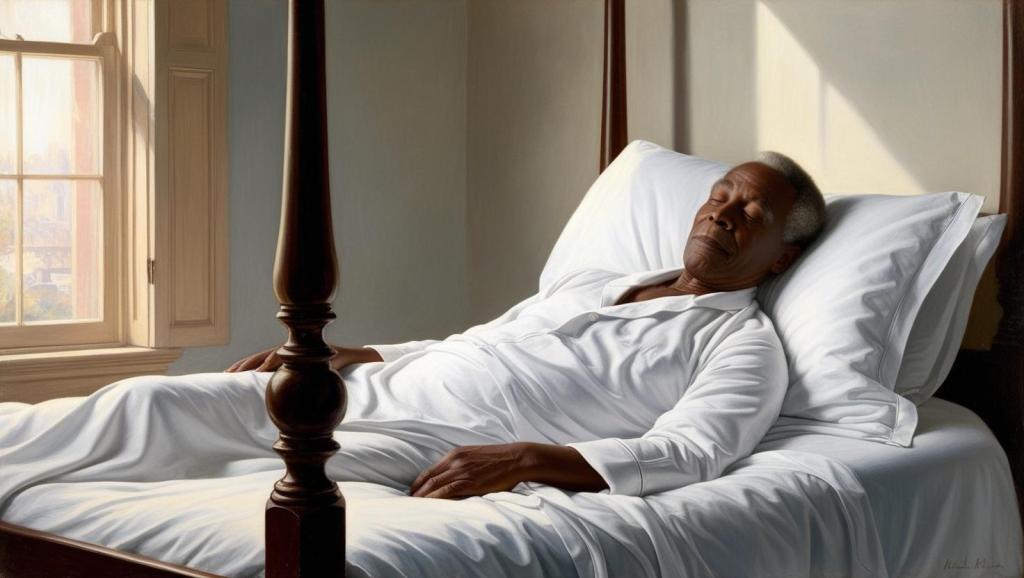
After Juliette’s death, Pierre’s health further deteriorated. He became increasingly inactive and was often bedridden. Two days before he died, he uttered the words, “God is with me.”  When someone asked him if he wanted anything, he replied, “Nothing on Earth.” Those were his last recorded words. Pierre Toussaint entered into his eternal home on June 30, 1853.

At his funeral Mass, St. Peter’s Church overflowed with mourners of all types – rich and poor, Black and white – wishing to pay their respects to the man whose kindness, dignity and charity illuminated the lives of everyone he encountered. Pierre Toussaint had managed the incredible feat of displaying true Christian charity, compassion, respect and mercy that transcended all the levels of society in which he moved. Father Quinn, who gave the eulogy, said that Pierre Touissant was “one who always had wise counsel for the rich and words of encouragement for the poor.”

As the funeral service concluded, Pierre’s white friends and associates honored his final request, stepping back to allow members of the Black community to bear his casket through the streets to St. Patrick’s Cemetery on Mulberry Street, as they had for Juliette two years earlier. At the graveside, people from all walks of life united in prayer as Toussaint was laid to rest beside his wife Juliette and adopted daughter, Euphemia.

New York’s newspapers paid tribute to Pierre Toussaint’s passing with lavish praise. One obituary eloquently stated: “His charity was of the efficient character which did not content itself with a present relief of pecuniary aid, but which required time and thought by day and by night, and long watchfulness and kind attention at the bedside of the sick and the departing.”

In 1854, Hannah Sawyer Lee’s biography, “Memoir of Pierre Toussaint, Born a Slave in St. Domingo,” published in Boston, became crucial in preserving details of his extraordinary life through notes left by her sister, Mary Anna Schuyler, and other sources. But in the turbulent decades following Toussaint’s death, as America grappled with political upheaval leading to the Civil War and its aftermath, his remarkable story faded from public memory, persisting mainly as oral history within Haitian-American and Black Catholic communities. A few decades later, the Touissant archives at the NY Public Library were compiled by Mary Ann Schuyler’s granddaughter Georgina.

But these did not draw much public attention until the 1930s, when Garland White, Jr., a young African-American student preparing for Confirmation challenged his teacher, a seminarian named Charles McTague, with the words, “You can’t name me one Black Catholic that white people respected!” McTague did not back down from the challenge. He managed to locate a Jesuit priest named John LaFarge, who remembered his grandmother’s stories about a devout Black man who had been her hairdresser for many years. McTague rediscovered Toussaint’s family gravestone in the Mulberry Street cemetery, where the inscription had faded to the point of being illegible. This discovery generated new interest in Toussaint’s extraordinary life and works.

In the 1950s, research and promotion of Pierre Touissant’s life was begun by the John Boyle O’Reilly Committee for Interracial Justice, an Irish-American group dedicated to social justice and equality. In 1951, a petition for the canonization of Pierre Toussaint was begun, and Cardinal Francis Spellman blessed a plaque to mark Touissant’s headstone. Spellman’s successor, Cardinal Terence Cooke, initiated the cause of canonization in 1968, which gained momentum over the following decades.

Fast forward to 1990, when, as part of Toussaint’s canonization process, his remains needed to be exhumed, examined and identified. Columbiana Curator Hollee Haswell provided the photograph taken in 1850 by Nathaniel Fish Moore to a team of forensic anthropologists, who compared it against Toussaint’s exhumed skull, leading to positive identification. Cardinal John O’Connor arranged for Pierre’s remains to be interred in the crypt beneath the altar of St. Patrick’s Cathedral, an honor usually reserved only for high-ranking clerics. Pierre Touissant thus became the only lay person, and the only Black person, to be buried in this crypt. A portrait of Touissant by Hunt Slonem now also hangs in the Cathedral.

In 1996, Pope John Paul II declared Pierre Toussaint “Venerable,” advancing him one step closer to sainthood. As of now, Toussaint’s canonization cause awaits an intercessory miracle — specifically, the instantaneous, complete, permanent, and medically-inexplicable healing of a serious medical condition — to progress to the next step of beatification. A second miracle is required for canonization. He is one of six North Americans under consideration for sainthood, potentially becoming the first Black North American saint.

Pierre’s legacy continues to thrive in the Archdiocese of New York and beyond. The Pierre Toussaint Guild, actively involved in advancing his cause for sainthood, also works to share his inspiring story globally. The Pierre Toussaint Scholarship Fund, managed by the archdiocese’s Black Ministry Office, perpetuates his mission by providing financial grants, mentorship, and opportunities for students to develop both their faith and careers. The foundation’s impact extends internationally, supporting the College Pierre Toussaint in Sassier, Haiti, enabling young Haitians to acquire skills to serve their community. In Miami, Florida, the Pierre Toussaint Haitian-Catholic Center bears his name, offering support services to Haitian immigrants. Though there are too many to list here, Pierre Touissant’s legacy extends to charitable and education institutions throughout the United States and beyond.

Additionally, Toussaint’s memory is honored through various public recognitions. A series of portraits in Gracie Mansion commemorates his good works. In April 2021, a significant portion of Church Avenue in Brooklyn, New York, was co-named Pierre Toussaint Boulevard. Additionally, the intersection near St. Peter’s Church in Manhattan, Toussaint’s former parish, was named after him in 1998. Most recently, in February 2024, Toussaint was featured in the New York Times’ “Overlooked No More” series of articles, which highlight remarkable individuals whose deaths originally went unreported in The Times.

In 1999, at a Mass in Toussaint’s honor, Cardinal O’Connor said, “If ever a man was truly free, it was Pierre Toussaint…. If ever a man was a saint, in my judgment, it was Pierre Toussaint. … No one can read this man’s life…without being awed by his holiness. He is now buried beneath this high altar with all of the bishops, archbishops and cardinals of New York. It will be a great privilege for me to be buried in a vault in the same section with Pierre Toussaint.”  Cardinal O’Connor further stated that it was not necessary to wait for Pierre’s official sainthood to emulate his virtues. “Beatified or not,” he said, “Pierre Toussaint remains a wonderful model, and I wish he were here.”

PT. 4 of 4: ST. FRANCESCA CABRINI – THE FINAL YEARS

To watch the YouTube video, which includes BOTH Parts 3 & 4, click arrow in thumbnail below:

Click here to read the previous three parts:

Part One: https://everydaylifespirituality.com/2024/12/15/st-francesca-cabrini-part-one/

Part Two: https://everydaylifespirituality.com/2024/12/22/st-francesca-cabrini-part-two/

Part Three: https://everydaylifespirituality.com/2025/01/26/part-3-of-4-st-cabrinis-excellent-adventures/

Although she had become a public figure celebrated for her accomplishments, Mother Cabrini hated the spotlight and refused to allow her picture to be published in newspapers. By this stage in her life, she yearned for a retirement of peaceful contemplation, hoping to pass on the mission work to her younger and stronger nuns, This dream, however, would never materialize.

At the end of 1907, Francesca Cabrini once again set sail for Buenos Aires to visit her school—this time by boat from Barcelona instead of by mule across the Andes! After her visit, she continued on to Brazil, where her Sisters had established a school in São Paulo. Her journey then took her to Rio de Janeiro, but during the train ride through mosquito-infested marshlands, she contracted malaria and fell ill for several weeks. Despite her weakened state, she managed to open a school in Rio; however, shortly after its opening, a smallpox epidemic swept through the city, affecting several of the nuns. The first Sister to contract the disease tragically died because the authorities insisted she be taken to the public plague house, where she received inadequate care. Distraught over this, Francesca quickly arranged for a cottage outside the city for the remaining sick nuns, nursing them tirelessly just as her sister Rosa had cared for her during her own battle with smallpox decades ago in Italy.

After returning to the United States, Francesca dedicated the next two years to visiting all her houses across the country. In 1910, she was approached by the Archbishop of Chicago with a request to open a second hospital. She discovered a prime property in an affluent neighborhood, which was generously donated to the Sisters. However, local wealthy residents opposed having a free hospital in their community and attempted to dissuade Mother Cabrini through bribery and political pressure. When these tactics failed, they resorted to vandalism by cutting the water pipes on a frigid night. The resulting flood froze into thick layers of ice, which Francesca and her Sisters, along with some immigrant supporters, laboriously hacked away with pickaxes. After repairing the damage and making a few rooms livable, Francesca moved in, to ensure that the building remained guarded at night.

Their adversaries were undeterred, and one night arsonists broke into the basement and set it on fire. Fortunately, the Sisters and the fire department managed to extinguish the blaze. The following evening, however, the arsonists returned. This time, Francesca was prepared; she dashed into the street shouting for the police. The frightened criminals fled, and although they were never apprehended, they never returned. Ultimately, the hospital opened and was so well-received that many individuals and organizations within the community rallied together to support its ongoing operation.

Once the hospital was established and thriving, Francesca returned to Italy with plans to announce at the Rome motherhouse her intention to retire, and to request that a replacement be elected as Superior General. However, the Sisters were shocked and dismayed at the thought of losing their beloved Mother-Foundress. They conspired to fulfill her request by electing a Superior who would serve for life—but that Superior turned out to be Mother Cabrini herself! Surrounded by her joyful Sisters at her birthday celebration, where she was informed by the Cardinal of this decision, she graciously accepted their choice and relinquished her dream of a peaceful retirement at West Park.

While in Italy, Francesca sought out Antonia Tondini—her old nemesis who had caused her so much distress while she was a young woman caring for orphans at the House of Providence. Antonia was brought into the convent’s reception room, where Francesca warmly embraced her and said, “Please forgive me for any trouble I involuntarily may have caused you.” Confused, and overwhelmed with emotion, Antonia began to tremble and weep. Afterward, a nun asked Francesca, “Didn’t she make you suffer terribly?” To which Francesca replied with remarkable grace: “Antonia Tondini was given by God not to know any better. She truly thought that when she treated me as she did, it was for my own good.” This exemplified the profound forgiveness that dwelt in Francesca Cabrini’s magnificent heart. She recognized that all she endured at the House of Providence had been a crucible, preparing her for her great mission.

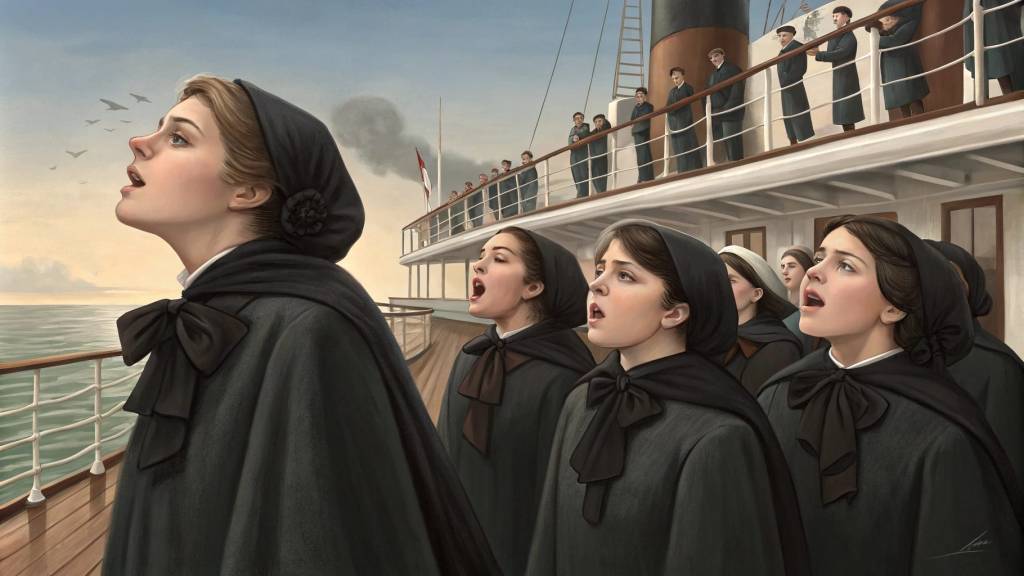
That summer, she embarked on a journey to Paris and London, seeking new houses to replace the original ones that required expansion. Her stay in London lasted 10 months, but before returning to the United States, she was compelled to return to Italy for some much-needed rest. In December, she visited Rome, where she fell gravely ill. By mid-March, her health had improved somewhat, and she abruptly announced her need to return to New York, because the hospital there required her presence. On March 27, 1911, she set sail from Naples on what would become her final sea voyage. She had a strong sense that she would never return to her homeland. As usual, the sea air invigorated her, restoring some of her strength.

Back in New York, she faced challenges in raising the necessary funds for a new Columbus Hospital to replace the old one, whose needs had outgrown its capacity. Undeterred by these obstacles, she enlisted a young architect to design a 10-story building that would eventually rise at 227 E. 19th St. Unfortunately, due to delays caused by World War I, she would not live to see its completion.

In July, while visiting West Park, she burst out of her room one morning, exclaiming that she was dying. Though she did not pass away at that time, the nuns insisted on sending her to the Mount of the Holy Cross in Colorado—a health refuge for sick nuns donated by a benefactor. Once well enough to travel, she made her way there. A fellow nun tended to her needs in a log cabin nestled among glistening snow atop the mountain. She cherished the tranquility of the place and especially loved watching the eagles soar high above her. She spent much time in peaceful meditation, gradually regaining her strength.

As soon as she was able, she ventured to Los Angeles, where another school was desperately needed. She purchased four lots, but struggled to gather enough funds to construct the school. Lacking money for a contractor, she sent for Sister Salesia, a bricklayer’s daughter with considerable building skills. At that time, the Luna Amusement Park was slated for demolition. Mother Cabrini negotiated for the rights to salvage the wooden structures set for destruction. She hired skilled Italian carpenters and laborers on a daily basis and arranged for horses and wagons to transport the materials. The parish community rallied together as well, helping dismantle the frame structures of Luna Park. Francesca was often on-site supervising the work, sporting a wide-brimmed Mexican sombrero and carrying a bamboo cane. At noon each day, she drove a horse and cart between Luna Park and the new building site, delivering wine, coffee, sandwiches and sweets to everyone laboring there. Despite the strenuous work, laughter, singing and prayer lightened their spirits. After a month of hard work collecting building materials, Francesca found herself with more than enough for the Los Angeles school, so she arranged for the surplus materials to be shipped by freight car to expand the Denver orphanage.

Leaving Sister Salesia in charge, Francesca traveled to Seattle, where an orphanage was threatened by a planned highway expansion. The orphans needed relocation, prompting her search for a new site. Exhausted from countless trips through the city, Francesca spread a map of Seattle on the table, pointed to a spot, and instructed the Sisters to explore that location and report back. That evening, the excited nuns returned with news—they had discovered what they called “a little paradise on earth.” With a knowing smile, Francesca replied, “Yes, I knew it would be beautiful. I saw it all in a dream last night.” The following day, they visited the villa, perched on a hill with breathtaking views. The owner revealed that it belonged to his wife who loved the place and would never part with it. As they descended the hill back into town, Francesca firmly declared to her Sisters, “That paradise will be for our orphans…somehow or other.”

As dusk fell, streetcars became scarce. Although hiring a taxi felt extravagant, the exhaustion of her companions made it seem to Francesca the only alternative. But just then, a limousine carrying an elegantly-dressed woman approached them. On impulse, Francesca raised her cane, signaling for assistance. The car stopped, and the lady offered them a ride back to the convent. During their drive together, the woman learned that she was speaking with Mother Cabrini—a woman she greatly admired. When Francesca mentioned the beautiful estate they had seen earlier that day, the woman’s eyes widened in astonishment; it turned out that she owned that very property! After conferring with her husband, they offered Mother Cabrini the estate at an exceptionally reasonable price. A week later, two wealthy American men donated $160,000—sufficient funds for establishing not only an orphanage on the property, but also an adjoining chapel.

Once back in New York, she resolved to establish another orphanage closer to the city. During her search for suitable properties, she stumbled upon a stunning estate right by the river in Dobbs Ferry. One of the Sisters informed her that it was a neighborhood of millionaires, and the prices would be exorbitant; moreover, the building she admired was a private school for affluent Protestant boys. Undaunted, Francesca rang the bell, which was answered by a young man whose father was the president and owner of the school. Initially cool in his demeanor, he informed Francesca that the estate was not for sale. However, as their conversation progressed, Francesca’s charm began to work its magic on him. He graciously offered to give her and the other nuns a tour of the impressive building, which included classrooms, dormitories, a kitchen, dining room, chapel, gymnasium, and swimming pool—all in excellent condition. As they departed, Francesca handed the young man her card, in case his father would consider selling. Just before leaving, she bent down to tie her shoelace, and discreetly pushed a medal of St. Joseph into the soft earth of a flower bed. A few days later, she received a letter from the owner, asking her to make an offer on the property. Armed with her plan, Francesca approached several wealthy businessmen and successfully secured the necessary funds.

With financial backing in place, she and her nuns set to work on the improvements necessary before the March 31st grand opening of what would be known as the Sacred Heart Villa at Dobbs Ferry. Francesca felt inspired by Jesus to undertake the whitewashing of the building herself. Wearing a painter’s cap and pinning up her skirts, she joyfully began painting. However, the can slipped from her hand, splattering paint all over her from head-to-toe. Laughing, she wiped at her clothes and continued with determination. The nuns held the ladder steady as she climbed up; but when they offered to take over for her, she insisted that the whitewashing was her special task. For the next 15 days, she diligently applied her brush until the job was done.

During the opening ceremony, Francesca stood alongside the Cardinal. It was at this time that the last photograph of Francesca Cabrini was taken, capturing her shining eyes and serene smile as she stood observing the happy orphans around her.

On June 28, 1914, the assassination of Archduke Ferdinand of Yugoslavia marked the beginning of the First World War. From that day on, a shadow was cast over Francesca’s heart and she was burdened with sorrow and concern for her Missionary Sisters in Europe. She prayed ceaselessly for their safety, entrusting them to the Sacred Heart of Jesus, their Divine Protector. Her usual smile was now tinged with sadness, and restful sleep eluded her; only her work provided a semblance of relief.

In August 1915, Francesca traveled to Seattle with plans to open an orphanage. The train journey proved arduous as she battled intermittent chills and fever, coupled with excruciating discomfort from sitting upright in coach for days on end. “If my Lord wants this mission accomplished,” she confided to one of the Sisters with her, “He will return to me the strength which has almost totally abandoned me.”  In Seattle, she found a fine building in the heart of the city—the former Perry Hotel, which had gone bankrupt. Her discreet inquiries revealed that the principal trustee was a Mr. Clarke based in New York. Although lacking his first name, Francesca refrained from further inquiries to avoid alerting competing interests to her intentions. She telegraphed her nuns back in New York with a clear directive: “Find a certain Mr. Clarke, who is in possession of the Seattle Hotel Perry, and ask it as a donation to charity.”

This task proved daunting with no first name, as the New York City directory listed at least 200 Clarkes! Undaunted, the Sisters patiently called each number until they finally located the right party—a shrewd Protestant man, who was taken aback by their request for such a large donation to a Catholic charity, and adamantly refused. When they reported back to Mother Cabrini, she instructed them to return and propose the lowest price he would accept. This time, he was struck by their sincere humility and agreed to negotiate. After numerous visits from the Sisters, and exchanging 90 telegrams with Mother Cabrini, he ultimately bypassed the other trustees and offered her the property for $150,000—a bargain at the time. Even the Archbishop encouraged Francesca to accept this deal. Despite her persistent fatigue, she reached out to rich and poor alike, and was able to raise $10,000 as a retainer, which Mr. Clarke accepted. However, opposition soon arose. The other trustees were furious, and influential local figures vehemently opposed an Italian orphanage in that location, out of fear it would diminish property values. They ensured that all banks in Seattle would refuse to issue a loan to Mother Cabrini. From November through April, Francesca faced relentless struggles in securing financing for the property. During Lent, she gathered all her nuns and orphans to pray before the Blessed Sacrament, placing their hopes in Jesus, while she prepared herself to accept His will—whatever it might be.

In the Seattle convent stood a statue of St. Anne holding a book and teaching young Mary to read. In desperation, Francesca wrote “$120,000” in the book held by St. Anne and spent the evening in fervent prayer. While she was praying, the doorbell rang. A young nun entered to inform her that a gentleman wished to see her. When Francesca greeted him, she discovered that he was Mr. Chilberg, the Jewish president of the Scandinavian Bank. He bowed respectfully before Mother Cabrini and apologized for being out of town when she had previously visited his bank. Upon his return, he had learned about her loan denial. He expressed complete faith in her mission and offered to arrange any amount she needed. Leading him to St. Anne’s statue, Francesca told him that the amount she needed was written in the book. He read it and nodded. She then invited him to join her in the reception room for a glass of wine, which he gratefully accepted. The following day, the contract was signed, and on April 30, Mother Cabrini officially took possession of the Perry Hotel. Together with her Sisters, she prayed for abundant blessings upon their great friend Mr. Chilberg for his generous support of their mission.

It became clear that the turmoil of wartime was not an ideal backdrop for fundraising efforts aimed at establishing an orphanage. One night, Francesca had a profound dream. As she recounted to her Sisters, “…St. Anne instructed me to relinquish my desire for a foundling home, and indicated instead a hospital that will do acts of mercy and yet sustain itself.” However, this goal proved to be as challenging as her initial one. The presence of an existing Catholic hospital in Seattle led some within the Church to deem another one unnecessary and unwelcome. Additionally, those who had previously opposed her acquisition of the Perry Hotel were now rallying against her new plans. These factions exerted pressure on local doctors, causing them to withdraw their support from Mother Cabrini’s Seattle Columbus Hospital. The situation escalated to the point where even the Archbishop forbade the opening of the facility. Although initially disheartened, Francesca soon decided to pivot her approach. Instead of a general hospital, she resolved to establish a center focused on physiotherapy and electrotherapy treatments—services that were in high demand and would not directly compete with the other Catholic hospital in Seattle.

One day, a young pregnant woman from a respectable family approached the convent with a request: she wanted her baby to be born at Mother Cabrini’s hospital. Several weeks before the delivery date, Mother Cabrini felt inspired to send a Sister to visit the young woman’s home with an urgent message to summon her doctor and come immediately to Columbus Hospital, where a bed awaited her. The young lady complied, and just hours later, she gave birth to a baby girl. Due to her premature birth, the infant’s survival was uncertain; thus, Mother Cabrini herself baptized the child, naming her Columbina, which means “little dove.”  The joyous event of the baby’s birth, and the happiness of the young parents, their family, friends and doctor, significantly eased the initial hostility towards Columbus Hospital. Over time, as word spread about the Sisters’ compassionate care, the hospital began to flourish.

In the fall of 1916, Francesca sensed that her life was nearing its end and felt compelled to visit some of her other houses. She informed the Sisters in Seattle of her intention to travel to Los Angeles. Her pale and fragile appearance alarmed the nuns in California, who had eagerly awaited her visit. Standing in the garden, she gazed lovingly at the Sisters gathered around her. The orphans burst into the garden, running toward her and joyfully shouting, “Mama Cabrini is here!” Francesca spent the winter in the warm California sun, enjoying long hours of deep meditation amidst the beauty of the garden. The orphans frequently visited her, and she delighted in sharing candy and telling them funny stories. Birds flocked to her feet, drawn by her quiet gentleness as spoke softly to them, scattering crumbs and seeds on the ground.

One of her nuns in Los Angeles, Sister Euphemia, suffered greatly from varicose veins, despite years of treatment from numerous doctors. Francesca suggested that she try wearing silk stockings to ease her discomfort. Taking this advice a step further, Sister Euphemia borrowed a pair of Mother Cabrini’s own cotton stockings and put them on. To her amazement, she found immediate relief. She shared this with Mother Cabrini, who laughed off the notion, but then gently admonished her: “I hope you’re not going to be so foolish as to say that my stockings cured you! It was your faith that did it.”

As Spring approached, Francesca realized she needed to travel to Chicago, due to issues arising at the new hospital. By the time she reached the Chicago Columbus Hospital on April 18, 1917, she appeared thin, bent, and frail, relying on a cane for support as she struggled to walk. The doctors quickly recognized that her malaria had worsened significantly and insisted on immediate treatment. Although the chills and fever eventually subsided over the following weeks, the treatment left her exceedingly weak. She also was suffering from chronic endocarditis, an infection involving the heart’s valves and lining.

Despite her frailty, Francesca rallied enough to participate in spiritual exercises at the convent that summer, being the first to arrive at the chapel each morning at 5:00 AM. Following medical advice, the Sisters arranged for her to be driven into the countryside daily, where she gathered wildflowers to adorn the chapel. Nostalgic for the farm life of her youth, she was inspired to purchase a farm for the Institute that would provide fresh produce for the hospital. After exploring rural areas further afield, she discovered a lovely farm in Park Ridge, Illinois, which she purchased in October. She found immense joy in stocking the farm with horses, cows, goats, pigs, and chickens.

By November, Francesca’s health had once again deteriorated. One morning during Mass, just after receiving Communion, she nearly collapsed. The Sisters quickly carried her to her bed. Though her strength waned daily, she yearned to be with her daughters during their recreation periods. She loved these times with the Sisters, and in the past had delighted them with her stories, and liked to play cards, although she was terrible at it and never won unless her opponents secretly let her. Mother Antonietta Della Casa, the Superior of the Hospital, now implored her to reconsider and conserve her energy. But Francesca firmly replied, “Oh, no! It is only now at their recreation that I can be together with them. If I am not, they will think I do not love them.”

During these cherished recreation times, she would bring them small gifts of fruit, candy, cake, or cookies—tailored to each Sister’s preference—as they gathered around her affectionately. On December 8, the feast of the Immaculate Conception, she asked the Sisters to write verses about the Virgin Mary. This would be the last time she could join them for recreation. Subsequently, she quietly withdrew to spiritually prepare herself for Christmas—a feast that held a special place in her heart. She ordered new habits for all of the Sisters, including one for herself, secretly knowing she would be buried in it. For the Order’s Christmas cards, Francesca requested a verse from the Psalms to be printed: “Oh, send out Thy light and Thy truth; let them lead me; let them bring me unto Thy holy hill, and to Thy tabernacles.” When a Sister objected that the verse seemed more fitting for a funeral than for Christmas, Francesca smiled and insisted, “Yes, I know, but this Christmas that verse goes well. Leave it the way it is.” Upon learning that the 500 children of the parish school would have to go without candy due to the difficult times, she exclaimed, “Oh, no! They must have their candy! Christmas would not be Christmas for them without it!”She instructed the Sisters to purchase the candy at her expense.

On December 21, despite suffering from the final stages of malaria, Francesca attended Mass and joined the Sisters in preparing the Christmas packages of candy for the children. The following morning, December 22, 1917, Mother Della Casa visited Francesca’s room to greet her and consult about the day’s tasks. A young nun came in to ask if Francesca wanted a bowl of broth. She agreed, and requested that her room be tidied so she could sit in her rocking chair. Mother Della Casa returned at 11:40 AM with a question for Francesca. After she left, Francesca locked the door and returned to her chair to pray and meditate in solitude. While sitting there, she felt a sudden pain in her chest and got up to unlock the door and ring for help. When a Sister entered, she found Francesca slumped in her wicker chair, her nightgown and handkerchief stained with blood. The young nun rushed to summon Mother Della Casa, who immediately sent for both the priest and the doctor. All the nuns hurried to Francesca’s room, finding her unconscious. The priest administered Last Rites just as Francesca opened her eyes one final time. She leaned her head against Mother Della Casa’s arm and cast a loving glance at all her Sisters before drawing her last breath.

A solemn Requiem Mass was celebrated by the Archbishop of Chicago, after which Francesca’s body was transported to New York for a second Requiem Mass conducted by Bishop Hayes at St. Patrick’s Cathedral. In accordance with her wishes, her body was interred at her beloved West Park on January 2, 1918. Hundreds of orphans dressed in white, carrying lilies and candles, followed her casket from the convent chapel to her tomb. In 1930, her remains were moved to their current location in the chapel of Mother Cabrini High School (formerly the Sacred Heart Villa) at 701 Ft. Washington Avenue.

In 1928, the process for her canonization began. Two miracles are required for sainthood, and in Francesca’s case, the first miracle involved an infant named Peter Smith, who was born at the New York Columbus Hospital on March 14, 1921. As was customary at the time, a nurse applied a solution of silver nitrate to the infant’s eyes. As she put the bottle down, she realized with horror that in her haste she had used a 50% solution instead of the intended 1%, resulting in severe chemical burns to the baby’s eyes. An eye specialist, along with other doctors, concluded that there was nothing they could do—the corneas of the eyes were destroyed, and the child would be permanently blind. The Mother Superior rushed in with a relic of Mother Cabrini, placed it on the baby’s eyes, and then pinned it to his nightgown. She and the Sisters, along with the nurse involved, spent the entire night praying in the chapel for a miracle.

The following morning, when the doctors returned to examine baby Peter, they were astonished to find his eyes intact and perfectly normal. However, that same day, the infant developed double pneumonia, with a temperature reaching 108°F—just one degree short of fatal. The doctor advised the Mother Superior to start praying again, as the baby’s condition was critical. “Doctor,” she replied confidently, “Mother Cabrini has not cured his eyes just to let him die of pneumonia!” They prayed once more, pleading for a second miracle. By morning, all symptoms of pneumonia had vanished. Peter Smith grew up healthy with normal vision, and as a young man, served as a soldier in the Army. The only remnants of his hospital ordeal were two small scars from the silver nitrate that had leaked from his eyes.

The second miracle involved Sister Delfina Grazioli, who had suffered since 1915 from adhesions of the gallbladder and intestines. Despite undergoing four surgeries, her condition showed no improvement, and she was painfully wasting away. By December 1925, doctors had given up all hope and predicted she had only a day or two left to live. Funeral arrangements were already underway; however, on the night of December 16, after praying to Mother Cabrini, Sister Delfina saw her in a dream. The next morning, although still very weak, she announced that she was cured. The instantaneous healing was confirmed by the doctors, and she never experienced a recurrence of her illness. Mother Francesca Xavier Cabrini was beatified on November 13, 1938, and canonized on July 7, 1946.

Throughout her life, Francesca believed that faith, simplicity, humility, and obedience were the foundations of all spiritual power. She often reminded her Sisters that the only necessary mortification was to perfectly observe the Rule of the Order and wholeheartedly carry out their daily tasks. She prayed fervently that she would never ask her nuns to do anything she herself was unwilling to do. Francesca valued openness and candor in others and detested any pretentious displays of piety. She did not want to see her Sisters carrying rosaries unless they were actively reciting them. Always gentle and kind in her approach, she never hesitated to speak her mind, but did so with compassion. Rather than giving orders, she made requests that were promptly obeyed. She discouraged self-pity and long faces among her Sisters. A sense of humor and fun bubbled out of her spontaneously, gladdening the hearts of everyone who came under the spell of her infectious smile.

In my research for this video series, I came across a quote from one of her biographers that described her life as “a quiet whirlwind.” I can think of no better description. Francesca Cabrini perfectly fulfilled the hope she once wrote in her notebook: “I wish to die of love after a life of total surrender to God….Oh Jesus, I love you so much, so much!….Give me a heart as large as the universe, so that I may love you, if not as much as you deserve, at least as much as I am capable of.”

PART 3 of 4: ST. CABRINI’S “EXCELLENT ADVENTURES”

Across the USA, Europe, and Over the Andes to South America

To watch the YouTube video, click the arrow in the thumbnail below (Video contains Parts 3 & 4):

Mother Francesca Xavier Cabrini stood lost in thought, her eyes tracing the raindrops that streaked the windowpane. She found herself at a crossroads, faced with a challenging decision that could greattly impact the future endeavors of the Missionary Sisters of the Sacred Heart of Jesus, the Order she had founded just over a decade earlier. When she and her nuns had arrived in New York from Italy in March 1889, their primary mission was to educate poor Italian immigrants, which led to the establishment of academies, colleges, and normal schools.*  However, what truly distinguished Mother Cabrini’s work was her commitment to founding orphanages that would provide destitute girls with the training to become virtuous Christian women.

Now, two years later, she had received an unexpected request to manage a hospital, a task she felt was beyond her expertise. Yet, Francesca understood the pressing need for hospitals to serve Italian immigrants in the United States, many of whom were plagued by illnesses and injuries resulting from their dire living conditions and hazardous jobs. In public hospitals, they often faced neglect due to their poverty and limited English, compounded by the medical staff’s inability to speak Italian.

As she pondered her next steps, Francesca reflected on the journey that had brought her here. Born prematurely in 1850 in Sant’Angelo, Italy, she had always been frail, but possessed an unconquerable spirit. As a child, the stories of missionaries had captivated her imagination and fueled her longing to serve others.  Despite being rejected by several religious orders due to her health, she had founded the Institute of the Missionary Sisters of the Sacred Heart of Jesus in 1880 with a handful of young women. Francesca’s aspirations initially pointed towards China, yet Pope Leo XIII had redirected her to America, where thousands of Italian immigrants awaited assistance. This marked a significant turning point in her life and mission. Upon arriving in New York, she quickly recognized the urgent needs of the immigrant community, both material and spiritual.

Bishop Giovanni Scalabrini, a devoted advocate for Italian emigrants to the United States, had established a small hospital on East 109th Street, entrusting its management to his Order, the Fathers of St. Charles Borromeo, under the direction of Father Felice Morelli. Despite the priests’ commendable efforts in tending to the spiritual needs of the patients, the hospital was on the brink of disaster due to the clergy’s lack of practical experience in healthcare management. Desperate to remedy the situation, Bishop Scalabrini had sought Francesca’s assistance during her recent visit to Italy. He explained that without her intervention, the hospital would be forced to shut down. However, Francesca was hesitant; she feared that the demands of running a hospital would compromise the religious spirit of her nuns, and that her own aversion to physical illness would make her unsuitable for such a role. Although she had cared for patients suffering from diseases like smallpox and typhoid when necessary, managing a hospital presented an entirely different challenge. She already had sought the advice of a Cardinal, who had encouraged her to undertake the task, and also had received a letter of recommendation from the Cardinal-Vicar in Rome.

The decision weighed heavily on her heart as she considered how it might transform lives within the immigrant community she had come to love so deeply. Yet she remained uncertain. Faced with this dilemma, Francesca turned to her usual source of guidance: prayer. She closed the curtains against the gloomy rain, and went to the convent’s chapel, where she knelt in front of the statue of the Sacred Heart of Jesus. There once again she poured out all her questions and concerns, praying fervently to be shown the right path. That night she had a vivid dream in which she saw the Virgin Mary, sleeves rolled up and skirt pinned back, moving through a hospital ward, comforting the sick. When Francesca rushed to offer her help, Our Lady turned to her and said, “I am doing what you refuse to do.” This dream left Francesca with no doubt about her path forward, and she promptly assigned ten nuns to the Scalabrini hospital.

In October 1891, she traveled to Nicaragua and New Orleans to open missions there. However, when she learned the following Spring that, despite the nuns’ valiant efforts, the hospital had failed, she rushed back to address the situation. She quickly discovered the root of the problem. Contrary to her intentions, the Sisters were still under the control of Father Morelli, who had not paid them the promised $25.00 per month. Additionally, Francesca was expected to assume responsibility for a substantial debt that had accumulated even before she had sent her Sisters there. Francesca refused to pay off the old debts unless her Order could gain ownership of the hospital. Unfortunately, this became impossible when the property was foreclosed that summer. As negotiations regarding the distribution of furnishings stalled, complicated by the fact that the nuns had not been compensated for a year, Francesca made a difficult decision: she and her Sisters would amicably part ways with the Scalabrinian Fathers.

In a show of support, Archbishop Corrigan of New York provided Francesca with $50 and recommended her to four wealthy Italians in the city. With a total of $250 collected from these benefactors, she rented two adjoining houses on Twelfth Street and established her own hospital. She transferred ten patients from the failed hospital to this new facility. The donated funds allowed her to cover the first month’s rent and purchase ten inexpensive beds. The nuns crafted the mattresses themselves and sewed sheets from a large bale of fabric. For the first week, there was no water or gas for cooking, so the Sisters bought food from a nearby restaurant and heated it on a coal stove positioned in the center of the ward. Their meager pharmacy consisted of a dozen bottles of medicine. A writing desk and surgical instruments were donated by a doctor, while another donor provided an ambulance. Lacking funds for their own beds, the Sisters slept on the floor.

Despite these hardships and the criticism that naturally followed, the Sisters’ steadfast devotion more than compensated for their lack of supplies. They cared for their patients with kindness and compassion, placing their confidence in Mother Cabrini and following her example of total trust in God. When it came time to name their new facility in 1892, Francesca chose “Columbus Hospital,” explaining that the year marked the 400th anniversary of Christopher Columbus’s discovery of the New World. She declared, “He was the first Italian immigrant. If we call it after him, all the Italian immigrants will know that this is their hospital.”She would subsequently give the same name to all future hospitals she founded in America.

The very first patients at Columbus Hospital were too poor to pay for their care, but Dr. Keane, the head physician, generously offered his services free of charge. He was resolute in his commitment to the hospital’s mission, dismissing any staff doctor who attempted to charge a fee. Alongside Dr. Keane, other charitable doctors—several of whom were Protestants—joined the staff and referred their private paying patients to Columbus Hospital, providing a crucial source of income. As word spread about the hospital’s dedication to serving the needy, donations of money and equipment began to pour in, allowing the small hospital to steadily grow.

Feeling confident that the Sisters could manage the hospital, Francesca returned to Italy in October 1892 to visit the nuns at the original Motherhouse in Codogno and in various convents scattered throughout the country. During her visit, she had the opportunity to meet with Pope Leo XIII, who was celebrating the 50th Jubilee of his consecration as a Bishop. These trips to Italy were essential for Francesca’s spiritual renewal; she often felt the need to retreat to the quiet life of the cloister, which refreshed her for her future endeavors.

She returned to New York in 1895 to find Columbus Hospital thriving. A pivotal moment had occurred when an Italian warship docked in New York, carrying two sailors suffering from typhoid fever. After being turned away from other facilities, the Missionary Sisters welcomed them into Columbus Hospital, gaining significant publicity when the Italian Admiral visited. This led to an arrangement with the Italian Consul General, allowing any sick Italian sailor on a merchant vessel to be admitted for a flat fee. Although finances remained tight, this official recognition ensured that the hospital was consistently full. In March 1895, Columbus Hospital received formal approval from the State of New York and was legally incorporated. That same year, it was relocated to East 19th Street, and in 1973 would merge with another hospital, transforming into the Cabrini Medical Center at 226 East 20th Street, where it operated until its closure in 2008.

With the hospital’s future secured, Mother Cabrini was free to embark on a new journey to South America. First, she traveled to New Orleans to check on her mission there, staying for two days before sailing onward. The mission she and her Sisters had established in Granada, Nicaragua, had been closed by the government following a revolution, forcing the Sisters to relocate to Panama. Francesca intended to visit them before continuing on to Argentina. In Panama, Francesca was captivated by the mission’s stunning location overlooking the sea. In one of her letters, she described it vividly: “One could imagine oneself to be on board a steamer, because on the south and southwest it is surrounded by the sea…. The room the Sisters prepared for me is surrounded on two sides by large orange trees, the fruit of which touches my windowsill. One looks out on a path leading to the sea and its beautiful isles, which seem to be playing in the bay…. In our garden we have six kinds of palms, banana and coffee trees, and various kinds of fruit, the names of which I do not know.” She cherished the tranquility of this beautiful place, despite the fact that 30 girls practiced the piano every day, and 12 girls had singing lessons. “You can imagine our eardrums!” she wrote with her characteristic humor.

After spending 4-1/2 months in Panama, Mother Cabrini set out with Mother Chiara for what would become her longest and most adventurous journey. Their destination was Buenos Aires, where the Archbishop had requested her assistance in opening a school. From there, they planned to travel down South America’s coast to Chile and then cross the Andes into Argentina. During this voyage, Francesca crossed the Equator for the first time. During a particularly dull stretch of scenery, she took advantage of her background as a former teacher and lover of geography by writing a little lecture about the area for her nuns back home.

While making a long stop in Callao, Peru, Francesca and her companion ventured into Lima to visit St. Rose’s burial shrine. The ship continued its leisurely journey toward Valparaiso, making frequent stops along the way. When they arrived in Santiago at the foot of the Andes Mountains, they received advice from the Archbishop to rest for a while, because the Archbishop of Chile had passed away, making immediate travel unnecessary. Though Francesca chafed at this delay in her plans, she recognized that there was little choice: heavy snow blocked access through the Andes, and it would be several weeks before the first caravan of the season could depart. Her traveling companion, Mother Chiara, was a timid and sickly woman, so Francesca had offered her the choice of their going around Cape Horn by ship, or crossing the Andes mountains. Mother Chiara, who hated sea voyages, chose the Andes route.

On November 24, during the Spring season in the Southern Hemisphere, their journey across the Andes began. The first segment was by train, which navigated precariously along the mountains, hugging the edges of vast gorges so deep that the bottom was invisible. At the railway’s end, they transferred to mule-drawn coaches that trailed the river along a winding road bordering a deep chasm, where turbulent waters churned far below. This marked the beginning of the Cumbre Pass. Only dark green pine trees dotted the landscape, while a huge volcano towered above them. After a long day of travel, the coaches halted, and the passengers eagerly devoured a simple supper. Later, the two nuns stepped outside into the night to admire the brilliant moonlight that bathed the mountains in a lovely blue glow, reflecting off the snow. Francesca mused that the night’s beauty resembled that of the Virgin Mary.

With this uplifting thought, she and Mother Chiara retired to their inn for the night. Exhausted from their travels, they fell into a deep sleep, but were roused at 3:30 a.m. by the sounds of the mules being saddled. They donned long, brown, hooded capes lined with fur—gifts from the ladies in Santiago—preparing for their mountain crossing. The best mules were assigned to them, which meant they would ride at the front of the line. Tiny Francesca had to stand on a chair to mount her mule.

The first hour of their journey was relatively easy; however, they soon found themselves navigating through deep snow as the path vanished. Two muleteer guides led them along a trail that often skirted a precipice. Francesca’s mule was curious about the edge, and despite her shouted warnings in limited Spanish, and frantic attempts to pull its head away, the mule remained undeterred. She glanced over at Mother Chiara, who lay limply on her mule’s back, clearly regretting her decision to traverse the Andes instead of opting for a ship voyage. Yet, despite the perilous conditions, the view was breathtaking—an immense abyss on one side and an expansive stretch of sparkling white snow on the other, with the mountains they still had to cross looming ahead.

Suddenly, one of the guides halted and instructed everyone to dismount; something was amiss. Before them lay a long and terrifyingly deep crevice. The men managed to get some mules to leap across it and informed the travelers they would need to do the same on their mounts. Being at the front meant Francesca had to make the first jump. Bravely, she agreed, confident she would clear it without issue. However, the intense cold and high altitude had sapped her strength, and as her mule leaped, she lost her grip. She began to slide off down the chasm and would certainly have fallen to her death if not for the quick reflexes of a vigilant muleteer who threw himself across and caught her just in time. With assistance from his hiking stick and his fellow guide, he pulled Francesca safely to solid ground, where she promptly fainted into a snowbank.

When she regained consciousness, she found that all her companions had successfully leapt across. Remounting her mule by standing on a boulder, she and the cavalcade continued their adventurous trek. Soon, Francesca recovered from her alarming experience and began to appreciate once again the stunning scenery around them. As they approached the border between Chile and Argentina, they descended the mountain through a feathery snowfall and stopped at an inn for lunch. When asked to write in the visitors’ book, Francesca became the first person ever to express something positive about the crossing. Despite its dangers, she had relished every moment of this adventure. In her diary-letter to the nuns back home, she reflected: “…I was very pleased to have ascended such high mountains, which gave me an inducement to incite myself to ascend the heights of spiritual perfection—a peak much higher than any in the Andes…. Prayer, confidence and total abandonment to God will always be our arms. We are good for nothing…. But I can do all things in Him who strengthens me.”

Francesca and Mother Chiara arrived in Buenos Aires, a city where she was virtually unknown, because the Archbishop who had invited her had since passed away. Fortunately, she remembered a priest, Fr. Broggi, whom she had met in Genoa two years prior. He welcomed them cordially and treated them to a delightful Italian dinner. Afterward, he introduced them to the new Archbishop, Ladislao Castellano, a warm and fatherly man, who assured Francesca that he would provide all the support his predecessor had promised. During this time, she also met the influential clergy of the diocese, who were in the city for a procession to a shrine of Our Lady to welcome the new Archbishop. These priests quickly fell under the spell of Francesca’s famous — though unconscious — charm, and she received all the assistance she needed.

The Sisters of Mercy took the two nuns in until they could establish their own convent. Fr. Broggi guided them around the city, introducing them to individuals who would be instrumental in their mission. As was her custom, Francesca walked through the city each day, searching for potential houses for her new school and returning home exhausted every evening; yet she persevered and inspected 60 possible locations. One day, at the very spot where her worn shoes finally fell to pieces, she found a house that met all her needs. Despite warnings that her choice was a grave mistake due to its high cost, she nonetheless insisted that she had a secret inspiration and would take the house at any price.

Without hesitation, she cabled New York and Italy for Sisters to leave immediately for Buenos Aires, alarming Fr. Broggi, who thought this decision was rash and premature. She reassured him, “Don’t worry, Father. If I were to think too much about procuring the means, the Lord would withhold His graces.”

On Christmas Day, she took possession of the house and wasted no time preparing it for the incoming Sisters. One day, Archbishop Castellano came to visit. When Francesca opened the door, he didn’t recognize her at first, as she was clad in an apron, wielding a broom and duster. He asked to see Mother Cabrini, to which she replied, “Certainly, Your Excellency. Please sit down in the parlor and I will call her.” She hurried away and returned moments later without her apron and cleaning tools, her face and hands freshly washed. The Archbishop burst into laughter; however, Francesca was never one to shirk domestic responsibilities.

As often happened with her business decisions, what seemed rash turned out to be brilliant. She later reflected: “The courage shown in undertaking a difficult enterprise made a good impression on the people, so much so that the principal families brought us their children; and this went on so well that when we left, the academy was already full and I had to arrange for a second and larger house.” Although some students came from Italian families, most did not; South America lacked quality schools at that time, making these capable Italian nuns most welcome.

After establishing her school in Buenos Aires, Francesca set sail back to Italy. During the voyage, eager to expand her mission further into Spanish America, Mother Cabrini sought more knowledge about Spain and its people, with hopes of opening a house there and recruiting Spanish nuns. In Rome, she met once again with her old friend Pope Leo XIII to receive his blessing. Noticing her poor health, he inquired how she managed such extensive work. She smiled brightly and replied: “Holy Father, I am your spiritual daughter. That is what gives me the necessary moral strength. I am not going to lose my health by serving that dear Jesus who made me a Missionary of His Sacred Heart.”

Three weeks later, she arrived in Paris, where she longed to open a house. But initial efforts were met with difficulty. Archbishop Cardinal Richard was away, and his Vicar-General denied Francesca permission to proceed until his return. Unable to sway him otherwise, she and Sister Frances, a young Irish nun, took refuge with Madame de Mier, whose sister attended the missionary school in Panama. The woman was frail; while she occasionally conversed with the nuns, most of her time was spent resting in her room. Though Madame de Mier had abandoned religious practice years prior, Mother Cabrini’s influence inspired her return to the Catholic faith. Sadly, upon Madame de Mier’s death several weeks later, Francesca and Sister Frances found themselves without shelter—and still without permission to open a convent in Paris. However, Madame de Mier had left Francesca some valuable furniture in her will—too luxurious for a convent, but suitable for equipping a boarding house for affluent ladies, which Francesca undertook as a temporary solution to help establish a foothold in Paris while potentially attracting French vocations.

On September 8th, she finally received permission from Cardinal Richard to establish herself in the same parish where her new boarding house was located. By September 29th, seven Sisters had arrived from Italy, and they opened their house. Because it was far too grand for a convent setting, the nuns occupied the servants’ quarters, while converting the coach house into their refectory. The elegant residence appealed to exactly the kind of ladies they wished to attract, and on October 1st, their first paying boarders arrived.

With Paris now established as part of her mission field, Francesca and Sister Frances traveled to England for ten days, where she instantly fell in love with London and its polite people who were always willing to help. She wrote: “In other countries they speak of nobility and courtesy; in London they practice them!…I was astonished at the courtesy shown me and inwardly implored blessings on this country of England which I should love to call—if possible—the ‘Land of Angels.’”  Although she was there with intentions of establishing an orphanage for Italian children, this project would ultimately need postponement for several years.

Francesca spent the majority of 1899 dedicated to establishing schools for impoverished Italian children across New York, Newark, NJ, and Scranton, PA. She also opened a boarding school for the children of affluent Italians, who often required spiritual guidance to maintain their faith. This establishment, known as Sacred Heart Villa, was located at 190th St. and Fort Washington Ave. in New York. It became not only the American novitiate, but also the closest thing Francesca ever had to a settled home. In later years, Sacred Heart Villa would evolve into Mother Cabrini High School.

That same year, she was invited to open a mission in Chicago, where the immigrant population faced challenges similar to those in New York. Following the Civil War, Chicago had transformed into a major urban center, second only to New York. The demand for cheap labor surged, due to numerous factories and infrastructure projects like railroads and bridges. Unfortunately, many areas rebuilt after the Great Fire of 1871 were filled with unsafe and unhealthy wooden tenements that housed Italians alongside Black migrants from the South and various other immigrant groups including Jews, Greeks, Croatians, Russians, Lithuanians, Poles, and Mexicans. Living conditions were dire; unsanitary plumbing was common; alleyways overflowed with garbage and dead animals; and toilets often backed up. Rats posed a significant threat to infants. Families resorted to sleeping with guns under their beds to fend off these pests at night, and food had to be stored in tin boxes or suspended from ceilings by ropes or wires. Such conditions bred diseases like typhoid and impetigo in summer, and rheumatism, tuberculosis, and pneumonia in winter. Immigrants faced constant peril in factories, where lost limbs or death were everyday risks. Yet amidst these horrors, a small but ambitious group of immigrants began launching their own businesses, which eventually flourished.

In May 1899, Francesca traveled to Chicago with 14 of her Sisters. Father Morechini of the Servite Fathers had prepared a building for her at his parish of the Church of the Assumption. Francesca’s task would be to organize both students and faculty in this burgeoning city. Her greatest aspiration was always focused on educating children, whom she envisioned as soldiers ready to combat the evils their parents had endured. Soon her school at the Church of the Assumption boasted 700 students. Before leaving Chicago, she laid plans for an orphanage and a potential hospital.

She then sailed back to Europe. Exhausted from her labors, she collapsed into a deck chair for some much-needed rest. Sea voyages were as close as she ever got to a vacation. Upon regaining some strength, she wrote to her nuns: “How lovely and sweet it is to undertake a sea voyage when one is tired and worn out with the labors of the missions! I’m like a fish — I feel better on sea than on land, and eat with a better appetite.” Her journey included stops in Paris and Lourdes before continuing on to Spain, where she opened a school and college in Madrid, along with two orphanages in Bilbao, before returning to Italy.

From birth, Francesca had always been frail, and a near-drowning incident in her childhood had left her with compromised lungs. When she founded her Order in 1880, she had been advised that she likely only had a couple of years to live. In 1889, when she first came to America, she was again warned that her health would not be able to stand the stress and strain. But she would only smile at these warnings. Putting all her trust in God, she knew that if He had called her to this work, He would make sure she had the strength to see it through. By 1900, Francesca was 50 years old; and although her face retained its youthful appearance, her health was gradually declining, due to extreme fatigue and fevers. Nevertheless, once in Italy, instead of succumbing to illness, she opened a chapel and school in Rome, an orphanage in Mariscano, convents in San Raffaele and Citta della Pieve, an exclusive academy for upper-class girls, and a sanatorium for sick nuns in Torino.

Francesca then spent seven months in Argentina visiting not only Buenos Aires—where her schools were thriving—but also the pampas, where many scattered groups of Italian immigrants worked. She had learned that her Sisters in Panama had been forced to leave that country due to civil war. Despite the fact that they had tirelessly nursed the sick during outbreaks of typhoid, yellow fever, and bubonic plague, and also those wounded in the conflict, the Sisters had been ordered away from Panama. Francesca promptly reassigned them to her schools in Argentina, while welcoming the new South American novices who were starting to arrive.

When she returned to Italy in the spring of 1902, Francesca Cabrini found herself gravely ill, confined to her bed, with the specter of death looming once more. In her weakened state, she began making arrangements for the governance of her Institute after her passing. However, on March 19, the feast of St. Joseph, a basket of oranges arrived from the Vatican gardens, a thoughtful gift from her steadfast friend and patron, Pope Leo XIII. Despite not having eaten for days, Francesca took one of the oranges and declared it delicious, claiming it had restored her energy. She soon recovered enough to visit the Pope, who bestowed upon her a blessing that would be his last for her. He passed away the following summer at the age of 93.

With renewed vigor, Francesca set out to visit her many convents across Italy and Spain. The elegant boarding house in Paris was relinquished in favor of an orphanage in Neuilly. Yet, her primary focus shifted towards founding a convent in London. With the support of Bishop Bourne of Southwark (Suth-erk), she established a house at Brockley, which would later move to nearby Honor Oak. She was now free to return to the United States, where she would spend the next four years.

Francesca’s aspirations led her toward the Rocky Mountains, with hopes of eventually reaching the Pacific coast. Her immediate mission was to assist Italian immigrants laboring in Colorado’s mining fields. Although these immigrants fared better materially than others across the nation, they still faced challenges. Separated from their families, with limited opportunities to practice their Catholic faith, they faced great temptations presented by their lucrative wages in the gold and silver mines. Setting up headquarters in Denver, Francesca and her nuns traversed rugged terrain to reach miners working underground. They descended hundreds of feet into dark shafts, walking miles along tunnels to offer brief moments of connection during lunch breaks.

The miners deeply appreciated these visits; they had felt isolated and forgotten until uplifted by the presence of these kind nuns who spoke their language. In recognition of their positive impact on worker morale, the mine superintendent provided accommodations for them, where they would sometimes stay for several days. During these interactions, Francesca learned about the pressing need for a hospital and orphanage because of frequent injuries or fatalities that left many children homeless.

Starting with a small school on Palmer Avenue for immigrant children who lacked parental supervision, Francesca later returned to Denver and strategically acquired a large property on the city’s outskirts. Despite initial protests from the Bishop regarding its isolation, Francesca’s keen understanding of maps and population trends proved invaluable as she secured properties that would thrive as the cities developed. Denver soon expanded in the direction of her property, constructing streetcar lines into what would become thriving suburbs.

She returned East and established St. Anthony’s Orphanage in Arlington, New Jersey. She also added an annex to the Columbus Hospital in NY. Francesca demonstrated remarkable financial acumen in managing her projects. While she sought donations from Italian communities, yielding modest sums, for larger amounts she also approached wealthy benefactors with surprising success. One notable encounter was with a Mr. Wentworth. After several unsuccessful attempts to meet with him, she finally cornered him outside his office one day. He asked her what she was selling. She declared, “Sell, Mr. Wentworth? Only children.” She passionately shared her dreams with him, leaving that day with a generous contribution.

Despite her aversion to begging, Francesca excelled at it by framing requests as opportunities for the donors, telling them, “In asking you for something, I am conferring a privilege upon you – the chance to do some good.” Her bright blue eyes and infectious smile made it hard for potential donors to refuse her appeals. They could only stare at her, dumbfounded…and reach for their checkbook. As she often remarked to her fellow nuns, “We have nothing, yet we spend millions.” Long before Women’s Liberation, Mother Francesca Cabrini employed all the skills of the greatest female CEOs.

In 1903, she returned to Chicago with plans to establish a hospital. One snowy April day, she spotted the six-story North Shore Hotel on Lincoln Park’s edge—a prime location selling for the bargain price of  $160,000, due to previous mismanagement. Despite raising only $1,000 initially—much to the Archbishop’s amusement—Francesca’s relentless spirit led her back into Chicago’s Italian community, where she successfully raised $10,000. Encouraged by the Archbishop to proceed with purchasing the hotel despite her trepidation, Francesca’s astuteness soon became evident during negotiations, when she suspected some deception regarding the property measurements. She sent two Sisters out with string and chalk to measure the lot accurately before signing any documents. The sellers of the property soon learned that although she was a woman and a foreigner — two strikes against her in that era — Francesca was not one to be easily deceived. They had, in fact, been secretly intent on retaining 25’ of the property for their own use. Seeing that they were defeated, they agreed to her terms. As a wise businessman once noted, “One does not fool with Mother Cabrini.”

However, when the time came to renovate the hotel into a hospital, unscrupulous contractors again tried to cheat the nuns. Francesca then took charge of the project herself, acting as chief contractor and retaining only the honest workmen. The dishonest ones she fired, after paying them only what was fair and not a penny more. She made friends with the remaining workers, fostering camaraderie while ensuring efficiency, and renovations expected to take 12 months were completed in just eight. Donations poured in, not only from Italians, but also from non-Italian Catholics, Jews, and Protestants. An eminent Catholic surgeon named John B. Murphy offered his services to Francesca’s hospital, acting as President and head-of-staff, and he was the one she turned to for medical advice. On April 26, 1905, the Columbus Hospital of Chicago officially opened its doors.

Francesca Cabrini’s legacy extends beyond her establishment of orphanages, schools, and hospitals; she also exhibited profound compassion for prisoners. She started this ministry at Sing Sing prison in Ossining, NY, where she communicated with Italian inmates in their native language—a necessity, since none of the official chaplains spoke Italian. To address this gap, she arranged for Italian-speaking priests to visit the prison for confessions, while her own nuns made regular visits several times a week. The prisoners on Death Row especially received tender compassion and comfort. In New Orleans, her Missionary Sisters visited a young Black man sentenced to hang, offering him solace and helping him reconcile with God before his execution. On the occasion of Mother Cabrini’s 25th Anniversary, the prisoners at Sing Sing sent her a beautifully-illustrated message of gratitude. Additionally, inmates from a Chicago prison contributed funds for a horse and carriage to facilitate the Sisters’ visits.

Despite suffering from a high fever, Francesca journeyed to the West Coast, where she opened a small orphanage, parochial school, and modest wooden chapel in Seattle. She even wielded a pickaxe herself for the chapel’s construction, placing a note and religious medals into its foundation. During her return trip, an attempted train robbery occurred, and a rifle shot pierced the train window precisely where Francesca had been sitting moments before she leaned forward to better hear the nun traveling with her. When the frightened conductor pointed out how narrowly she had escaped death, she calmly reassured him: Sir, that bullet could never have found me, for the Sacred Heart protects me.”

Chronologically summarizing Mother Cabrini’s extensive travels across the U.S. during the early 1900s is challenging. Her primary bases of operation included New York, Chicago, Denver, Seattle, Los Angeles, and New Orleans. In 1905, while Francesca was in Chicago, a yellow fever epidemic ravaged New Orleans, claiming many lives among poor immigrants in the overcrowded slums. Often, it was only Francesca’s Missionary Sisters who were permitted into these homes, working alongside medical authorities to alleviate the immigrants’ suspicion of doctors and nurses. Miraculously, not one Sister contracted the illness, despite their constant exposure.

In the Fall of 1905, Francesca traveled to Los Angeles with plans to assist both Italian and Mexican immigrants. There, she established an orphanage on Sunset Boulevard, a school on Alpine Street, and a sanitarium in Burbank for children suffering from tuberculosis or at risk of contracting it.

By this time, Mother Cabrini had gained recognition among Italians everywhere. The Italian government officially praised her efforts and provided some financial support for her work. She was honored by the Queen of Italy, and acknowledged by politicians who conceded that she did more for immigrants than all other agencies combined. As one biographer noted: “The name ‘Mother Cabrini’ began to sound like music to the ears of the clergy and civil authorities, and of all Italians as well. There had never been—and has not been since—a woman in America quite like Mother Cabrini. As Americans witnessed the flourishing communities under her influence—hospitals, orphanages, schools, religious and social centers—they gradually began to respect immigrants and shed ignorant prejudices.”

Coming in Part 4: The Final Years, Miracles & Canonization

ST. FRANCESCA CABRINI-PART TWO

PATRON SAINT OF IMMIGRANTS

THE NEW WORLD: NEW YORK, NICARAGUA, NEW ORLEANS

TO WATCH THE YOUTUBE VIDEO, CLICK ARROW IN THUMBNAIL BELOW:

On March 31, 1889, the SS La Bourgogne docked at Ellis Island, NY. Among the throng of hopeful immigrants stood a small, fragile-looking woman dressed in a nun’s habit. Although she was almost 40 years old, her petite frame and innocent blue eyes made her appear hardly more than a child. Yet, this unassuming exterior housed an invincible spirit. Her name was Mother Francesca Xavier Cabrini, and accompanying her were six young nuns, all members of the Missionary Sisters of the Sacred Heart of Jesus, an Order she had founded less than a decade earlier. Sent by Pope Leo XIII, Mother Cabrini and her companions were charged with the monumental task of providing spiritual solace and material aid to the burgeoning Italian immigrant community in New York City. As they set foot on Ellis Island, little would anyone suspect that this unassuming group of nuns, led by their visionary founder, would soon transform the lives of countless Italian orphans and immigrants in New York, and then go on to establish a vast network of schools, orphanages, and hospitals all across North, Central and South America — and beyond.

As the fog lifted on that early morning, Father Felice Morelli and another priest approached the weary group of nuns. They explained that they were there to meet the Sisters and take them to St. Joachim’s Church on Roosevelt Street. At the rectory the nuns, hungry and tired from their long journey, were treated to a hearty Italian meal, which they gratefully devoured. Throughout the dinner, Mother Cabrini sensed an undercurrent of uneasiness from their hosts. When the meal ended, she politely suggested it was time for them to retire to their convent. A tense silence fell over the room before Father Morelli reluctantly admitted, “It is not our fault, Mother Cabrini, but the fact is…there is no convent.”

Francesca’s blue eyes widened in disbelief. “No convent!” she exclaimed. “But I was assured one would be ready for us!” Father Morelli could only offer a vague explanation, promising that Archbishop Corrigan would clarify the situation the following day. “But what are we to do for tonight?” Francesca asked. Father Morelli suggested a hotel, but with telephones still being a rarity, securing such accommodations proved too difficult. Eventually, he proposed a nearby rooming house in one of the Little Italy neighborhoods. Mother Cabrini agreed, and the priests took them to a rooming house where the nuns, now on the brink of collapse, looked forward to finally getting some much-needed rest.

Upon entering their room, the sisters quickly realized that sleep would be an elusive luxury. One of the nuns shrieked in horror as she pulled back a blanket, revealing sheets and blankets teeming with bedbugs. Nor could they could bring themselves to stretch out on the filthy boards of the floor. In the Institute’s early days, they had often made do with straw bedding, but though their convents in Italy were bare, they were immaculately clean. While poverty was one thing, this level of squalor was quite another. In that moment of despair, Francesca found the strength to uplift her companions. “My daughters,” she encouraged, “we are missionaries, and as such, we must be prepared for trials like these. This hardship is surely a sign of God’s impending blessing upon us!” They resorted to taking turns sitting in the few chairs, resting their heads on the table or against the wall. Their fitful attempts at sleep were frequently interrupted by sudden jerks awake, imagining vermin crawling over them. In the darkness, mice and other vermin scurried across the room. Francesca, naturally fastidious and terrified of mice, made no attempt to sleep herself, though she encouraged the sisters to rest as best they could. Instead, she spent the night in prayer for the great challenge that lay ahead of them.

And a challenge it certainly would be! The Italian immigrants who arrived in America in the late 19th and early 20th centuries faced immense hardship and suffering. Crowded into unsanitary slums, they were exposed to ruthless exploitation, often at the hands of their own countrymen who acted as unscrupulous agents and padroni. The newcomers were relegated to the most dangerous, poorly paid, and thankless jobs. Of the nearly 4 million Italian immigrants who came during this period, about 1-1/2 million eventually returned to Italy, unable to establish themselves successfully in the New World.

Life in America’s “Little Italy” neighborhoods was harsh. Forced into the most dangerous and grueling jobs – the only work available to them, which other immigrant groups, such as the Irish, had moved on from – many Italians faced frequent injuries, permanent disabilities, and even death. Their children ran wild in the streets, with some resorting to selling newspapers or shining shoes to earn a bit of money. In these moments of crisis, they had nowhere to turn for support or solace. For those who fell ill, the public hospitals offered little comfort. Many men learned only enough English to perform their jobs, while the women often learned none at all. Unable to communicate effectively with doctors due to the language barrier, many suffered in silence or died in utter loneliness. When tragedy struck, the children were often taken away and placed in institutions, where they inevitably lost the remnants of their faith and culture. Those men fortunate enough to recover from illness or injury returned to lives of crushing poverty and squalor. Despite these immense challenges, from a labor standpoint the Italians were generally viewed as useful to American society.

A major challenge was the provincial loyalties the Italians brought with them. Rather than uniting as a single community, they formed small enclaves based on their specific regions of origin within Italy. This factionalism made it difficult to organize for common causes or improvements. Another serious issue was that about two-thirds of the immigrants were men, often separated from their families. This upheaval, combined with the presence of some criminal elements, unfairly tarnished the reputation of all Italians, despite the fact that most were hardworking and law-abiding.

The Italians found little opportunity to practice their Catholicism in America, as they lacked the religious infrastructure that had aided other immigrant communities. While the Irish had plenty of priests, and the Germans had pastors and religious orders who spoke their language, the Italians had no such spiritual or cultural support. When they went to church, they often had the humiliating experience of being relegated to basement chapels. Those who did hear Mass regularly could seldom find a priest able to hear their confession. Not even when dying could they find a priest to attend them.

Archbishop Michael Augustine Corrigan, at the age of 50, had already served as a Bishop for 16 years. A kind man, he was known for his frequent smile, which helped to conceal a slight facial imperfection, earning him the disparaging nickname “Smiling Mickey” from his detractors. He was fluent in several languages, including Italian. However, when Mother Cabrini and her Sisters arrived at his office the next day, they were greeted not by his characteristic smile, but by a look of surprise and mild annoyance. “But didn’t you get my letter asking you not to come yet?” Archbishop Corrigan asked in Italian, his brow furrowed.

Mother Cabrini replied calmly, “No, Your Excellency. The letter must have crossed the Atlantic while we were on our way here. Bishop Scalabrini assured me that everything was prepared, but I arrive to find that nothing is ready. I wrote to you in February, mentioning that I might come in May or possibly before.”

The Archbishop sighed, “Even so, I hadn’t counted on your arriving so soon! I had written to you requesting a postponement of your departure from Rome. As of yet, we have no house for Italian orphans. The complexities and prejudices here present obstacles too significant for you to overcome. It’s unfortunate that you’ve crossed the ocean for nothing; however, I see no alternative but for you and your Sisters to return to Italy. I’m truly sorry.”

Francesca, however, stood her ground. “No, Your Excellency, we cannot do that. I came to New York under obedience to the Holy Father, and so I shall remain here.” She presented him with her carefully preserved bundle of letters. Archbishop Corrigan glanced at the documents, realizing the truth of her words. Faced with a direct order from the Pope himself, he knew he could not oppose it. Moreover, Francesca’s passion and resolve made a strong impression on him. Like so many before him who had looked into Francesca’s candid blue eyes, the Archbishop sensed that she was not someone to be easily dissuaded. Therefore, he decided to help the determined nuns. He personally escorted them to the convent of the Sisters of Charity, located at the corner of 51st Street and Madison Avenue. There they were warmly received by the Irish Superior, Mother Mary Martha, who immediately welcomed the homeless Italian nuns.

Francesca soon discovered the root of her difficulties regarding the orphanage: Mary Reid, an American woman married to Italian Count Cesnola, had generously donated $5,000 and selected a house on East 59th Street to be used for Italian orphans. However, Archbishop Corrigan opposed the location, fearing it would draw unwanted attention and reignite hostility towards Italians in the affluent neighborhood. Knowing how recently his own people, the Irish, had experienced American animosity, he was afraid of arousing it once again. During a subsequent meeting, Archbishop Corrigan explained his concerns to Mother Cabrini. “As long as the Italians inconspicuously keep to their Little Italies, there’s no harm done. But bringing a bunch of Italian orphans swarming onto 59th Street is inviting disaster! You can send some of your Sisters to teach at St. Joachim’s parish, and if you can find a house for an orphanage downtown, that would be all right.”

But because Countess Cesnola had already paid for rental of the 59th St. house, Mother Cabrini persuaded the Archbishop to meet with Countess. During that meeting, he shifted his argument, claiming that their funds were insufficient to maintain the orphanage in such an expensive area. Seizing her opportunity, the clever Countess dramatically knelt and exclaimed, “Your Excellency, remember that in the Lord’s Prayer we ask only for our daily bread – not bread for a year!” Archbishop Corrigan sighed. “All right, all right,” he conceded. “Since you have already rented that house, Mother Cabrini can take possession of it.”

On April 21, just three weeks later, Francesca and the Sisters moved into their new home. They were greeted by a statue of the Sacred Heart of Jesus at the entrance, with a loaf of bread placed at its base. Delighted by this auspicious sign, Francesca declared, “You see! Providence is never going to desert our little orphans!” The following Palm Sunday, Archbishop Corrigan visited, presenting Francesca with a blessed palm. She interpreted this gesture as a triumphant sign heralding the beginning of her great missionary career.

Five days after moving in, two disheveled little girls in tattered clothing became the orphanage’s first residents. Francesca welcomed them warmly, saying, “Remember, I am your mother, and you have a mother in every one of these Sisters. This is your home now.” She immediately set to work bathing them and untangling their hair. Resourcefully, she fashioned dresses for them from her own petticoat. Years later, one of these girls would join Francesca’s Missionary Sisters.

Acknowledging Archbishop Corrigan’s concerns about funding, Francesca sought ways to increase their resources. After being turned down by the Italian Consul in New York and other Italian officials, she realized that personal donations were their only hope. Sympathetic, wealthy women, including the Countess’ daughters, solicited contributions from their social circles, often supplementing the funds with their own money. Francesca and the Sisters also canvassed New York’s Little Italy, particularly Mulberry Street. They learned to navigate the diverse Italian communities, which each retained their distinct customs and dialects. Despite occasional cold receptions, they received many donations of money and food. Though most contributions were small, and the orphanage’s existence remained precarious, they managed to survive. Within four months, the orphanage housed 400 destitute children.

Even before the orphanage opened, Francesca had sent Sisters to work at Fr. Morelli’s parish, St. Joachim’s. She believed that establishing schools for poor Italian children, where both Italian traditions and religion could be preserved, was crucial to her Order’s mission. Initially, the Sisters supervised children during Sunday Mass, taught catechism in the afternoon, and offered Christian doctrine conferences in Italian to older girls and young women. By late April, they had established a day school within the church itself. Classes were held in the choir loft and beneath it (with a curtain for privacy), as well as in a room off the sacristy. Despite the lack of desks and limited books, they managed to instruct 200 children daily. Under Mother Cabrini’s nurturing care, the children flourished. During her school visits, they would gather around her eagerly, and she often presented each child with a small token, even if it was just a piece of candy. In return, the children offered their own little gifts to the Sisters.

Francesca’s efforts extended beyond the makeshift school. She and her nuns ventured into the immigrants’ homes, even in areas where the police were wary of entering. As a result, hundreds of Italian immigrants were encouraged to re-embrace their faith. Even adults who were not personally inclined to religious practice were willing to have their children instructed in the faith.

In May of 1889, a NY newspaper reported: “This week, young ladies with radiant faces, dressed in plain black religious hoods and robes, were seen coursing the overcrowded streets of Little Italy….They are the pioneers of a congregation called the Missionary Sisters of the Sacred Heart, and in the short period of a month have already founded a school and orphanage….The Directoress of their congregation is ‘Madre Francesca Cabrini,’ a diminutive, youthful lady with great eyes and an attractive, smiling face. She does not know the English language, but she knows the universal language of the human spirit.”

Convinced of her Divine calling, Francesca would pore over maps of the United States, calculating distances and identifying strategic locations for future endeavors. To keep up with news and current trends, she would read the Italian newspaper, Il Progresso, and several New York papers, learning English by comparing stories of the same events. Despite the immense challenges ahead, she placed absolute trust in God’s guidance. By now, Francesca had developed a strong friendship with Archbishop Corrigan, who recognized the immense value of the Sisters’ work. To familiarize her with American life, he occasionally invited her on his countryside visits. During one such outing in Peekskill, he gestured across the Hudson River and declared, “Now, there, Mother, is where you should establish yourself!” Francesca responded, “May it please God, your Excellency, that you will prove to be a prophet!”

On July 20, Francesca embarked on a journey back to Italy, accompanied by two Irish postulants from New York City. She returned to the Motherhouse in Codogno to select additional nuns for her American mission. She was now 40 years old. Most of the Sisters were considerably younger, some still teenagers, infusing the Institute with a youthful vigor and an adventurous spirit, inspired by Mother Francesca Cabrini’s own invincible character. But amidst the excitement, there was sorrow when Guiseppa Alberici, the cook and Francesca’s longtime friend, passed away suddenly, severing another link to her past. Francesca spent a month at Codogno motivating her nuns, before visiting each of her Lombardy convents. The Sisters rejoiced at their Mother’s presence, many hoping to be chosen for the missions. In Rome, Francesca had a private audience with Pope Leo XIII, updating him on their progress and ongoing needs. After receiving his encouragement and blessing, she felt more than ever that the Pope was her steadfast friend and supporter.

While in Italy, Francesca had a vivid dream of a grand house on a wooded estate nestled alongside a wide river, surrounded by farmlands and orchards. Shortly afterwards, Archbishop Corrigan informed her by letter that the Jesuits were relinquishing their novitiate in the Catskills and relocating to the eastern bank of the Hudson River. They offered their property to Mother Cabrini at a remarkably low price. The estate boasted extensive grounds, farmland and orchards, two large houses and a smaller one. As yet unbeknownst to Francesca, the water supply was inadequate, but the offer remained a bargain, with favorable terms and financial backing promised from Italian friends. Recalling her dream, she wondered if this could be the place she had envisioned.

On April 18, 1890, as Francesca sailed back to New York, her anticipation grew. During this voyage, she began penning a series of diary-letters to her nuns in Italy, which later became an invaluable resource for her biographers. These letters were not only edifying and encouraging, but often chatty and amusing, revealing the captivating personality that charmed people wherever she went. Francesca Cabrini had a remarkable ability to bring out kindness in others. On every voyage, she quickly became a favorite among the ship’s company. She made it a habit to approach the head of the steamship agency, and once on board, introduce herself to the Captain and his staff. Invariably charmed, they would go out of their way to make her and the Sisters’ journey more comfortable. Francesca’s personal charisma likely contributed to her ability to accomplish so much with limited financial resources. She often received what she asked for, and frequently, people eagerly offered gifts and favors without her even having to ask.

Francesca grew to enjoy the ocean voyages, as they provided  her only opportunities for rest, and may well have contributed to her longevity. Despite her former fear of deep water, she claimed to never feel better than when breathing the clean ocean air. Even so, she found courage to brave the water only when necessary for her mission, and avoided any boat rides that were strictly recreational.

One night during Mother Cabrini’s voyage back to New York, the ship’s engine malfunctioned, forcing it to halt for repairs. Awakened by the fog horns, she quickly dressed and comforted the frightened Sisters, spending the remainder of the night in prayer. Come morning, she discovered that the ship was encircled by massive icebergs. The gravity of their situation struck her: had the engine not broken down, they might have struck one of the icebergs in the darkness. Overwhelmed with gratitude for Divine protection, the nuns assembled on deck, raising their voices in a heartfelt rendition of the hymn, “Ave Maria Stella.” Many fellow passengers, believing the nuns’ prayers had safeguarded them all, joined them on deck.

Upon her return to New York, Mother Cabrini wasted no time in looking over the property the Archbishop had mentioned. As she surveyed the grounds, a sense of déjà vu washed over her: this was the very place she had envisioned in her dream! Its proximity to New York City, coupled with the included old-but-functional furniture and the reasonable price, made it an ideal location. Here she would be able to house 300 girls, offering them a paradise compared to the city slums. When informed by the Jesuits of the property’s water shortage, she was not deterred. Convinced that a reliable well must exist somewhere on the grounds, she remained optimistic. In the meantime, a small well provided just enough water for drinking, while other needs would require a challenging 20-minute trek by the nuns and orphans to and from the Hudson River’s steep banks to fetch buckets of water. Laundry would be done in the river.

Once moved in, Francesca tirelessly inspected the West Park grounds, searching for signs of dampness while fervently praying to Our Lady of Grace. Her persistence paid off when she discovered a promising spot and ordered a well to be dug. Her intuition proved correct, and soon they had an abundance of water. In gratitude, Francesca promptly erected a statue of the Blessed Virgin beside the well. Francesca developed a deep affection for West Park, often expressing her desire to retire there one day. She would tell the Sisters, “This is where I shall be buried.”

Despite the obstacles, and the skepticism of many who viewed the purchase as imprudent, Mother Cabrini had secured a bargain. Her bold decision to acquire the property, which came to be known as West Park, would prove to be one of her wisest business moves

During her 3-1/2 month stay in New York, Francesca established operations at West Park, and relocated the 59th Street reception center to East 43rd Street. On August 16, she embarked on a return journey to Italy, accompanied by two aspiring novices. Once back in Italy, she opened a residence-house for normal-school students in Rome, similar to the one she had founded in Milan. While in Rome, Francesca consulted Cardinal Rampolla, the Papal Secretary of State, about her ambitious plan to open a mission in Central America. A wealthy Nicaraguan woman, Elena Arellano, had offered her a house in Granada, Nicaragua to establish a school. This proposal aligned with Francesca’s vision of expanding her missionary activities beyond a single country or social class, recognizing that the wealthy needed spiritual guidance as much as the poor, if not more so. Francesca’s decision to accept this offer marked a significant turning point in her career. It would lead to the establishment of select academies for Spanish-speaking girls in both Central and South America, elevating her Institute to international status. To support these new schools with teachers, she would also need to establish Houses in Paris, Madrid, and London.

In September 1891, Francesca returned to New York with 29 nuns. The number of her Missionary Sisters in America since her first arrival, less than 2-1/2 years earlier, now totaled fifty. She then prepared for her journey to Nicaragua with 14 nuns to establish the new school. On October 10, Francesca and her companions set sail on the SS New York. However, they encountered a fierce Caribbean hurricane shortly after passing Sandy Hook, New Jersey. Throughout that terrifying night, as monstrous waves threatened to engulf the ship, Francesca and her sisters prayed fervently, preparing themselves for the possibility of death. Francesca clutched her rosary and lit the candle of Our Lady of Loreto that she had brought with her, believed to hold special power against sea storms. She also invoked St. Aloysius, patron of Catholic youth, to protect the young nuns accompanying her. While other ships tragically met their doom off the New Jersey coast that night, the SS New York managed to navigate into open waters, narrowly escaping the hurricane’s destructive path.

On October 19, Mother Cabrini and her companions arrived at the port of Colon [Col-OWN] on the Panamanian coast, where the Eastern entrance to the Panama Canal was under construction. As they crossed the isthmus by train, Francesca marveled at the lush tropical landscape of coconut palms, banana trees, tamarinds, vibrant flowers, exotic birds and butterflies, beneath a turquoise sky. This vivid scenery evoked memories of the missionary magazines that had fueled her childhood imagination, and she felt a surge of excitement at finally experiencing life as a foreign missionary.

Upon reaching Panama, they boarded another ship. During a brief stop in Punta Arenas [Poon’tah Areenas], Costa Rica, they received a visit from the local Bishop, an astute and dynamic German. He extended an open invitation, saying, “If you ever need shelter, you’ll find it in my diocese.” Francesca recognized him as a potentially valuable ally in Central America.

As they entered the picturesque Gulf of Nicaragua on October 25, their arrival in Corinto [Cor-EEN-toe] was met with great fanfare. Approaching their ship were two boats, festooned with flags, carrying soldiers in ornate, gold-laced uniforms, with brass bands playing triumphantly. They had been sent by the President of the Republic and the Bishop to welcome the nuns. Similar enthusiasm greeted them in Granada, though Francesca remained cautiously mindful of the fickleness of public adulation, reminding the Sisters about the Gospel accounts of Palm Sunday leading so quickly to Good Friday.

In Granada, the nuns were taken aback by the relaxed moral standards. The women dressed scantily, even at Mass, and the high number of illegitimate children registering for their new school seemed to be taken for granted. Francesca, unwilling to appear complicit in what she viewed as immoral behavior, refused to admit these children. This ignited a firestorm of protest, leading to threats and acts of violence that deeply unsettled her and the nuns. However, the protestors had no idea of the resoluteness of Mother Cabrini who, despite her fear, stood firm in her convictions. Eventually, the protests subsided, and her steadfast principles earned her greater respect within the community. Soon, children who did meet the school’s criteria began arriving in droves, necessitating a move to larger premises within just a few months, due to the academy’s overwhelming success.

Life in Granada presented numerous challenges for Mother Cabrini and her Sisters. The intense heat and frequent earthquakes from a nearby active volcano forced them to sleep on the central porch that ran along the building. This exposed them to unfamiliar insects and reptiles, causing Francesca sleepless nights as she imagined beetles and snakes crawling towards her, despite the mosquito netting. One young nun took it upon herself to protect Mother Cabrini by standing guard against all toads, snakes, and lizards. Three of the Sisters contracted typhoid fever, and one nearly died; but Mother Cabrini nursed them all back to health with loving care. In order to avoid becoming embroiled in local politics and rivalries, the nuns quickly learned to refuse any gifts that were presented to them,

On December 3, the feast day of her patron, St. Francis Xavier, Mother Cabrini formally opened the school. She delivered a short speech in her high-pitched voice, using the best Spanish she could manage. She remained until she was confident of the school’s success, then departed with Sister Mercedes for the United States in early March 1892. Francesca opted for a different return journey, eager to experience more of Nicaragua beyond the affluent, aristocratic city of Granada. She decided to traverse Lake Nicaragua and the San Juan River, seeking a broader perspective on the country’s conditions.

At that time, the San Juan River journey was far from straightforward. Unlike today’s canal routes, suitable for large vessels, Francesca and her companion, Sister Mercedes, had to switch steamers a dozen times. Accompanying them on the steamers were some unexpected guests in the form of mice and other vermin scurrying about. “At least they are rather amusing to watch,” Francesca quipped about the mice to Sister Mercedes, attempting to lighten the mood. But her humor did little to ease their discomfort. They retreated to their cramped stateroom, where Sister Mercedes settled down to sleep on a small sofa, while Francesca’s mouse phobia kept her vigilant throughout the night. Instead of sleeping, she devoted her wakeful hours to prayer and standing guard against unwanted four-legged guests.

At times, the river narrowed, forcing them to switch to canoes, which navigated through a maze of swampy, dark jungles of thick vines and dense thickets. This challenging leg of their journey led them to the Mosquitia [MO-SKEE’-tee-ah] Reserve, a Native American territory that Cardinal Rampolla had specifically requested Francesca to visit. During their river voyage, Francesca had the opportunity of meeting two chiefs from the Reserve, an encounter which favorably impressed her. Upon reaching the Reserve with its community of mixed-descent people, the two Sisters visited the inhabitants in their humble dwellings, engaging them in conversation. Initially shy, the locals soon warmed up to the “Black Gowns,” as they affectionately called the Sisters. They implored Francesca to send nuns and priests to educate them, a request that resonated deeply with her missionary spirit.

Had circumstances allowed, Francesca would have promptly complied with their request. However, two years later, a new revolutionary government in Nicaragua expelled the Missionary Sisters in Granada, and by then, the Mosquitia Reserve had been transformed into the political department of Zelaya [Zell-EYE-ah]. This effectively quashed the opportunity she had glimpsed during her eventful journey.

Before returning to New York, Francesca decided to stop in New Orleans, driven by her concern for the Italian immigrants who needed help facing the harsh conditions and prejudice there. The climate, though warm, differed greatly from Italy, and their plantation wages were meager. The Creole aristocracy looked down upon the Italians, preventing them from becoming cotton-raisers themselves. Most alarmingly, Italians had been targeted by lynch mobs, which deeply shocked Mother Cabrini, providing a primary motive for her visit. She believed that the Italians themselves needed to overcome the prejudices against them, but required religious and moral support to do so. True to her method, she sought firsthand information to analyze and resolve the problems. Upon arrival, the Archbishop of New Orleans, Francis Janssens, and Father Gambera, a Scalabrinian priest, warmly welcomed her, pleading for a mission in the city. Francesca promised to send Sisters as soon as possible.

Two months later, despite limited funds, she assigned three Sisters to the task. Unable to afford the fare to New Orleans, she bought them tickets to a city en route, where they would beg for fare to continue south. Finding shelter in local convents, and soliciting contributions in Italian neighborhoods, they slowly made their way to New Orleans. Upon reaching their destination, the Sisters contacted Father Gambera. After collecting the grand sum of $17.30, they telegraphed Mother Cabrini, who promptly joined them on Aug. 6 with four additional nuns. Their initial lodging consisted of three rented rooms in a tenement on St. Philip’s Street, in the Italian section of a predominantly Black neighborhood. In the building’s large courtyard, they cooked on a crude, brick barbecue, using a bench as a dining table. Due to typhoid concerns, they went door-to-door for filtered water. When they later opened their convent, Mother Cabrini ordered that a jug of clean water always be at the door for any thirsty caller.

A week later, Mother Cabrini purchased the tenement at a low price. By August, they had established a convent, with a chapel open to the neighborhood. When crowds exceeded the chapel’s capacity, they used the courtyard as an outdoor church with a portable altar and awning. The space also served for social gatherings and religious instruction. Orphans were taken in, and a school was started, rapidly establishing the New Orleans mission.

Despite the heat, Francesca insisted on joining the Sisters in soliciting donations. They also ventured to rice and cotton fields in Louisiana and Mississippi, bringing comfort to isolated Italian immigrant groups who longed for a sympathetic word in their native tongue. A priest who spoke Italian would travel to these areas to say Mass and hear confession. Archbishop Janssens sometimes accompanied them where, sitting on a kitchen chair under the open sky, he would administer the Sacrament of Confirmation.

As always, once confident in the mission’s establishment, Mother Cabrini departed, leaving it in the Sisters’ capable hands with her customary words: “You can go ahead now; everyone to her own mission.”

Coming in Part Three: Across the USA, Europe, and over the Andes to South America

ST. FRANCESCA CABRINI – PART ONE

PATRON OF IMMIGRANTS & FIRST U.S. CITIZEN SAINT

THE EARLY YEARS: ITALY, 1850 – 1889

Mother Francesca Xavier Cabrini, circa 1889

To watch the YouTube video, click arrow on thumbnail below:

After a couple of months, hoping to improve Francesca’s situation, Monsignor Serrati and the Bishop suggested that she wear the habit to eliminate her status as an outsider. Although this felt like another sacrifice of her own plans, she agreed. She and two of her pupils were invested in the habit on October 15, 1874, soon joined by five other girls. For three years, she remained without vows—technically still a novice under the eccentric Tondini—yet she acted as a novice mistress, gathering the girls for spiritual conferences and assuring them that one day they all would become missionaries. That dream seemed more unattainable than ever, yet she clung to it fiercely. Francesca had developed a great devotion to the Sacred Heart of Jesus, and she placed her present situation trustingly into His loving care.

With supplies sent by her sister Rosa, Francesca tackled the chaos and filth of the House of Providence. Armed with fine combs, she painstakingly removed lice from the girls’ hair; baths, salves, and powders helped cure their skin ailments. She restored unsightly petticoats and dresses through washing and sewing, and taught the girls how to make bonnets and cobble their worn shoes. From her guidance, they learned self-sufficiency rather than dependency on others. She educated them in geography, mathematics, spelling and writing, while ensuring they all said their prayers. As some of the girls approached adolescence, Francesca considered the potential dangers they faced, and recognized that she would need to be their personal mother.

Francesca and her small band worked diligently at sewing and embroidery to support a new group of orphans they had taken in, which eventually swelled their numbers to about 30. The House of Providence began to function more like a true orphanage. However, Tondini seethed with frustration at any improvements made for the orphans, since they reflected poorly on her. But even all these improvements could not excuse the fact that the house of Providence was badly located.

One day, seven of the girls approached Francesca and declared, “We, too, want to become missionaries with you.” Francesca, now 27, took the girls with her to see Msgr. Serrati, where they earnestly pleaded to consecrate themselves to God through holy vows. The Monsignor gazed fondly at the petite, beautiful, golden-haired young woman he had placed in this challenging situation. Despite Tondini’s constant complaints about Francesca, she had never shown resentment or bitterness towards the odious woman. On September 14, 1877, Francesca and her seven orphan girls offered their vows of poverty, chastity, and obedience to God. She chose the name “Francesca Xavier Cabrini,” honoring the great missionary St. Francis Xavier with her middle name. The Monsignor then conferred upon her the title of Mother Cabrini, Superior of the House of Providence.

This recognition sent Tondini into a rage; her insults escalated into attempts at physical violence against Mother Cabrini. Fortunately, her new Sisters quickly gathered around her to offer protection. As the newly-appointed Superior of the House of Providence, it became Francesca’s duty to prevent Tondini from giving money to her slacker nephew. However, Tondini continued to sign promissory notes that she could not back financially. This left Francesca with no choice but to report the situation to Bishop Gelmini. By the end of 1880, the Bishop announced the termination of the House of Providence.

Now the pressing question was what would happen next for Mother Cabrini and the seven Sisters she had trained? Bishop Gelmini summoned her and said, “I know that you want to become a missionary. I know of no missionary order of women. Why not found one yourself?” Taken utterly by surprise by this unexpected turn of events, Francesca fell silent for a moment. Then, with her heart overflowing with gratitude to God, she looked at the Bishop and simply replied, “I will look for a house.” The six years Francesca had spent at the House of Providence had been marked by darkness and complexity—the most challenging years of her life. Yet by the end of that time, she had emerged fully formed and finally ready for her great calling.

Behind the Franciscan church in Codogno was a 17th-century monastery which had lain abandoned and empty since the time of Napoleon. Francesca told the Msgr. that this was where she wanted to open her convent. It was somewhat in need of repairs but solidly built and just what she needed. A young Milanese architect employed by Bishop Gelmini was commissioned to inspect the place and make an offer to the owner. Because the owner was fiercely against the church, the Msgr. instructed his friend to tell the owner that he was buying the monastery for the storage of cement. Little would he know that the cement would be of the spiritual kind! Francesca could not part with the orphans. She decided to take them with her and make of the monastery a missionary convent and orphanage combined. She also took with her Guiseppa Alberici, the meek and inoffensive cook from the house of Providence who was thrilled be included. Their fondest dream had come true; they were going to their own true home. They moved into the monastery on November 12, 1880. As she watched the orphans as running joyfully through the tall grass and wildflowers, she said to Bishop Gelmini and Monsignor Serrati: “Today his children know laughter, and their ringing voices are the bells announcing this, the new house of His Heart.”

“Francesca, go to Rome!”