First Native American Woman Saint
To watch the YouTube video, click on the arrow in the thumbnail below:
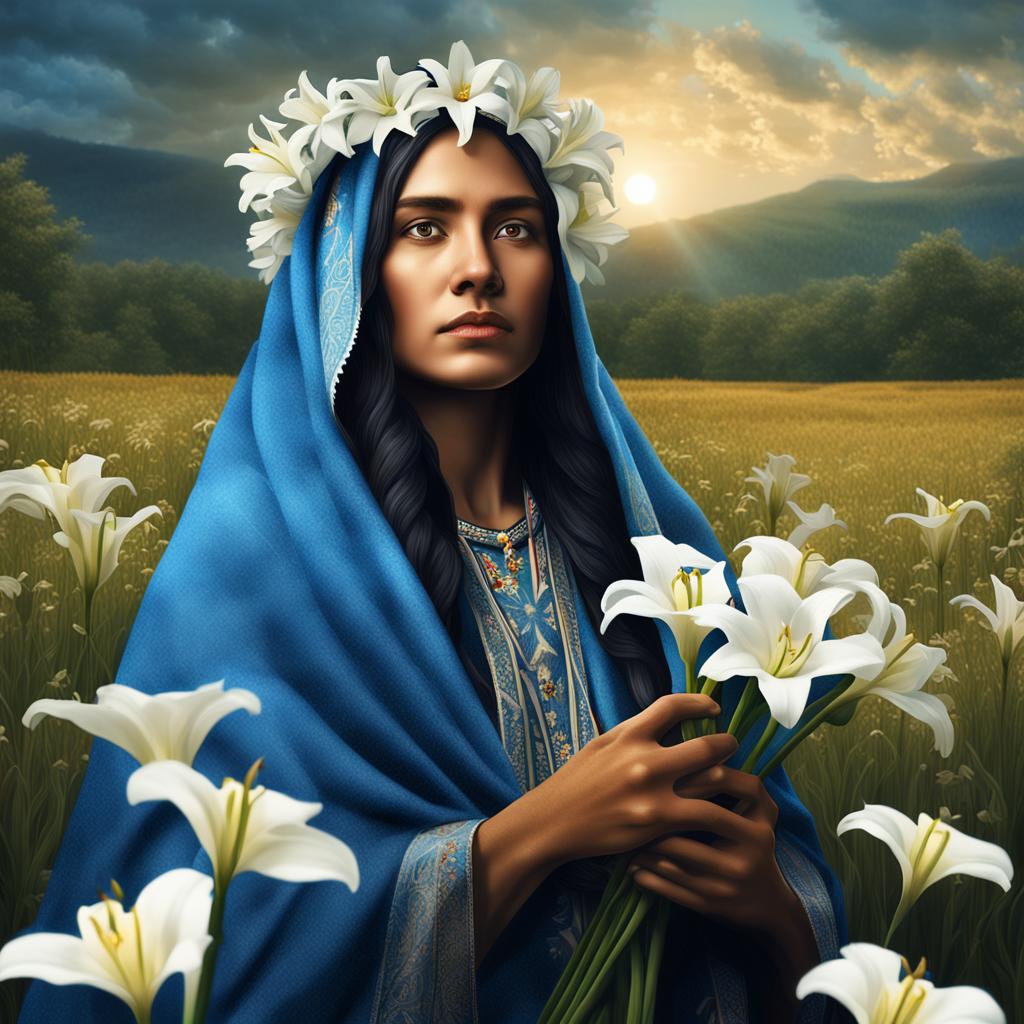
Around 1656 in the Mohawk village of Ossernenon, located in what is now northeastern New York State, a baby girl was born. Little did anyone know that this child would grow up to become a significant figure in both Native American and Catholic history. Her parents named her “Little Sunshine,” because she was born at sunrise and had a cheerful disposition. Her father, Kenneronkwa, was a Mohawk chief of the Turtle Clan, one of the three separate extended family networks of the Mohawk nation, the other two being the Wolf clan and the Bear clan. Her mother was an Algonquin woman named Kahenta, who had been captured by Mohawk warriors and brought to their homeland. She was eventually adopted and assimilated into the tribe, but with one important difference: before her capture, Kahenta had been baptized as a Catholic and educated by French missionaries. Kenneronkwa wished to maintain peace between the Mohawk nation and the French, and was tolerant of the spread of the Catholic faith. Kahenta likely introduced Little Sunshine to Jesus, Mary, and the Christian faith as she grew up in a fully Mohawk culture, although Kenneronkwa did not consent to the baptism of his children.
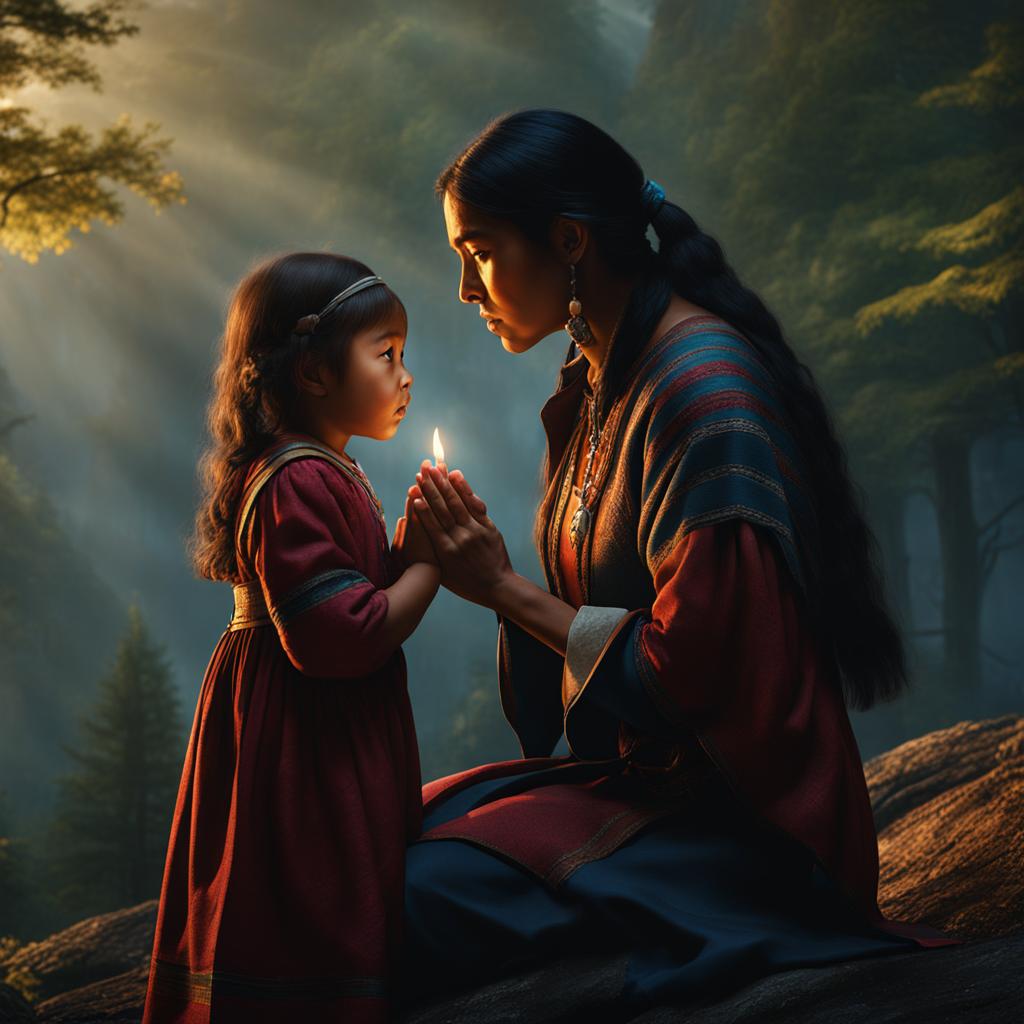
Their village was a melting pot of cultures and traditions. Because the Mohawk had lost so many of their people to warfare and disease, they actively absorbed captured natives from other tribes, particularly their rivals, the Huron. This diversity would have exposed the children of the village to a rich tapestry of Native American cultures from an early age.
Four years later, a devastating smallpox epidemic swept through the village, claiming the lives of Kenneronkwa, Kahenta, and their baby boy. Little Sunshine survived, but the disease left its mark – her face was scarred, her eyesight impaired. She was adopted by her father’s sister, and her aunt’s husband, who had succeeded Kenneronkwa as the new chief of the Turtle Clan. In their Haudenosaunee culture, this adoption meant that they treated her exactly as if she were their own biological child. Haudenosaunee parents typically gave their children names later in life, after observing unique traits about them. The little girl’s adoptive parents renamed her ‘Tekakwitha,’ which in English means ‘she walks groping for her way’ or ‘she puts things in their place.’ This name reflected both her physical reality—having to feel her way around due to her impaired vision—and her personality traits. Little Tekakwitha, now an orphan, indeed had to navigate her way through her new life while dealing with the physical and emotional scars of her ordeal.
Tekakwitha’s childhood and teenage years were set against a backdrop of considerable upheaval. The Mohawk were caught between French and Dutch colonists competing for control of the lucrative fur trade. In 1666, when Tekakwitha was about 10 years old, a significant French military campaign targeted the Mohawk territory. The Mohawk, facing overwhelming odds, strategically withdrew from their settlements rather than engage in direct conflict. The French resorted to destructive measures by burning Mohawk towns and destroying food supplies, thus creating a severe threat of famine. But the Mohawk people, including young Tekakwitha, managed to survive, aided by the support of the other Haudenosaunee nations and their traditional practice of maintaining substantial food reserves. In the aftermath, the Mohawk rebuilt their communities, with each clan establishing new primary settlements.
In 1667, when Tekakwitha was 11, three Jesuit missionaries arrived in her village. She was fascinated by these strange men in black robes, speaking of a God she had never known. Her uncle did not want Tekakwitha to convert. He was wary of Christians and often opposed them, which created tension when she began showing interest in Christianity. But this encounter with the Jesuits eventually would prove to be a great turning point in Tekakwitha’s life.
Despite her interest in Christianity, Tekakwitha continued to grow up immersed in Mohawk culture. Over the years, her eyesight had improved somewhat, and she became skilled in the traditional women’s arts of learning to make clothing, weave mats, process animal pelts, tend crops, and prepare food. But there was something different about Tekakwitha – she was described as a modest girl who often avoided social gatherings.
Despite the turmoil around her, Tekakwitha’s strength of character shone brightly. In the summer of 1669, when she was around 13, she shocked everyone by refusing to consider marriage. In a bold statement to her confessor, she declared, “I can have no spouse but Jesus,” and even went as far as to say, “I have the strongest aversion to marriage.”
That same year, Mohican warriors attacked her village. Instead of hiding, Tekakwitha joined other girls in helping a priest named Jean Pierron tend to the wounded, bury the dead, and carry food and water to those in need, demonstrating her compassionate and caring nature.
As Tekakwitha grew older, the pressure to conform to traditional expectations intensified. When she was about 17, her adoptive mother and another aunt tried to arrange her marriage to a young Mohawk man. But Tekakwitha stood her ground. In a dramatic turn of events, she fled from her cabin and hid in a nearby field to avoid the marriage. Her determination was so strong that eventually, her aunts gave up their efforts to marry her off.
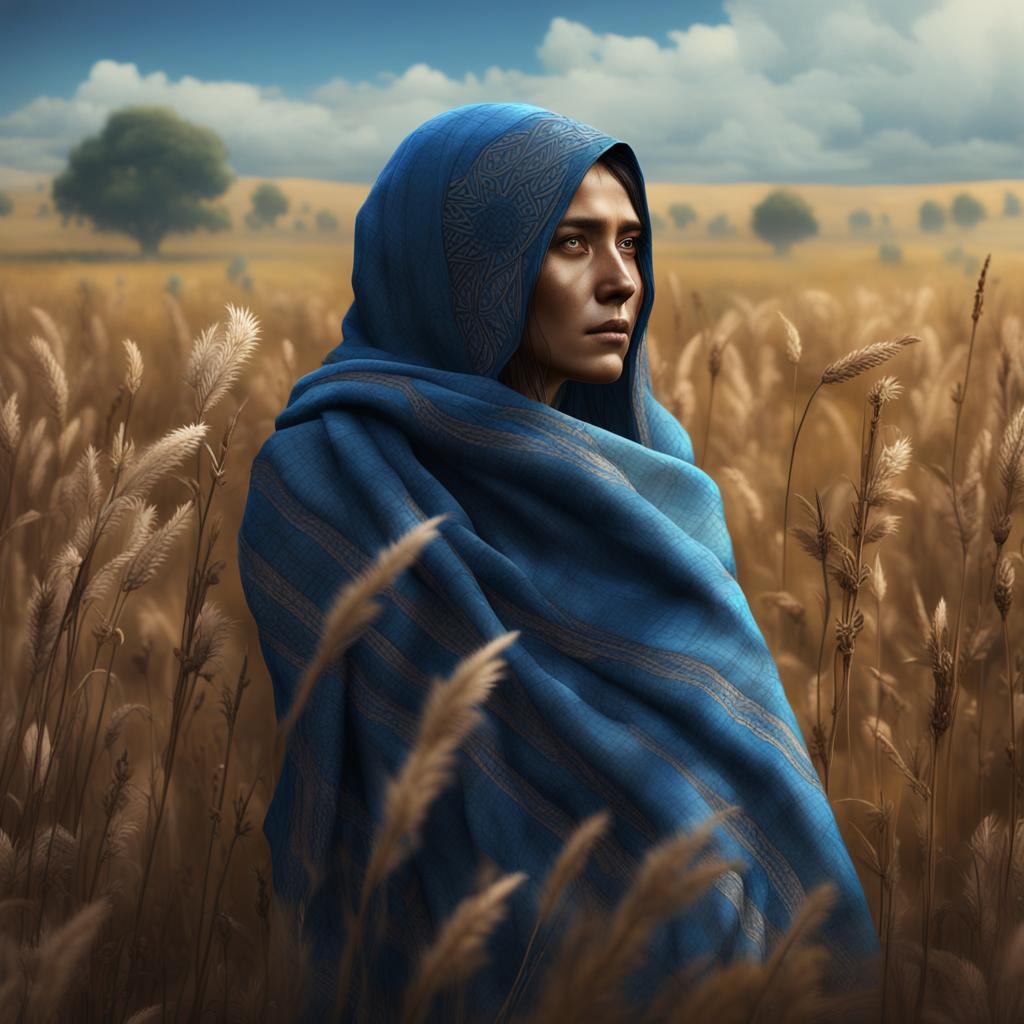
In the 1600’s, the Haudenosaunee men and women donned cloth garments, adapting their attire to various occasions, much like we do in our modern world. The women’s fashion, in particular, was a vibrant tapestry of colors, adorned with intricate beadwork that told stories of their rich culture. Unmarried Mohawk women of that era had a unique custom of leaving their hair loose and unbraided, a symbol of their status and freedom. Tekakwitha, however, stood out from the crowd with her distinctive choice of attire. While her peers favored the popular red shawl draped over their shoulders, Tekakwitha opted for a Marian blue shawl that she wore over her head. This wasn’t merely a fashion statement; it served a practical purpose, shielding her sensitive eyes and partially concealing her scarred face. Although self-conscious about her smallpox scars, she embraced them with true humility, viewing them as a blessing that allowed her to focus more on her spiritual life rather than receiving attention for her appearance.
In the spring of 1674, when Tekakwitha was 18, she met Jesuit priest Jacques de Lamberville, who was visiting her village. In a brave move, Tekakwitha openly shared her story with him and expressed her desire to become a Christian. This marked the beginning of her formal Christian education as she started studying the catechism with Lamberville.
Tekakwitha’s journey to Catholicism was significantly influenced by Mohawk converts who had embraced the faith. These role models lived out their faith in a way that made a deep impression on her. Their commitment to Jesus Christ and their ability to integrate their Catholic faith with their Mohawk culture showed Kateri that she could do the same. However, her decision to convert was not an easy path, as it sometimes led to tensions within her family and community, particularly given the complex political landscape of the time. Even before her religious conversion, her refusal to marry and start a family – values deeply ingrained in Mohawk culture – strained her relationship with her adopted parents. Her embrace of Catholicism in 1676 only increased the tensions.
Tekakwitha’s baptism on Easter Sunday of 1676 marked a significant milestone in her spiritual journey. The choice of her baptismal name, “Kateri,” which means “Catherine” in English, remains a topic of speculation. Some biographers suggest she named herself after St. Catherine of Siena, the contemplative mystic, while others propose St. Catherine of Alexandria, who was martyred for her faith. It’s possible that Kateri identified with both the mystic and the martyr, adding profound meaning to her chosen name and identity. Her baptism marked the beginning of her deep and personal relationship with God. Her faith was not just a set of beliefs but a way of life that influenced every aspect of her existence.
Holy Mohawk Catholics played a significant role in Kateri’s conversion. Many lay Catholics bore witness to their faith, sharing their testimonies of life in Jesus Christ and inviting their fellow Mohawk to follow Him. While Jesuit priests were involved in her instruction, it was the evangelization by Mohawk Catholics, living out their faith within their culture, that deeply impressed her. By this time, some of the Mohawk Catholics advocated for re-establishing themselves at the St. Francis Xavier du Pres settlement at Caughnawaga — now known as Kahnawake. It was situated on their traditional northern frontiers in what is now southern Quebec. Known as “the praying village,” it was founded by a devout Oneida married couple, in conjunction with the Jesuits. Migrating to Caughnawaga would allow Mohawk Catholics to live their faith intentionally and position them to dominate a trading route with the French, while also guarding the southern approach to Montreal.
Kateri Tekakwitha found herself at the center of a cultural and spiritual storm. Her adopted father took a very harsh approach to maintaining unity and keeping people rooted in Mohawk territory. This stance, largely supported by the influential clan mothers, led to severe consequences for those who chose to leave. But rather than convincing them to stay, the chief’s stringent policies actually encouraged Mohawk Catholics more than ever to migrate to Caughnawaga. Kateri, as the daughter of a Turtle clan chief, was in a quandary further complicated by her adopted sister’s conversion and subsequent move to Caughnawaga with her husband.
As a devout Catholic, Kateri’s decision to observe Christian practices, such as refraining from work on Sundays and holy days, was perceived by many as shirking her duties to the Mohawk nation. Yet, despite facing opposition from her tribe and even her own family, Kateri remained steadfast and courageous in her faith. She endured escalating hostility, including being insulted and ostracized, harsh labor, having stones thrown at her, and being denied food, yet she persevered in her Christian beliefs. Even as she faced persecution from her own people, Kateri prayed for their conversion and forgiveness, showing a remarkable capacity for love and understanding. In a particularly cruel attempt to prevent her departure, one of her aunts falsely accused Kateri of incest with an uncle, figuring that this would make her unwelcome in the praying village.
Aided by the encouragement of a Jesuit priest, Kateri’s unwavering faith led her to Caughnawaga in 1677, a year after her conversion. In this welcoming community, she could fully embrace her identity as a Mohawk Catholic woman. Kateri showed exceptional devotion to her faith, particularly to the Blessed Sacrament, which she visited frequently throughout the day. She attended daily morning Mass and was often the first to arrive at the chapel, even in harsh winter conditions. At Mass, the priests would pray in Latin, while the congregation sang in their native language. The sermons were preached by Haudenosaunee catechists. Kateri participated in Vespers and Benediction of the Blessed Sacrament in the evening, and received the sacraments regularly. She spent many hours in prayer, both in the chapel and in nature. Along with the other residents, she prayed the Rosary as she worked in the fields. She also worked alongside the Jesuits in caring for the sick, wounded and elderly. Because of her personal sanctity and exemplary virtue, Kateri was soon invited to join the Holy Family Confraternity, a spiritual community at Caughnawaga dedicated to living out Gospel values. They would meet every Sunday afternoon and prayed a special form of the rosary. Her profound spirituality attracted a group of devout women, known as “Kateri’s band,” with whom she contemplated establishing a culturally-aligned religious order, but was discouraged from doing so by the Jesuits, probably because of her poor health. She formed close bonds with Marie-Thérèse Tegaiaguenta, an Oneida convert about her age, and Father Claude Chauchetière, who became her spiritual advisor. Throughout her time in Caughnawaga, St. Kateri’s guiding principle was reflected in her motto, “Who will teach me what is most agreeable to God, so that I may do it?
Still experiencing pressure from her relatives to marry, on March 25, 1679, at the age of 23, she made her consecration of virginity, framing her commitment in matrimonial terms. Instead of getting married in the traditional sense, she decided to become a “bride of Christ.” In this way, St. Kateri demonstrated that she was not rejecting the traditional Mohawk values of marriage and family. Instead, she chose to live out these values spiritually through her union with Jesus. Making a private vow of perpetual virginity was unusual for a young woman in her culture. Her biographer, Fr. Claude Chauchetière, described her chastity as “the most beautiful flower in her crown”.

However, even in this rose garden of spirituality that was Caughnawaga, she wasn’t immune to the thorns of human nature. A painful incident arose when a woman in the community, driven by jealousy and misunderstanding, falsely accused St. Kateri of seducing her husband during a hunting trip. This accusation was particularly hurtful, as it echoed similar false claims made against her in her homeland. Despite the pain this caused, Kateri’s response was one of grace and restraint. She denied the accusation, as did the woman’s husband, but chose not to retaliate. Instead, she made the personal decision to abstain from future hunting trips, wanting to avoid even the appearance of impropriety. Eventually, the the woman realized her error of rash judgement and repented. But the shadow of this accusation lingered, prompting a Jesuit priest to seek confirmation of St. Kateri’s innocence on her deathbed. While this questioning was undoubtedly distressing for Kateri in her final moments, it served a greater purpose. The priest’s intention was to secure a deathbed testimony that would silence any future detractors and preserve Kateri’s legacy of purity and devotion. This poignant episode highlights Kateri’s unwavering faith and character in the face of adversity, further cementing her status as a model of Christian virtue.
Kateri Tekakwitha’s relationship with nature and creation was deeply intertwined with her faith and cultural heritage. She had a profound connection with the natural world, which was a significant part of her Mohawk heritage. The Haudenosaunee people, including the Mohawks, held a deep respect for nature, seeing it as a gift from the Creator. This respect was reflected in their daily lives, rituals, and spiritual practices. For Kateri, nature was not just a backdrop for her life but a living testament to God’s presence and creation. She often found solace and inspiration in the natural world, which she saw as a reflection of God’s beauty and handiwork. This connection with nature was evident in her prayer life and her contemplative practices.
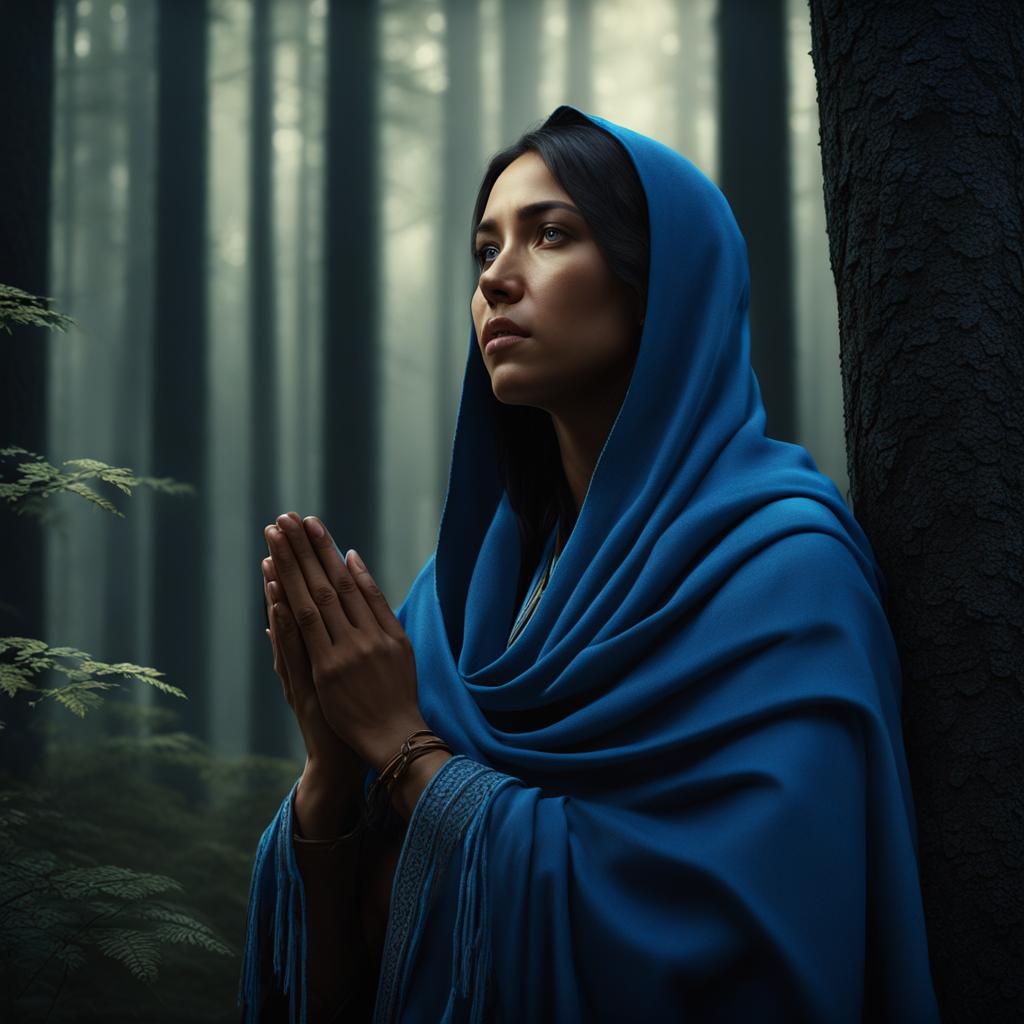
Kateri would often retreat to the woods to pray, finding in the quiet and solitude of nature a perfect setting to commune with God. The forests, rivers, and fields around her were not just physical spaces but sacred places where she could feel closer to the Creator. Her deep love for the natural world was a way for her to express her gratitude and reverence for God’s creation. She saw the land as a sacred trust, something to be cared for and preserved for future generations. Her relationship with nature resonated with the Haudenosaunee belief in responsible stewardship of the earth, and also was in harmony with her Catholic faith, which teaches respect for God’s creation and the importance of caring for the environment.

Kateri’s devotion manifested in intense ascetic practices that often surpassed the expectations and comfort levels of her Jesuit mentors. These penances, driven by an ardent love for Christ, included extreme fasting and bodily mortifications, which she often concealed from the concerned Jesuits and shared only with close confidantes like Marie-Therese. The severity of Kateri’s self-imposed disciplines reflected a 17th-century Western Catholic theology that emphasized Christ’s suffering. Another intention behind her penances seemed to be reparation: Kateri took on her own body the punishments due to sin that might otherwise fall on the Mohawk nation, whom she loved deeply. Kateri’s asceticism also incorporated traditional Mohawk practices designed to prepare individuals to display their orenda, or “greatness of spirit,” in the face of extreme pain, such ritual torture and death at the hands of enemies. When Marie-Therese informed the Jesuit father that Kateri was lying on a bed of thorns, he ordered her to stop out of obedience.
After a painful illness that left her bedridden in the longhouse, Kateri died on Holy Wednesday, April 17, 1680, softly repeating her last words, “Jesus, Mary, I love you,” in her native language. She was buried according to her people’s traditional customs. The Haudenosaunee Catholics of Caughnawaga honored her with the highest praise they could give: “She died as she lived. That is, a saint.” Upon drawing her last breath, her skin became clear and smooth, with no sign of smallpox scars. Her face radiated a smiling beauty and serenity which remained until her burial.
Immediately following her death, Kateri appeared in visions to some of her loved ones, assuring them that she was going home to God. These apparitions held a deeper meaning in traditional Haudenosaunee culture than might be apparent to Catholics accustomed to European culture. According to Haudenosaunee beliefs, the souls of the dead would visit their loved ones before departing to the village of the dead.
One night, one of the Jesuits had a dream in which St. Kateri appeared to him. In the dream, their chapel was overturned, and one of Caughnawaga’s Catholics was burning at the stake. This prophecy seemed to come true when a powerful windstorm flattened the church, nearly killing the Jesuits inside. They prayed to Kateri for protection and credited their survival to her intercession. This event, along with the eventual martyrdom of Caughnawaga’s Haudenosaunee Catholics, reinforced their belief in her protective presence. This vision of the overturned church and the persecuted indigenous Christian might have multiple fulfillments. Further south, the La Florida Mission Martyrs, primarily Appalachee and Timucua Catholics, were killed for their faith during an invasion and persecution led by the English. The vision’s fulfillment has likely repeated itself in more recent times, particularly during the 19th and 20th centuries.
Although St. Kateri did not experience martyrdom herself, her witness and prayers had a profound impact on the Haudenosaunee Catholics of Caughnawaga, deepening their commitment to the Catholic faith.
Kateri Tekakwitha’s journey to sainthood is a fascinating tale that intertwines Native American and Catholic traditions. The first written account of her life didn’t appear until 1715, decades after her death. Her commitment to chastity earned her the title “Lily of the Mohawks,” drawing on the flower’s symbolism of purity in Christian iconography. Artistic depictions of Tekakwitha often feature a lily and cross, with feathers or a turtle added to acknowledge her Mohawk heritage. She acquired several other poetic titles, including “the Mohawk Maiden,” “the Pure and Tender Lily,” and “the New Star of the New World.” Her gravestone bears the inscription “the fairest flower that ever bloomed,” reflecting how she was viewed by both her tribal community and European settlers.
Tekakwitha’s legacy sparked an increase in Native American participation in Catholicism. In the 1730s, a convent for Native American nuns opened in Mexico. By the 1880s, Indian Catholic missions and bishops were petitioning for her official veneration alongside Jesuit martyrs Isaac Jogues and René Goupil.
Over the centuries, devotion to Kateri Tekakwitha grew, and numerous miracles were attributed to her intercession. Her reputation spread across North America, with French Canadians reporting miraculous recoveries. People would take dirt from her grave and touch it to their bodies. Many personal miracles were attributed to St. Kateri, and among the French, she was known as the “Genevieve of Canada” for her aid during times of conflict and famine. Native communities across the continent heard of Kateri Tekakwitha long before any Catholic missionaries arrived there.
The path to Tekakwitha’s canonization began in earnest at the Third Plenary Council of Baltimore in 1885. Support came from both U.S. and Canadian Catholics, with 906 Native Americans signing letters advocating for her sainthood. Her cause progressed steadily: her spiritual writings were approved in 1936, she was declared Venerable by Pope Pius XII in 1943. There were so many reports of miracles that St. John Paul II waived the first miracle requirement for her beatification in 1980.
The miracle that led to St. Kateri’s canonization was the healing of a five-year-old boy, Jacob Finkbonner, a descendant of the Lummi nation in Washington state. He was cured of a fatal flesh-eating disease that had attacked his face. Doctors had given up all hope of his recovery. Interestingly, one of Finkbonner’s ancestors had signed a petition to canonize Kateri back in the 19th century.
On Oct. 21, 2012, Kateri Tekakwitha was canonized by Pope Benedict XVI. Although St. Juan Diego is considered the first indigenous saint of the Americas, Kateri Tekakwitha is the first Native American woman saint. Along with St. Francis of Assisi, she is the patron saint of ecology and the environment. Her patronage also includes Native Americans, orphans, people in exile, those ridiculed for their faith, and World Youth Day. She is also one of the patron saints of Canada. Her feast day in the United States is July 14; in Canada, it is celebrated on April 17.
St. Kateri Tekakwitha’s canonization has sparked a renewed interest in the Native American roots of Catholicism in North America, fostering a deeper appreciation for indigenous contributions to the faith, and has reinvigorated efforts to recognize other Native American holy figures, such as the Martyrs of La Florida Missions, Nicholas Black Elk, and Rose Prince. These emerging stories of Native American saints and martyrs are enriching the Catholic Church’s understanding of its diverse heritage in North America.
St. Kateri Tekakwitha was a remarkable figure whose life bridged Indigenous and European cultures during a tumultuous period in North American history. Her life was a powerful witness to the transformative power of faith. Despite the challenges she faced, including the loss of her family, physical ailments, and cultural pressures, St. Kateri remained committed to her spiritual path. Her ability to integrate her Catholic beliefs with her Mohawk identity, her devotion to prayer and the sacraments, and her unwavering commitment to purity and holiness all highlight the central role that faith played in her life. Her legacy remains complex. She is viewed by some as a symbol of religious transformation. Others regard her as a victim of colonization, even though Christianity was never forced upon her; she willingly chose it and embraced it with her entire being. Regardless of interpretation, her story continues to inspire many, showing that true sanctity is possible even in the face of great adversity.

First Native American Woman Saint
PRAYER TO ST. KATERI TEKAKWITHA
by Harold Caldwell
O Saint Kateri, Lily of the Mohawks,
Your love for Jesus,
so strong, so steadfast,
pray that we may become like you.
Your short and painful life
showed us your strength and humility.
Pray that we may become
forever humble like you.
Like the bright and shining stars at night,
we pray that your light
may forever shine down upon us,
giving light, hope, peacefulness
and serenity in our darkest moments.
Fill our hearts, Saint Kateri Tekakwitha
with your same love for Jesus
and pray that we have the
strength and courage
to become one like you in heaven.
Through Christ our Lord.
Amen.


 Everyday Life Spirituality