ST. ROSE OF LIMA: Was She Too Extreme?

To watch the YouTube Video, click arrow on thumbnail below:

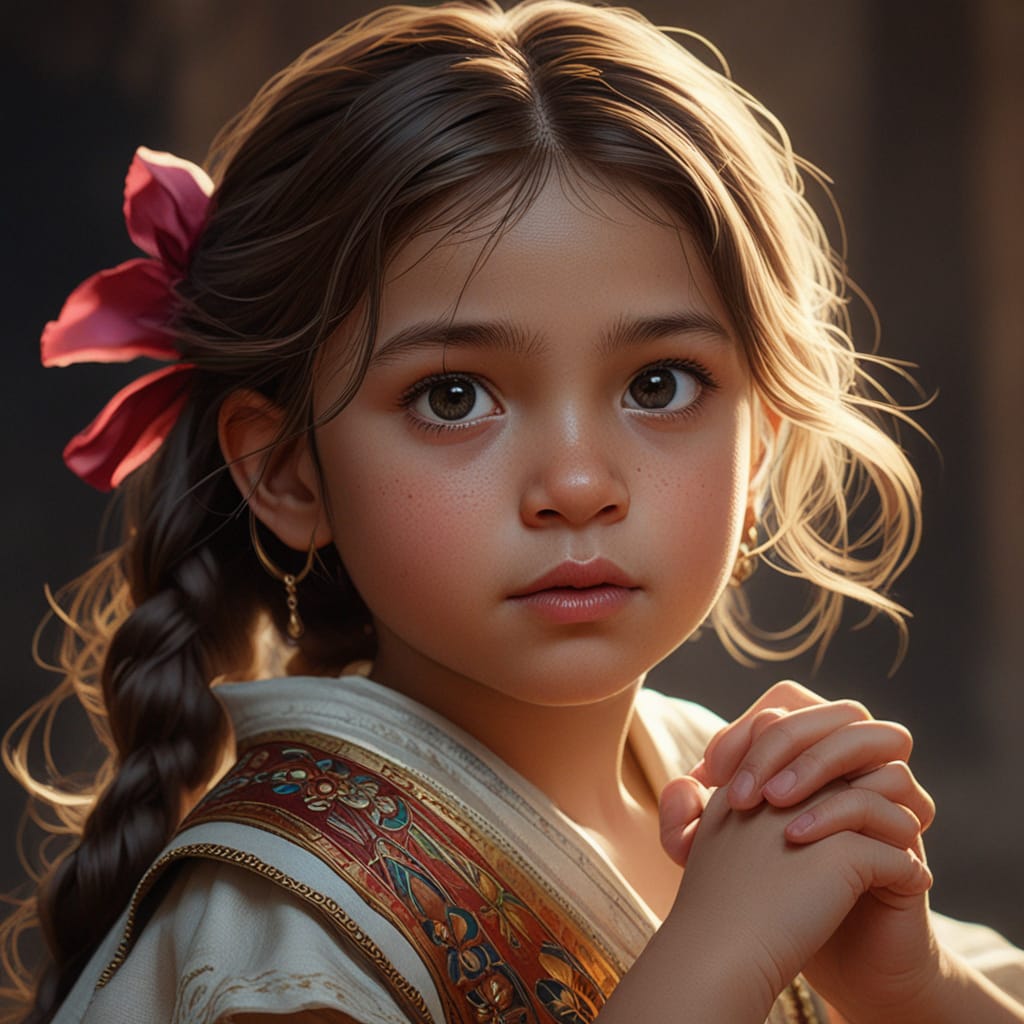
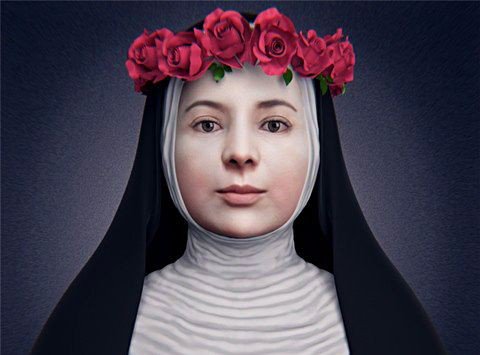
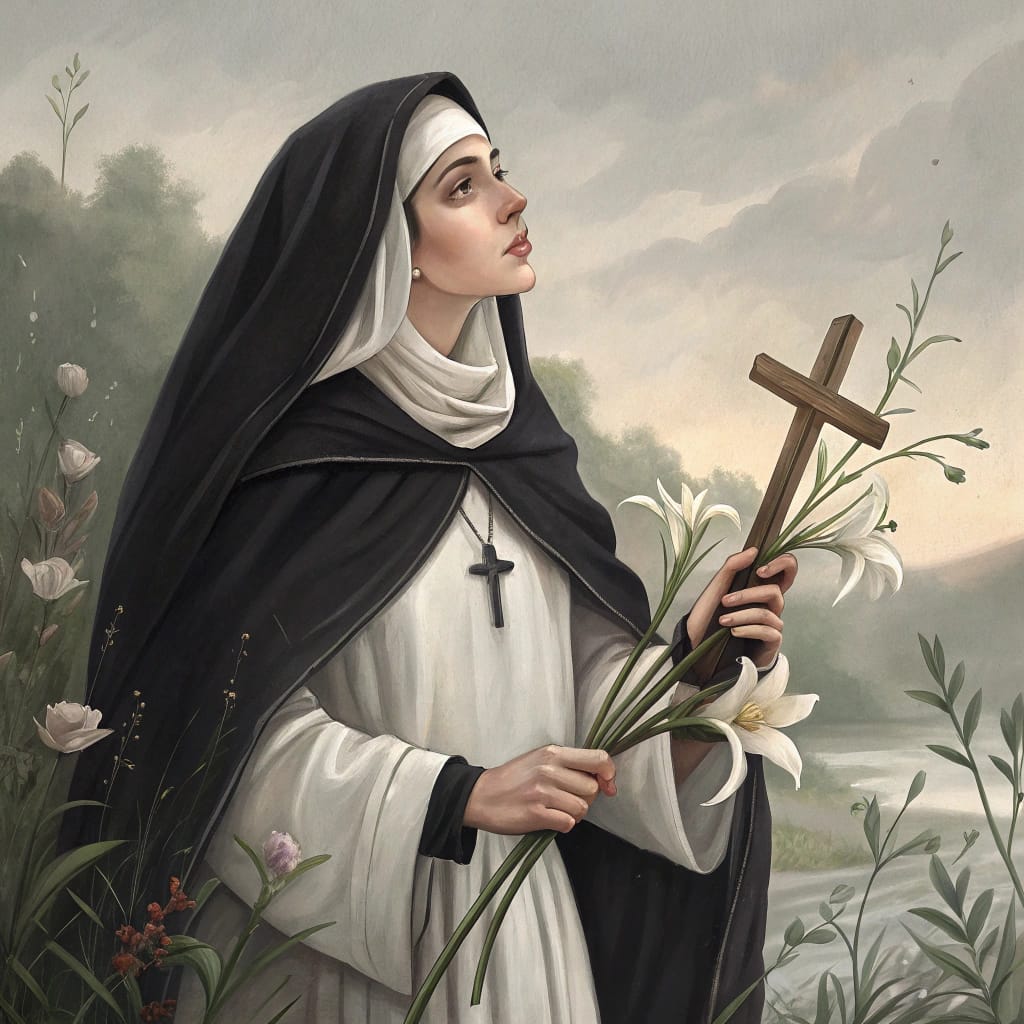
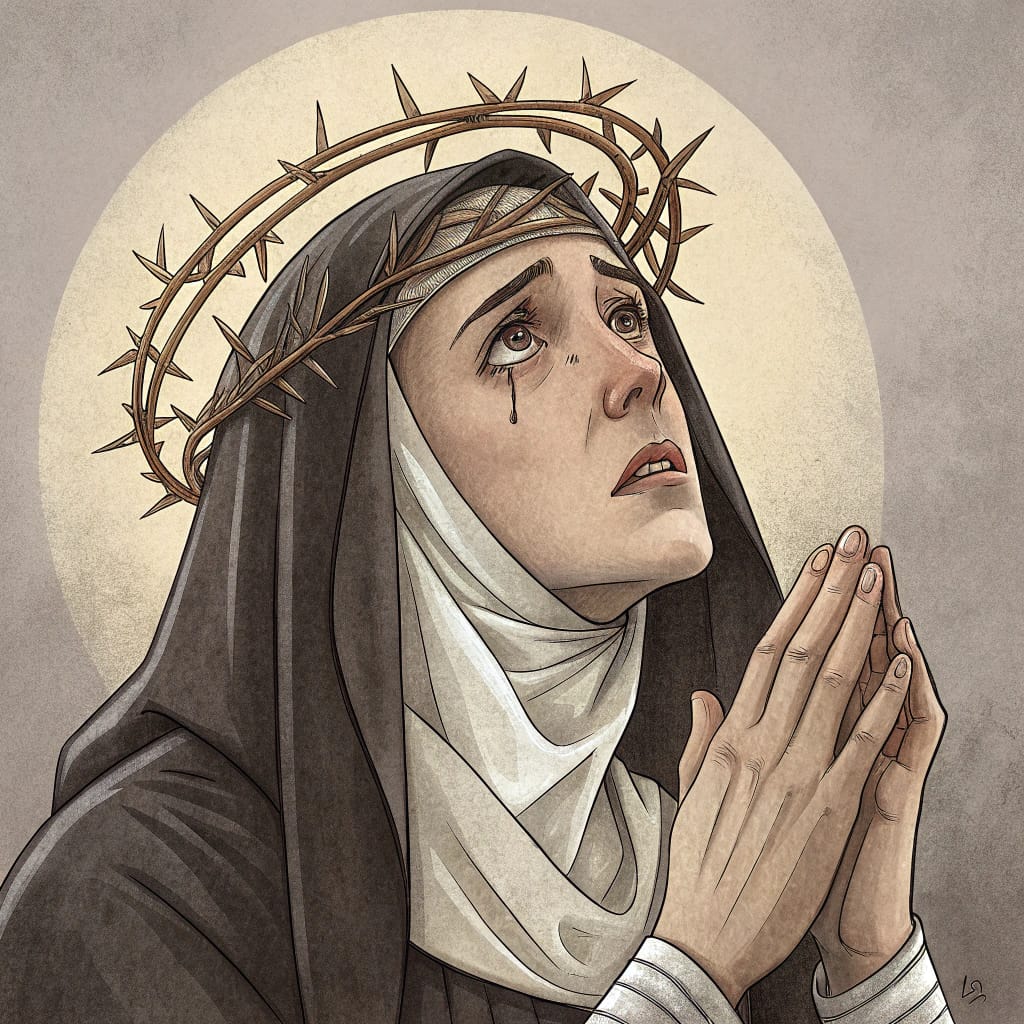
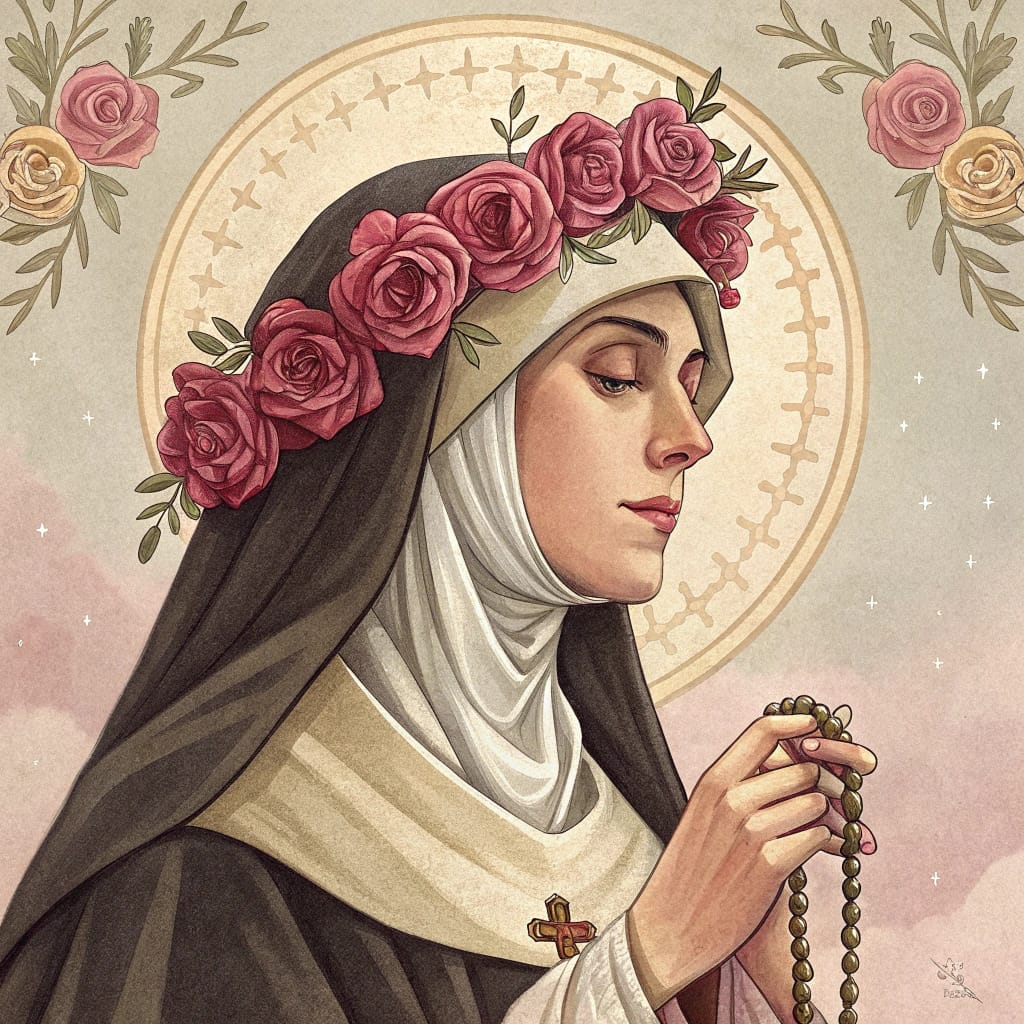
Rose had a deep devotion to the Infant Jesus and His Blessed Mother and spent countless hours praying before the Blessed Sacrament. She received Communion three times a week. Although she would have liked to receive daily, in those days young girls were forbidden to go out unless accompanied by an adult woman, and Maria was not always available, perhaps deliberately. Later in her life, Rose was able to receive Communion daily, which was an extremely rare practice at that time.

After reading a book about St. Catherine of Siena, the impressionable young girl adopted the saint as her personal role model. Emulating St. Catherine, Rose fasted three times a week, donned coarse clothing, and cut her beautiful hair short. She concealed her cropped locks with a veil to avoid her parents’ disapproval. When Maria eventually discovered it, she was very angry.

In Rose’s teenage years, her family faced financial hardship when her father’s gold-mining venture failed, leaving them impoverished, with seven children still living at home. Rose, ever resourceful, stepped up to support her family by selling flowers from her own garden and creating exquisite lace and embroidery. Her needlework was of the highest quality, with remarkable beauty and delicacy. Despite long hours of labor, Rose dedicated her evenings to prayer and acts of penance.

Maria had grand aspirations for her beautiful daughter, hoping to secure a marriage into one of Peru’s wealthy and prominent families. She orchestrated opportunities for potential mothers-in-law to admire Rose, but these efforts were in vain, because, contrary to her mother’s wishes, Rose felt a Divine calling to a life of virginity.

When Rose realized she was attracting the notice of suitors, she attempted to deflect their attention by rubbing crushed hot peppers on her beautiful face and lime juice on her hands to roughen them.

VENERABLE PIERRE TOUSSAINT: From Haitian Slave to Hairstylist to Holiness

To watch the YouTube video, click on arrow in thumbnail below:

On a summer’s day, in the lush, tropical country of Saint-Domingue, now known as Haiti, a slave woman named Ursule cradled her newborn son in her arms. She gazed out the window, her eyes taking in the green, fertile fields of the sprawling Bérard family sugar-cane plantation located on the banks of the Artibonite River, near the port town of Saint-Marc. This land was her home, where she lived and worked as a personal maid to Madame Berard. Even though she knew that her son, too, would be a slave, in her heart she dared to hope for greater things in his future. Little did she know that this baby boy was destined to play an important role, not only in the history of her people, but of the Catholic Church as well.

The infant had been given the name Pierre, after the owner’s father, Pierre Berard. The date of Pierre’s birth is recorded in many sources as June 27, 1766; however, based on the more recent research of journalist and biographer Arthur Jones, Pierre’s year of birth is now believed to have been 1781. His father’s name is unknown. The roots of Pierre’s family tree stretched back to Africa, where his great-grandmother Tonette had been born and raised before being taken across the Atlantic as a slave to toil on the sugar-rich soils of Saint-Domingue. Pierre’s grandmother, Zenobe Julien, had earned her freedom through years of loyal service to the Bérard family. Five years after Pierre’s birth, his sister Rosalie was born, who would become his steadfast companion throughout the years ahead.

As Pierre grew, the Bérard family, recognizing something special in the young boy, had him educated by their children’s tutors. In the grand house, far removed from the backbreaking labor of the fields, Pierre’s mind blossomed. Intelligent and eager, he learned to read, write, and think critically — skills that would one day prove instrumental in shaping not just his own destiny, but in helping and influencing many others. Jacques Berard allowed Pierre free access to his library, where the curious boy spent many hours avidly reading books on many diverse topics, further broadening his education. He was a playmate to the Berard children, and raised with knowledge of all the social niceties. Tall and mild-mannered, he was trained to courteously greet and serve the family’s guests, and had an excellent command of the French language, both written and spoken. He was also musically inclined and a talented fiddler. Pierre was baptized and raised a Catholic, and found solace in the rituals and teachings of the Church. Yet, as he matured, he couldn’t help but wonder at the contradictions between the Christian message of universal love and equality and the harsh realities of plantation life.

When the senior Bérards returned to France, their son Jean Bérard took over the plantation. Soon, tensions began to escalate, which eventually would lead to enslaved and free people of color uprising in the Haitian Revolution. In 1797, as conditions became more dangerous, Jean & Marie Berard fled for New York City, taking with them 16-year-old Pierre, his younger sister, Rosalie, his aunt, and two other house slaves. They arrived in the young country of the United States shortly after George Washington, its first President, had completed his two terms in office. They were among many French aristocrats, from St. Domingue and from Europe–where the French Revolution had ended in 1794–who were seeking refuge in America.

Once settled in a stylish rented house in lower Manhattan, Jean Bérard signed Pierre up as apprentice to a Mr. Merchant (first name unknown). He was a hairdresser, who taught Pierre the art of hair styling, a skill in which he quickly excelled. This was a wise move on Berard’s part, since the city was full of wealthy society women whose lifestyle required elaborate hairstyles for their frequent social engagements. Male hairdressers, while popular in France, were a fairly new phenomenon in America, where wealthy women generally had their hair done by their lady’s maid.

Berard allowed Pierre to keep most of what he earned as a hairdresser. Pierre quickly mastered all the latest hairstyles of the French, including powdered wigs and false hair additions, along with the chignons and face-framing curls that were trendy among the Americans. He became what one biographer described as “the Vidal Sassoon of his day.” His client list read like a “Who’s Who” of 18th-century New York society: Elizabeth Schuyler Hamilton, wife of Alexander Hamilton, and their daughter, Eliza Holly Hamilton, were among his important clients, along with Catherine Church Cruger, known as “Kitty,” whose father would give the pistols to Hamilton for his duel with Aaron Burr. Another client, a  prominent socialite named Mary Anna Sawyer Schuyler, also related to the Hamiltons, became Pierre’s close friend, referring to him as “my Saint Pierre.” Most of his women clients were Protestant, but they deeply admired Pierre’s devotion to his faith, along with his pious, kind and gentle nature. Hannah Farnham Sawyer Lee, Pierre’s first biographer and the sister of Mary Anna Schuyler, recounts, “He often quoted in his native language from the Sermon on the Mount, and the Beatitudes seemed to have found their way into his heart.”

Pierre also met some French emigrants in NY who knew the senior Berards in France, with whom he corresponded for decades, generously assisting his godmother, Aurora Berard, who had fallen on hard financial times in Paris. He also regularly corresponded with friends in Haiti. A prolific writer, his letters filled 15 bound volumes and served as part of the documentation submitted to the Vatican for his canonization process.

After a while, Jean Berard returned to Saint-Domingue to check on his property there. While in Haiti, he learned that his plantation was lost. He planned to return to New York; however, he developed pleurisy, an inflammation of the lungs, and died while still in Haiti. Soon after his death, his widow, Marie, learned that she was completely destitute. By then, Pierre was earning good money as a hairdresser. He voluntarily continued to care for the widow Marie, allowing her to lead a life of dignity, and assumed financial responsibility for the household. Marie eventually remarried to Gabriel Nicolas, who was also from Saint-Domingue. Pierre and Rosalie continued to live in the Nicolas household.

Eventually, Marie’s health began to fail. Pierre knew that having company lifted her spirits, so he encouraged her to entertain, and would buy tropical fruit and ice cream for the guests. Before they arrived, he would style Marie’s hair, adorning it with a flower as a finishing touch. In 1807, on her deathbed, Marie gave Pierre his freedom. In 1811, he bought the freedom of his sister, Rosalie, and also of his fiancé, Marie-Rose Juliette Gaston, whom he had known in Saint-Domingue.

Pierre’s relationship with the abolitionist movement was complicated. From the growing number of Haitian refugees in New York, he heard reports of murder and devastation from the island of his birth. Despite his intimate knowledge of slavery’s evils and his awareness of New York’s abolitionist movement, he refrained from active participation and hesitated to engage in America’s abolition debate, mindful of the immense toll paid to end slavery on his native island. He avoided anything that could incite violence, explaining, “They have not seen the blood flow as I have.”  This stance led some Black Catholics in the 1990s to oppose his candidacy for sainthood, viewing him as too accepting of enslavement. However, the truth is that Pierre’s inner freedom transcended his legal status as a slave. He consciously chose to embrace God’s grace daily, becoming a powerful symbol of Divine generosity. Pierre himself articulated it this way: “I have never felt I am a slave to any man or woman, but I am a servant of almighty God who made us all. When one of His children is in need I am glad to be His slave.”

This perspective echoes that of Saint Josephine Bakhita, another former slave who expressed similar sentiments about her time of enslavement and her relationship with God. Pierre chose to exemplify human dignity and Christian charity to both the affluent and impoverished in the city. However, after gaining freedom, he chose the surname Toussaint, likely in honor of Toussaint Louverture [Loo-vah-TOUR], the leader of the Haitian Revolution. This choice suggests a connection to revolutionary ideals, despite his apparent reluctance to engage in overt abolitionist activities.

In his later years, Toussaint was reluctant to discuss the atrocities he had witnessed in Haiti. His approach focused on living out his faith through acts of kindness and generosity, becoming a beacon of hope and compassion in 19th-century New York.

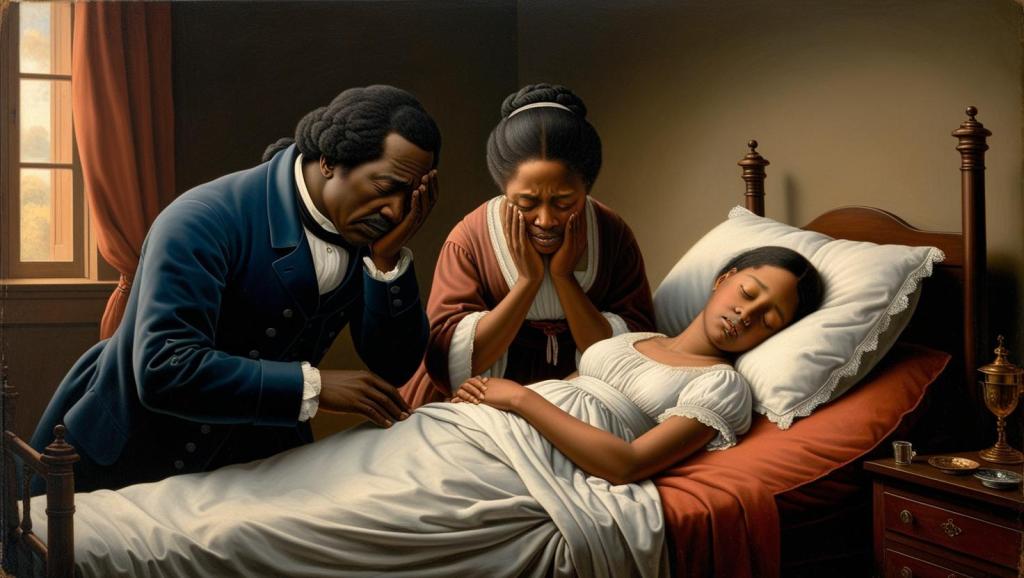
Pierre and Juliette wed on Aug. 5, 1811. For the next four years, they continued to board at the Nicolas house. In 1815, Gabriel Nicolas, who had remarried, moved down South with his wife, and the Touissants purchased a home of their own in Manhattan. Although they never had biological children, when Pierre’s sister Rosalie died of tuberculosis, he and Juliette adopted Rosalie’s daughter, Euphemia. They enrolled Euphemia in a school for Black children in New York. Pierre tutored her in French and taught her to write in both French and English. She also had piano lessons from an accomplished musician named Cesarine Meetz, who gave recitals at City Hotel. Cesarine’s father, Raymond, owned a musical depository on Maiden Lane and was a minor composer and music teacher. When Euphemia died at the age of 14, also of tuberculosis like her mother, Pierre and Juliette were devastated with grief, for they had loved her as their own child.

The Touissants lived a life of charity, compassion and generosity in New York City. They frequently visited the Orphan Asylum, bringing joy to the children with baked treats as well as financial support. Their home became a sanctuary, where they fostered a succession of orphan boys, providing them with education and vocational training. Pierre and Juliet established a credit bureau and an employment agency, offering crucial support to those in need. Their home also served as a refuge for priests and travelers seeking shelter. Pierre’s bilingual skills in French and English made him an invaluable asset to Haitian refugees arriving in New York. He assisted these newcomers by organizing sales of goods, helping them secure funds for their livelihood.

Pierre and his family attended St. Peter’s Church on Barclay Street. He went to Mass every morning at 6:00 a.m., until in his later years illness prevented him from doing so. He was devoted to the rosary and had an excellent command of Scripture. St. Peter’s was the same parish that Saint Elizabeth Ann Seton had attended for a few years after her conversion to Catholicism in 1805, before moving to Maryland, where she founded the Sisters of Charity, America’s first community of nuns. There is no record of Seton and Touissant ever meeting one another; however, he played an important role in later raising funds for the Sisters of Charity’s orphanage in New York, even though it admitted only white children.

The Touissants’ contributions to the Catholic community were significant, including fundraising for the construction of Old St. Patrick’s Cathedral on Mulberry Street. They supported various Catholic institutions, including orphanages and schools, and also helped establish the first Catholic school for Black children in New York City, at St. Vincent de Paul on Canal Street. Pierre Touissant is called the “father of Catholic Charities,” because his legacy of compassion and service laid the foundation for what would later become the Catholic Charities organization.

During a cholera epidemic, Pierre fearlessly crossed barricades to care for quarantined patients. On at least one occasion, he brought a sick priest back to his house to nurse him back to health. He also showed heroic charity in his response to the outbreaks of yellow fever that occurred every summer in New York, something he had seen often back in Saint-Domingue. Hannah Sawyer Lee wrote the following about one such epidemic:“When the yellow fever prevailed in New York, by degrees Maiden Lane was almost wholly deserted, and almost every house in it closed. One poor woman, prostrated by the terrible disorder, remained there with little or no attendance, till Toussaint, day by day, came through the lonely street, crossed the barricades, entered the deserted house where she lay, and performed the nameless offices of a nurse, fearlessly exposing himself to the contagion.”

Despite his success, Toussaint faced significant challenges as a free Black man in New York, where slavery remained legal until 1829. He risked abduction by bounty hunters, and was barred from public transportation, forcing him to walk to his clients’ homes. His Catholicism added to his vulnerability, as anti-Catholic prejudice was widespread in New York at the time. Conversely, his reputation as an entrepreneur and highly-skilled master of his trade made him welcome in the homes of New York’s society families, not only as a hairdresser but as a trusted friend and confidante. Many clients came to view Pierre as more than just a hairdresser, seeking his advice on personal matters. His wisdom and discretion made him a trusted advisor. His clients were deeply impressed by his staunch commitment to discretion and his refusal to engage in gossip. This level of trust allowed them to confide in him freely, knowing their secrets were safe. One client remarked, “It was like the confessional to talk to Toussaint, you were so sure of his secrecy.” This steadfast refusal to share gossip was seen as evidence of his strong moral character. When pressed for information, Pierre would simply state, “Toussaint, Madame, is a hairdresser. He does not gather news.” This polite but firm response became well-known among his clientele, further establishing his reputation for discretion.

A significant friendship blossomed on Franklin Street in New York City, where Pierre and Juliette lived at number 144. Just down the street at number 70 resided the Moore siblings – Nathaniel Fish Moore, an enthusiastic amateur photographer and the future president of Columbia University, and his sister Sarah Ann. Toussaint’s skillful hands had long been tending to Sarah Ann’s hair, their relationship evolving from that of stylist and client to genuine friendship. Evidence of their bond survives in the Pierre Toussaint papers at the New York Public Library, where two letters from Sarah Ann reside. One, undated, simply requests a hairdressing appointment. The other, penned in 1840, speaks of a more personal connection – Sarah Ann had thoughtfully brought Pierre a rosary from her and Nathaniel’s pilgrimage to the Holy Land.

It was through this connection that Toussaint came to sit for Nathaniel Fish Moore’s camera. Nathaniel, ever eager to practice his craft, captured a striking portrait of  Toussaint in his later years. For decades, this photographic image lay dormant, passed down through the Moore family until 1944, when William Hodges, Sarah Ann’s grandson, donated it along with other salt prints to Columbia University’s Columbiana Collection. Initially misidentified and incorrectly credited, the photograph’s true significance remained hidden until many years after Pierre’s passing. But more about that later!

Through the 1820s and early 1830s, Pierre Toussaint’s fortune grew steadily through his tireless work.His days often stretched beyond 12 hours as he traversed New York’s streets, styling hair in the city’s most prestigious homes. Yet, this demanding work was not for personal gain; rather, it was a means to generate more resources for the less fortunate. When a friend suggested he had amassed enough to retire comfortably, Toussaint responded with characteristic selflessness: “Madam, I have enough for myself, but if I stop work, I have not enough for others.”

In 1835, disaster struck New York City, when the Great Fire of New York engulfed lower Manhattan, destroying between 530 and 700 buildings across 13 acres. Witnesses described the inferno as “immense iron furnaces in full blast,” with copper roofs melting and “fiery tongues of flame” leaping from buildings. This catastrophe is believed to have cost Pierre investments equivalent to almost a million dollars in today’s currency. Despite this significant financial setback, he persevered in his charitable endeavors.

Hannah Sawyer Lee eloquently captured the essence of his philanthropy in her 1854 memoir: “It must not be supposed that Toussaint’s charity consisted merely in bestowing money; he felt the moral greatness of doing good, of giving counsel to the weak and courage to the timid, of reclaiming the vicious, and above all, of comforting the sick and sorrowful.”

The 1840s brought stark reminders of the persistent racism in American society. Although New York had abolished slavery, prejudice and violence against Black individuals remained commonplace. In 1842, Toussaint and his wife faced a painful incident at Old St. Patrick’s Cathedral on Mulberry Street – a church whose construction he had helped finance. Unaware of his prominent status, ushers turned them away due to their race. As they turned to leave, some Cathedral trustees saw what was happening and rushed to apologize and welcome them into the church. But the damage had been done, underscoring the pervasive discrimination of the era. By contrast, Pierre’s own charity and inclusivity stood as a shining example of true Christian virtue, to be emulated not only in his day, but in ours.

Though he continued to grow steadily in spiritual strength and beauty, Pierre gradually began to decline physically during the following decade. On May 14, 1851, his beloved wife and partner, Juliette, died and was buried in the cemetery of St. Patrick’s Old Cathedral beside their adoptive daughter, Euphémia. It was at this time that Pierre demonstrated the assertiveness he could summon when it truly mattered. At Juliette’s funeral, he requested that only Black attendees follow the procession to the graveyard, although white mourners were welcome at the graveside. This practice was repeated at his own funeral.

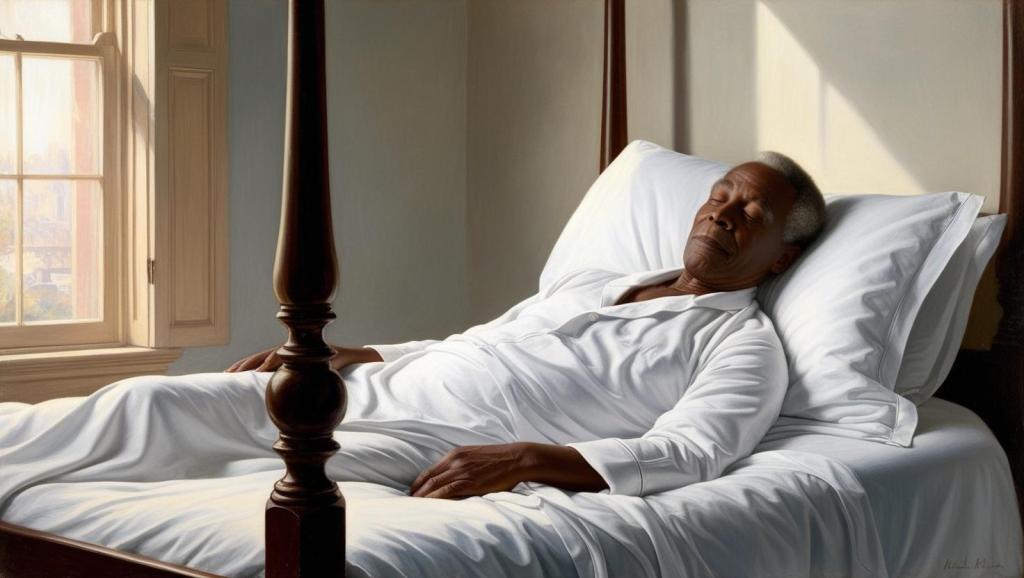
After Juliette’s death, Pierre’s health further deteriorated. He became increasingly inactive and was often bedridden. Two days before he died, he uttered the words, “God is with me.”  When someone asked him if he wanted anything, he replied, “Nothing on Earth.” Those were his last recorded words. Pierre Toussaint entered into his eternal home on June 30, 1853.

At his funeral Mass, St. Peter’s Church overflowed with mourners of all types – rich and poor, Black and white – wishing to pay their respects to the man whose kindness, dignity and charity illuminated the lives of everyone he encountered. Pierre Toussaint had managed the incredible feat of displaying true Christian charity, compassion, respect and mercy that transcended all the levels of society in which he moved. Father Quinn, who gave the eulogy, said that Pierre Touissant was “one who always had wise counsel for the rich and words of encouragement for the poor.”

As the funeral service concluded, Pierre’s white friends and associates honored his final request, stepping back to allow members of the Black community to bear his casket through the streets to St. Patrick’s Cemetery on Mulberry Street, as they had for Juliette two years earlier. At the graveside, people from all walks of life united in prayer as Toussaint was laid to rest beside his wife Juliette and adopted daughter, Euphemia.

New York’s newspapers paid tribute to Pierre Toussaint’s passing with lavish praise. One obituary eloquently stated: “His charity was of the efficient character which did not content itself with a present relief of pecuniary aid, but which required time and thought by day and by night, and long watchfulness and kind attention at the bedside of the sick and the departing.”

In 1854, Hannah Sawyer Lee’s biography, “Memoir of Pierre Toussaint, Born a Slave in St. Domingo,” published in Boston, became crucial in preserving details of his extraordinary life through notes left by her sister, Mary Anna Schuyler, and other sources. But in the turbulent decades following Toussaint’s death, as America grappled with political upheaval leading to the Civil War and its aftermath, his remarkable story faded from public memory, persisting mainly as oral history within Haitian-American and Black Catholic communities. A few decades later, the Touissant archives at the NY Public Library were compiled by Mary Ann Schuyler’s granddaughter Georgina.

But these did not draw much public attention until the 1930s, when Garland White, Jr., a young African-American student preparing for Confirmation challenged his teacher, a seminarian named Charles McTague, with the words, “You can’t name me one Black Catholic that white people respected!” McTague did not back down from the challenge. He managed to locate a Jesuit priest named John LaFarge, who remembered his grandmother’s stories about a devout Black man who had been her hairdresser for many years. McTague rediscovered Toussaint’s family gravestone in the Mulberry Street cemetery, where the inscription had faded to the point of being illegible. This discovery generated new interest in Toussaint’s extraordinary life and works.

In the 1950s, research and promotion of Pierre Touissant’s life was begun by the John Boyle O’Reilly Committee for Interracial Justice, an Irish-American group dedicated to social justice and equality. In 1951, a petition for the canonization of Pierre Toussaint was begun, and Cardinal Francis Spellman blessed a plaque to mark Touissant’s headstone. Spellman’s successor, Cardinal Terence Cooke, initiated the cause of canonization in 1968, which gained momentum over the following decades.

Fast forward to 1990, when, as part of Toussaint’s canonization process, his remains needed to be exhumed, examined and identified. Columbiana Curator Hollee Haswell provided the photograph taken in 1850 by Nathaniel Fish Moore to a team of forensic anthropologists, who compared it against Toussaint’s exhumed skull, leading to positive identification. Cardinal John O’Connor arranged for Pierre’s remains to be interred in the crypt beneath the altar of St. Patrick’s Cathedral, an honor usually reserved only for high-ranking clerics. Pierre Touissant thus became the only lay person, and the only Black person, to be buried in this crypt. A portrait of Touissant by Hunt Slonem now also hangs in the Cathedral.

In 1996, Pope John Paul II declared Pierre Toussaint “Venerable,” advancing him one step closer to sainthood. As of now, Toussaint’s canonization cause awaits an intercessory miracle — specifically, the instantaneous, complete, permanent, and medically-inexplicable healing of a serious medical condition — to progress to the next step of beatification. A second miracle is required for canonization. He is one of six North Americans under consideration for sainthood, potentially becoming the first Black North American saint.

Pierre’s legacy continues to thrive in the Archdiocese of New York and beyond. The Pierre Toussaint Guild, actively involved in advancing his cause for sainthood, also works to share his inspiring story globally. The Pierre Toussaint Scholarship Fund, managed by the archdiocese’s Black Ministry Office, perpetuates his mission by providing financial grants, mentorship, and opportunities for students to develop both their faith and careers. The foundation’s impact extends internationally, supporting the College Pierre Toussaint in Sassier, Haiti, enabling young Haitians to acquire skills to serve their community. In Miami, Florida, the Pierre Toussaint Haitian-Catholic Center bears his name, offering support services to Haitian immigrants. Though there are too many to list here, Pierre Touissant’s legacy extends to charitable and education institutions throughout the United States and beyond.

Additionally, Toussaint’s memory is honored through various public recognitions. A series of portraits in Gracie Mansion commemorates his good works. In April 2021, a significant portion of Church Avenue in Brooklyn, New York, was co-named Pierre Toussaint Boulevard. Additionally, the intersection near St. Peter’s Church in Manhattan, Toussaint’s former parish, was named after him in 1998. Most recently, in February 2024, Toussaint was featured in the New York Times’ “Overlooked No More” series of articles, which highlight remarkable individuals whose deaths originally went unreported in The Times.

In 1999, at a Mass in Toussaint’s honor, Cardinal O’Connor said, “If ever a man was truly free, it was Pierre Toussaint…. If ever a man was a saint, in my judgment, it was Pierre Toussaint. … No one can read this man’s life…without being awed by his holiness. He is now buried beneath this high altar with all of the bishops, archbishops and cardinals of New York. It will be a great privilege for me to be buried in a vault in the same section with Pierre Toussaint.”  Cardinal O’Connor further stated that it was not necessary to wait for Pierre’s official sainthood to emulate his virtues. “Beatified or not,” he said, “Pierre Toussaint remains a wonderful model, and I wish he were here.”

PART 3 of 4: ST. CABRINI’S “EXCELLENT ADVENTURES”

Across the USA, Europe, and Over the Andes to South America

To watch the YouTube video, click the arrow in the thumbnail below (Video contains Parts 3 & 4):

Mother Francesca Xavier Cabrini stood lost in thought, her eyes tracing the raindrops that streaked the windowpane. She found herself at a crossroads, faced with a challenging decision that could greattly impact the future endeavors of the Missionary Sisters of the Sacred Heart of Jesus, the Order she had founded just over a decade earlier. When she and her nuns had arrived in New York from Italy in March 1889, their primary mission was to educate poor Italian immigrants, which led to the establishment of academies, colleges, and normal schools.*  However, what truly distinguished Mother Cabrini’s work was her commitment to founding orphanages that would provide destitute girls with the training to become virtuous Christian women.

Now, two years later, she had received an unexpected request to manage a hospital, a task she felt was beyond her expertise. Yet, Francesca understood the pressing need for hospitals to serve Italian immigrants in the United States, many of whom were plagued by illnesses and injuries resulting from their dire living conditions and hazardous jobs. In public hospitals, they often faced neglect due to their poverty and limited English, compounded by the medical staff’s inability to speak Italian.

As she pondered her next steps, Francesca reflected on the journey that had brought her here. Born prematurely in 1850 in Sant’Angelo, Italy, she had always been frail, but possessed an unconquerable spirit. As a child, the stories of missionaries had captivated her imagination and fueled her longing to serve others.  Despite being rejected by several religious orders due to her health, she had founded the Institute of the Missionary Sisters of the Sacred Heart of Jesus in 1880 with a handful of young women. Francesca’s aspirations initially pointed towards China, yet Pope Leo XIII had redirected her to America, where thousands of Italian immigrants awaited assistance. This marked a significant turning point in her life and mission. Upon arriving in New York, she quickly recognized the urgent needs of the immigrant community, both material and spiritual.

Bishop Giovanni Scalabrini, a devoted advocate for Italian emigrants to the United States, had established a small hospital on East 109th Street, entrusting its management to his Order, the Fathers of St. Charles Borromeo, under the direction of Father Felice Morelli. Despite the priests’ commendable efforts in tending to the spiritual needs of the patients, the hospital was on the brink of disaster due to the clergy’s lack of practical experience in healthcare management. Desperate to remedy the situation, Bishop Scalabrini had sought Francesca’s assistance during her recent visit to Italy. He explained that without her intervention, the hospital would be forced to shut down. However, Francesca was hesitant; she feared that the demands of running a hospital would compromise the religious spirit of her nuns, and that her own aversion to physical illness would make her unsuitable for such a role. Although she had cared for patients suffering from diseases like smallpox and typhoid when necessary, managing a hospital presented an entirely different challenge. She already had sought the advice of a Cardinal, who had encouraged her to undertake the task, and also had received a letter of recommendation from the Cardinal-Vicar in Rome.

The decision weighed heavily on her heart as she considered how it might transform lives within the immigrant community she had come to love so deeply. Yet she remained uncertain. Faced with this dilemma, Francesca turned to her usual source of guidance: prayer. She closed the curtains against the gloomy rain, and went to the convent’s chapel, where she knelt in front of the statue of the Sacred Heart of Jesus. There once again she poured out all her questions and concerns, praying fervently to be shown the right path. That night she had a vivid dream in which she saw the Virgin Mary, sleeves rolled up and skirt pinned back, moving through a hospital ward, comforting the sick. When Francesca rushed to offer her help, Our Lady turned to her and said, “I am doing what you refuse to do.” This dream left Francesca with no doubt about her path forward, and she promptly assigned ten nuns to the Scalabrini hospital.

In October 1891, she traveled to Nicaragua and New Orleans to open missions there. However, when she learned the following Spring that, despite the nuns’ valiant efforts, the hospital had failed, she rushed back to address the situation. She quickly discovered the root of the problem. Contrary to her intentions, the Sisters were still under the control of Father Morelli, who had not paid them the promised $25.00 per month. Additionally, Francesca was expected to assume responsibility for a substantial debt that had accumulated even before she had sent her Sisters there. Francesca refused to pay off the old debts unless her Order could gain ownership of the hospital. Unfortunately, this became impossible when the property was foreclosed that summer. As negotiations regarding the distribution of furnishings stalled, complicated by the fact that the nuns had not been compensated for a year, Francesca made a difficult decision: she and her Sisters would amicably part ways with the Scalabrinian Fathers.

In a show of support, Archbishop Corrigan of New York provided Francesca with $50 and recommended her to four wealthy Italians in the city. With a total of $250 collected from these benefactors, she rented two adjoining houses on Twelfth Street and established her own hospital. She transferred ten patients from the failed hospital to this new facility. The donated funds allowed her to cover the first month’s rent and purchase ten inexpensive beds. The nuns crafted the mattresses themselves and sewed sheets from a large bale of fabric. For the first week, there was no water or gas for cooking, so the Sisters bought food from a nearby restaurant and heated it on a coal stove positioned in the center of the ward. Their meager pharmacy consisted of a dozen bottles of medicine. A writing desk and surgical instruments were donated by a doctor, while another donor provided an ambulance. Lacking funds for their own beds, the Sisters slept on the floor.

Despite these hardships and the criticism that naturally followed, the Sisters’ steadfast devotion more than compensated for their lack of supplies. They cared for their patients with kindness and compassion, placing their confidence in Mother Cabrini and following her example of total trust in God. When it came time to name their new facility in 1892, Francesca chose “Columbus Hospital,” explaining that the year marked the 400th anniversary of Christopher Columbus’s discovery of the New World. She declared, “He was the first Italian immigrant. If we call it after him, all the Italian immigrants will know that this is their hospital.”She would subsequently give the same name to all future hospitals she founded in America.

The very first patients at Columbus Hospital were too poor to pay for their care, but Dr. Keane, the head physician, generously offered his services free of charge. He was resolute in his commitment to the hospital’s mission, dismissing any staff doctor who attempted to charge a fee. Alongside Dr. Keane, other charitable doctors—several of whom were Protestants—joined the staff and referred their private paying patients to Columbus Hospital, providing a crucial source of income. As word spread about the hospital’s dedication to serving the needy, donations of money and equipment began to pour in, allowing the small hospital to steadily grow.

Feeling confident that the Sisters could manage the hospital, Francesca returned to Italy in October 1892 to visit the nuns at the original Motherhouse in Codogno and in various convents scattered throughout the country. During her visit, she had the opportunity to meet with Pope Leo XIII, who was celebrating the 50th Jubilee of his consecration as a Bishop. These trips to Italy were essential for Francesca’s spiritual renewal; she often felt the need to retreat to the quiet life of the cloister, which refreshed her for her future endeavors.

She returned to New York in 1895 to find Columbus Hospital thriving. A pivotal moment had occurred when an Italian warship docked in New York, carrying two sailors suffering from typhoid fever. After being turned away from other facilities, the Missionary Sisters welcomed them into Columbus Hospital, gaining significant publicity when the Italian Admiral visited. This led to an arrangement with the Italian Consul General, allowing any sick Italian sailor on a merchant vessel to be admitted for a flat fee. Although finances remained tight, this official recognition ensured that the hospital was consistently full. In March 1895, Columbus Hospital received formal approval from the State of New York and was legally incorporated. That same year, it was relocated to East 19th Street, and in 1973 would merge with another hospital, transforming into the Cabrini Medical Center at 226 East 20th Street, where it operated until its closure in 2008.

With the hospital’s future secured, Mother Cabrini was free to embark on a new journey to South America. First, she traveled to New Orleans to check on her mission there, staying for two days before sailing onward. The mission she and her Sisters had established in Granada, Nicaragua, had been closed by the government following a revolution, forcing the Sisters to relocate to Panama. Francesca intended to visit them before continuing on to Argentina. In Panama, Francesca was captivated by the mission’s stunning location overlooking the sea. In one of her letters, she described it vividly: “One could imagine oneself to be on board a steamer, because on the south and southwest it is surrounded by the sea…. The room the Sisters prepared for me is surrounded on two sides by large orange trees, the fruit of which touches my windowsill. One looks out on a path leading to the sea and its beautiful isles, which seem to be playing in the bay…. In our garden we have six kinds of palms, banana and coffee trees, and various kinds of fruit, the names of which I do not know.” She cherished the tranquility of this beautiful place, despite the fact that 30 girls practiced the piano every day, and 12 girls had singing lessons. “You can imagine our eardrums!” she wrote with her characteristic humor.

After spending 4-1/2 months in Panama, Mother Cabrini set out with Mother Chiara for what would become her longest and most adventurous journey. Their destination was Buenos Aires, where the Archbishop had requested her assistance in opening a school. From there, they planned to travel down South America’s coast to Chile and then cross the Andes into Argentina. During this voyage, Francesca crossed the Equator for the first time. During a particularly dull stretch of scenery, she took advantage of her background as a former teacher and lover of geography by writing a little lecture about the area for her nuns back home.

While making a long stop in Callao, Peru, Francesca and her companion ventured into Lima to visit St. Rose’s burial shrine. The ship continued its leisurely journey toward Valparaiso, making frequent stops along the way. When they arrived in Santiago at the foot of the Andes Mountains, they received advice from the Archbishop to rest for a while, because the Archbishop of Chile had passed away, making immediate travel unnecessary. Though Francesca chafed at this delay in her plans, she recognized that there was little choice: heavy snow blocked access through the Andes, and it would be several weeks before the first caravan of the season could depart. Her traveling companion, Mother Chiara, was a timid and sickly woman, so Francesca had offered her the choice of their going around Cape Horn by ship, or crossing the Andes mountains. Mother Chiara, who hated sea voyages, chose the Andes route.

On November 24, during the Spring season in the Southern Hemisphere, their journey across the Andes began. The first segment was by train, which navigated precariously along the mountains, hugging the edges of vast gorges so deep that the bottom was invisible. At the railway’s end, they transferred to mule-drawn coaches that trailed the river along a winding road bordering a deep chasm, where turbulent waters churned far below. This marked the beginning of the Cumbre Pass. Only dark green pine trees dotted the landscape, while a huge volcano towered above them. After a long day of travel, the coaches halted, and the passengers eagerly devoured a simple supper. Later, the two nuns stepped outside into the night to admire the brilliant moonlight that bathed the mountains in a lovely blue glow, reflecting off the snow. Francesca mused that the night’s beauty resembled that of the Virgin Mary.

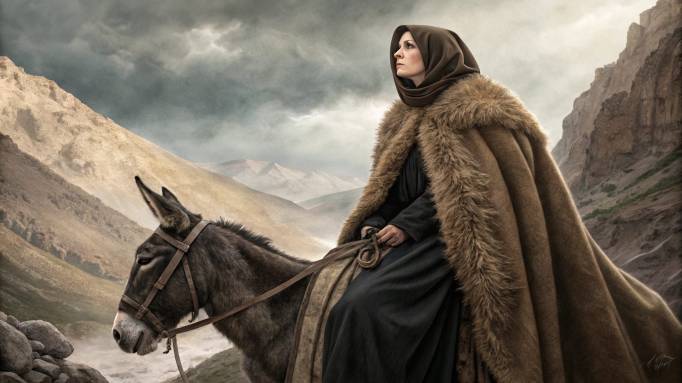
With this uplifting thought, she and Mother Chiara retired to their inn for the night. Exhausted from their travels, they fell into a deep sleep, but were roused at 3:30 a.m. by the sounds of the mules being saddled. They donned long, brown, hooded capes lined with fur—gifts from the ladies in Santiago—preparing for their mountain crossing. The best mules were assigned to them, which meant they would ride at the front of the line. Tiny Francesca had to stand on a chair to mount her mule.

The first hour of their journey was relatively easy; however, they soon found themselves navigating through deep snow as the path vanished. Two muleteer guides led them along a trail that often skirted a precipice. Francesca’s mule was curious about the edge, and despite her shouted warnings in limited Spanish, and frantic attempts to pull its head away, the mule remained undeterred. She glanced over at Mother Chiara, who lay limply on her mule’s back, clearly regretting her decision to traverse the Andes instead of opting for a ship voyage. Yet, despite the perilous conditions, the view was breathtaking—an immense abyss on one side and an expansive stretch of sparkling white snow on the other, with the mountains they still had to cross looming ahead.

Suddenly, one of the guides halted and instructed everyone to dismount; something was amiss. Before them lay a long and terrifyingly deep crevice. The men managed to get some mules to leap across it and informed the travelers they would need to do the same on their mounts. Being at the front meant Francesca had to make the first jump. Bravely, she agreed, confident she would clear it without issue. However, the intense cold and high altitude had sapped her strength, and as her mule leaped, she lost her grip. She began to slide off down the chasm and would certainly have fallen to her death if not for the quick reflexes of a vigilant muleteer who threw himself across and caught her just in time. With assistance from his hiking stick and his fellow guide, he pulled Francesca safely to solid ground, where she promptly fainted into a snowbank.

When she regained consciousness, she found that all her companions had successfully leapt across. Remounting her mule by standing on a boulder, she and the cavalcade continued their adventurous trek. Soon, Francesca recovered from her alarming experience and began to appreciate once again the stunning scenery around them. As they approached the border between Chile and Argentina, they descended the mountain through a feathery snowfall and stopped at an inn for lunch. When asked to write in the visitors’ book, Francesca became the first person ever to express something positive about the crossing. Despite its dangers, she had relished every moment of this adventure. In her diary-letter to the nuns back home, she reflected: “…I was very pleased to have ascended such high mountains, which gave me an inducement to incite myself to ascend the heights of spiritual perfection—a peak much higher than any in the Andes…. Prayer, confidence and total abandonment to God will always be our arms. We are good for nothing…. But I can do all things in Him who strengthens me.”

Francesca and Mother Chiara arrived in Buenos Aires, a city where she was virtually unknown, because the Archbishop who had invited her had since passed away. Fortunately, she remembered a priest, Fr. Broggi, whom she had met in Genoa two years prior. He welcomed them cordially and treated them to a delightful Italian dinner. Afterward, he introduced them to the new Archbishop, Ladislao Castellano, a warm and fatherly man, who assured Francesca that he would provide all the support his predecessor had promised. During this time, she also met the influential clergy of the diocese, who were in the city for a procession to a shrine of Our Lady to welcome the new Archbishop. These priests quickly fell under the spell of Francesca’s famous — though unconscious — charm, and she received all the assistance she needed.

The Sisters of Mercy took the two nuns in until they could establish their own convent. Fr. Broggi guided them around the city, introducing them to individuals who would be instrumental in their mission. As was her custom, Francesca walked through the city each day, searching for potential houses for her new school and returning home exhausted every evening; yet she persevered and inspected 60 possible locations. One day, at the very spot where her worn shoes finally fell to pieces, she found a house that met all her needs. Despite warnings that her choice was a grave mistake due to its high cost, she nonetheless insisted that she had a secret inspiration and would take the house at any price.

Without hesitation, she cabled New York and Italy for Sisters to leave immediately for Buenos Aires, alarming Fr. Broggi, who thought this decision was rash and premature. She reassured him, “Don’t worry, Father. If I were to think too much about procuring the means, the Lord would withhold His graces.”

On Christmas Day, she took possession of the house and wasted no time preparing it for the incoming Sisters. One day, Archbishop Castellano came to visit. When Francesca opened the door, he didn’t recognize her at first, as she was clad in an apron, wielding a broom and duster. He asked to see Mother Cabrini, to which she replied, “Certainly, Your Excellency. Please sit down in the parlor and I will call her.” She hurried away and returned moments later without her apron and cleaning tools, her face and hands freshly washed. The Archbishop burst into laughter; however, Francesca was never one to shirk domestic responsibilities.

As often happened with her business decisions, what seemed rash turned out to be brilliant. She later reflected: “The courage shown in undertaking a difficult enterprise made a good impression on the people, so much so that the principal families brought us their children; and this went on so well that when we left, the academy was already full and I had to arrange for a second and larger house.” Although some students came from Italian families, most did not; South America lacked quality schools at that time, making these capable Italian nuns most welcome.

After establishing her school in Buenos Aires, Francesca set sail back to Italy. During the voyage, eager to expand her mission further into Spanish America, Mother Cabrini sought more knowledge about Spain and its people, with hopes of opening a house there and recruiting Spanish nuns. In Rome, she met once again with her old friend Pope Leo XIII to receive his blessing. Noticing her poor health, he inquired how she managed such extensive work. She smiled brightly and replied: “Holy Father, I am your spiritual daughter. That is what gives me the necessary moral strength. I am not going to lose my health by serving that dear Jesus who made me a Missionary of His Sacred Heart.”

Three weeks later, she arrived in Paris, where she longed to open a house. But initial efforts were met with difficulty. Archbishop Cardinal Richard was away, and his Vicar-General denied Francesca permission to proceed until his return. Unable to sway him otherwise, she and Sister Frances, a young Irish nun, took refuge with Madame de Mier, whose sister attended the missionary school in Panama. The woman was frail; while she occasionally conversed with the nuns, most of her time was spent resting in her room. Though Madame de Mier had abandoned religious practice years prior, Mother Cabrini’s influence inspired her return to the Catholic faith. Sadly, upon Madame de Mier’s death several weeks later, Francesca and Sister Frances found themselves without shelter—and still without permission to open a convent in Paris. However, Madame de Mier had left Francesca some valuable furniture in her will—too luxurious for a convent, but suitable for equipping a boarding house for affluent ladies, which Francesca undertook as a temporary solution to help establish a foothold in Paris while potentially attracting French vocations.

On September 8th, she finally received permission from Cardinal Richard to establish herself in the same parish where her new boarding house was located. By September 29th, seven Sisters had arrived from Italy, and they opened their house. Because it was far too grand for a convent setting, the nuns occupied the servants’ quarters, while converting the coach house into their refectory. The elegant residence appealed to exactly the kind of ladies they wished to attract, and on October 1st, their first paying boarders arrived.

With Paris now established as part of her mission field, Francesca and Sister Frances traveled to England for ten days, where she instantly fell in love with London and its polite people who were always willing to help. She wrote: “In other countries they speak of nobility and courtesy; in London they practice them!…I was astonished at the courtesy shown me and inwardly implored blessings on this country of England which I should love to call—if possible—the ‘Land of Angels.’”  Although she was there with intentions of establishing an orphanage for Italian children, this project would ultimately need postponement for several years.

Francesca spent the majority of 1899 dedicated to establishing schools for impoverished Italian children across New York, Newark, NJ, and Scranton, PA. She also opened a boarding school for the children of affluent Italians, who often required spiritual guidance to maintain their faith. This establishment, known as Sacred Heart Villa, was located at 190th St. and Fort Washington Ave. in New York. It became not only the American novitiate, but also the closest thing Francesca ever had to a settled home. In later years, Sacred Heart Villa would evolve into Mother Cabrini High School.

That same year, she was invited to open a mission in Chicago, where the immigrant population faced challenges similar to those in New York. Following the Civil War, Chicago had transformed into a major urban center, second only to New York. The demand for cheap labor surged, due to numerous factories and infrastructure projects like railroads and bridges. Unfortunately, many areas rebuilt after the Great Fire of 1871 were filled with unsafe and unhealthy wooden tenements that housed Italians alongside Black migrants from the South and various other immigrant groups including Jews, Greeks, Croatians, Russians, Lithuanians, Poles, and Mexicans. Living conditions were dire; unsanitary plumbing was common; alleyways overflowed with garbage and dead animals; and toilets often backed up. Rats posed a significant threat to infants. Families resorted to sleeping with guns under their beds to fend off these pests at night, and food had to be stored in tin boxes or suspended from ceilings by ropes or wires. Such conditions bred diseases like typhoid and impetigo in summer, and rheumatism, tuberculosis, and pneumonia in winter. Immigrants faced constant peril in factories, where lost limbs or death were everyday risks. Yet amidst these horrors, a small but ambitious group of immigrants began launching their own businesses, which eventually flourished.

In May 1899, Francesca traveled to Chicago with 14 of her Sisters. Father Morechini of the Servite Fathers had prepared a building for her at his parish of the Church of the Assumption. Francesca’s task would be to organize both students and faculty in this burgeoning city. Her greatest aspiration was always focused on educating children, whom she envisioned as soldiers ready to combat the evils their parents had endured. Soon her school at the Church of the Assumption boasted 700 students. Before leaving Chicago, she laid plans for an orphanage and a potential hospital.

She then sailed back to Europe. Exhausted from her labors, she collapsed into a deck chair for some much-needed rest. Sea voyages were as close as she ever got to a vacation. Upon regaining some strength, she wrote to her nuns: “How lovely and sweet it is to undertake a sea voyage when one is tired and worn out with the labors of the missions! I’m like a fish — I feel better on sea than on land, and eat with a better appetite.” Her journey included stops in Paris and Lourdes before continuing on to Spain, where she opened a school and college in Madrid, along with two orphanages in Bilbao, before returning to Italy.

From birth, Francesca had always been frail, and a near-drowning incident in her childhood had left her with compromised lungs. When she founded her Order in 1880, she had been advised that she likely only had a couple of years to live. In 1889, when she first came to America, she was again warned that her health would not be able to stand the stress and strain. But she would only smile at these warnings. Putting all her trust in God, she knew that if He had called her to this work, He would make sure she had the strength to see it through. By 1900, Francesca was 50 years old; and although her face retained its youthful appearance, her health was gradually declining, due to extreme fatigue and fevers. Nevertheless, once in Italy, instead of succumbing to illness, she opened a chapel and school in Rome, an orphanage in Mariscano, convents in San Raffaele and Citta della Pieve, an exclusive academy for upper-class girls, and a sanatorium for sick nuns in Torino.

Francesca then spent seven months in Argentina visiting not only Buenos Aires—where her schools were thriving—but also the pampas, where many scattered groups of Italian immigrants worked. She had learned that her Sisters in Panama had been forced to leave that country due to civil war. Despite the fact that they had tirelessly nursed the sick during outbreaks of typhoid, yellow fever, and bubonic plague, and also those wounded in the conflict, the Sisters had been ordered away from Panama. Francesca promptly reassigned them to her schools in Argentina, while welcoming the new South American novices who were starting to arrive.

When she returned to Italy in the spring of 1902, Francesca Cabrini found herself gravely ill, confined to her bed, with the specter of death looming once more. In her weakened state, she began making arrangements for the governance of her Institute after her passing. However, on March 19, the feast of St. Joseph, a basket of oranges arrived from the Vatican gardens, a thoughtful gift from her steadfast friend and patron, Pope Leo XIII. Despite not having eaten for days, Francesca took one of the oranges and declared it delicious, claiming it had restored her energy. She soon recovered enough to visit the Pope, who bestowed upon her a blessing that would be his last for her. He passed away the following summer at the age of 93.

With renewed vigor, Francesca set out to visit her many convents across Italy and Spain. The elegant boarding house in Paris was relinquished in favor of an orphanage in Neuilly. Yet, her primary focus shifted towards founding a convent in London. With the support of Bishop Bourne of Southwark (Suth-erk), she established a house at Brockley, which would later move to nearby Honor Oak. She was now free to return to the United States, where she would spend the next four years.

Francesca’s aspirations led her toward the Rocky Mountains, with hopes of eventually reaching the Pacific coast. Her immediate mission was to assist Italian immigrants laboring in Colorado’s mining fields. Although these immigrants fared better materially than others across the nation, they still faced challenges. Separated from their families, with limited opportunities to practice their Catholic faith, they faced great temptations presented by their lucrative wages in the gold and silver mines. Setting up headquarters in Denver, Francesca and her nuns traversed rugged terrain to reach miners working underground. They descended hundreds of feet into dark shafts, walking miles along tunnels to offer brief moments of connection during lunch breaks.

The miners deeply appreciated these visits; they had felt isolated and forgotten until uplifted by the presence of these kind nuns who spoke their language. In recognition of their positive impact on worker morale, the mine superintendent provided accommodations for them, where they would sometimes stay for several days. During these interactions, Francesca learned about the pressing need for a hospital and orphanage because of frequent injuries or fatalities that left many children homeless.

Starting with a small school on Palmer Avenue for immigrant children who lacked parental supervision, Francesca later returned to Denver and strategically acquired a large property on the city’s outskirts. Despite initial protests from the Bishop regarding its isolation, Francesca’s keen understanding of maps and population trends proved invaluable as she secured properties that would thrive as the cities developed. Denver soon expanded in the direction of her property, constructing streetcar lines into what would become thriving suburbs.

She returned East and established St. Anthony’s Orphanage in Arlington, New Jersey. She also added an annex to the Columbus Hospital in NY. Francesca demonstrated remarkable financial acumen in managing her projects. While she sought donations from Italian communities, yielding modest sums, for larger amounts she also approached wealthy benefactors with surprising success. One notable encounter was with a Mr. Wentworth. After several unsuccessful attempts to meet with him, she finally cornered him outside his office one day. He asked her what she was selling. She declared, “Sell, Mr. Wentworth? Only children.” She passionately shared her dreams with him, leaving that day with a generous contribution.

Despite her aversion to begging, Francesca excelled at it by framing requests as opportunities for the donors, telling them, “In asking you for something, I am conferring a privilege upon you – the chance to do some good.” Her bright blue eyes and infectious smile made it hard for potential donors to refuse her appeals. They could only stare at her, dumbfounded…and reach for their checkbook. As she often remarked to her fellow nuns, “We have nothing, yet we spend millions.” Long before Women’s Liberation, Mother Francesca Cabrini employed all the skills of the greatest female CEOs.

In 1903, she returned to Chicago with plans to establish a hospital. One snowy April day, she spotted the six-story North Shore Hotel on Lincoln Park’s edge—a prime location selling for the bargain price of  $160,000, due to previous mismanagement. Despite raising only $1,000 initially—much to the Archbishop’s amusement—Francesca’s relentless spirit led her back into Chicago’s Italian community, where she successfully raised $10,000. Encouraged by the Archbishop to proceed with purchasing the hotel despite her trepidation, Francesca’s astuteness soon became evident during negotiations, when she suspected some deception regarding the property measurements. She sent two Sisters out with string and chalk to measure the lot accurately before signing any documents. The sellers of the property soon learned that although she was a woman and a foreigner — two strikes against her in that era — Francesca was not one to be easily deceived. They had, in fact, been secretly intent on retaining 25’ of the property for their own use. Seeing that they were defeated, they agreed to her terms. As a wise businessman once noted, “One does not fool with Mother Cabrini.”

However, when the time came to renovate the hotel into a hospital, unscrupulous contractors again tried to cheat the nuns. Francesca then took charge of the project herself, acting as chief contractor and retaining only the honest workmen. The dishonest ones she fired, after paying them only what was fair and not a penny more. She made friends with the remaining workers, fostering camaraderie while ensuring efficiency, and renovations expected to take 12 months were completed in just eight. Donations poured in, not only from Italians, but also from non-Italian Catholics, Jews, and Protestants. An eminent Catholic surgeon named John B. Murphy offered his services to Francesca’s hospital, acting as President and head-of-staff, and he was the one she turned to for medical advice. On April 26, 1905, the Columbus Hospital of Chicago officially opened its doors.

Francesca Cabrini’s legacy extends beyond her establishment of orphanages, schools, and hospitals; she also exhibited profound compassion for prisoners. She started this ministry at Sing Sing prison in Ossining, NY, where she communicated with Italian inmates in their native language—a necessity, since none of the official chaplains spoke Italian. To address this gap, she arranged for Italian-speaking priests to visit the prison for confessions, while her own nuns made regular visits several times a week. The prisoners on Death Row especially received tender compassion and comfort. In New Orleans, her Missionary Sisters visited a young Black man sentenced to hang, offering him solace and helping him reconcile with God before his execution. On the occasion of Mother Cabrini’s 25th Anniversary, the prisoners at Sing Sing sent her a beautifully-illustrated message of gratitude. Additionally, inmates from a Chicago prison contributed funds for a horse and carriage to facilitate the Sisters’ visits.

Despite suffering from a high fever, Francesca journeyed to the West Coast, where she opened a small orphanage, parochial school, and modest wooden chapel in Seattle. She even wielded a pickaxe herself for the chapel’s construction, placing a note and religious medals into its foundation. During her return trip, an attempted train robbery occurred, and a rifle shot pierced the train window precisely where Francesca had been sitting moments before she leaned forward to better hear the nun traveling with her. When the frightened conductor pointed out how narrowly she had escaped death, she calmly reassured him: Sir, that bullet could never have found me, for the Sacred Heart protects me.”

Chronologically summarizing Mother Cabrini’s extensive travels across the U.S. during the early 1900s is challenging. Her primary bases of operation included New York, Chicago, Denver, Seattle, Los Angeles, and New Orleans. In 1905, while Francesca was in Chicago, a yellow fever epidemic ravaged New Orleans, claiming many lives among poor immigrants in the overcrowded slums. Often, it was only Francesca’s Missionary Sisters who were permitted into these homes, working alongside medical authorities to alleviate the immigrants’ suspicion of doctors and nurses. Miraculously, not one Sister contracted the illness, despite their constant exposure.

In the Fall of 1905, Francesca traveled to Los Angeles with plans to assist both Italian and Mexican immigrants. There, she established an orphanage on Sunset Boulevard, a school on Alpine Street, and a sanitarium in Burbank for children suffering from tuberculosis or at risk of contracting it.

By this time, Mother Cabrini had gained recognition among Italians everywhere. The Italian government officially praised her efforts and provided some financial support for her work. She was honored by the Queen of Italy, and acknowledged by politicians who conceded that she did more for immigrants than all other agencies combined. As one biographer noted: “The name ‘Mother Cabrini’ began to sound like music to the ears of the clergy and civil authorities, and of all Italians as well. There had never been—and has not been since—a woman in America quite like Mother Cabrini. As Americans witnessed the flourishing communities under her influence—hospitals, orphanages, schools, religious and social centers—they gradually began to respect immigrants and shed ignorant prejudices.”

Coming in Part 4: The Final Years, Miracles & Canonization

JOSEPHINE BAKHITA: FROM SLAVERY TO SAINTHOOD

To watch the YouTube video, click arrow in thumbnail below:

The inspiring and unforgettable story of the slave who became a saint began around 1869, when she was born in a village in Darfur called Olgossa. It was located on the southern edge of the Sahara Desert, in an area of rolling countryside known as Daju (DAH-jshoo). Many streams flowed down from the mountains, creating beautiful, fertile lands on both sides of the streams, surrounding the area with lush greenery. The baby girl’s birth name is unknown, because not even she herself remembered it later. Her father, whose brother was the village chief, was a landowner who had a staff of numerous field laborers and herdsmen to run his large and prosperous farm. The family was economically comfortable, and also very close and loving. The little girl had three brothers and three sisters, including a twin sister. There also were four other siblings who died before she was born. Of her early life she recalled, “I was as happy as could be and didn’t know the meaning of sorrow.”

Although destined to become part of Sudan, Darfur at that time was still a small independent Sultanate, ruled by a tribe called the Fur. Although the Fur had long been Muslim, their subjects did not necessarily share the Muslim faith, and the inhabitants of Olgossa at that time were not Muslim. The little girl had no early structured religious upbringing, but later said, “Seeing the sun, the moon and the stars, the beauties of nature, I asked myself, ‘Who is the owner of all these beautiful things?’ And I felt a great desire to see him, to know him and to pay him homage.”

In the 1800s, Mohammed Ali – no, not THAT one! — a Macedonian soldier in the Ottoman army, seized power in Egypt and forced the Sultan of Constantinople (now Istanbul), to recognize him as governor. He ruled from 1820 to 1849. Because he and his administrative and military leaders spoke Turkish, not Arabic, they were generally referred to as “Turks,” although for the most part they were European Muslims. Starting in 1820, Ali began carving out for himself a huge central African colony in Sudan. Unfortunately, the Turks indulged in heinous crimes in Sudan, unashamedly plundering for the personal enrichment of themselves and Ali. Their main form of profit was slave trading. Although the Muslim Sudanese could not legally be enslaved themselves, they were forced to hand over a large proportion of the slaves in their households and workforce. The only way to reimburse their losses was to abduct large numbers of fresh slaves from among the “un-believers” further south.

After Ali’s death, those who succeeded him, holding the title “Khedive,” wanted to adopt technology and education ideas from Europe, and the prevalence of slavery in the territories became an embarrassment to them. They began introducing anti-slavery measures, as was becoming increasingly common in the Western nations. But they were not effective, because the Sudan area was so large that raiders and traders could usually evade the police patrols. In 1873, the current Sultan of Darfur was defeated and killed in battle by a notorious slave trader named Zubayr. Darfur became part of the Sudanese province, leaving it open to raids by slavers from other parts of Sudan. Children between the ages of 10 to 15 fetched the highest prices on the slave market.

The little girl’s happy childhood began to unravel when she was around five years old. As she describes it: “One day, my mother decided to go out into the country where we had many fields full of crops and herds of cattle, to see if all the workmen were attending to the tasks. She wanted all of us children to go with her. But my eldest sister, who wasn’t feeling well, asked if she could stay home with our little sister, and Mummy agreed. While we were out in the field, we heard a great commotion: lots of shouting, and people running to and fro. Everyone immediately guessed what it must be — slavers raiding the village.”

They ran back home to find her twin sister crying hysterically and shaking with terror. She had hidden behind a wall, eluding the raiders, but her older sister had been taken. They were never able to find her.

About two years later, when the little girl was 7, she and her friend, who was a few years older, set out to walk in the fields near their home. After playing for a while, they began to gather herbs, when suddenly they were startled by two armed men emerging from behind a hedge. Wishing to get the older girl out of the way, they told her to keep walking and that her friend would rejoin her in a couple of minutes. They then instructed the little girl to go into the woods and fetch a package for them. Innocent child that she was, and used to obeying adults, the little girl did not suspect anything and went to do as she was told. Once she was in the woods, the men came up behind her. One of them grabbed her roughly, pulled a big knife from his belt, and told her, “If you shout, you’re dead! Come with us!” The other man pushed her forward, holding a gun to her back. The trembling child was so petrified that she could not even scream or speak. They forced her to walk until evening. Exhausted, her feet and legs bleeding from the sharp stones and thorn bushes, she sobbed pitifully, but the cruel men were unmoved by her tears.

At one point, one of the men asked her name. She tried to answer him, but no words would come. In her great stress and terror, she could not even recall her name. Impatiently, the other man snapped at her, “From now on your name is Bakhita. Don’t forget it!” Bakhita, which means “lucky” or “fortunate,” was a common name for slaves. They were often given names with positive connotations, as exemplified by the early Christian martyr Felicity, whose slave name meant “happiness.” The name Bakhita initially seemed a cruel irony, given the immense suffering she would endure. However, in hindsight, this name proved remarkably fitting, as it foreshadowed the profound grace and spiritual fortune she would ultimately find through her faith.

When they arrived at their destination, one of the men dragged Bakhita into a storeroom full of tools and other broken bits of equipment. There was nothing for her to lie on except the bare ground. Giving her a piece of black bread, he ordered, “Stay here,” then went out and locked the door behind him. Bakhita remained in that room for over a month. The only light coming in was from a very small window high up near the ceiling. Every so often the door would open briefly and scraps of food would be thrown in for her. Bakhita’s suffering in that horrible place was indescribable. She would cry until she fainted from exhaustion, then dream that she was among her family once again or happily playing with her friends in the fields. When she woke up in that harsh and lonely place, the heartbreak and despair were almost more than she could bear.

One morning, Bakhita was taken from the room and sold to a slave merchant, who put her in a caravan with some other slaves. As they set out on the road, seeing the countryside, the sky and water, and breathing the fresh air, Bakhita felt a little better, although her future was frightening and uncertain. The journey lasted eight days on foot. Upon arriving at the slave market, Bakhita and another little girl about her age began to plot to escape. Their captor’s routine was to put them in a separate room and shut the door. One evening, he came back to the market leading a mule laden with corn. He removed the girls’ chains and told them to husk the corncobs and feed some of them to the mule. He went away in a hurry, forgetting to close the door. Alone and free from the chains, it was the moment they had been waiting for. They fled into the open countryside, running all night as fast as they could, terrified not only of being recaptured, but because in the darkness they could hear the roaring of wild animals. Whenever the sound was closer, they climbed up into the trees for safety. When they heard approaching caravans, they would hide behind the thorn bushes. In Bakhita’s words, “For a good two hours, one group after the other passed just in front of us, but nobody saw us. It was the good God who protected us, nobody else.”

One night, the two girls were lost in the pitch-dark forest, surrounded by danger from wild beasts, not knowing in which direction to continue. Suddenly, Bakhita saw a form of light appear in the night sky above her. It was smiling down at her and pointing out the way they should go. The girls walked as directed, and as dawn approached, the apparition vanished. It was only much later in life that Bakhita realized the vision had been her Guardian Angel, who had led her in the path chosen by God, which — though not right away — ultimately would lead to her greatest good.

At sunset, they saw a cabin. As they approached, a man came up to them and asked where they were going. They replied, “To our parents.” When he pressed them as to where their parents were, they couldn’t answer. Realizing they were runaways, he told them, “Come and rest a bit. Then I’ll take you to your parents.” Entering the cabin, he gave them some water and left them alone so they could sleep. A little while later, he woke them up, gave them food and water, and put them into a big sheepfold. He put down a string bed, and fastened the two girls together by the feet with a heavy chain, telling them to stay there until further notice. As Bakhita later described it, “That was that – we were slaves again.…We cried and cried. He left us there among the sheep and lambs for several days, until a slave merchant passed, and took us out of the sheepfold and sold us to him. We had to walk a long way before rejoining the caravan. Imagine our surprise when we saw, among the slaves, some who had belonged to the master we’d escaped from! They told us how furious he’d been, and what a hue and cry there was when we weren’t found. He was blaming and hitting out at everyone he met, and threatening to cut us into pieces if he found us. Now I understand more and more the goodness of the Lord, who saved me then so miraculously.”

Bakhita and her companion were taken to El Obeid, the provincial capital of Kordofan. By this point, Bakhita had traveled almost 600 miles from the day of her abduction. The girls were taken into the household of the Arab chief, a wealthy man who owned many slaves. There Bakhita quickly became fluent in Arabic and eventually forgot her original language. The girls were assigned as handmaids to the ladies of the household and the chief’s daughters, who liked them and treated them kindly, making sure they lacked nothing. However, one day Bakhita committed a fault in the eyes of the master’s son. The exact nature of the transgression isn’t detailed in historical records, but it is believed to have been a minor offense, such as breaking a vase. Seizing a whip, he flogged and kicked her so badly she was confined to her sleeping mat for more than a month.

Three months later, she was sold to a Turkish Army General. She and another young girl were put to work as handmaids to his wife and his elderly mother, both of them heartless women who insisted that the girls never leave them even for a moment. If, because of lack of rest, they made any little mistake, they were whipped unmercifully. Years later, Bakhita recalled, “The whole three years I was in their service, I don’t recall having got through a single day without a beating. No sooner did my wounds heal than more lashes rained down on my back – without my even knowing why.” Once, overhearing Bakhita telling her companion about her escape from her first captor, the General’s daughter made Bakhita wear a big chain on her foot for over a month

One of the worst cruelties Bakhita ever had to endure had to do with the custom of slaves wearing designs or patterns cut into their bodies, a crude form of tatooing. Bakhita’s mistress decided to make “a gift” of these tatoos to those of her slaves who didn’t already have them – Bakhita and two others.

One of the most horrific experiences Bakhita endured was a brutal form of scarification, a practice common among slave owners in Sudan at the time. Her mistress decided to inflict this “gift” upon Bakhita and two other slaves who had not yet been marked in this way. A woman who was an expert in this hideous practice arrived. She took them to the porch, while the mistress stood behind them, holding a whip. The woman had a dish of white flour, a dish of salt, and a razor. Bakhita was made to lie down on the mat. The woman, who was ordered to spare her face, started off by using the flour to mark six designs on Bakhita’s chest, 60 on her belly and 48 on her right arm. Then, the woman cut into the designs with the razor. Once the cuts were made, salt was rubbed into them to produce scarring. Needless to say, the ritual was excruciating. Bakhita was left in a state of semi-consciousness for hours after the procedure, barely able to move due to the intense pain. No one tended to her wounds or provided any form of medical care. For weeks, she remained confined to her sleeping mat, enduring constant pain and discomfort. The scars remained with Bakhita for the rest of her life, and the experience remained one of the most terrifying memories from her time in captivity.

Eventually, the General decided to move back to Turkey. He selected 10 slaves, including Bakhita, and sold off the rest. They left Kordofan and traveled by camel to Khartoum, where they were put up at an inn. The General spread the word that he had slaves for sale. The Italian consular agent, named Calisto Legnani came over one day, and Bakhita was told to bring him coffee. The next day, Bakhita went to live in the Legnani household. Calisto Legnani was a kind man and took a great liking to Bakhita. Her duties were to help the housekeeper with domestic work. She always claimed that she was very happy in his service. Even though there was a Catholic mission in Khartoum, which Calisto frequently visited, Bakhita never knew of it and had never heard about Christianity.

In 1884, with civil unrest brewing in the area, Legnani was planning another trip to Italy. In Bakhita’s own words: “I don’t know why, but when I heard the name ‘Italy,’ although I knew nothing of its beauty and charm, a keen desire sprang up in my heart to accompany him. He liked me so much, I dared to ask him to take me to Italy with him.…He agreed, to please me. It was God who wished it, I realized later. I can still feel the joy I experienced at that moment.” Calisto, his friend Augusto Michieli, Bakhita, and a young black boy, all rode on camels in a caravan. After a few days journey, they reached Suakin, where they stayed for several weeks before boarding a ship for Genoa. While in Suakin, the news reached them that a gang of rebels had invaded Khartoum, wreaking havoc by vandalizing property, pillaging, looting, and stealing all the slaves. Bakhita realized that if she had stayed there, she, too, would have been stolen, and who knows what her fate would have been? She remained forever thankful to the Lord for having saved her yet again.

In Genoa, Augusto Michieli’s wife, Maria Turina, came to see her husband at the guesthouse where they were staying. After meeting Bakhita, Maria expressed a wish to have someone like her in her own household. Subsequently, before he left for Padua, Legnani entrusted Bakhita to the Michielis. Bakhita never saw him again. She and the Michielis made their way to the family home in a village called Zianigo, a short distance from Venice. There Bakhita was nurse to their little daughter, Alice Alessandrina Augusta, nicknamed “Mimmina.” As Bakhita later wrote: “The baby came to love me dearly, and I naturally came to feel a similar affection for her.”

Augosto Michieli returned to Suakin to open a hotel. Bakhita and the rest of the family remained in Italy for three years, until at the end of 1886, Augusto sent for them all to join him. The empty house in Italy was left in the hands of the local agent, Illuminato Checchini. Maria, Bakhita and Mimmina remained in Suakin for 9 months. When the decision was made to make it their permanent residence, Maria needed to return to Italy to sell the property there and pack up the furniture. She took Bakhita and Mimmina with her. As Bakhita later wrote: “Then I bade in my heart an eternal farewell to Africa. An inner voice told me I would never see it again.”

The agent Checchini often visited the house to assist and advise Maria in the selling of the property. He was shocked to learn that Bakhita had never been given any religious instruction, and asked the housekeeper to say prayers with Bakhita every morning. The prayers, said either in Italian or Latin, would have meant nothing to Bakhita, but Maria still was annoyed by it. She didn’t want Illuminato “upsetting the servants.” Neither she nor Augusto were religious; furthermore, she wasn’t Italian, but Russian, and claimed to be an atheist, like many upper-class Russians of that era. Illuminato, on the other hand, was the son of a village cart maker and not of the upper class. Renowned for his excellent guidance, he was instrumental in counseling the affluent and advocating for savings banks and mutual insurance societies. He was a deeply religious man and used to play the organ in his home parish of Salzano. He was great friends with the parish priest there, Father Guiseppe Sarto, and they kept in touch even after Illuminato moved away from Salzano.

One day, while visiting the Michieli house, Illuminato gave Bakhita a little silver crucifix. “Giving me the crucifix, he kissed it with devotion,” Bakhita later wrote, “then explained to me that Jesus Christ, Son of God, died for us. I didn’t know what it was, but impelled by a mysterious force, I hid it, in case my mistress took it off me. Before then I had never hidden anything, because I was never attached to anything. I remember how I used to look at it in secret, and feel inside myself something I couldn’t explain.”

Within a year, Maria Turina had sold off the property, but there was still some unfinished business remaining. She missed her husband, however, so she decided to travel out to Africa to spend some time with him. Since she didn’t plan to stay long, she decided it would be best to leave Bakhita and Mimmina in Italy during her absence. She asked Illuminato for advice as to where they could stay while she was gone, perhaps a boarding school where Bakhita could receive some education. By this time, Bakhita was 20 years old and had never had any schooling. Illuminato suggested the Catechumenate in Venice, run by the Canossian Sisters, who also had a convent in a nearby village. Maria, knowing how respectable these nuns were, felt reassured that the two girls would be properly looked after, and insisted that they not be separated. Illuminato offered to negotiate all the arrangements, and also personally guaranteed to cover all expenses in the event that there was any difficulty once Maria Turina left the country.

In Bakhita’s words: “When my mistress accompanied me to the Institute, she turned around on the doorstep to bid me goodbye and said: ‘There, that is your home now.’ She said this without having any idea what she was really saying. Oh, if she had realized what was going to happen, she’d never have brought me there! I was entrusted, together with the baby, to a Sister who was well experienced in instructing catechumens, Maria Fabbretti. Tears come to my eyes whenever I think of all the care she took of me. She asked if it was my desire to become a Christian and, hearing that I did desire it and had come with that intention, she was filled with joy. Then those holy Mothers instructed me with heroic patience, and brought me into a relationship with that God whom, ever since I was a child, I had felt in my heart without knowing who He was.”

The nuns faced challenges with Bakhita. Though she was obedient, cooperative, and eager to learn, she communicated only in a fractured blend of standard Italian and the local dialect. She struggled to understand anything beyond practical matters. All instructions had to be delivered verbally or illustrated through pictures, as she could not read books.

It wasn’t long before a little girl who lived across the street, 6-year-old Giulia Della Fonte, began coming over to play with Mimmina. She was fascinated by the kind Black nursemaid, who always smiled but didn’t look truly happy. Actually, at the time, Bakhita would have said she had been happy ever since arriving at the Legnani’s house in Khartoum. But despite her present fortunate circumstances, the horrific experiences she had endured had left her spirit crushed, and it wasn’t so easy to just dismiss the memories. But now she was hopeful that her spirit could be healed. She knew that with God there were no language barriers, and she could talk openly to Him about whatever was in her heart. She spent a lot of her free time in prayer, either in front of the large crucifix in the downstairs parlor, or in the domestic chapel where a statue of Our Lady of La Salette had been installed. She also would go with Mimmina to the nearby church of Our Lady of Health, where there was an old icon of the Madonna and Child. As is the case with so many of Europe’s venerated Marian icons, the figures depicted in it were black, making them even easier for Bakhita to relate to. She had a great devotion to Mary. “The Blessed Virgin protected me, even when I did not know her,” she later recalled. “Even in the depths of discouragement and sadness, when I was a slave, I never despaired, because I felt in me a mysterious force that supported me. ”

The year passed happily for Bakhita. Then, on Nov. 27, 1889, Maria Turina came back to Italy, announcing that Mimmina and Bakhita would travel back with her to Africa to live permanently, where Bakhita would have a new job tending the family’s hotel bar in Suakin. But Bakhita refused, much to everyone’s surprise, including her own, because she had never before refused to obey an order. “I refused to go with her to Africa because I was not yet well enough instructed to be baptized,” she wrote. “I also thought that, even if I had been baptized, it wouldn’t be easy to practice my new religion there, and therefore it was better for me to stay with the Sisters.” Needless to say, Maria was not pleased. She angrily reminded Bakhita of everything the Michieli’s had done for her. In those days, young women were not allowed to make their own decisions about their lives. They either had to defer to their parents, or in the case of a servant with no family of her own, her employers. Bakhita didn’t blame Maria Turina for her attitude. She knew it was justified, because they really had treated her kindly and had tried very hard to do what they thought was best for her. Also, she loved the family, especially little Mimmina. Feeling emotionally torn, she was tempted to give in, but in her heart she felt that it wasn’t so much about doing what she wanted with her life, but about her loyalty to God, who had protected and guided her so well thus far.

After Maria Turina stormed out, Bakhita spent a long time praying in front of the crucifix in the parlor. “It made me suffer to see her so disgusted with me, because I really liked her,” she later said. “It was our Lord who gave me strength to be so firm about it, because he wanted to make me his. How good he is!”

Even the nuns tried to persuade her at first to do what Maria wanted, even though they would have liked Bakhita to stay with them. But Bakhita insisted, “No. I won’t leave the house of Our Lord. It would be the ruin of me.” They didn’t quite understand this, because there was a Catholic mission in Suakin, and she would have access to all the Sacraments. But Bakhita knew that she would not be able to live her Christian beliefs to their fullest in an irreligious household in a non-Christian country. Father Jacopo, Rector of the Catechumenate, didn’t know what to do, so he wrote to the Patriarch of Venice, Domenico Agostini. He in turn sought advice from the Royal Procurator, who said that slavery did not exist in Italy, and therefore, Bakhita was not a slave but a free woman.

A meeting was held in the parlor of the Catechumenate on Nov. 29. Bakhita related the events this way: “The Patriarch spoke first. There followed a long discussion, which concluded in my favor. Mrs. Turina, weeping with rage and disappointment, seized the child, who didn’t want to be separated from me and was clinging to me to try to make me come. I was so upset, I couldn’t say a word. I left them weeping and went out, satisfied that I hadn’t given in.” The next day, Bakhita sat alone in her room, crying profusely. Mimmina had gone away to Africa, and she would never see her again.

On January 9, 1890, in the church of St. John the Baptist, Bakhita was baptized. Illuminato Checchini and his family were there, along with little Giulia, her mother and aunt. Some members of the old Venetian nobility were also present. Her godparents were Count Marco Avogrado di Soranzo and Lady Margherita Donati. It was decided that her baptismal name would be Guiseppina Margherita Fortunato. She was named Guissepina (Italian for Josephine) for the Countess, her godfather’s wife; Margherita for her godmother; and Fortunato as the Latin translation of her Arabic name, Bakhita. She was also confirmed and given her First Communion by the Patriarch on that same day. Bakhita stayed close to little Giulia during the reception afterwards, both of them feeling shy and overawed. When everyone else had gone home, Father Jacopo invited the girls to join him for lunch in his quarters. Bakhita was now transfigured with joy, her face radiant. Giulia thought, “This must be what a saint looks like,” and kissed Bakhita’s hands repeatedly. Knowing that she was loved by the Lord and belonged to Him made all the pain and sorrow of Bakhita’s past shrink into insignificance. She understood that the Lord had always been there, watching over her and guiding her. She knew that the suffering had had a Divine purpose. Even if she couldn’t understand it, she trusted God in his wisdom.

Bakhita remained at the Catechumenate for a whole year following baptism, as was traditional for newcomers. Giulia continued to visit her, and Illuminato also kept in touch. He assured her that as soon as she was ready to resume normal life, he would welcome her into his family as an honorary daughter. She would have a dowry settled on her and could look forward to favorable marriage opportunities. But when the end of the year came, Bakhita wanted to remain with the Sisters. They agreed, and she lived there until the summer of 1893. As she later wrote: “I stayed in the Catechumenate for four years, during which time I was hearing more and more clearly in the depths of my soul a gentle voice drawing me to want to become a Sister myself. In the end I spoke about it to my confessor. He suggested that I should speak to the Superior, Sister Luigia Bottesella, who wrote to the Superior of the Motherhouse in Verona, Mother Anna Previtali. That good Mother not only agreed to my request, but added that she herself wished to have the satisfaction of clothing me in the holy habit and, in due course, to receive my profession.”

It was traditional for women wishing to join the Order to confirm their vocation by returning to the world for a brief period. Bakhita spent three months with the Checchini family in Zianigo. Although she enjoyed it very much, she had no doubts about her future life path. She entered the novitiate in the House of Catechumens in Venice on December 7, 1893. A year later, she was called to Verona to be clothed in the habit of the Canossians. As was customary before taking religious vows, the candidate would be interviewed to confirm that they had the maturity to make a free choice and had not been pressured in any way. Bakhita’s examination was conducted by the Patriarch of Venice, who was now Illuminato’s former parish priest, Guiseppe Sarto. He told her, “Don’t have any fears about taking your holy vows. Jesus wants you, Jesus loves you. And you are to love him and serve him always in the same way.”

Taking the name Sister Josephine Margaret Fortunata, Bakhita professed her sacred vows in Verona on December 8, 1896, the Feast of the Immaculate Conception. This turned out to be perfect timing, allowing Mother Previtali to witness the ceremony as she had hoped, because she passed away just a month later, on Jan. 11. Bakhita was given the medallion of Our Lady of Sorrows by the Reverend Mother Superior, and received into the community. The Checchinis attended the ceremony. Bakhita considered them family, and even after Illuminato’s death, she never lost touch with his children and grandchildren. After the ceremony, she was given a tour of the ancestral mansion of the Canossa family, the foundress’ childhood home, and met her nephew, 87-year-old Bishop Luigi di Canossa, who was eager to meet this new member of his aunt’s congregation.

For the next six years, Sister Josephine continued to live quietly at the Catechumenate in Venice. She helped out with the cooking and cleaning, and sometimes supervised the little schoolgirls. But her most frequent activity was handcrafting articles for sale to help fund the overseas missions. This consisted of simple embroidery, handloom-weaving, and beadwork using locally-made colored glass beads. She loved the beadwork, and it became a hobby that she continued throughout her life. She made little items as gifts for friends, who cherished them because they knew all the love that went into making them. She also helped embroider vestments and altar cloths. By now she had learned some basic reading and writing, although she only read her prayer book, the Canossian rule, and probably also the Gospels, because she came to know them so well.

In accordance with the wishes of Patriarch Sarto, she was moved in 1902 to the Canossian House in Schio, about 60 miles from Venice. When told of this transfer she smiled and said “We’re always in the house of Our Lord.” The following year, Giuseppe Sarto was elected Pope, taking the name Pius X. Schio was Sister Josephine’s home for the rest of her life, except for temporary transfers. She was appointed assistant cook, and in 1907 she was promoted to head cook. She saw it as a service of charity and did her best to produce delicious meals. She cheerfully put in the extra work to make special menus for invalids, and she always kept meals hot for the Sisters whose work prevented them from eating at the regular meal times. In 1910, her Superior requested that she dictate an account of her life to be written down by one of the other Sisters.

In May 1915, Italy came into the First World War on the Allied side. One night in May 1916, some wounded soldiers from the front reached Schio. An officer knocked on the door of the convent to ask if room could be made for them. The house was soon turned into a field hospital. Most of the nuns were transferred to Mirano, but Sister Josephine stayed on as head cook, with soldier-orderlies now working under her direction in the kitchen. She also sometimes helped with the nursing. Once, when a man was brought in with a fractured skull, there was not enough bedding, so she ran to get her own pillow for him to lie on.

The patients loved talking to her and hearing her fascinating life story. She spoke to them about God, would not tolerate bad language, and always reminded them to go to confession. Not all of the soldiers appreciated this, and one day some of the orderlies decided to play a prank on her. As she walked past, they suddenly set off an ear-piercing alarm, but she did not react. They asked in astonishment, “Aren’t you afraid of death?” She replied “Anyone whose soul is in the right place doesn’t have to be afraid.” As the war continued, everyone was on edge. Sister Josephine was almost arrested one day while out walking with Mother Superior, because the military policeman assumed that anyone who was not a native Italian was automatically a spy. On November 3, 1918, hostilities formally came to an end.

Sister Josephine fell seriously ill with pneumonia in 1922. She was so sick that the doctor advised the Sisters to call the priest, and she was given Last Rites. But a few days later she rallied and began to recover. When the doctor told her she was out of danger, she replied, “What a pity! When I was already so well on the way out, it would’ve been better to keep going. Now I’ll have to do it all again!” She was relieved of her post as head cook and giving lighter work as the portress, admitting into the school the mothers and their children, dealing with delivery men, contractors, and general callers. People loved to invent excuses to drop in to see her. She had the gift of making everyone feel like they’d known her all their lives, even after speaking with her for just a few minutes. Because she had suffered so much in her own life, she always understood when people poured out their sorrows and worries to her. They knew they could draw courage and fortitude from talking with her.  She was fond of saying, “In God’s will, there is great peace.”

Sister Josephine took her perpetual vows in August 1927 in the Canossian House in Milano. She was temporarily assigned to another of the congregation’s Venice houses in 1930, where she was interviewed about her life story by Ida Zanolini. It was published as “Storia meravigliosa,” which translates to “A Marvelous Story”. It was wildly popular in Italy, selling for the price of two lire a copy, and was translated into other languages as well. People began traveling to Schio to meet Sister Josephine. One day, she was called to the parlor to receive visitors at a particularly inconvenient time during recreation. She quipped dryly, “Mother, if it cost two lire to read me, how much does it cost to see me?” She always received the visitors with humility and courtesy, but never viewed her fame as anything but a nuisance.

In 1932, her superiors asked her to go on tour around the towns and villages of northern and central Italy for a series of publicity and fundraising events to support the Congregation’s foreign missions. Because Sister Josephine froze up in front of large audiences, and her Italian was not good enough for formal speeches, she was paired with Sister Leopoldina Benetti, an experienced missionary who had spent 35 years in China. Mother Benetti would deliver a talk on the missions and recount “The Marvelous Story” while Sister Josephine sat quietly next to her on the platform. At the end, Mother Benetti would turn to her and ask her to say a few words. Sister Josephine would stand up and thank everyone for coming, and say simply “Be good. Love our Lord. Pray for those who do not yet know him. It’s such a great grace to know God!”

In late 1936 she had an audience with Pope Pius XI in Rome. This marked the culmination of her mission promotion campaign — much to her relief, as she had not enjoyed it. Despite the overwhelming popularity of the presentations, which caused massive traffic jams in every town where they took place, Sister Josephine found it challenging to stand before large crowds without forming personal connections. She greatly preferred one-on-one interactions.

Thanks to the efforts of Fathers Oliveieri and Verri, Italian priests who worked to ransom young women from slavery, several other Black Sudanese nuns found their way to northern Italy. Sister Josephine met one of them, Sister Maria Agostino, a Visitation nun residing in a cloister in Soresina. As they exchanged stories, they were astonished by the striking similarities in their childhood experiences. Sister Maria, a few years older than Sister Josephine, was the same age as Josephine’s kidnapped older sister would have been. She also had been captured and sold into slavery, before being ransomed by an Italian, Father Blaise Verri. After receiving care from the Visitation nuns, she chose to join their Order. The two nuns felt a deep connection, believing they were long-lost sisters reunited. As they parted ways, they comforted each other with the promise that they would meet again in heaven. Sister Maria Agostina passed away at the age of 80, shortly before Sister Josephine’s own death.

Sister Josephine was never annoyed by curiosity about her color, even when expressed in ignorant ways. The townspeople called her “Madre Moretta,” which roughly translates to “Black Mother.” They did not mean this in any derogatory way; it was a term of endearment. But when “The Marvelous Story” was published, she did not like the fuss that was made over her and was upset that, after hearing her story, people would pity her. She felt that they were missing the point, not understanding that the story had a happy ending, because all of it had been for a purpose. “I’m not a ‘poor,’ thing, because I belong to the Master, and I’m in his house,” she would exclaim. “People who don’t know our Lord — they’re the ones who are poor!”

In researching St. Josephine Bakhita’s life story, the one thing that amazed me the most was her capacity for forgiveness. When a fellow Sister once expressed righteous anger against the wicked people who had tormented Bakhita, she placed a finger on her lips and said, “Shhh…poor things, they weren’t wicked. They didn’t know God. And also, maybe they didn’t realize how much they were hurting me.…I pray for them a lot, that Our Lord, who has been so very good and generous to me, will be the same with them, and bring them all to conversion and salvation.” Whenever people asked her what she would do if she ever met her captors again, she had always replied “If I were to meet those who kidnapped me, or even those who tortured me, I would kneel down and kiss their hands. Because, if those things had not happened, I would not have become a Christian I would not be a sister today.”

It’s also quite possible that we wouldn’t be honoring her as a saint today if not for her early, harrowing experiences. However, it’s rare to find someone who can extend that sort of forgiveness and compassion towards those who inflicted such immense suffering upon them. One of the requirements for canonization is the demonstration of “heroic virtue” during one’s lifetime. In my view, St. Josephine Bakhita’s extraordinary ability to forgive exemplifies true heroism.

Whenever she met visitors to the House who were the parents of prospective missionaries, Sister Josephine could see that many of them were uneasy about their daughter’s choice. But she would say to them, “How many thousands of people in Africa would be brought to the faith, if only there were missionaries to tell them that God loves them, and that Jesus Christ died for them!” It was because of these people in Africa that she herself put up with going on tour. She would say, “Let’s hope it will help the missions, and especially my missions, and it doesn’t matter to me that I’ll never see them on this earth, because I’ll see them in heaven.” She knew she was fulfilling God’s will and making her own contribution simply by offering up her sufferings in humble obedience. She once told a heartbroken novice who was unable to be a missionary because of poor health, “Courage! You and I will both of us be saints and missionaries, and save many souls, by staying here.”

Sister Josephine stayed on at the Canossian house in Vimercate for two more years, then returned to Schio for good at the end of 1938. She was suffering from arthritis and the long-term effects of the brutal treatment she had suffered in her youth. After a bad fall in 1942, she needed a cane to walk, and by the following year was in a wheelchair. One day, a Bishop who was visiting the convent asked her what she was doing while sitting in her wheelchair. With a  cheerful smile, she answered, “I’m doing what you yourself are doing: the will of God.”

As World War II raged and bombs began to fall over Italy, the townspeople were frightened. But Sister Josephine reassured them, “No, don’t worry. Schio will be spared.” She refused to take cover in the air-raid shelter, saying, “No, no, our Lord saved me from the lions and panthers; do you think he can’t save me from the bombs?” Her prediction turned out to be correct. Bridges and military targets in the surrounding area were bombed, and at one point, 50 bombs dropped on the outskirts of town but failed to explode. One wing of the textile mill was destroyed, and some workers died. But the houses of Schio remained untouched at the end of the war.

By 1945, Sister Josephine was mostly confined to bed, because her health had declined so badly. “I’m going slowly, slowly, step by step to eternity,” she said. “Jesus is my captain and I am his assistant. I have to carry the suitcases. One contains my debts, the other, heavier, the infinite merits of Jesus. What shall I do in the court of God? I will cover my debts with the merits of Jesus, and I will say to the Eternal Father, ‘Now judge what you see.’ In heaven, I will go with Jesus and I will obtain many graces. I will come visit you in your dreams if the ‘Master’ allows me. In paradise, I will have power and I will obtain many graces for all.”

She was too sick to go to Mass, but said that her Guardian Angel would attend for her. Although she took a lot of prescribed medications, they didn’t do much for her pain. When asked about it, she would reply, “As our Lord wishes – it’s up to Him to decide.” She refused to wake the Infirmarian at night when she couldn’t sleep. “Why should I disturb the sleep of those who need to sleep?” she would say. “I can rest later, but that Mother has work to do during the day. Anyway, if I suffer a bit it doesn’t matter. I owe our Lord so much that what I offer him is nothing.”

At 11 AM on February 8, 1947, the priest came and asked her if she wanted to receive communion. She replied, “I’d better, because afterwards there will be no point….I’m going to heaven.” Toward evening, apparently reliving the tortures of her youth, she told the infirmarian, “The chains on my feet are so heavy!” The Infirmarian lifted away the bedcovers to give her some relief. Sister Josephine said, “That’s fine. Now I must go over there, to St. Peter.” The other Sister thought she meant the Cathedral, but Sister Josephine corrected, “No, not that St. Peter’s there, but St. Peter in heaven. I’ll introduce myself to him and ask him to call the Madonna to me.” The Sister told her that it was Saturday, the day of the Blessed Mother. Sister Josephine replied, “Yes, I am so happy….Our Lady, Our Lady.” At that moment, her eyes shifted and she broke out into a radiant smile, as if seeing a vision of the Heavenly Mother. “Look, look!” She exclaimed. “You’re here? Come, come, let’s go to the foundress….So, when I’m there I will not have to go away again and I’ll be there forever.” With that, she closed her eyes and passed into the next life.

The next morning, Sister Josephine’s body was laid out in an open coffin at the convent, so that the townspeople could pay their respects. The first visitor was an unemployed workman, who approached the coffin, removed his hat, and asked Sr. Josephine for help in finding a job, because he and his family were destitute. After leaving, he went to the Rossi textile mills and spoke to the foreman, who immediately gave him a job. Soon, despite the snow and ice on the ground, a long line formed to view the body of the beloved Mother Moretta. Some of them furtively cut off pieces of her habit or locks of her hair. Others touched their personal belongings, such as watches or rings, to her body for a few seconds, taking them home to cherish as blessed relics. She often had said that when she was dead, she “would not scare anyone.” Indeed, the children were not frightened of her, because she didn’t seem dead to them – she just lay there smiling peacefully, as if asleep. A large number of workmen from the Rossi textile mills came to see her when the factory closed for the day. After her funeral, a procession of nearly a mile long made its way to the cemetery where she would be laid to rest.

Josephine Margaret Bakhita was beatified in 1992. One of the miracles that led to her canonization involved a Brazilian woman with advanced diabetes, who was in danger of having her legs amputated due to severely infected wounds. After praying to Josephine Bakhita in the cathedral of Santos, Brazil, her wounds completely disappeared. This medically-unexplainable healing was later recognized by the Church as a miraculous event. Saint Josephine Bakhita was canonized on Oct. 1, 2000. Her feast day is celebrated on February 8th. She is the patron saint of Sudan and victims of modern slavery and human trafficking.

At her canonization Mass, Pope John Paul II said: “Abducted and sold into slavery at the tender age of seven, she suffered much at the hands of cruel masters. But she came to understand the profound truth that God, and not man, is the true Master of every human being, of every human life.…This experience became a source of great wisdom for this humble daughter of Africa. In today’s world, countless women continue to be victimized, even in developed modern societies. In Saint Josephine Bakhita we find a shining advocate of genuine emancipation. The history of her life inspires not passive acceptance, but the firm resolve to work effectively to free girls and women from oppression and violence, and to return them to their dignity in the full exercise of their rights.”

♥♥♥

ST. CLARE OF ASSISI: “The Other Francis”

Chiara Offreducio, known as St. Clare of Assisi

To watch the YouTube video, click arrow in the thumbnail below:

The honey-colored stone buildings gleamed in the bright Italian sunshine as dawn broke over the town of Assisi one day during Lent in the year 1212. The lively medieval town, perched on the slopes of Monte Subasio in the heart of the Umbria region of Italy, offered breathtaking views of the surrounding misty valleys and rolling green hills. The scent of freshly baked bread wafted through the air, mingling with the earthy aroma of livestock and the pungent smell of tanned leather. As the sun climbed higher, the narrow, winding streets echoed with the sounds of daily life – merchants hawking their wares, craftsmen at work, and the distant chiming of church bells. To everyone else in Assisi, it was just an ordinary day. But for a young woman named Chiara Offreduccio, it was the day that would determine her destiny.

Morning in Assisi, Italy in the 1200s

In the modest church of San Giorgio on the outskirts of town, Chiara (Italian for Clare) sat with her family during the Lenten service, listening to the preaching of a young man named Francesco Bernardone. The more he spoke, the more Clare was riveted by his words about a life dedicated to truly living the Gospel values. His radical ideas were beginning to take root, attracting admiration, as well as scorn and suspicion, from his fellow citizens.

She glanced at her two younger sisters, Beatrix and Catarina, sitting on either side of her, and then turned her head slightly to look at her mother. They all were listening politely, but none appeared moved and inspired as Clare herself was feeling. She had heard the gossip around Assisi about Francesco (Italian for Francis), a wealthy, charismatic, handsome young man who loved parties and revelry, but had suddenly decided to leave his family and their thriving silk business to pursue a life of poverty, humility and service to others in imitation of Christ.

As she walked home with her mother and sisters, Clare thought about her own life. She knew she was fortunate and blessed to belong to a wealthy and noble family. Born on July 16, 1194, she was the eldest daughter of Favorino Sciffi, the Count of Sasso-Rosso, and his wife, Ortolana. Their family legacy traced back to an ancient Roman lineage, their wealth evident in the grand palace that graced Assisi and the castle perched on Mount Subasio’s slope. Ortolana, noble and deeply pious, had embarked on pilgrimages to Rome, Santiago de Compostela, and the Holy Land. Her faith was etched into her very being, and she had instilled her deep spirituality into her daughters from their early childhood.

As was typical for most young women of her status, Clare had received a basic education in reading, writing, a little Latin, and basic arithmetic, along with religious instruction. She spent her days learning household management, personal hygiene, skincare, fashion, sewing and embroidery. In her leisure time she could pursue dancing, music, poetry or painting as she wished. Her wardrobe consisted of elegant garments made of the finest materials, often decorated with elaborate embroidery and fur. As a young woman of marriageable age, she attended social events, feasts and tournaments. Marriages among the wealthy were often arranged for political or economic advantages and were crucial for forming alliances and consolidating wealth and power. Clare was expected to marry well, and for the past several years had been facing increasing pressure from her family, especially her father, to do so. She finally had persuaded her parents to let her delay marriage until she was 18, and that time was fast approaching.

But for years now, Clare had found herself detaching from all the worldly trappings of her life, wanting a more deeply meaningful and spiritual existence. She spent many hours in prayer and contemplation, and practiced penances to achieve greater virtue. Unlike most of her friends, who were caught up in frivolous pursuits, she saw all the poor people of Assisi and its surrounding areas, and felt a deep compassion and sense of responsibility for them. As a child, she sometimes had hidden food from her plate to later give to the poor. Little by little, Clare found herself torn between two worlds. But despite all her inner turmoil, she did not know what to do or what God expected of her.

That is, until today.

Francis’ words stirred the depths of Clare’s soul

Francis’s words stirred the depths of her soul, and she finally had a focus for the nagging restlessness and dissatisfaction with her life that had haunted her throughout her teenage years. Francis and his followers exuded a peace that seemed sorely lacking in the people around her, who were mainly focused on material possessions and power. Clare now knew that her heart beat to a different rhythm—one that echoed the footsteps of the wandering friar named Francis, called “Il Poverello” or “The Little Poor Man”— a radical path that led not to marriage and privilege, but to a sacred union with Christ. That day marked the beginning of her profound spiritual journey, guided by Francis’s teachings and example. From then on, every chance she got, Clare listened to Francis preaching.

Her father announced that it was time she prepared to get married, and that he had an eligible suitor in mind for her. Clare realized that she didn’t have much time left to make a major change in her life before it was too late. She went to see Francis and poured out her heart to him. After listening carefully, Francis, recognizing her sincerity and devotion, advised her to leave behind her worldly possessions and follow the path of humility, simplicity, poverty and service to God, as he had.

On the night of Palm Sunday, March 20, 1212, with the consent of the Bishop, Clare, along with her Aunt Bianca and a cousin, set out for a prearranged meeting with Francis and his companions. Their meeting place was the Portiuncula, a small chapel dedicated to the Blessed Mother, which Francis had restored. There, in the soft glow of the candles, Francis cut off Clare’s beautiful golden hair, a symbolic act demonstrating that she was no longer bound by the laws of man or society, but by the will of God. Clare then exchanged her exquisite dress for a rough woolen habit and veil, her fine leather shoes for wooden sandals, and her jeweled belt for a knotted rope. Francis then brought her to the convent of the Benedictine nuns of San Paulo, since she was the first woman follower of Francis, and there was no residence for her as yet. With the Benedictine Sisters, Clare would learn how to live the life of a nun in a religious community.

It didn’t take long for Clare’s father to find her and attempt to force her back home. She adamantly refused, professing that she would have no other husband than Jesus Christ. Clare’s family, desperate to reclaim their daughter, tried every tactic. They dangled jewels and whispered promises of status and prestige. When persuasion failed, they resorted to force. One day, they stormed the chapel where Clare sought solace. She clung to the cold stone of the altar and defiantly revealed her cropped hair. The scissors had severed more than her lovely hair; they had cut her ties to earthly things. Her family, stunned by her resolve, finally relented and left Clare in peace.

Clare’s hair was cut as a symbol of her renunciation of worldy things and her commitment to God.

In order to give her the greater solitude she needed, Francis then sent Clare to Sant’ Angelo in Panzo, another Benedictine convent, nestled on the flanks of Subasio. There, Clare’s days were spent in prayer and contemplation. But fate wove another thread into her story: Sixteen days later, her sister Catarina arrived, also wanting to pursue the path Clare had chosen. Catarina shed her former name and embraced a new one—Agnes. The family had now lost two daughters to a higher love than human marriage. Soon their father’s brother Monaldo arrived, flanked by a group of stern men. As Clare prayed for Agnes’ safety, Monaldo demanded Agnes’s return, but Agnes would not be swayed. Eventually, their uncle gave up and left.

It wasn’t long before other women joined Clare and Agnes. It was obvious that a convent would have to be built for them as soon as possible. Their dwelling, hastily constructed near the church of San Damiano, became a peaceful sanctuary of simplicity, poverty, austerity and seclusion. This was the first community of the Poor Ladies of San Damiano, as they called themselves — the Second Order of Francis. After Clare’s death, they would become known as the Clarisse, or Poor Clares in English.

In the beginning, having no formal rule to guide them, Clare and her companions followed a simple formula vitae, or life formula, given to them by Francis, which can still be found among his works. Unlike the Franciscan friars who roamed the countryside preaching and evangelizing, Clare’s nuns found their sanctuary within the sturdy walls of enclosure. For women, an itinerant life such as the friars led was a distant dream. Their days were etched with the simplicity of manual labor and prayer. The daily life of the Poor Ladies of San Damiano combined the joy and simplicity of the Franciscan call within the framework of their contemplative community.

Their days began with Morning Prayer, Mass and reception of the Eucharist—the heartbeat of their existence. Throughout the day, they prayed the Canonical Hours, read Scripture and other spiritual literature, and lived mostly in silence. Clare considered work a grace—a way to banish idleness without extinguishing the spirit of prayer. They made altar breads (hosts), tended to secretarial tasks, sewed, cooked, and maintained the monastery. Two sacred hours were set aside for private prayer—one at dawn, the other in the evening. Some sought to pray before the Blessed Sacrament; others communed with God in nature. Music—from Gregorian chants to contemporary compositions—enriched their days, echoing Francis’s love for all things. This was a time of great simplicity and devotion, where the women relied solely on their faith and the teachings of Francis. They imitated Christ, following His footsteps with joy, trusting to God for their daily existence.

In 1215, at the insistence of Francis, Clare reluctantly accepted the mantle of Abbess at San Damiano at the age of 21. She continued in that role until her death in 1253. She preferred the titles “mother,” “handmaid,” or “servant.” Shyness veiled her authority, and when she gave orders, it was with humility. The tedious tasks, like scrubbing floors and mending habits, she reserved for herself. The nuns were her flock, and she looked after them with maternal tenderness.

Clare had a profound and special devotion to the Holy Eucharist. To deepen her love for Christ crucified, she memorized the Office of the Passion, a beautiful book of prayers composed by Francis himself. She would emerge from prayer with her face luminous, glowing with peace and joy. Eyewitnesses claimed she possessed a radiant beauty, even without the luxurious trappings of her earlier life. Under Clare’s wise and gentle and guidance, the community of San Damiano flourished. It became a sanctuary of every virtue, a true nursery of saints. The nuns there lived lives of simplicity and holiness, inspired by Clare’s example. They called her “alter Franciscus”—”another Francis” — because she so perfectly mirrored his virtues, his simplicity.

Francis and Clare shared a rare and enduring friendship and spiritual bond. Francis was Clare’s inspiration, her touchstone, her spiritual father figure. When residing at Assisi, he often visited Clare to give her holy counsel, to which she trustingly deferred. Clare, in turn, played an important role in supporting and encouraging Francis throughout his life, especially during times when he was assailed with doubts. When he expressed to Clare his wish to lead a more contemplative life, Clare persuaded him to continue his mission of working among the people.

St. Francis & St. Clare

Clare’s heart was filled with joy as she saw her family join her in this sacred journey. Her younger sister Beatrix, her widowed mother Ortolana, and her faithful Aunt Bianca, all eventually followed Agnes into the Order, creating a close-knit family of faith. However, as the community grew, so did the need for a more structured rule. In 1219, while Francis was away in the East, Cardinal Ugolino, the protector of the Order, drafted a written rule for the Poor Ladies, based on the Rule of St. Benedict. Unfortunately, this new rule, approved by Pope Honorius III, inadvertently stripped the Poor Ladies of their Franciscan identity of absolute poverty, making them more like a congregation of Benedictines. When Clare discovered that the new rule allowed the holding of property in common, she was deeply troubled. This was entirely against the intentions of Francis, who had forbidden both his friars and the Poor Ladies from possessing any worldly goods, even in common. They were to depend entirely on what the Friars Minor could beg for them. Clare’s resistance to these changes was both courageous and steadfast.

When Francis, ill and with failing eyesight, came to visit to San Damiano for what would be the last time, Clare provided a small hut for him in an olive grove near the monastery and served as his caretaker. In this peaceful and secluded place, Francis composed his famous “Canticle of the Sun.” After Francis’s death, Clare and her community had the opportunity to venerate his remains, especially the stigmata on his hands and feet, a moment poignantly captured in one of Giotto’s frescoes.

In 1228, Cardinal Ugolino, now Pope Gregory IX, visited Assisi for the canonization of Francis. He took this opportunity to visit Clare at San Damiano and urged her to accept some provision for the unforeseen needs of the community. Clare, however, firmly refused. When Gregory offered to absolve her from her vow of strict poverty, she responded with unwavering conviction, “Holy Father, I crave for absolution from my sins, but not to be absolved from the obligation of following Jesus Christ.” The Pope was deeply moved by Clare’s heroic commitment to poverty. His admiration and fatherly affection for Clare is evident in his letters to her, which still exist today.

Ultimately, on September 17, 1228, he granted her the unique privilege — the first of its kind ever issued by the Vatican — that allowed Clare and her community to continue living in absolute poverty as St. Francis had intended. The original autograph copy of this privilege is preserved in the archive at Santa Chiara in Assisi, a testament to Clare’s unwavering faith and dedication.

THE RULE OF THE POOR CLARES:

Clare’s loyalty to Francis’s ideals and teachings was evident throughout her life. Always dedicated to his rule and mission, she was the embodiment of the spirit of the Franciscan movement.  The Rule of the Order of the Poor Ladies, written by Clare of Assisi in the 13th century, is a set of guidelines for the nuns in this religious community. The Rule emphasizes simplicity, humility, and a deep commitment to spiritual life, inspired by the teachings of St. Francis of Assisi.

Here are the key points in simple terms:

  1. Poverty: The nuns live a life of extreme poverty, owning nothing personally or as a community. They rely entirely on donations and alms for their needs.
  2. Chastity: They take a vow of chastity, dedicating their lives to God and refraining from marriage and romantic relationships.
  3. Obedience: The nuns vow to obey their superiors and the rules of the Order.
  4. Enclosure: They live in a cloistered environment, meaning they stay within the confines of their monastery and do not go out into the world.

There is no evidence that Clare ever ventured beyond the boundaries of San Damiano. Yet, her influence was so great that Popes, Cardinals and Bishops often came to consult her. Although we do not have too many details of her life in the cloister, “hidden with Christ in God” to use the words of St. Paul, we do know that, inspired by Francis, Clare embraced a life of profound poverty, humility, and self-denial. She became a living reflection of St. Francis’s virtues, dedicating herself entirely to the service of God. Clare also witnessed the foundation of monasteries of Poor Ladies spreading far and wide across Europe, a testament to the enduring legacy of her devotion and leadership.

THE EUCHARISTIC MIRACLE OF ST. CLARE

In the year 1234, the valley of Spoleto was under siege by the army of Frederick II. As the soldiers prepared to assault Assisi, they scaled the walls of San Damiano under the cover of night, much to the horror of the nuns. Despite being ill at the time, Clare went to the chapel and prayed, “Behold, my Lord, is it possible You want to deliver into the hands of pagans Your defenseless handmaids, whom I have taught out of love for You? I pray You, Lord protect these Your handmaids whom I cannot now save by myself.” She suddenly heard a voice from the tabernacle say, “I will always protect you.” Clare then calmly took the ciborium – a large covered cup containing the Eucharist — from the altar and approached an open window where the invaders had placed a ladder. With unwavering faith and courage, Clare raised the Blessed Sacrament high. Miraculously, the soldiers who were about to enter the monastery fell back as if blinded by a dazzling light, and those who were ready to follow them fled in terror.

Eucharistic Miracle of St. Clare

This miraculous event, an account of which is recorded in the writings of Tommaso da Celano, a Franciscan Friar who lived during the time of St. Clare, is the reason St. Clare is often depicted in art holding a ciborium.

Some time later, a larger force led by General Vitale di Aversa, who had not been present during the first attack, returned to launch another assault on Assisi. Clare and her nuns knelt and begged God that the town be spared. Suddenly, a violent storm arose, scattering the soldiers’ tents. They fled in panic. The grateful people of Assisi attributed their deliverance from harm to Clare’s intercession. Their love for Clare, whom they called “the Seraphic Mother,” became even more fervent as she neared the end of her life.

Even as the years etched lines on her face, Clare’s heart remained aflame with the love of Christ. She outlived Francis by 27 years, but suffered serious illness for most of those years. On a cold Christmas Eve in 1252, Clare  lay in her humble cell at the convent of San Damiano. She was gravely ill, her frail body unable to join her fellow Sisters at the Midnight Mass in the new Basilica of St. Francis, one mile from the convent. Her heart ached with longing to be present at the celebration of the Holy Eucharist. As the night progressed, feeling lonely and on the verge of tears, she closed her eyes and poured out her soul to God, expressing her sorrow and yearning.

Suddenly, a miraculous vision unfolded before her. The bare wall of her cell transformed into a vivid scene of the Midnight Mass at the Basilica. She could see the altar, the flickering candles, and the priests in their vestments. The sacred hymns and prayers filled her ears as if she were physically present in the Basilica. Her heart swelling with joy and gratitude, Clare watched the entire Mass unfold, recognizing the familiar faces of the friars and the faithful gathered there. The vision was so clear and detailed that she could recount every moment the next day. This miraculous event brought immense comfort to Clare, reaffirming her deep connection with the Divine, even in her physical weakness. It was a testament to her steadfast faith and the special graces bestowed upon her. Because of this vision, Pope Pius XII designated Clare as the patron saint of television in 1958.  

Having heard that Clare was seriously ill, Pope Innocent IV came to visit her a few days before she died, and gave her absolution. On August 11, 1253, she breathed her last, after murmuring softly to herself, “Go forth in peace, for you have followed the good road. Go forth without fear, for He Who created you has made you holy, has always protected you, and loves you as a mother. Blessed be You, my God, for having created me.”

Wax figure of St. Clare at the Basilica di Santa Chiara in Assisi

Clare was canonized on September 26, 1255 by Pope Alexander IV. Just a year after her canonization, the foundations of the Basilica di Santa Chiara began to take shape beside the ancient church of San Giorgio. But Saint Clare’s influence extends far beyond Assisi, with her name gracing numerous places worldwide.

A charming tradition that has endured through the centuries is an offering of eggs to the Poor Clares as a plea for good weather, especially for weddings. This custom is particularly cherished in the Philippines, at the Real Monasterio de Santa Clara in Quezon City and in Obando, Bulacan. The practice is said to have originated from the dual meaning of Clare’s name in Castilian, where “clara” signifies both a clear interval in weather and the white of an egg.

St. Clare of Assisi’s feast day is celebrated in the Roman Catholic Church on August 11, and in the Church of England and other Anglican Communion churches with a Lesser Festival on the same date, ensuring that her spirit and contributions to faith and community remain vibrant and honored across the world.

SPIRITUAL LESSONS FROM ST. CLARE OF ASSISI

Beyond her miracles, St. Clare of Assisi’s life offers several inspiring aspects:

  1. Radical Poverty: St. Clare embraced a life of radical poverty, following in the footsteps of St. Francis. She renounced material wealth, choosing simplicity and dependence on God. “If we love things, we become a thing,” she said. “If we love nothing, we become nothing.” Although we may not choose or be able to embrace poverty to such an extreme as she did, her commitment to poverty was a powerful witness to the Gospel. Clare’s life reminds us that material success and possessions will not follow us into eternity. Rather than obsess over money or allow it to cause us undue anxiety, we can embrace Christ’s words during the Sermon on the Mount: “Do not worry and say, ‘What are we to eat or drink?’ or ‘What are we to wear?’ All these things the pagans seek. Your heavenly Father knows that you need them all. Seek first the kingdom of God and his righteousness, and all these things will be given you besides.  Do not worry about tomorrow; tomorrow will take care of itself. Sufficient for the day is its own evil.”  Matt. 6:25-34
  2. Courage and Perseverance: Clare’s decision to cut her hair and leave her family to join Francis was bold and courageous. Despite societal norms, she stood firm in her faith and vocation. In this way, she stands as a role model for modern women to pursue their own path fearlessly, in accordance with God’s plan. Her perseverance in discerning and following God’s call to live a life of prayer and service is admirable, inspiring us to discern and follow God’s call in our own lives.
  3. Deep Prayer Life: Clare’s devotion to prayer was steadfast. She spent hours in contemplation, seeking intimacy with God. Her reliance on prayer sustained her during trials and inspired others.
  4. Compassion for the Poor: St. Clare cared for the poor and marginalized. She established the Order of Poor Ladies, later known as the Poor Clares, to serve those in need. Her compassion extended beyond words to practical acts of love.
  5. Eucharistic Devotion: During the siege of Assisi, Clare’s faith and unwavering belief in Christ’s Real Presence in the Eucharist led her to courageously hold up the Blessed Sacrament, resulting in the enemy’s retreat. She was, in today’s vernacular, “willing to bet her life on it.”
  6. Sisterhood and Community: Clare fostered a strong sisterhood within her order. Her leadership and commitment to communal life created a supportive environment where women could grow spiritually together, inspiring us to help one another to do the same.
  7. Joy Amid Suffering: Despite physical ailments, Clare radiated joy. Her joy came from her relationship with God, and she shared it with others. Her example teaches us to find joy even in adversity.

St. Clare’s life inspires us to live authentically, love selflessly, and seek God above all else. She followed in the footprints of Christ, leaving her own behind for others to follow.

Clare followed in the footsteps of Jesus

POWERFUL PRAYER TO ST. CLARE

O glorious Saint Clare!

God has given you the power of working miracles continually, and the favor of answering the prayers of those who invoke your assistance in misfortune, anxiety, and distress.

We beseech you, obtain for us from Jesus, through Mary, His Blessed Mother, what we beg of you so fervently and hopefully, if it be for the greater honor and glory of God and for the good of our souls.

O Blessed Saint Clare, your life shines like a beacon and casts its light down the ages of the Church to guide the way of Christ. Look with compassion on the poor and humble who call on you for help.

As you bow before your Eucharistic Lord in Heaven, speak to Him of my afflicted body and my broken spirit. Ask Him to heal me and to wash away my sins in His precious Blood.

Great Servant of Christ, remember the needs of my family and all those I pray for. Defend us from everything that would threaten our faith.

Hear the cry of the poor and make it a song of intercession, rising from your poor heart to the Eucharistic Heart of Jesus, our Healer, our Savior, and our Lord. Amen.

Saint Clare, Pray For Us!
Amen.

St. Clare of Assisi, pray for us!

KATERI TEKAWITHA, “Lily of the Mohawks”

First Native American Woman Saint

To watch the YouTube video, click on the arrow in the thumbnail below:

Kateri Tekakwitha, “Lily of the Mohawks”

Around 1656 in the Mohawk village of Ossernenon, located in what is now northeastern New York State, a baby girl was born. Little did anyone know that this child would grow up to become a significant figure in both Native American and Catholic history. Her parents named her “Little Sunshine,” because she was born at sunrise and had a cheerful disposition. Her father, Kenneronkwa, was a Mohawk chief of the Turtle Clan, one of the three separate extended family networks of the Mohawk nation, the other two being the Wolf clan and the Bear clan. Her mother was an Algonquin woman named Kahenta, who had been captured by Mohawk warriors and brought to their homeland. She was eventually adopted and assimilated into the tribe, but with one important difference: before her capture, Kahenta had been baptized as a Catholic and educated by French missionaries. Kenneronkwa wished to maintain peace between the Mohawk nation and the French, and was tolerant of the spread of the Catholic faith. Kahenta likely introduced Little Sunshine to Jesus, Mary, and the Christian faith as she grew up in a fully Mohawk culture, although Kenneronkwa did not consent to the baptism of his children.

Their village was a melting pot of cultures and traditions. Because the Mohawk had lost so many of their people  to warfare and disease, they actively absorbed captured natives from other tribes, particularly their rivals, the Huron. This diversity would have exposed the children of the village to a rich tapestry of Native American cultures from an early age.

Four years later, a devastating smallpox epidemic swept through the village, claiming the lives of Kenneronkwa, Kahenta, and their baby boy. Little Sunshine survived, but the disease left its mark – her face was scarred, her eyesight impaired. She was adopted by her father’s sister, and her aunt’s husband, who had succeeded Kenneronkwa as the new chief of the Turtle Clan. In their Haudenosaunee culture, this adoption meant that they treated her exactly as if she were their own biological child. Haudenosaunee parents typically gave their children names later in life, after observing unique traits about them. The little girl’s adoptive parents renamed her ‘Tekakwitha,’ which in English means ‘she walks groping for her way’ or ‘she puts things in their place.’ This name reflected both her physical reality—having to feel her way around due to her impaired vision—and her personality traits. Little Tekakwitha, now an orphan, indeed had to navigate her way through her new life while dealing with the physical and emotional scars of her ordeal.

Tekakwitha’s childhood and teenage years were set against a backdrop of considerable upheaval. The Mohawk were caught between French and Dutch colonists competing for control of the lucrative fur trade. In 1666, when Tekakwitha was about 10 years old, a significant French military campaign targeted the Mohawk territory. The Mohawk, facing overwhelming odds, strategically withdrew from their settlements rather than engage in direct conflict. The French resorted to destructive measures by burning Mohawk towns and destroying food supplies, thus creating a severe threat of famine. But the Mohawk people, including young Tekakwitha, managed to survive, aided by the support of the other Haudenosaunee nations and their traditional practice of maintaining substantial food reserves. In the aftermath, the Mohawk rebuilt their communities, with each clan establishing new primary settlements.

In 1667, when Tekakwitha was 11, three Jesuit missionaries arrived in her village. She was fascinated by these strange men in black robes, speaking of a God she had never known. Her uncle did not want Tekakwitha to convert. He was wary of Christians and often opposed them, which created tension when she began showing interest in Christianity. But this encounter with the Jesuits eventually would prove to be a great turning point in Tekakwitha’s life.

Despite her interest in Christianity, Tekakwitha continued to grow up immersed in Mohawk culture. Over the years, her eyesight had improved somewhat, and she became skilled in the traditional women’s arts of learning to make clothing, weave mats, process animal pelts, tend crops, and prepare food. But there was something different about Tekakwitha – she was described as a modest girl who often avoided social gatherings.

Despite the turmoil around her, Tekakwitha’s strength of character shone brightly. In the summer of 1669, when she was around 13, she shocked everyone by refusing to consider marriage. In a bold statement to her confessor, she declared, “I can have no spouse but Jesus,” and even went as far as to say, “I have the strongest aversion to marriage.”

That same year, Mohican warriors attacked her village. Instead of hiding, Tekakwitha joined other girls in helping a priest named Jean Pierron tend to the wounded, bury the dead, and carry food and water to those in need, demonstrating her compassionate and caring nature.

As Tekakwitha grew older, the pressure to conform to traditional expectations intensified. When she was about 17, her adoptive mother and another aunt tried to arrange her marriage to a young Mohawk man. But Tekakwitha stood her ground. In a dramatic turn of events, she fled from her cabin and hid in a nearby field to avoid the marriage. Her determination was so strong that eventually, her aunts gave up their efforts to marry her off.

In the 1600’s, the Haudenosaunee men and women donned cloth garments, adapting their attire to various occasions, much like we do in our modern world. The women’s fashion, in particular, was a vibrant tapestry of colors, adorned with intricate beadwork that told stories of their rich culture. Unmarried Mohawk women of that era had a unique custom of leaving their hair loose and unbraided, a symbol of their status and freedom. Tekakwitha, however, stood out from the crowd with her distinctive choice of attire. While her peers favored the popular red shawl draped over their shoulders, Tekakwitha opted for a Marian blue shawl that she wore over her head. This wasn’t merely a fashion statement; it served a practical purpose, shielding her sensitive eyes and partially concealing her scarred face. Although self-conscious about her smallpox scars, she embraced them with true humility, viewing them as a blessing that allowed her to focus more on her spiritual life rather than receiving attention for her appearance.

In the spring of 1674, when Tekakwitha was 18, she met Jesuit priest Jacques de Lamberville, who was visiting her village. In a brave move, Tekakwitha openly shared her story with him and expressed her desire to become a Christian. This marked the beginning of her formal Christian education as she started studying the catechism with Lamberville.

Tekakwitha’s journey to Catholicism was significantly influenced by Mohawk converts who had embraced the faith. These role models lived out their faith in a way that made a deep impression on her. Their commitment to Jesus Christ and their ability to integrate their Catholic faith with their Mohawk culture showed Kateri that she could do the same. However, her decision to convert was not an easy path, as it sometimes led to tensions within her family and community, particularly given the complex political landscape of the time. Even before her religious conversion, her refusal to marry and start a family – values deeply ingrained in Mohawk culture – strained her relationship with her adopted parents. Her embrace of Catholicism in 1676 only increased the tensions.

Tekakwitha’s baptism on Easter Sunday of 1676 marked a significant milestone in her spiritual journey. The choice of her baptismal name, “Kateri,” which means “Catherine” in English, remains a topic of speculation. Some biographers suggest she named herself after St. Catherine of Siena, the contemplative mystic, while others propose St. Catherine of Alexandria, who was martyred for her faith. It’s possible that Kateri identified with both the mystic and the martyr, adding profound meaning to her chosen name and identity. Her baptism marked the beginning of her deep and personal relationship with God. Her faith was not just a set of beliefs but a way of life that influenced every aspect of her existence.

Holy Mohawk Catholics played a significant role in Kateri’s conversion. Many lay Catholics bore witness to their faith, sharing their testimonies of life in Jesus Christ and inviting their fellow Mohawk to follow Him. While Jesuit priests were involved in her instruction, it was the evangelization by Mohawk Catholics, living out their faith within their culture, that deeply impressed her. By this time, some of the Mohawk Catholics advocated for re-establishing themselves at the St. Francis Xavier du Pres settlement at Caughnawaga — now known as Kahnawake. It was situated on their traditional northern frontiers in what is now southern Quebec. Known as “the praying village,” it was founded by a devout Oneida married couple, in conjunction with the Jesuits. Migrating to Caughnawaga would allow Mohawk Catholics to live their faith intentionally and position them to dominate a trading route with the French, while also guarding the southern approach to Montreal.

Kateri Tekakwitha found herself at the center of a cultural and spiritual storm. Her adopted father took a very harsh approach to maintaining unity and keeping people rooted in Mohawk territory. This stance, largely supported by the influential clan mothers, led to severe consequences for those who chose to leave. But rather than convincing them to stay, the chief’s stringent policies actually encouraged Mohawk Catholics more than ever to migrate to Caughnawaga. Kateri, as the daughter of a Turtle clan chief, was in a quandary further complicated by her adopted sister’s conversion and subsequent move to Caughnawaga with her husband.

As a devout Catholic, Kateri’s decision to observe Christian practices, such as refraining from work on Sundays and holy days, was perceived by many as shirking her duties to the Mohawk nation. Yet, despite facing opposition from her tribe and even her own family, Kateri remained steadfast and courageous in her faith. She endured escalating hostility, including being insulted and ostracized, harsh labor, having stones thrown at her, and being denied food, yet she persevered in her Christian beliefs. Even as she faced persecution from her own people, Kateri prayed for their conversion and forgiveness, showing a remarkable capacity for love and understanding. In a particularly cruel attempt to prevent her departure, one of her aunts falsely accused Kateri of incest with an uncle, figuring that this would make her unwelcome in the praying village.

Aided by the encouragement of a Jesuit priest, Kateri’s unwavering faith led her to Caughnawaga in 1677, a year after her conversion. In this welcoming community, she could fully embrace her identity as a Mohawk Catholic woman. Kateri showed exceptional devotion to her faith, particularly to the Blessed Sacrament, which she visited frequently throughout the day. She attended daily morning Mass and was often the first to arrive at the chapel, even in harsh winter conditions. At Mass, the priests would pray in Latin, while the congregation sang in their native language. The sermons were preached by Haudenosaunee catechists. Kateri participated in Vespers and Benediction of the Blessed Sacrament in the evening, and received the sacraments regularly. She spent many hours in prayer, both in the chapel and in nature. Along with the other residents, she prayed the Rosary as she worked in the fields. She also worked alongside the Jesuits in caring for the sick, wounded and elderly. Because of her personal sanctity and exemplary virtue, Kateri was soon invited to join the Holy Family Confraternity, a spiritual community at Caughnawaga dedicated to living out Gospel values. They would meet every Sunday afternoon and prayed a special form of the rosary. Her profound spirituality attracted a group of devout women, known as “Kateri’s band,” with whom she contemplated establishing a culturally-aligned religious order, but was discouraged from doing so by the Jesuits, probably because of her poor health. She formed close bonds with Marie-Thérèse Tegaiaguenta, an Oneida convert about her age, and Father Claude Chauchetière, who became her spiritual advisor. Throughout her time in Caughnawaga, St. Kateri’s guiding principle was reflected in her motto, “Who will teach me what is most agreeable to God, so that I may do it?

Still experiencing pressure from her relatives to marry, on March 25, 1679, at the age of 23, she made her consecration of virginity, framing her commitment in matrimonial terms. Instead of getting married in the traditional sense, she decided to become a “bride of Christ.” In this way, St. Kateri demonstrated that she was not rejecting the traditional Mohawk values of marriage and family. Instead, she chose to live out these values spiritually through her union with Jesus. Making a private vow of perpetual virginity was unusual for a young woman in her culture. Her biographer, Fr. Claude Chauchetière, described her chastity as “the most beautiful flower in her crown”.

Kateri’s Vow of Chastity

However, even in this rose garden of spirituality that was Caughnawaga, she wasn’t immune to the thorns of human nature. A painful incident arose when a woman in the community, driven by jealousy and misunderstanding, falsely accused St. Kateri of seducing her husband during a hunting trip. This accusation was particularly hurtful, as it echoed similar false claims made against her in her homeland. Despite the pain this caused, Kateri’s response was one of grace and restraint. She denied the accusation, as did the woman’s husband, but chose not to retaliate. Instead, she made the personal decision to abstain from future hunting trips, wanting to avoid even the appearance of impropriety. Eventually, the the woman  realized her error of rash judgement and repented. But the shadow of this accusation lingered, prompting a Jesuit priest to seek confirmation of St. Kateri’s innocence on her deathbed. While this questioning was undoubtedly distressing for Kateri in her final moments, it served a greater purpose. The priest’s intention was to secure a deathbed testimony that would silence any future detractors and preserve Kateri’s legacy of purity and devotion. This poignant episode highlights Kateri’s unwavering faith and character in the face of adversity, further cementing her status as a model of Christian virtue.

Kateri Tekakwitha’s relationship with nature and creation was deeply intertwined with her faith and cultural heritage. She had a profound connection with the natural world, which was a significant part of her Mohawk heritage. The Haudenosaunee people, including the Mohawks, held a deep respect for nature, seeing it as a gift from the Creator. This respect was reflected in their daily lives, rituals, and spiritual practices. For Kateri, nature was not just a backdrop for her life but a living testament to God’s presence and creation. She often found solace and inspiration in the natural world, which she saw as a reflection of God’s beauty and handiwork. This connection with nature was evident in her prayer life and her contemplative practices.

Kateri would often retreat to the woods to pray, finding in the quiet and solitude of nature a perfect setting to commune with God. The forests, rivers, and fields around her were not just physical spaces but sacred places where she could feel closer to the Creator. Her deep love for the natural world was a way for her to express her gratitude and reverence for God’s creation. She saw the land as a sacred trust, something to be cared for and preserved for future generations. Her relationship with nature resonated with the Haudenosaunee belief in responsible stewardship of the earth, and also was in harmony with her Catholic faith, which teaches respect for God’s creation and the importance of caring for the environment.

Kateri’s devotion manifested in intense ascetic practices that often surpassed the expectations and comfort levels of her Jesuit mentors. These penances, driven by an ardent love for Christ, included extreme fasting and bodily mortifications, which she often concealed from the concerned Jesuits and shared only with close confidantes like Marie-Therese. The severity of Kateri’s self-imposed disciplines reflected a 17th-century Western Catholic theology that emphasized Christ’s suffering. Another intention behind her penances seemed to be reparation: Kateri took on her own body the punishments due to sin that might otherwise fall on the Mohawk nation, whom she loved deeply. Kateri’s asceticism also incorporated traditional Mohawk practices designed to prepare individuals to display their orenda, or “greatness of spirit,” in the face of extreme pain, such ritual torture and death at the hands of enemies. When Marie-Therese informed the Jesuit father that Kateri was lying on a bed of thorns, he ordered her to stop out of obedience.

After a painful illness that left her bedridden in the longhouse, Kateri died on Holy Wednesday, April 17, 1680, softly repeating her last words, “Jesus, Mary, I love you,” in her native language. She was buried according to her people’s traditional customs. The Haudenosaunee Catholics of Caughnawaga honored her with the highest praise they could give: “She died as she lived. That is, a saint.” Upon drawing her last breath, her skin became clear and smooth, with no sign of smallpox scars.  Her face radiated a smiling beauty and serenity which remained until her burial.

Immediately following her death, Kateri appeared in visions to some of her loved ones, assuring them that she was going home to God. These apparitions held a deeper meaning in traditional Haudenosaunee culture than might be apparent to Catholics accustomed to European culture. According to Haudenosaunee beliefs, the souls of the dead would visit their loved ones before departing to the village of the dead.

One night, one of the Jesuits had a dream in which St. Kateri appeared to him. In the dream, their chapel was overturned, and one of Caughnawaga’s Catholics was burning at the stake. This prophecy seemed to come true when a powerful windstorm flattened the church, nearly killing the Jesuits inside. They prayed to Kateri for protection and credited their survival to her intercession. This event, along with the eventual martyrdom of Caughnawaga’s Haudenosaunee Catholics, reinforced their belief in her protective presence. This vision of the overturned church and the persecuted indigenous Christian might have multiple fulfillments. Further south, the La Florida Mission Martyrs, primarily Appalachee and Timucua Catholics, were killed for their faith during an invasion and persecution led by the English. The vision’s fulfillment has likely repeated itself in more recent times, particularly during the 19th and 20th centuries.

Although St. Kateri did not experience martyrdom herself, her witness and prayers had a profound impact on the Haudenosaunee Catholics of Caughnawaga, deepening their commitment to the Catholic faith.

Kateri Tekakwitha’s journey to sainthood is a fascinating tale that intertwines Native American and Catholic traditions. The first written account of her life didn’t appear until 1715, decades after her death. Her commitment to chastity earned her the title “Lily of the Mohawks,” drawing on the flower’s symbolism of purity in Christian iconography. Artistic depictions of Tekakwitha often feature a lily and cross, with feathers or a turtle added to acknowledge her Mohawk heritage. She acquired several other poetic titles, including “the Mohawk Maiden,” “the Pure and Tender Lily,” and “the New Star of the New World.” Her gravestone bears the inscription “the fairest flower that ever bloomed,” reflecting how she was viewed by both her tribal community and European settlers.

Tekakwitha’s legacy sparked an increase in Native American participation in Catholicism. In the 1730s, a convent for Native American nuns opened in Mexico. By the 1880s, Indian Catholic missions and bishops were petitioning for her official veneration alongside Jesuit martyrs Isaac Jogues and René Goupil.

Over the centuries, devotion to Kateri Tekakwitha grew, and numerous miracles were attributed to her intercession. Her reputation spread across North America, with French Canadians reporting miraculous recoveries. People would take dirt from her grave and touch it to their bodies. Many personal miracles were attributed to St. Kateri, and among the French, she was known as the “Genevieve of Canada” for her aid during times of conflict and famine. Native communities across the continent heard of Kateri Tekakwitha long before any Catholic missionaries arrived there.

The path to Tekakwitha’s canonization began in earnest at the Third Plenary Council of Baltimore in 1885. Support came from both U.S. and Canadian Catholics, with 906 Native Americans signing letters advocating for her sainthood. Her cause progressed steadily: her spiritual writings were approved in 1936, she was declared Venerable by Pope Pius XII in 1943. There were so many reports of miracles that St. John Paul II waived the first miracle requirement for her beatification in 1980.

The miracle that led to St. Kateri’s canonization was the healing of a five-year-old boy, Jacob Finkbonner, a descendant of the Lummi nation in Washington state. He was cured of a fatal flesh-eating disease that had attacked his face. Doctors had given up all hope of his recovery. Interestingly, one of Finkbonner’s ancestors had signed a petition to canonize Kateri back in the 19th century.

On Oct. 21, 2012, Kateri Tekakwitha was canonized by Pope Benedict XVI. Although St. Juan Diego is considered the first indigenous saint of the Americas, Kateri Tekakwitha is the first Native American woman saint. Along with St. Francis of Assisi, she is the patron saint of ecology and the environment. Her patronage also includes Native Americans, orphans, people in exile, those ridiculed for their faith, and World Youth Day. She is also one of the patron saints of Canada. Her feast day in the United States is July 14; in Canada, it is celebrated on April 17.

St. Kateri Tekakwitha’s canonization has sparked a renewed interest in the Native American roots of Catholicism in North America, fostering a deeper appreciation for indigenous contributions to the faith, and has reinvigorated efforts to recognize other Native American holy figures, such as the Martyrs of La Florida Missions, Nicholas Black Elk, and Rose Prince. These emerging stories of Native American saints and martyrs are enriching the Catholic Church’s understanding of its diverse heritage in North America.

St. Kateri Tekakwitha was a remarkable figure whose life bridged Indigenous and European cultures during a tumultuous period in North American history. Her life was a powerful witness to the transformative power of faith. Despite the challenges she faced, including the loss of her family, physical ailments, and cultural pressures, St. Kateri remained committed to her spiritual path. Her ability to integrate her Catholic beliefs with her Mohawk identity, her devotion to prayer and the sacraments, and her unwavering commitment to purity and holiness all highlight the central role that faith played in her life. Her legacy remains complex. She is viewed by some as a symbol of religious transformation. Others regard her as a victim of colonization, even though Christianity was never forced upon her; she willingly chose it and embraced it with her entire being. Regardless of interpretation, her story continues to inspire many, showing that true sanctity is possible even in the face of great adversity.

St. Kateri Tekakwitha,
First Native American Woman Saint

PRAYER TO ST. KATERI TEKAKWITHA

by Harold Caldwell

O Saint Kateri, Lily of the Mohawks,
Your love for Jesus,
so strong, so steadfast,
pray that we may become like you.

Your short and painful life 
showed us your strength and humility.
Pray that we may become 
forever humble like you.

Like the bright and shining stars at night,
we pray that your light 
may forever shine down upon us, 
giving light, hope, peacefulness
and serenity in our darkest moments.

Fill our hearts, Saint Kateri Tekakwitha
with your same love for Jesus 
and pray that we have the 
strength and courage 
to become one like you in heaven.
Through Christ our Lord.

Amen.

ST. DYMPHNA, Patron of Mental Wellness

St. Dymphna of Ireland

TO WATCH THE YOUTUBE VIDEO, CLICK ON THE ARROW IN THE THUMBNAIL BELOW:

According to the World Health Organization (WHO), in 2019, 1 in every 8 people — or 970 million people — around the world were living with a mental disorder. The most common mental disorders were anxiety and depression. An extensive international study by researchers from Harvard Medical School and the University of Queensland found that one out of every two people in the world will develop a mental health disorder in their lifetime.

Chances are you or someone close to you has suffered from an mental, nervous or emotional crisis at one time or another. If so, Saint Dymphna can be a beacon of hope in your life and the lives of your loved ones!

I first heard about St. Dymphna when I was a little girl. A close family member, who was suffering from a severe emotional crisis and depression, found a small article about St. Dymphna in a Catholic magazine and sent away for a prayer booklet. She began praying fervently to St. Dymphna, and forever afterwards claimed that the saint had helped her through the dark times of her struggle, guiding her to a wonderful doctor who was able to give her the treatment she required. As I grew up, I began praying to St. Dymphna myself over the years, as I experienced the emotional lows and mental stresses that all of us face at one time or another. As a result, I became very devoted to her, and a prayer to St. Dymphna is part of my daily morning devotions.

Like many early saints and martyrs who lived during the first centuries of the Church, there is not a great wealth of information about her, as there is about many of the more contemporary saints. But her story is one of great courage and fortitude in the face of extremely disturbing and alarming circumstances.

Dymphna was born in Ireland in the 7th-century. Her father, a pagan man named Damon, was the King of Oriel, an Irish over-kingdom or petty kingdom. Her mother, name unknown, was of noble birth and a devout Christian, admired for her extraordinary beauty and sweet, pious nature. As Dymphna grew up, she greatly resembled her mother both in her physical beauty and gentle disposition.

Dympha greatly resembled her mother in every way

She was showered with love and attention by her devoted parents, and was loved throughout the kingdom. She was brought up in the Christian faith and baptized by Father Gerebrand (JEER-brand), who also taught Dymphna to read and write along with religious instruction. At the age of 14, she took a vow of chastity and consecrated herself and her life to Christ.

Dymphna’s life and home were happy and secure until tragedy struck the household with the untimely death of Dymphna’s beautiful and beloved mother. Her father, who deeply loved his young wife, was devastated by her death. Although his sorrow was shared by his daughter, he did not have Dymphna’s faith to sustain him in his grief as she did. As time wore on, and King Damon grew more and more despondent, his counsellors advised that he remarry. He agreed only on the condition that a woman could be found who was equal to his deceased wife in both beauty and character.

The King was inconsolable after the death of his wife

Despite all the efforts of members of the King’s court to find such a woman for the King to marry, he was not satisfied with any of the prospective brides. It was at this time that some evil members of the court suggested to King Damon that he marry his own daughter, Dymphna, who was the very image of his late wife in every way. By this time, Damon’s mind was so disordered that, although the idea was repugnant to him at first, he eventually allowed himself to be persuaded to approach Dymphna with this horrific and indecent proposal.

Naturally, Dymphna was shocked and revolted. To buy herself time, she requested of her father if she could have 40 days in which to consider his proposal. He agreed, and she immediately sought the counsel of her dear friend and spiritual advisor, Fr. Gerebrand. He told her that for the sake of her virtue and safety, she needed to leave the country at once. Dymphna, together with Fr. Gerebrand and a few trusted servants, set sail for the continent of Europe. Eventually they landed in Antwerp in present-day Belgium, and eventually settled in the town of Gheel, near the shrine of St. Martin of Tours.

Tradition says that in Gheel, Dymphna cared for the sick and the poor, and eventually used the money she had brought with her to open a hospice. All was well until the King’s spies landed in Gheel. When the innkeeper noticed that the coins they gave him were similar to those that Dymphna was using in the town, he innocently mentioned this to the men. They were then able to trace Dymphna’s whereabouts, and notified the King.

Upon hearing the news, King Damon immediately set out for Gheel. When he found Dymphna, Fr. Gerebrand and their companions, he controlled his anger with great effort and went about trying to persuade Dymphna to accept his proposal. He begged her to come back home,  promising her great wealth and power as the new Queen. Fr. Gerebrand came to her defense, admonishing the King for his evil intentions, and protesting that Dymphna should remain in Gheel.

Enraged by the priest’s interference and Dymphna’s refusals, the King ordered his men to kill them both. They dutifully killed Fr. Gerebrand by striking him on the neck with a sword, but one tradition states that they could not bring themselves to kill the beloved Princess. King Damon was so consumed with insane rage and frustration by this point, that he drew his own sword and cut off the head of his daughter, who fell to her death at his feet. This took place on May 15, sometime between the years 620 and 640 AD. At the age of only 15, Dymphna earned the crown of martyrdom by refusing to give up her Christian faith, her moral values, and her vow of virginity.

Martyrdom of St. Dymphna

The bodies of Dymphna and Fr. Gerebrand remained where they had been struck down, until the King and his men returned home to Ireland. Then the citizens of Gheel brought the bodies to a cave, where they customarily interred the remains of the deceased. Several years later, it was decided by the townspeople that these two heroic souls deserved a more suitable burial place. Tradition says that when the workmen opened the cave’s entrance, to everyone’s astonishment they discovered within the cave two beautiful tombs carved of white stone. When Dymphna’s tomb was opened, a red tile was found within which read: “Here lies the holy Virgin & Martyr, Dymphna.” Her remains were  moved to the church in Gheel. She was canonized in the year 1247 and was known as the “Lily of Eire.” Fr. Gerebrand also was canonized, and his remains eventually moved to Xanten (ZAN-tin), Germany.

In 1349, a church was built in Gheel in honor of St. Dymphna. Pilgrims began visiting the church from far and wide, seeking treatment for mental and nervous disorders. Many cures were attributed to the intercession of St. Dymphna. Eventually, the number of pilgrims became so great that the church had to expand their housing with an annex to the church. When that, too, was overflowing, residents of Gheel began caring for the patients in their own homes. As a result, for the past 700 years Gheel has been world-famous for its care of the mentally afflicted. A hospital for the mentally ill was built, called “The Infirmary of St. Elizabeth” run by the Sisters of St. Augustine. The patients, after initial treatment in the hospital, were placed into the care of the citizens of Gheel, who welcomed them into their homes, a practice that still continues to this day. They are not referred to as “patients,” but as “guests” or “boarders.” Many of them work at the local farms, and are treated with great kindness and respect as ordinary and useful members of the community.

The original Church of St. Dymphna in Gheel burned to the ground in 1489, and a new, even more magnificent church in her honor was built, and consecrated in 1532. It still stands today, above her original burial site. A silver reliquary containing St. Dymphna’s mortal remains is housed in the church. Some of her remains also are found at the U.S. National Shrine of St. Dymphna inside St. Mary’s Catholic Church in Massillon, Ohio. St. Dymphna’s Special School in Ballina, County Mayo, Ireland, caters to Primary and Post Primary pupils from 5 to 18 years of age with Mild General Learning Needs.

St. Dymphna, “The Lily of Eire (Ireland)”

Today, St. Dymphna is invoked as the patron saint of those suffering from mental, nervous and emotional disorders, as well as victims of rape, incest and sexual abuse, runaways, orphans, and mental health professionals and caregivers. She usually is depicted in art wearing a crown and holding a sword, both symbols of her martyrdom. She also is sometimes shown holding a lamp, or a book and white lilies. Her feast day is May 15.

TRADITIONAL PRAYER TO ST. DYMPHNA:

Lord God, Who has graciously chosen Saint Dymphna to be the patroness of those afflicted with mental and nervous disorders, and has caused her to be an inspiration and a symbol of charity to the thousands who invoke her intercession, grant through the prayers of this pure, youthful martyr, relief and consolation to all who suffer from these disturbances, and especially to those for whom we now pray. (Here mention those for whom you wish to pray.)

We beg You to accept and grant the prayers of Saint Dymphna on our behalf. Grant to those we have particularly recommended patience in their sufferings and resignation to Your Divine Will. Fill them with hope and, if it is according to Your Divine Plan, bestow upon them the cure they so earnestly desire. Grant this through Christ Our Lord. Amen.

ST. LUCY, BEARER OF LIGHT

To watch the YouTube video, click on the arrow in the thumbnail below:

I learned about St. Lucy at a very young age, when my mother told me she believed that her prayers to this great saint saved my eyesight when I was an infant. It was customary at that time to put silver nitrate into the eyes of newborn babies to prevent bacterial infections that can occur during birth. Unfortunately, in my case too much silver nitrate was applied to my eyes, which can cause severe inflammation, corneal melting and scarring, and significant vision impairment. My mother said that for a while my eyes were stuck shut, and the doctors didn’t know if I would suffer vision loss. Being Italian-American and knowing that Santa Lucia, greatly venerated in Italy, is the patron saint of eyes, my Mom fervently prayed to her on my behalf. Fortunately, my eyes cleared up, and I suffered no permanent damage to my vision. (In the 1980’s, erythromycin replaced silver nitrate as a precautionary treatment for newborn babies’ eyes.)

As a result of this incident, St. Lucy always has held a special place in my heart, and I’ve had a devotion to her all my life. I even picked Lucy as my confirmation name. I have invoked her intercession whenever I or a loved one have had any type of eye problem, and she has always helped us.

Because Lucia lived so long ago, most of her history has been lost to time. We do have some basic facts about her, as well as legends that have persisted over the centuries. The following account is the one that has stood the test of time and seems the most plausible:

Lucia was born in Siracusa (Syracuse) in Sicily, Italy in or around the year 283. Her parents were wealthy members of the nobility. Her father was of Roman origin, but there seems to be no record of his name. He died when Lucia was five years old. Her mother’s name was Eutychia and she was seemingly of Greek ancestry. Lucia converted to Christianity at a young age and developed a devotion to St. Agatha, a virgin who was martyred in Catania, Sicily, around 251 AD. Like Agatha, Lucia consecrated her virginity to God and vowed never to marry.

Her mother, Eutychia, is said to have suffered from a chronic hemorrhagic condition and feared that she did not have long to live. She worried about Lucia being left alone after her death, so she arranged Lucia’s betrothal to a wealthy young man from a noble pagan family. It’s possible that Eutychia was unaware of Lucia’s vow of virginity, or else her concern for Lucia’s future caused her to ignore the vow. But somehow, Lucia managed to delay the marriage for the next several years.

Having heard of the many cures reported by people who had traveled to St. Agatha’s tomb in Catania to invoke her intercession, Lucia persuaded her mother make a pilgrimage with her to the tomb to request St. Agatha’s intercession to cure Eutychia of her malady. Lucia hoped not only for the healing of her mother, but that the healing might convince her mother that Lucia’s Christian faith was indeed the best choice for her life.

Lucia and Eutychia traveled to Catania, which was less than 50 miles from their home, and prayed at St. Agatha’s tomb for Eutychia’s healing. While there, Lucia had a dream in which St. Agatha told her that Eutychia would be cured because of Lucia’s faith. Agatha also told her, “Soon you will be the glory of Siracusa, as I am of Catania.” Upon awakening, Lucia cried to Eutychia, “O mother, mother, you are healed!”

St. Lucy's Dream at St. Agatha's Tomb
14th-century painting by Giovanni di Bartolommeo Cristiani
Lucia’s Dream at St. Agatha’s Tomb
14th-century painting by Giovanni di Bartolommeo Cristiani

Eutychia’s condition did indeed improve, so when they returned home Lucia took the opportunity to convince her mother to allow Lucia to distribute her dowry money to the poor and live the celibate life she had vowed to God years earlier. At first, Eutychia tried to persuade Lucia that it would be imprudent to dispose of all her money straightaway, and suggested that Lucia instead bequeath it in her will. Lucia is reported to have replied, “Whatever you give away at death for the Lord’s sake you give because you cannot take it with you. Give now to the true Savior, while you are healthy, whatever you intended to give away at your death.” Eutychia finally agreed, and Lucia began to distribute her dowry money to the poor.

In 303 A.D., the Roman Emperor Diocletian issued an edict that outlawed the Christian religion throughout the Roman Empire. Christians were forbidden to gather for worship, their churches were destroyed, and sacred Christian texts were abolished. Christian civil servants or members of the nobility were stripped of their ranks, and their belongings confiscated. Christians were forced to offer sacrifice to the Emperor and the Roman gods. To refuse meant torture and even execution.

Tradition says that Lucia visited the poor, the homebound, and Christians hiding in the catacombs, delivering wheat and bread to them. Because she often went at night to avoid being discovered, she carried a lamp to light her way. Sometimes, to keep her hands free to carry the provisions, she wore on her head a wreath crowned with candles. An early Christian text records her as telling her fellow Christians by way of encouragement: “To God’s servants the right words will not be wanting, for the Holy Spirit speaks in us. All who live piously and chastely are temples of the Holy Spirit.”

Eventually, gossip about Lucia’s donation of her dowry to the poor reached her prospective bridegroom. He became enraged, either because of the rejection of realizing that Lucia had no intention of becoming his bride, or because of his greed over the loss of her dowry money – and probably both. He reported to Paschasius, the Governor of Siracusa, that Lucia was a practicing Christian.

Lucia was arrested and questioned by the Governor. He ordered her to offer a sacrifice to the Roman gods, but of course she refused.A later text on Roman martyrs reports her to have said: “I know but one sacrifice pure and full of honor, which I can offer. This is to visit orphans and widows in their tribulation, and to keep oneself unspotted from the world. For three years, I have daily offered this sacrifice to my God and Father, and now I long for the happiness of offering myself to Him as a living victim. His holy will be done.”

Lucia also told the Governor that his worship of the Roman Gods would condemn his soul before the one true God, and that the reign of Diocletian would soon come to an end. This so outraged Paschasius that he ordered her to be taken to a brothel and forced into prostitution, the ultimate mockery of her Christianity and vow of virginity. Legend tells, however, that Lucia was so filled with the Holy Spirit that she became immovable. No efforts on the part of her captors was able to budge her, not even when they attempted to drag her by tying her to the yoke of a team of oxen. They then surrounded her with wood and set it on fire, but the flames did not harm her.

To further torture her, Lucia’s eyes, which were reportedly very beautiful, were gouged out by her captors. Another account says that Lucia gouged them out herself, in an effort to make herself unattractive to her suitor or any man who would attempt to defile her. (Personally, I find the torture theory to be more plausible than the self-mutilation theory.) Her frustrated captors finally succeeded in killing her by piercing her through the neck with a sword. Early literature on the martyrs reports Lucia to have said as she was dying: “O Siracusa, O place of my birth, as Catania finds its safety and glory beneath the guardianship of my sister Agatha, so shall you be shielded by me, if you are willing to embrace that Faith for the truth of which I shed my blood.”

"Santa Lucia" by Carlo Dolci
“Santa Lucia” by Carlo Dolci, 1616

Whatever the real cause of Lucia’s loss of her eyes, when her body was being prepared for burial, it was discovered that her beautiful eyes had been restored by God. This is the reason Lucia is honored as the patron saint of those suffering from blindness and eye diseases, and why she is most often depicted in art holding her eyes on a golden platter.

Whatever one believes about the legends that have sprung up around Lucia’s life, one thing is clear: She had to have been a woman of a particularly heroic nature, because devotion to her grew exponentially after her death. The first writings about her were in the Acts of the Martyrs, written in the late fifth century. Many miracles were attributed to her, and by the sixth century she was included in the Sacramentary of Pope Gregory I, and also in the Roman Martyrology. She was honored throughout the Christian world until the Protestant Reformation. In England, her feast day of Dec. 13 was at one time considered a holy day, on which no work except farming was allowed. Today, St. Lucy is still venerated in the Roman Catholic, Orthodox, Lutheran and Anglican Churches.

Lucy holds the honor of being one of several women saints mentioned in the Roman Catholic Eucharistic Prayer I said at Mass: “To us, also, your servants, who, though sinners, hope in your abundant mercies, graciously grant some share and fellowship with your holy Apostles and Martyrs: with John the Baptist, Stephen, Matthias, Barnabas, Ignatius, Alexander, Marcellinus, Peter, Felicity, Perpetua, Agatha, Lucy, Agnes, Cecilia, Anastasia, and all your Saints….”

St. Lucy is the patroness of Siracusa and Perugia in Italy, the town of Olon in Ecuador, and Guane, Santander, Colombia. The island of St. Lucia in the Caribbean is named after her. She is the patron of authors, glaziers, laborers, martyrs, peasants, saddlers, salesmen, and stained glass workers. Besides her special patronage of people with blindness and diseases of the eye, she is invoked against hemorrhages, dysentery, and throat infections. In art, she is usually pictured carrying her eyes on a golden plate, and sometimes holding a palm branch, symbolic of martyrs. She also is sometimes depicted with the symbols of a lamp, dagger, sword, or two oxen.

Statue of St. Lucy

St. Lucy’s current feast day is December 13, during Advent. Before the calendar reforms, her feast day was also the Winter Solstice. Since this was the shortest and darkest day of the year, and because her name, Lucia, derives from the Latin word for light (“lux”), she stands as a symbolic bearer of light in the darkness. Thus, her feast day became a festival of light.

One legend tells that during a famine in Italy, ships filled with wheat sailed into the harbors on St. Lucy’s feast day, saving the people from starvation. Because of this, in Sicily it is traditional to make “cuccia,” a dish of boiled wheat berries, mixed with ricotta and honey or served as a soup with beans, to celebrate her feast day. Croatians plant wheat in a pot indoors on Dec. 13, and by Christmas, when the shoots have emerged, they are put next to the Nativity manger as a gift to the Christ Child and a symbol of the Eucharist, which is made of wheat.

A similar legend states that on the Winter Solstice during a famine in Sweden, a boat came into sight sailing across the lake. St. Lucy could be seen at the prow of the boat, dressed in white with a heavenly light emanating from her. Upon the boat’s docking at the shore, she handed out sacks of wheat to the starving people. To commemorate this, Scandinavians bake a sweet saffron bread called “Lussekatter,” and bring it to the poor, sick, and shut-ins on Dec. 13. In Scandinavian countries, on “lucienatt” (Lucy night), there is a procession of schoolchildren carrying candles and singing the “Santa Lucia” song. They are led by a girl dressed as Lucia in a white dress, with the wreath crown of candles on her head. The “Santa Lucia” song, which is popular in many countries, was written by the Neapolitan composer Teodoro Cottrau in 1850. There is a Scandinavian version as well, using the same melody but with Swedish lyrics. In some villages in the Philippines, a St. Lucy novena (9 days of prayer) is held before her feast day. There is a procession of St. Lucy’s image every morning at the village center during the 9 days of the novena.

Even though Lucy lived so long ago that there is little known about her, it is extraordinary that she has remained a beloved and venerated figure for over 1700 years. This fact stands as an enduring testimony to her sanctity, her courage, and her great love of Christ and her fellow humans. Her light still shines brightly today, as it did so many centuries ago. It is a light that is sorely needed in our present time, which is so often enveloped in the darkness of hatred, violence and evil. St. Lucy stands near to us as a steadfast friend in the communion of saints, ready to intercede with God on our behalf. For myself, I am grateful for her intercession in saving me from blindness, allowing me to be able to see the light and beauty of God’s creation. Grazie, Santa Lucia!

Traditional Prayer to St. Lucy:

“Saint Lucy, you did not hide your light under a basket, but let it shine for the whole world, for all the centuries to see. We may not suffer torture in our lives the way you did, but we are still called to let the light of our Christianity illumine our daily lives. Please help us to have the courage to bring our Christianity into our work, our recreation, our relationships, our conversation – every corner of our day.

By your intercession with God, obtain for us perfect vision for our bodily eyes and the grace to use them for God’s greater honor and glory and the salvation of all people. Saint Lucy, virgin and martyr, hear our prayers and obtain our petitions. Amen.”

St. Lucy Statue

Catherine Laboure´: Saint of the Miraculous Medal – Part 3

To watch the video (which includes Pts. 3 & 4 of this blog), click the arrow in the thumbnail below:

(The first two parts of this series covered the childhood of Catherine (“Zoe”) Laboure´, her entrance into the order of the Sisters of Charity, and her first visions. Part 3 describes the visions of the Blessed Virgin Mary that revealed her mission to bring the “Miraculous Medal” into existence.)

Part 3: The Miraculous Medal

By November of 1830, the unrest in Paris was over, and Louis Philippe had taken the throne. On Nov. 27, eve of the First Sunday of Advent, Catherine was in the chapel with the other sisters for evening meditation, when she again heard the swish of a silk dress. Looking up, she saw a vision of the Queen of Heaven dressed all in white, standing on a globe and holding a golden ball in her hands. Her fingers were covered with rings whose stones sparkled with brilliant light that poured from them all the way down to her feet. She was radiant “in all her perfect beauty,” as Catherine later described it. Catherine heard the words, “The ball which you see represents the whole world, especially France, and each person in particular. These rays symbolize the graces I shed upon those who ask for them. The gems from which rays do not fall are the graces for which souls forget to ask.”

Then the vision changed. The ball vanished, and Mary’s arms swept downward, the rays cascading to the globe on which she still stood, her foot crushing the head of a serpent. The globe had the year “1830” inscribed upon it. The Virgin wore a blue mantle over a white dress, with a white veil draped back over her shoulders. An oval formed around the vision like a frame, and written in gold letters within it were the words: “O Mary, conceived without sin, pray for us who have recourse to thee.”

The voice said, “Have a medal struck after this model. All who wear it will receive great graces; they should wear it around the neck….” The apparition reversed, and Catherine saw a large M surmounted by a bar and a cross, with the Hearts of Jesus and Mary beneath it, one crowned with thorns, the other pierced by a sword (symbolic of the prophecy of Simeon, when he told Mary, “a sword shall pierce your own heart, so that the thoughts of many hearts will be revealed.” Luke 2:35). Twelve stars encircled the whole thing. The vision then faded, but would be repeated five more times over the next year.

Catherine told Fr. Aladel about the latest apparitions and the request to have a medal struck. As with her other visions, he did not accord it much importance. Each time the vision was repeated, poor Catherine was compelled once again to approach Fr. Aladel about it. These were extremely unpleasant encounters for Catherine, often involving verbal battles between her and Fr. Aladel. The other Sisters would see Catherine approach the confessional trembling with fear, then hear the sound of raised voices issuing from within.

Although Catherine was never disobedient or rebellious, and would cease the discussion at Fr. Aladel’s order, she was not to be dissuaded from the mission she believed God had entrusted to her. While honoring her vow of obedience, she nonetheless possessed a strong will and a spirited tongue, and doggedly pursued her mission.  There is no doubt that, as Our Lady had warned, Catherine suffered much during this period, even to the extent of telling the Virgin that she “had better appear to someone else, since no one will believe me.” Only Our Lady’s promise of God’s grace sustained Catherine and made it possible for her to persevere.

In fairness to Fr. Aladel, his was not an easy task, either. He needed to determine if Sister Catherine’s visions were genuine and whether it would be prudent to act on them. But eventually, as he came to know Catherine better, he realized that by her very nature it was unlikely that she was inventing it all. He knew that she was good and pious, and he did not doubt the sincerity of her belief that she had seen these things. He also realized that of herself she did not possess the intellectual ability nor the imagination to fabricate such a story with all its lavish detail. Then, too, was the fact that her reported prophecies had indeed come true. Furthermore, he had given his promise to Catherine early on that her identity not be revealed, which placed all the responsibility for carrying out heaven’s orders on his shoulders alone.

Meanwhile, the end of Catherine’s novitiate was fast approaching, when she could possibly be assigned to a far-away post. Somehow, Fr. Aladel managed to use his influence to ensure that Catherine was assigned to the Hospice d’Enghien at Reuilly, where he was the regular confessor. This, of course, was necessary because of his role as Catherine’s spiritual advisor in the matter of her visions. The Hospice had been founded as a retirement home for the old men who in earlier years had served the royal family. Sr. Catherine’s duty would now be to care for these aged residents.

vision-of-mm-2

Shortly after her arrival at Enghien, while visiting the chapel at the Motherhouse, Catherine saw Our Lady again. The apparition took the same form as it had on Nov. 27, but on this occasion Our Lady informed Catherine, “You will see me no more, but you will hear my voice in your prayers.”  In the following weeks, during her prayers Catherine heard the frequent urging of Our Lady that the medal be struck. When Catherine complained that Fr. Aladel did not believe her, Our Lady replied, “Never mind. He is my servant and would fear to displease me.”

No doubt it was these words reported back to Fr. Aladel that finally spurred him to action.  His love for Mary and his fear of angering her overcame the lingering doubts he had about Catherine’s visions. Indeed, Our Lady seemed to have great confidence in him, as he also would later be spiritual advisor to Sr. Justine Bisqueyburu, to whom the Green Scapular was manifested in 1840, and would be responsible for its production and distribution.

In January 1832, his good friend, Fr. Etienne, had an appointment with Archbishop de Quelen and asked Fr. Aladel to accompany him. After Fr. Etienne’s meeting, Fr. Aladel took this opportunity to tell the Archbishop about the visions and Our Lady’s request for a medal. After much careful questioning, the Archbishop, who was especially devoted to the Immaculate Conception, consented. On June 30, 1832, the first 2,000 Medals of the Immaculate Conception were delivered. Catherine, upon receiving her share of medals, said, “Now it must be propagated!” She was to keep a few of these first Medals until the end of her life (one of them can be seen at the Miraculous Medal Art Museum in Germantown, PA).

As the saying goes, the rest is history: The Medal’s rapid spread throughout France and the world, and its astonishing impact as a sacramental was rivaled only by the Rosary. So many healings, conversions, and wonders sprang from it that it soon became known as “the Miraculous Medal.”

miraculous-medal
Front & Back of a  Medal of the Immaculate Conception (“Miraculous Medal”)

Catherine’s great mission was accomplished; and the ecstasy of the heavenly visions, as well as the despair and frustration of trying to convince Fr. Aladel to act on them, was over. Now Catherine would embark on the final, and longest, phase of her earthly journey: the hidden life of obscurity as she settled into the ordinary routine that was to be her destiny for 46 years.

(In Part 4: Catherine’s Hidden Life & Final Years on Earth)


Spiritual Lessons from St. Bernadette – Pt. 1

young- st. bernadette soubirous
Bernadette Soubirous

TO WATCH THE YOUTUBE VIDEO (PARTS 1 & 2 COMBINED), CLICK ON THE THUMBNAIL BELOW:

This post and the next will focus on St. Bernadette Soubirous, the visionary who saw the apparition of the Blessed Virgin Mary in Lourdes, France on February 1858 and subsequently brought forth the miraculous spring that brings comfort and healing –  sometimes miraculous ones – to the millions of people who visit the shrine each year, Catholic and non-Catholic alike.

Some of the non-Catholic readers out there might be wondering, “What’s up with Catholics and their saints?” Contrary to the erroneous beliefs of some, Catholics do NOT “worship” the Blessed Mother or canonized saints, as worship and adoration belong to God alone. We do, however, respect and honor them, due to the fact that a human being is declared a saint by the Church because they are deemed to have exhibited “heroic virtue” during their life on earth. During the lengthy canonization process, every aspect of the candidate’s life is scrutinized meticulously by the Church. This process can take many years, even decades or centuries before they are declared canonized saints. As saints, they become role models to whom we look to for inspiration, and for whose intercession we ask. Catholics do not believe that the saints of their own power grant our requests, but that they pray to God on our behalf, just as you might ask a friend here on earth to pray for you when you are in need. So to Catholics, asking a saint to intercede for us is no different, as we consider them our heavenly friends.

If you are interested in learning more about the canonization process, the miraculous healings at Lourdes, or other aspects of St. Bernadette or Our Lady of Lourdes, I have included some links in these posts for your convenience. There also are many other resources available, online and otherwise, where you can obtain more information.

PART ONE OF TWO

On January 9, 1844 in Lourdes, a town at the foot of the Pyrenees in southwest France, two-day-old Bernadette Soubirous was being baptized. Much to the embarrassment of her relatives, she wailed incessantly throughout the entire ceremony. “All she does is cry,” her godfather complained on the way home. “She’ll be a bad one!”

Bernadette, the first child of the miller François and his wife, Louise, spent the first 10 years of her life at the Boly Mill, which her father operated. Then, in 1854, the business fell on hard times. The family, which now had grown to six, was evicted and forced to move into the dungeon room of a former prison, considered too damp and unhealthy to house criminals any longer. Despite their extreme poverty and deplorable living conditions, the Soubirous were a devout and close-knit family.

Spirited, fun-loving Bernadette was petite and pretty, with a round face, beautiful chestnut hair and gentle, velvety dark-brown eyes. As the eldest daughter, she cheerfully and efficiently performed all the traditional family duties expected of her. Although of delicate health, she was to all outward appearances an ordinary, unremarkable young girl. But on February 11, 1858, when Bernadette was 14, she had an experience that would change her life beyond anyone’s wildest dreams.

While gathering wood in the grotto at Massabielle, she saw an indescribably beautiful young lady dressed in a white veil and a white gown tied with a blue sash, standing in a niche above her. The Lady had a rosary on her arm and golden roses on her bare feet. She smiled at Bernadette and held out her arms in welcome. The astonished girl fell to her knees, instinctively reached for her rosary, and began to pray.

our-lady-of-lourdes
The Lady of Lourdes (“Aquero”), as described by Bernadette

This was the first of 18 apparitions occurring over a five-month period. During the third apparition, the Lady spoke for the first time. With a tender smile, she asked Bernadette, “Would you have the kindness to come here for 15 days?” At Bernadette’s consent, the Lady added, “I do not promise to make you happy in this world, but in the next.”

For many weeks, Bernadette had no idea who the Lady was; she referred to her simply as “Aquero” (“that one” or “that of which I speak”). When, at the urging of her companions, Bernadette offered the Lady pen and paper to write her name, the Lady laughed gently and replied, “It is not necessary.” On February 25, at the Lady’s direction, Bernadette unearthed an underground spring, which ever since has been a miraculous source of spiritual and physical healing.

“Aquero” finally revealed her identity during the 16th apparition on March 25, feast of the Annunciation. Folding her hands and raising her eyes to heaven, she said: “Que soy era Immaculada Counchetsiou (I am the Immaculate Conception).”

The Immaculate Conception is a doctrine of the Church that refers to the condition that the Virgin Mary was free from Original Sin from the first moment of her conception in the womb of her mother, St. Anne. This doctrine was declared a dogma of the Church on Dec. 8, 1854; however, it would not have been part of the religious instruction curriculum during Bernadette’s childhood. Thus, the words would have been strange and incomprehensible to her. So as not to forget, Bernadette silently kept repeating the unfamiliar words all the way to the rectory, where she dutiful nadette finally knew that “Aquero”  was the Blessed Virgin Mary.

In July 1866, Bernadette left Lourdes forever to join the order of the Sisters of Charity at Nevers, where she took the name Sr. Marie-Bernarde and served as Infirmarian and Sacristan. Her health continue to decline steadily, and she died on April 16, 1879, at the age of 35. She was beatified on June 14, 1925 and canonized on December 8, 1933. She is buried at the Convent of St. Gildard at Nevers. Her body remains partially incorrupt to this day.

THE SPIRITUALITY OF BERNADETTE

Bernadette’s holiness was humble, straightforward, and unpretentious. She possessed no great knowledge of theology; she was, in fact, a poor student who struggled to memorize her lessons. Her nurse, Marie Lagues, became so frustrated trying to teach the young Bernadette catechism, she threw a book across the room and shouted at the crying girl, “You’ll never know anything!”

Bernadette did not perform heroic deeds or suffer martyrdom; she died quietly in a French convent after a long and painful illness. She did not seek out suffering or extreme mortification, but accepted with grace and courage the many trials, pain, and humiliations life handed her.

She has been compared with St. Therese of Lisieux, who was 6½ years old when Bernadette died in 1879. In actuality, Bernadette was living the “Little Way” years before Therese was born. Yet, unlike Therese, who left such prolific spiritual writings that she was declared a Doctor of the Church, Bernadette has been called “the most secretive of all the saints,” because she was not given to deeply analytical, sentimental, or effusive discourses on spiritual matters. She lived her faith naturally and instinctively.

In this simplicity lies Bernadette’s appeal. She is a model we can emulate, someone whose common-sense spirituality is down-to-earth and approachable. In fact, Bernadette herself insisted on learning about the faults and spiritual trials of the saints, which humanized them and inspired her to overcome her own shortcomings. Similarly, in this series we will explore the virtues and struggles of this charmingly simple, humble saint.

Mirror of Mary

Like Mary of Nazareth, Bernadette’s life was one of poverty, humility, obedience, fortitude, and total dedication to doing the will of God. In his excellent biography, Bernadette Speaks, Fr. Rene Laurentin writes: “Chosen by God, Bernadette splendidly demonstrated the happiness of the poor. This child, unknown or disregarded, would be proclaimed blessed by all.” Father Raffin, a witness at Bernadette’s beatification process, stated: “She delighted in saying that if she had been chosen…by the Blessed Virgin, it was because of her littleness, her lowliness, so that all honor would revert to the Blessed Virgin and to the glory of God.”

Humility

Bernadette did not take pride in the great spiritual favors she had been accorded or feel she deserved them; yet neither did she resort to contrived displays of false humility. Her attitude was well-balanced and tinged with good-natured humor. “The Blessed Virgin picked me up like a pebble,” she would remark. Bernadette’s humility was the result of her awareness of being only an instrument of the Divine, of being nothing without God’s great love. “I was like a broomstick for the Blessed Virgin. When she no longer needed me, she put me in my place behind the door,” she said, adding happily, “Here I am and here I’ll stay!”

For Bernadette, poverty was a means of preserving humility. “I want to stay poor,” she told a journalist who was laying out before her the prospect of wealth. She repeatedly turned down gifts of money that well-meaning people tried to press on her and her family. “It burns me!” she would say.

Even in the convent, she received many visitors who wanted to see her and hear about her extraordinary experiences. These visits became a great trial to Bernadette, who wanted nothing more than to remain hidden and be just an ordinary nun. She did, however, dutifully see visitors when directed to do so by her superiors.

Bernadette Soubirous kneeling in the grotto at Lourdes before vision of Our Lady, with crowd surrounding her.
Illustration of the grotto and miraculous spring at Lourdes during an apparition of the Blessed Virgin to Bernadette Soubirous

One evening, a woman named Felicitie Benoit visited the convent and hoped to meet the famed visionary. While taking a walk with a short, unfamiliar nun, Felicitie asked if she could see Bernadette. “Oh, Mademoiselle!” the sister replied, “Bernadette is just like everyone else!” Felicitie later repeated to another nun her request to see Bernadette. “What?” the sister said in surprise. “You didn’t recognize her? Why, just a little while ago you were strolling with her!”

Sr. Marthe du Rais, a contemporary of Bernadette’s, described her humility: “When she received undeserved reprimands, she would say, ‘The good Lord sees my intentions. Fiat!’ and preserve the same serenity of soul. She remained friendly as before towards people who had caused her pain.” But Bernadette was realistic enough to know that pride is an elemental part of human nature. During a discussion on self-esteem, she made a circle with her thumb and forefinger and said, “Let her who doesn’t have any, put her finger here.”

Acceptance

What hurt Bernadette most was feeling useless and being called “good for nothing.” But she accepted this without bitterness, remaining always grateful to God for the many graces she had received, and to the Congregation at Nevers, whom she felt had accepted her out of charity. Like Therese of Lisieux, she wanted to do great and wonderful deeds for God, but was prevented from doing much because of poor health. She once referred to being sick as “her job.” Believing she was a burden on the motherhouse, especially as her health deteriorated, she would say, “I’m good for nothing. The only thing I can do is pray.”

Obedience

Obedience did not come easily to Bernadette, because of her quick temper, strong will, and exuberant personality. She found it hard to adjust to the strict and confining life of the convent, and sometimes reacted spontaneously despite her best efforts to conform. She would get discouraged, but this only caused her to depend more totally on God’s grace. “How I need the help of God!” she would exclaim.

Perhaps the hardest test of Bernadette’s obedience was the strict order of her superiors at Nevers not to speak to her fellow nuns about the visions of Lourdes. She naturally would have longed to share her extraordinary experience, and the other sisters were bursting with curiosity. Yet, with unflinching  obedience, she kept silent about it.

“Above all, the depth of her obedience was dependent on its relationship to God,” writes René Laurentin. “He is the one whom she obeyed in all things.”

(In Part Two: Bernadette’s characteristics and challenges)