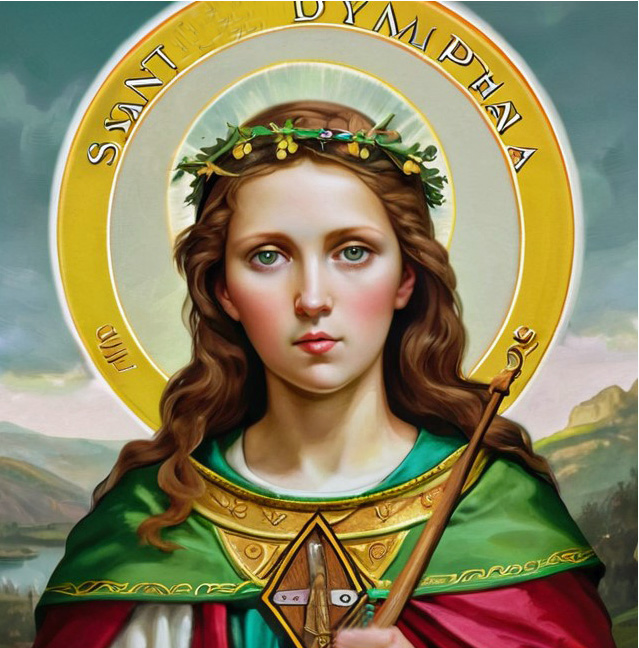
TO WATCH THE YOUTUBE VIDEO, CLICK ON THE ARROW IN THE THUMBNAIL BELOW:
According to the World Health Organization (WHO), in 2019, 1 in every 8 people — or 970 million people — around the world were living with a mental disorder. The most common mental disorders were anxiety and depression. An extensive international study by researchers from Harvard Medical School and the University of Queensland found that one out of every two people in the world will develop a mental health disorder in their lifetime.
Chances are you or someone close to you has suffered from an mental, nervous or emotional crisis at one time or another. If so, Saint Dymphna can be a beacon of hope in your life and the lives of your loved ones!
I first heard about St. Dymphna when I was a little girl. A close family member, who was suffering from a severe emotional crisis and depression, found a small article about St. Dymphna in a Catholic magazine and sent away for a prayer booklet. She began praying fervently to St. Dymphna, and forever afterwards claimed that the saint had helped her through the dark times of her struggle, guiding her to a wonderful doctor who was able to give her the treatment she required. As I grew up, I began praying to St. Dymphna myself over the years, as I experienced the emotional lows and mental stresses that all of us face at one time or another. As a result, I became very devoted to her, and a prayer to St. Dymphna is part of my daily morning devotions.
Like many early saints and martyrs who lived during the first centuries of the Church, there is not a great wealth of information about her, as there is about many of the more contemporary saints. But her story is one of great courage and fortitude in the face of extremely disturbing and alarming circumstances.
Dymphna was born in Ireland in the 7th-century. Her father, a pagan man named Damon, was the King of Oriel, an Irish over-kingdom or petty kingdom. Her mother, name unknown, was of noble birth and a devout Christian, admired for her extraordinary beauty and sweet, pious nature. As Dymphna grew up, she greatly resembled her mother both in her physical beauty and gentle disposition.
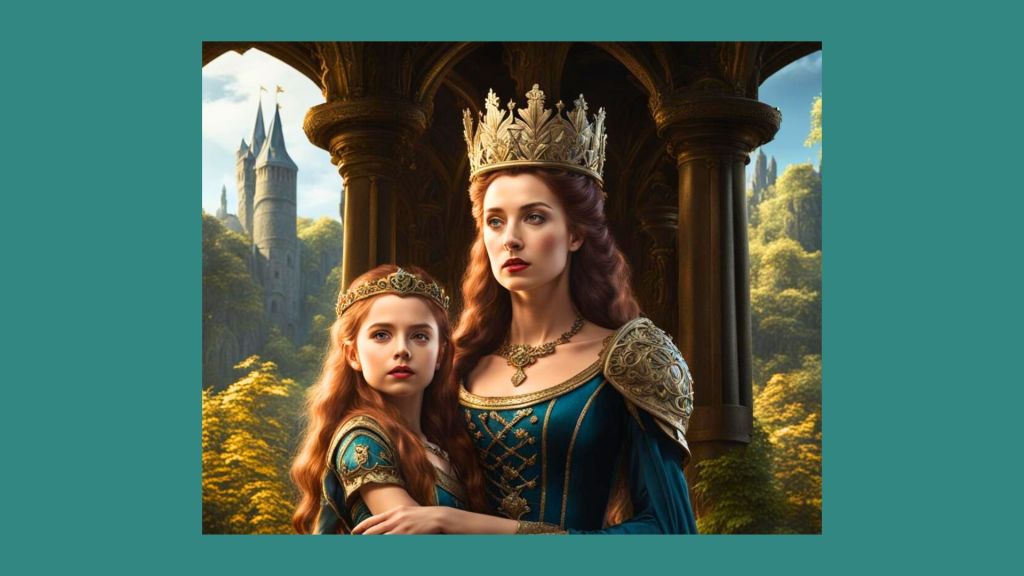
She was showered with love and attention by her devoted parents, and was loved throughout the kingdom. She was brought up in the Christian faith and baptized by Father Gerebrand (JEER-brand), who also taught Dymphna to read and write along with religious instruction. At the age of 14, she took a vow of chastity and consecrated herself and her life to Christ.
Dymphna’s life and home were happy and secure until tragedy struck the household with the untimely death of Dymphna’s beautiful and beloved mother. Her father, who deeply loved his young wife, was devastated by her death. Although his sorrow was shared by his daughter, he did not have Dymphna’s faith to sustain him in his grief as she did. As time wore on, and King Damon grew more and more despondent, his counsellors advised that he remarry. He agreed only on the condition that a woman could be found who was equal to his deceased wife in both beauty and character.
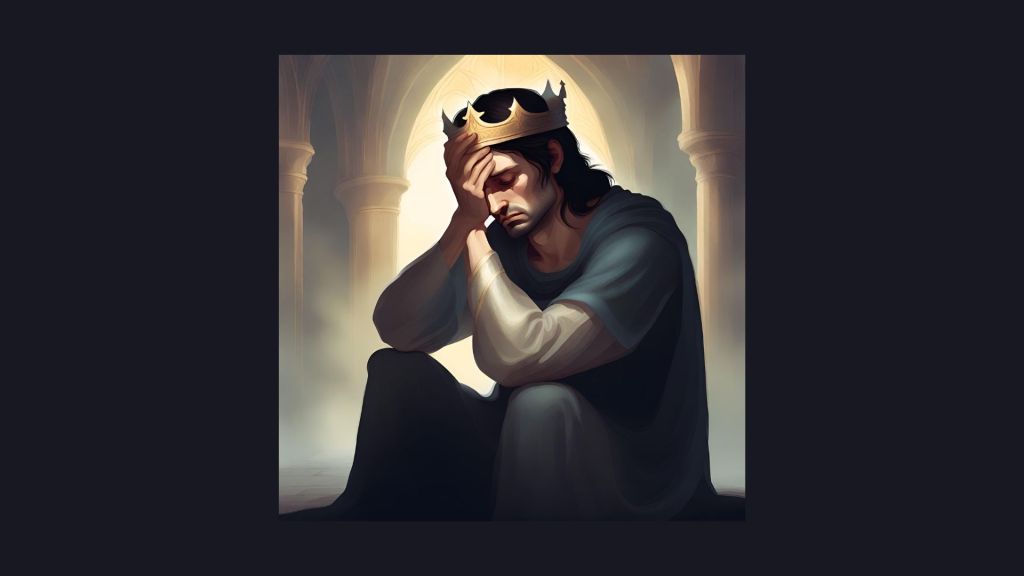
Despite all the efforts of members of the King’s court to find such a woman for the King to marry, he was not satisfied with any of the prospective brides. It was at this time that some evil members of the court suggested to King Damon that he marry his own daughter, Dymphna, who was the very image of his late wife in every way. By this time, Damon’s mind was so disordered that, although the idea was repugnant to him at first, he eventually allowed himself to be persuaded to approach Dymphna with this horrific and indecent proposal.
Naturally, Dymphna was shocked and revolted. To buy herself time, she requested of her father if she could have 40 days in which to consider his proposal. He agreed, and she immediately sought the counsel of her dear friend and spiritual advisor, Fr. Gerebrand. He told her that for the sake of her virtue and safety, she needed to leave the country at once. Dymphna, together with Fr. Gerebrand and a few trusted servants, set sail for the continent of Europe. Eventually they landed in Antwerp in present-day Belgium, and eventually settled in the town of Gheel, near the shrine of St. Martin of Tours.
Tradition says that in Gheel, Dymphna cared for the sick and the poor, and eventually used the money she had brought with her to open a hospice. All was well until the King’s spies landed in Gheel. When the innkeeper noticed that the coins they gave him were similar to those that Dymphna was using in the town, he innocently mentioned this to the men. They were then able to trace Dymphna’s whereabouts, and notified the King.
Upon hearing the news, King Damon immediately set out for Gheel. When he found Dymphna, Fr. Gerebrand and their companions, he controlled his anger with great effort and went about trying to persuade Dymphna to accept his proposal. He begged her to come back home, promising her great wealth and power as the new Queen. Fr. Gerebrand came to her defense, admonishing the King for his evil intentions, and protesting that Dymphna should remain in Gheel.
Enraged by the priest’s interference and Dymphna’s refusals, the King ordered his men to kill them both. They dutifully killed Fr. Gerebrand by striking him on the neck with a sword, but one tradition states that they could not bring themselves to kill the beloved Princess. King Damon was so consumed with insane rage and frustration by this point, that he drew his own sword and cut off the head of his daughter, who fell to her death at his feet. This took place on May 15, sometime between the years 620 and 640 AD. At the age of only 15, Dymphna earned the crown of martyrdom by refusing to give up her Christian faith, her moral values, and her vow of virginity.
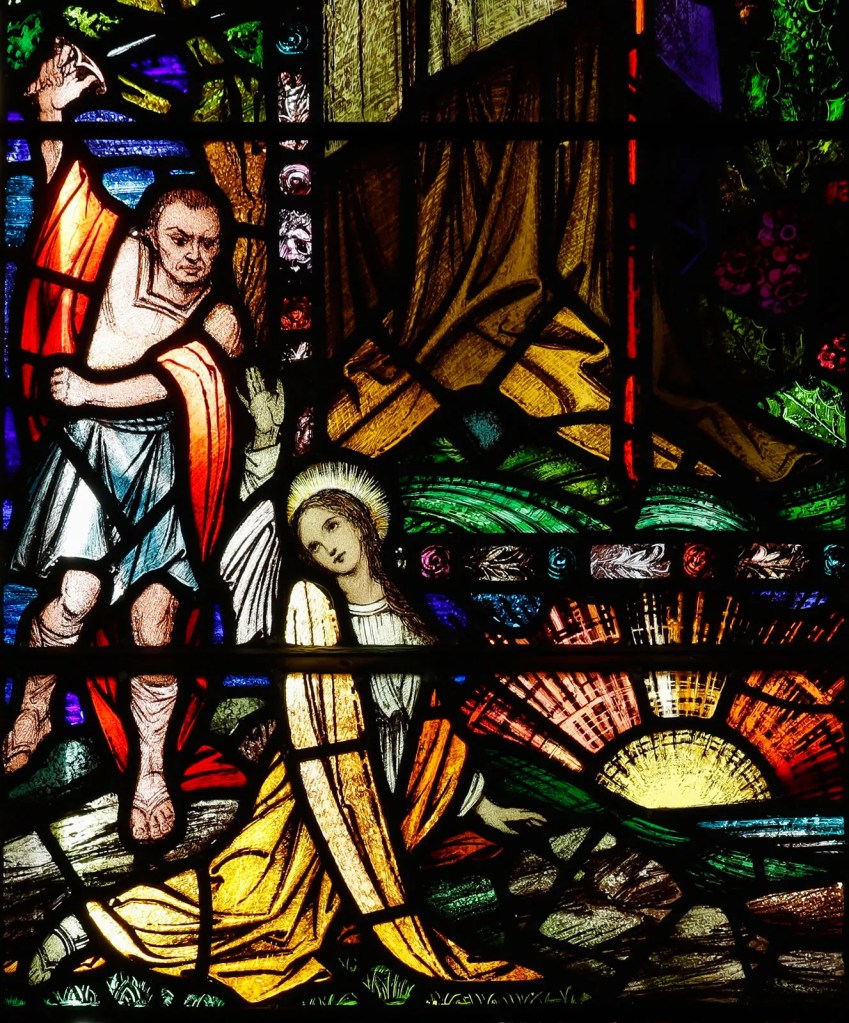
The bodies of Dymphna and Fr. Gerebrand remained where they had been struck down, until the King and his men returned home to Ireland. Then the citizens of Gheel brought the bodies to a cave, where they customarily interred the remains of the deceased. Several years later, it was decided by the townspeople that these two heroic souls deserved a more suitable burial place. Tradition says that when the workmen opened the cave’s entrance, to everyone’s astonishment they discovered within the cave two beautiful tombs carved of white stone. When Dymphna’s tomb was opened, a red tile was found within which read: “Here lies the holy Virgin & Martyr, Dymphna.” Her remains were moved to the church in Gheel. She was canonized in the year 1247 and was known as the “Lily of Eire.” Fr. Gerebrand also was canonized, and his remains eventually moved to Xanten (ZAN-tin), Germany.
In 1349, a church was built in Gheel in honor of St. Dymphna. Pilgrims began visiting the church from far and wide, seeking treatment for mental and nervous disorders. Many cures were attributed to the intercession of St. Dymphna. Eventually, the number of pilgrims became so great that the church had to expand their housing with an annex to the church. When that, too, was overflowing, residents of Gheel began caring for the patients in their own homes. As a result, for the past 700 years Gheel has been world-famous for its care of the mentally afflicted. A hospital for the mentally ill was built, called “The Infirmary of St. Elizabeth” run by the Sisters of St. Augustine. The patients, after initial treatment in the hospital, were placed into the care of the citizens of Gheel, who welcomed them into their homes, a practice that still continues to this day. They are not referred to as “patients,” but as “guests” or “boarders.” Many of them work at the local farms, and are treated with great kindness and respect as ordinary and useful members of the community.
The original Church of St. Dymphna in Gheel burned to the ground in 1489, and a new, even more magnificent church in her honor was built, and consecrated in 1532. It still stands today, above her original burial site. A silver reliquary containing St. Dymphna’s mortal remains is housed in the church. Some of her remains also are found at the U.S. National Shrine of St. Dymphna inside St. Mary’s Catholic Church in Massillon, Ohio. St. Dymphna’s Special School in Ballina, County Mayo, Ireland, caters to Primary and Post Primary pupils from 5 to 18 years of age with Mild General Learning Needs.

Today, St. Dymphna is invoked as the patron saint of those suffering from mental, nervous and emotional disorders, as well as victims of rape, incest and sexual abuse, runaways, orphans, and mental health professionals and caregivers. She usually is depicted in art wearing a crown and holding a sword, both symbols of her martyrdom. She also is sometimes shown holding a lamp, or a book and white lilies. Her feast day is May 15.
TRADITIONAL PRAYER TO ST. DYMPHNA:
Lord God, Who has graciously chosen Saint Dymphna to be the patroness of those afflicted with mental and nervous disorders, and has caused her to be an inspiration and a symbol of charity to the thousands who invoke her intercession, grant through the prayers of this pure, youthful martyr, relief and consolation to all who suffer from these disturbances, and especially to those for whom we now pray. (Here mention those for whom you wish to pray.)
We beg You to accept and grant the prayers of Saint Dymphna on our behalf. Grant to those we have particularly recommended patience in their sufferings and resignation to Your Divine Will. Fill them with hope and, if it is according to Your Divine Plan, bestow upon them the cure they so earnestly desire. Grant this through Christ Our Lord. Amen.

 Everyday Life Spirituality