PATRON OF ALTAR SERVERS, FILIPINO YOUTH, THE PHILIPPINES, PEOPLE WORKING OVERSEAS

TO WATCH THE YOUTUBE VIDEO, CLICK ARROW ON THUMBNAIL BELOW:
In the bustling streets of 17th century Manila, a young man named Lorenzo Ruiz lived an ordinary life. Born around 1600 to a Chinese father and Filipino mother, Lorenzo grew up in the Binondo district, the heart of Manila’s Chinese community. He learned Chinese from his father and Tagalog from his mother. From his early childhood, Lorenzo’s parents instilled in him a deep Catholic faith. He became an altar boy and sacristan at the local church, where the Spanish Dominican friars took him under their wing and taught him to read and write.
As he grew up, Lorenzo’s skills in calligraphy earned him a reputation as a talented “escribano,” serving as a clerk, notary and translator for the Spanish. He became known for his honesty, trustworthiness, and reliability. He joined the Confraternity of the Holy Rosary and continued to maintain close ties with the Dominican friars, acting as their unofficial messenger. He also helped them minister to people in Manila, particularly in the Binondo area.

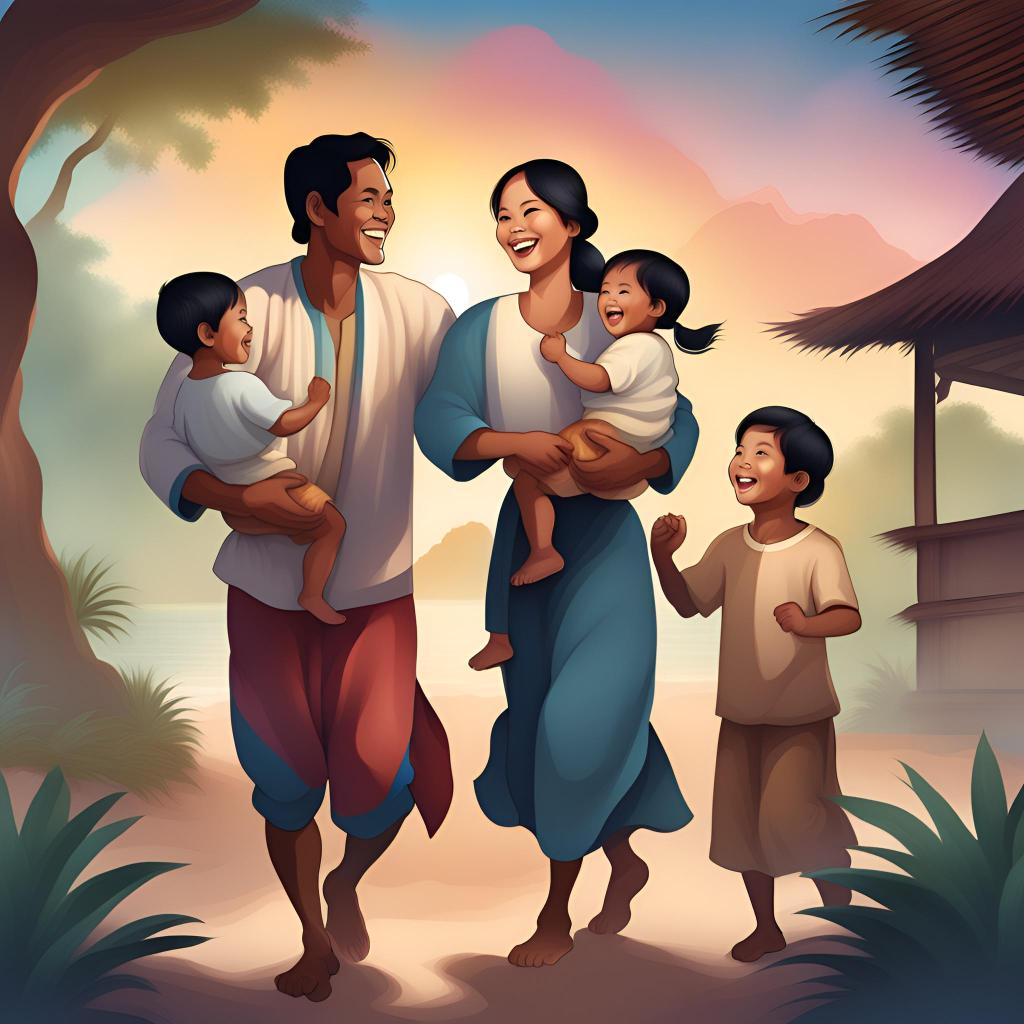
Life seemed to be following a predictable path for Lorenzo when he married a native Filipino woman named Rosario. They had two sons and a daughter. Lorenzo was a loving husband and father, who regularly participated in church activities, prayers and devotions. His faith was an integral part of his daily life, influencing his work, relationships and character. Lorenzo, Rosario and their three children lived a simple, ordinary, yet happy and comfortable life.
But fate had other plans for this seemingly ordinary man. In June of 1636, Lorenzo found himself falsely accused of murdering a Spaniard. Fearing that he almost certainly wouldn’t get a fair trial, thus facing death for a crime he didn’t commit, Lorenzo sought the assistance of his good friends, the Dominicans. They secured asylum for Lorenzo with a group of missionary priests and a lay leper, on a small ship headed for Japan.
It’s unclear whether or not Lorenzo realized at first that the others were missionaries. But faced with no other choice, he had to make the heart-wrenching decision to leave his beloved family behind, departing suddenly and secretively under cover of darkness. He bid a hasty and heart-wrenching farewell to his wife and promised to send her money as soon as he could. Most likely, he planned to relocate his family at some point, once he was settled, as he probably could never return to Manila.

The ship left Manila in mid-June 1636, embarking on an arduous journey across treacherous seas. Little did Lorenzo know that he was sailing into the jaws of an even greater danger. At that time, Japan was ruled by the Tokugawa Shogunate, which, though successful in restoring order and unity to the country, was vehemently anti-Western and anti-Christian. The ship’s original destination was a more tolerant portion of the country, but a storm forced them ashore near Okinawa. Lorenzo and his companions were shocked to discover that they had landed in a place where Catholic Christians were despised. The Tokugawa Shogunate was in the midst of a brutal campaign to eradicate Christianity from their shores. Within days of their arrival, Lorenzo and his companions were arrested. For two long years, they endured horrific conditions in Japanese prisons, where they were treated worse than animals. Meanwhile, in Manila, Lorenzo’s family waited in vain for news of him.
In 1637, Lorenzo and his fellow prisoners were transferred to Nagasaki, where they faced gruesome torture and trials for their faith. The Japanese authorities demanded that they recant their Catholic beliefs, but Lorenzo and his companions stood firm. Being only human, Lorenzo suffered a brief period of spiritual darkness and was tempted to renounce his faith. But he found renewed courage in prayer, especially the rosary, and in turn comforted and strengthened his prison companions.

Then came the ultimate test. On Sept. 27, 1637, Lorenzo and the others were subjected to an excruciating form of torture called tsurushi. They were hung upside down over a pit lined with excrement, their bodies tied to slow the circulation of blood, thus prolonging their agony. One hand was left untied so that the victims could signal if they were ready to renounce their faith and be released. The torturers made cuts in the victims’ heads every few hours to relieve the pressure of blood buildup, thus further delaying their death and lengthening their time of suffering.
Despite unimaginable pain, Lorenzo refused to deny his faith. After three days of this brutal torture, Lorenzo died as a martyr on September 29, 1637. According to historical accounts, Lorenzo’s last words were, “I wholeheartedly accept death for God. Had I a thousand lives, all these to Him I should offer. You may kill me, if that is what you want. To die for God—such is my will.” His five companions also died as martyrs. The six bodies were burned, and their ashes scattered into Nagasaki harbor.
Lorenzo’s extraordinary story of faith and courage didn’t end with his death. Centuries later, in 1981, Pope John Paul II beatified Lorenzo Ruiz in the first beatification ceremony ever held outside the Vatican. The ceremony took place in the Philippines, Lorenzo’s homeland.

in Manila, Philippines – 1981
The process of becoming a saint in the Catholic Church requires at least one verified miracle attributed to the person after their death, leading to beatification and the title “Blessed.” A second verified miracle is then needed for canonization, where the Pope officially declares the person a saint. Martyrs such as Lorenzo, who died for their faith, are an exception: They can be beatified without a miracle, though they still need one for full sainthood (canonization). These miracles typically result from prayers to the deceased and must be significant events that defy natural explanation. The Church believes that the miracles are performed by God and prove that the deceased person is in heaven and interceding to God on our behalf.
In 1983, just two years after Lorenzo Ruiz’s beatification, a miracle was attributed to his intercession: A two-year-old girl named Cecilia Alegria Policarpio was miraculously cured of hydrocephalus, a buildup of fluid in the brain. Medical professionals had little hope for her recovery. In desperation, Cecilia’s family turned to the intercession of St. Lorenzo Ruiz. Remarkably, Cecilia began to show signs of improvement. One source claims that Cecilia, now known as “Ria,” recounted a vision during her illness. She described seeing a man holding a rosary and looking up to heaven, emanating a bright light. The following morning, her symptoms had vanished, and she could sit up in bed without assistance for the first time. By April 25, 1985, she had recovered to the point where she could walk unassisted.
The case was thoroughly investigated and ultimately recognized by the Vatican as the miracle that supported Lorenzo Ruiz’s canonization on October 18, 1987. Also canonized at that time were Lorenzo’s companion martyrs: the three Dominican priests — St. Antonio Gonzalez, St. Guillaume Courtet, and St. Miguel de Aozaraza — a Japanese priest, St. Vicente Shiwozuka de la Cruz; and the lay leper, St. Lazaro of Kyoto.
Today, St. Lorenzo Ruiz is revered as the patron saint of Filipino youth, the Philippines, people working overseas, and altar servers. His feast day is celebrated on September 28th.

SPIRITUAL LESSONS FROM ST. LORENZO RUIZ:
I don’t know about you, but martyrs always intimidate me, because I can never imagine myself aspiring to such bravery as they demonstrated in enduring horrible tortures and death for their faith. But I still believe these heroes can inspire us in many ways that we can relate to, even in our unremarkable, everyday lives. Here are 6 spiritual lessons we can learn from St. Lorenzo Ruiz:
- Faithfulness in the small things: St. Lorenzo’s life teaches us that extraordinary courage can be found in ordinary people. Faithfulness in small things prepares us for greater challenges. Through his daily devotion to his faith, his family, and his work, Lorenzo prepared himself for the ultimate test of martyrdom. As we reflect on his life, we’re challenged to consider how we’re living our own ordinary lives. Do we see God’s hand in the mundane and typical? What kind of saints is God preparing us to be?
- Daily Prayer and Devotion: Lorenzo found comfort in prayer throughout his life, especially the rosary, which lifted him from the spiritual darkness of imprisonment and torture. This highlights the sustaining power of regular prayer, and inspires us to be faithful to our own prayer life, always striving to find new ways to enhance and enrich it.
- Faith in Action: In the Gospel of John we read, “Let us not love in word or talk, but in deed and in truth.”[1 John 3:18] Lorenzo’s active participation in church activities, such as serving as an altar boy and sacristan, demonstrated his religious devotion. Are there ways in which we can more fully participate in the life of our church or community? Are there any volunteer opportunities to which we can lend our time and expertise?
- Courage in the face of adversity: Lorenzo’s story teaches us about finding courage to stand firm in our convictions, even in life-threatening situations. Do we speak up when we see injustice or wrong-doing? Or on the other hand, do we attack the people we disagree with, rather than addressing the issue itself?
- Trust in God’s Grace During Trials: Lorenzo’s ability to endure torture and still remain faithful shows how God’s grace can support us through unimaginable difficulties. When life seems unbearable, and we think God has abandoned us, we can take comfort in knowing that God is always present, sustaining us even when we don’t perceive His presence with our limited, human senses.
- Willingness to Sacrifice Our Own Plans for God’s Greater Plan: Lorenzo apparently loved his life, his work, and his family. It seems likely that he would have been perfectly content to live out the rest of his years in this peaceful, if unremarkable, way. But God had plans for Lorenzo’s greatness, even though in earthly terms it cost Lorenzo everything he loved, and ultimately his life. When at times we find our own plans unravelling, and it seems like we’re losing everything we care about, we can find comfort and inspiration in knowing that God’s plans are always for our greatness and ultimate victory in His Kingdom.
At Lorenzo’s canonization, Pope John Paul II said, “Lorenzo Ruiz…reminds us that everyone’s life must be at Christ’s disposal. Christianity means daily giving, in response to the gift of Christ, who came into the world so that all might have life and have it to the full….To die for the faith is a gift to some; to live the faith is a call for all.”
No matter how ordinary we may feel, we can draw inspiration from the life of St. Lorenzo Ruiz, the first Filipino saint, whose unwavering faith and courage in the face of unimaginable suffering continue to inspire millions around the world. Although we may never be called to die for our faith as he did, we still can strive to live our faith as he did.

Prayer to St. Lorenzo Ruiz
O most merciful and almighty God,
You bestowed as gift to Lorenzo Ruiz
The strength to withstand
The overpowering forces of death
For the sake of his faith in You.
Through his prayers,
Help us to follow his example
By overcoming all life’s trials
And eventually, increase
Our hope and love in You.
O St. Lorenzo Ruiz,
You brought honor to your country,
Having been a level-headed
And prudent father of the family,
A witness of Christ in your life
Until your death.
We present all our petitions
To God through your help
So that by our actions,
We may know more and love more
Jesus our Lord and Savior.
We humbly implore
Your intercession O dear St. Lorenzo,
For the infinite glory of God
And in honor of your triumph
As a martyr of Christ
And defender of Christianity. Amen.

 Everyday Life Spirituality